
BUSINESS
The $7.5 Trillion Islamic Finance Call Hits a Capital Wall
Standard Chartered still maps Islamic finance assets to $7.5 trillion by 2028, but only 6% of sukuk capital reaches South Asia and Africa.

Standard Chartered projected in May 2025 that global Islamic finance assets would reach $7.5 trillion by 2028, up from $5.5 trillion in 2024. The bank called that a 36% rise over four years.
On 6 August 2026 it put the stock at about $6 trillion across nearly 100 countries and said the binding problem is no longer size. The extra money is not travelling.
Standard Chartered Still Projects $7.5 Trillion by 2028
The May 2025 report, Islamic Banking for Financial Institutions: Unlocking Growth Amidst Global Shifts, is still the bank’s published 2028 map. It said the industry cleared a $5 trillion mark in 2024, rose 12% from 2023, and stood 43% above 2020. Islamic banking was put at over 70% of the total, with that book rising from $4 trillion in 2024 to $5.2 trillion by 2028. Sukuk, the Shariah-compliant certificates that function as Islamic bonds, were mapped from $971 billion to $1.5 trillion.
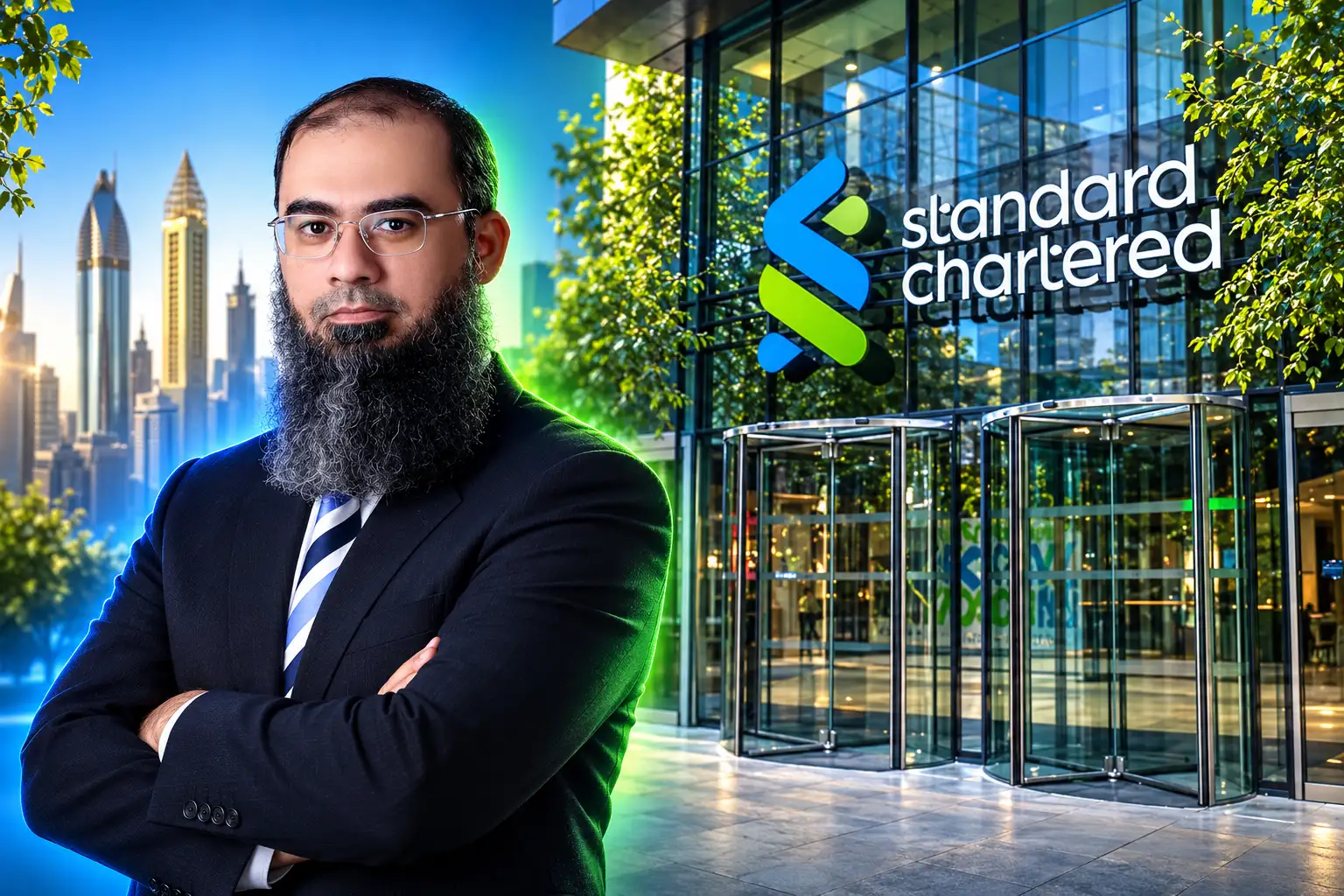
Khurram Hilal, CEO of Group Islamic Banking at Standard Chartered, tied the print to demand for ethical finance.
Islamic finance is entering a new era defined by scale, sustainability and strategic integration. The projected 36% increase in assets reflects strong fundamentals and global appetite for ethical and inclusive finance.
Khurram Hilal, CEO of Group Islamic Banking, Standard Chartered press release, 19 May 2025
Other compilers do not use the same yardstick, and the gap is large enough to keep in view. The Islamic Corporation for the Development of the Private Sector and the London Stock Exchange Group, in their 2025 Islamic Finance Development Indicator, put assets of $5.98 trillion in 2024, up 21% year on year, and projected $9.7 trillion by 2029 at an average 10% a year. Mustafa Adil, LSEG’s head of Islamic finance, told a Dubai conference on 1 October 2026 that the 2025 stock was about $6.5 trillion and that $10.5 trillion by 2030 was in reach, from about $2.5 trillion in 2018.
The Islamic Financial Services Board, whose series is narrower, is the cleanest split of what sits inside the total. S&P Global Ratings, in May 2026, also cut the near-term path to about 5% to 10% as conflict hit core markets.
HOW THE FORECAST MOVED
- 19 May 2025: Standard Chartered publishes the $5.5 trillion to $7.5 trillion map and the $971 billion to $1.5 trillion sukuk line.
- 3 November 2025: A second report, aimed at companies, says 65% of corporates that want Shariah products had no prior exposure.
- 6 August 2026: The bank says assets are about $6 trillion and that 6% of sukuk capital reaches South Asia and Africa.
- 1 October 2026: Adil puts 2025 assets at about $6.5 trillion and sketches $10.5 trillion by 2030.
None of those later prints retracts 2028. They do change what the $7.5 trillion number is asked to do. It is no longer a story about whether the industry can get bigger. It is a story about whether the extra $2 trillion from the 2024 base leaves the markets that already hold it.
Most Islamic Finance Assets Remain in a Handful of Markets
ICD-LSEG’s 2024 stock is blunt on concentration. Iran, Saudi Arabia and Malaysia together held $4.3 trillion, or 72% of that $5.98 trillion. The IFDI covers 140 countries, but three of them still dominate the money.
The IFSB’s 2025 regional split, built from assets covered by its 2025 monitoring framework, shows the same pile from another angle. The Gulf Cooperation Council held 53.8%. East Asia and the Pacific, led by Malaysia and Indonesia, held 21.3%. The rest of the Middle East and North Africa, including Iran’s fully Islamic banking system, held 16.4%. Europe and Central Asia held 4.9%. South Asia held 2.4%. Sub-Saharan Africa held 0.7%.
WHERE IFSB ASSETS SAT IN 2025
| Region | Share of IFSB assets |
|---|---|
| Gulf Cooperation Council | 53.8% |
| East Asia and the Pacific | 21.3% |
| MENA excluding the GCC | 16.4% |
| Europe and Central Asia | 4.9% |
| South Asia | 2.4% |
| Sub-Saharan Africa | 0.7% |
Malaysia is the capital-markets heavyweight inside that East Asia slice. ICD-LSEG data carried in ICAEW’s industry profile show it accounted for 36% of global sukuk outstanding and supplied over 46% of national financing in 2024. The UAE, which Standard Chartered now casts as a connector, has its own official target: about $700 billion of Islamic banking assets and about $180 billion of sukuk issuance by 2031.
A second concentration sits inside the banks themselves. ICD-LSEG counted Islamic windows inside conventional banks as 48% of Islamic banking institutions in 2024, but only 14% of banking assets. The large books still sit in full Islamic groups such as Al Rajhi, not in the add-on units Western banks built beside their interest books.
Sukuk Is the Slice Growing Fast Enough to Matter
Banking is still the bulk of the industry. It is not the part that is compounding fastest. The IFSB’s 2025 mix put banking at $3.05 trillion, 69.2% of its $4.4 trillion total, up 9.7%. Sukuk outstanding was $1.10 trillion, 25.1% of the total, and up 21.8%, more than twice the banking rate. Funds rose 25.6% to $180.5 billion, though 56% of active funds still held less than $10 million. Takaful, the mutual form of Islamic insurance, was $71.1 billion, up 13.9%.
IFSB ASSET MIX IN 2025
| Segment | Assets | Share | Year-on-year |
|---|---|---|---|
| Islamic banking | $3.05 trillion | 69.2% | 9.7% |
| Sukuk | $1.10 trillion | 25.1% | 21.8% |
| Islamic funds | $180.5 billion | 4.1% | 25.6% |
| Takaful | $71.1 billion | 1.6% | 13.9% |
| Total | $4.4 trillion | 100% | 13.4% |
LSEG put 2025 sukuk issuance at $291 billion, up 14.5%, with the foreign-currency share rising from 32% to 41%. Governments still accounted for 48% of issuance, but quasi-sovereign volume rose 45% and corporate volume 40%. That is the channel through which a conventional treasurer actually meets Islamic money: a listed certificate, often in dollars, often alongside a conventional bond.
Standard Chartered’s own 2024 corporate figures sit on that same track. The number of corporate sukuk issuers had nearly doubled since 2020, and issuance volumes rose 38% to $58.8 billion. Sustainable sukuk were oversubscribed by an average of 4.3 times in 2024, against 3.1 times for regular sukuk. The May 2025 report already treated sustainability as a growth lever. The November report treated it as a pricing fact.
Why Only 6% of Sukuk Capital Reaches South Asia and Africa
The August 2026 report, The Islamic Finance Connector Era, is the bank’s own answer to where the $7.5 trillion path breaks. It said Islamic finance liquidity is deepening, and that only 6% of global sukuk capital currently reaches South Asia and Africa. Hilal put the constraint in one line.
The challenge for many markets today is not a shortage of liquidity, but how to connect that liquidity with opportunity more effectively across borders.
Khurram Hilal, CEO of Group Islamic Banking, Standard Chartered press release, 6 August 2026
Fitch Ratings put Africa’s outstanding sukuk above $7 billion in August 2026, with Egypt accounting for 48% of that stock. Against a global sukuk book the IFSB already had at $1.10 trillion in 2025, that African total is a rounding error. South Asian governments have not waited for the global book to arrive. They have been building domestic sukuk programmes to fund themselves at home, which is what a 6% inbound share forces them to do.
Standard Chartered named three corridors it wants to turn into pipes, plus a private-credit overlay and a digital one.
THE PIPES THE BANK SAYS ARE STILL MISSING
- GCC-centred corridors: Gulf liquidity routed toward Asia, Türkiye and Africa as working capital and investment, not as more local deposits.
- China-centred corridors: Trade and treasury flows the bank wants Shariah structures to sit inside as supply chains shift.
- Middle East-Türkiye corridors: A third channel for trade, payments and settlement between those blocs.
- Private credit: Asset-backed Islamic structures for infrastructure, receivables, trade assets and mid-market firms outside public sukuk.
- Tokenisation: Digital issuance and custody, only if law, interoperability and governance catch up.
ICD-LSEG already counted 104 Islamic banks and windows across 28 sub-Saharan countries. Presence is not the same as a sukuk bid. The 6% figure is the bank admitting that a franchise can span 25 countries and still leave the places with the funding gap outside the market that is supposed to serve them.
Corporate Treasurers Are Interested and Unprepared
The November 2025 companion report, Islamic Banking for Corporates: Broadening Horizons, is where the second-order problem shows up in the buyer. Islamic banking, Standard Chartered said, now spans more than 80 countries with assets above $5 trillion. Yet 65% of corporates that signalled interest in Shariah-compliant solutions had no prior background in the product. Hilal called that gap an expensive opportunity cost.
The bank’s pitch to those boards is specific. Build the capability, and the company can tap specialised pools, better pricing in oversubscribed books, government incentives in high-growth markets, and ESG money where ethical screens are already built in. Sustainable oversubscription at 4.3 times is the exhibit. The Halal economy, which the report put at $2.2 trillion, is the trade-side exhibit. Shariah-compliant finance, it said, underpins much of a $5.7 trillion South-South corridor that now accounts for nearly a quarter of global trade.
Those are large numbers attached to a product most of the target buyers have not used. Tokenised sukuk, blockchain settlement and AI Shariah tools were listed as ways to cut issuance costs. They do not fix a treasurer who cannot tell a murabaha from a conventional revolver. The growth constraint in that report is literacy, not deposits.
On 29 September 2025 the bank said it would offer Islamic current accounts in the United Kingdom, extending Saadiq to clients who need a sterling cash product that does not pay interest. That is a retail wedge in a Western hub. It is not a substitute for a sukuk bid in Karachi or Lagos.
Saadiq’s Pitch Is Connectivity Across 25 Countries
Standard Chartered calls Saadiq, launched in 2007, the only international bank with a global Islamic banking franchise. The May 2025 release put that franchise in over 25 countries, across financial institutions, companies, wealth, retail and private banking. The wider group is in 55 markets and is listed in London and Hong Kong. By November 2025 the bank said it had arranged over $200 billion of Islamic financing across sukuk, structured trade and sustainable deals.
That is a connector’s balance sheet, not a deposit-taker’s. The large Islamic books remain with local groups in Riyadh, Kuwait and Dubai. What Standard Chartered is selling into the $7.5 trillion forecast is the ability to structure a certificate, place it with a mixed investor base, and move the proceeds along the corridors it named in August 2026.
Hilal’s August language matches that job description. He said financial institutions must put Islamic finance on the strategic agenda, and that they need recognised structures so Shariah-compliant capital can move across borders. He also said institutions that build trusted links between capital, markets and digital infrastructure will be the ones that support growth in emerging economies. The bank is describing its own product.
The $7.5 trillion print can still land. ICD-LSEG’s $9.7 trillion by 2029 and Adil’s $10.5 trillion by 2030 sit on a faster vendor path than Standard Chartered’s. The IFSB’s $4.4 trillion is a reminder that “global Islamic finance” is not one number. What the August 2026 report added, and what the May 2025 forecast did not, is the routing test. If the extra $2 trillion from 2024’s $5.5 trillion arrives on time, the question left on the page is how much of it has gone to the two regions that today receive 6% of sukuk capital.
Disclaimer: This article is news reporting and analysis of industry forecasts, asset tallies and market structure. It is informational only and is not investment advice, a solicitation to buy or sell any sukuk, share, deposit or other instrument, or a recommendation of any bank or product. Readers considering Shariah-compliant or conventional allocations should consult a qualified licensed financial adviser or investment professional who can assess suitability, legal structure and risk. Figures and status notes reflect the cited bank reports, IFSB and ICD-LSEG datasets, and named speakers as published on the dates given, and those totals and forecasts can change with methodology, FX and later filings.

The Court Revisits the Climate Nuisance Door It Left Open

ChatGPT Now Compiles Live Interfaces With GPT-6

A Tanker Attack Moves the War Into Qatar’s Waters

Personio Buys Circula to Own the DATEV Channel

Bluesky Files for .bsky and Enters the Registry Queue

Microsoft’s 96% Cyber Score Sits at 86.3% on the Board

Musk’s $914 Billion Lead Is a Public SpaceX Bet

The Odyssey’s IMAX Film Run Hit a 41-Theater Limit

Free Live Sports Streaming in 2026: What to Watch Without Cable

Endgame Encore’s $86 Million Trial for Infinity Vision
-
 NEWS3 months ago
Microsoft’s 96% Cyber Score Sits at 86.3% on the Board
-
 BUSINESS5 months ago
Musk’s $914 Billion Lead Is a Public SpaceX Bet
-
 ENTERTAINMENT3 months ago
The Odyssey’s IMAX Film Run Hit a 41-Theater Limit
-
 SPORTS4 months ago
Free Live Sports Streaming in 2026: What to Watch Without Cable
-
 ENTERTAINMENT4 months ago
Endgame Encore’s $86 Million Trial for Infinity Vision
-

 ENTERTAINMENT2 years ago
Andrew Garfield’s Spider-Man Films Are No Longer Free
-

 NEWS5 months ago
Singapore’s 3×3 and Surfing Debuts Miss the Medal Stand
-

 NEWS7 months ago
White Sands Footprints Put People in Ice Age New Mexico