
NEWS
Zhangjiajie Cave Dump Opened a National Karst Waste Hunt
Cili county hauled 51 tonnes from Avatar-adjacent caves in 2025. By August 2026 China had found 8,775 karst dumps, mostly village trash after burn bans.

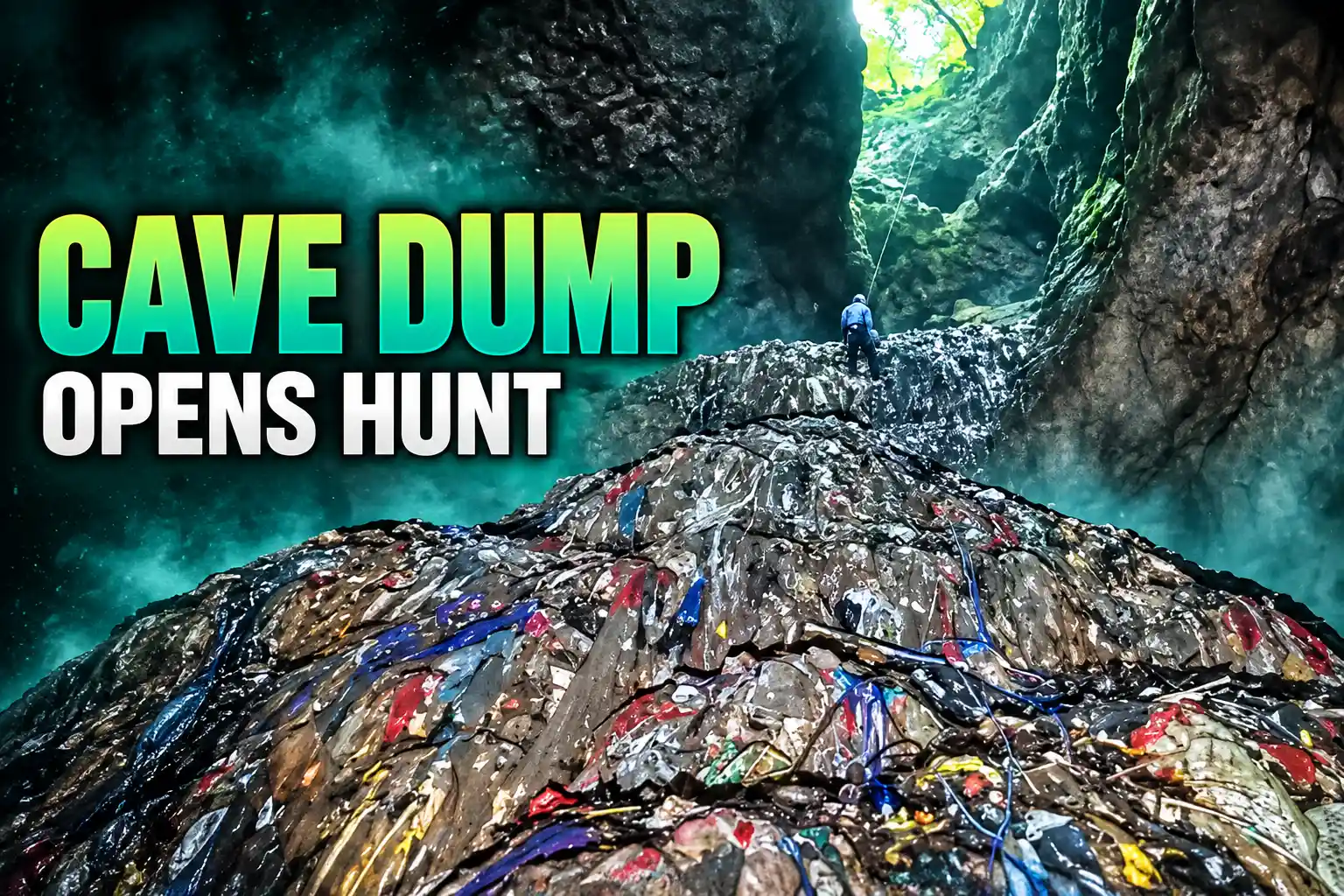
51 tonnes of household trash came out of two karst caves in Cili county by 18:00 on June 8, 2025, after cavers filmed a dump seven or eight floors high. The shafts sit in Zhangjiajie, Hunan, the city that sells the sandstone towers behind James Cameron’s 2009 film Avatar. By the end of August 2026 the Ministry of Ecology and Environment had counted 8,775 cave waste sites across eight karst provinces, about 90 percent of them rural household garbage.
The Cili haul was a local purge with cranes, suspensions, and a viral video. The later ledger is the same habit written at country scale: after open burning stopped and before regular pickup arrived, a hole in the rock became the dump.
Cili County, 35 Miles From the Avatar Peaks
English headlines folded the mess into the Avatar mountains. The two shafts that made the pictures are in Cili county, about 56 kilometers (35 miles) from Wulingyuan, the tourist district that holds the quartz-sandstone forest.
Yangjiapo cave sits in group 15 of Changyupu village, Tongjinpu town. Datiankeng, a sinkhole shaft, sits in group 9 of Caiqiu village, Dongyueguan town. Both are karst holes in a county Zhangjiajie administers. They are not the pillar that the park renamed Avatar Hallelujah Mountain in January 2010.
The UNESCO property, listed in 1992 as the Wulingyuan Scenic and Historic Interest Area, covers 26,400 hectares with a 12,680-hectare buffer. Its brief describes more than 3,000 narrow sandstone pillars, many over 200 meters high, plus about 40 caves and two natural bridges. The site later joined the Zhangjiajie UNESCO Global Geopark listing.
That core still draws the crowds. Over the May 31 to June 2, 2025 holiday, the forest park logged almost 400,000 visits, about 10 percent more than the same break a year earlier, while crews in Cili were bagging decade-old trash. IUCN’s outlook flags visitor growth after World Heritage listing as the lasting management strain. The dump story sat next to that machine, not inside the ticketed pillars.
A Burn Ban With No Pickup Filled the Shafts
Cili’s information office, through the “Zhangjiajie in Your Hand” WeChat account, said the waste in both caves was mostly household trash dumped between 2010 and 2016. That window opened after the county banned open burning and before urban-rural sanitation pickup was in place. Mineral water bottles dated 2015 were still in the pile when officials confirmed the find on May 31, 2025, so some of the load had sat about 10 years.
State media later described the practice as ordinary, and in places organized. Villages sent trucks to the karst holes. One resident said his father, who lived about 200 meters from a cave, threw trash in “for convenience.” Cili is also a pork county, raising about 700,000 pigs a year. Household bags were not the only thing that went underground. Manure and farm wastewater showed up in the same system, and rain at Yangjiapo pushed fouled water into the Loushui River.
FROM BURN BAN TO NATIONAL LEDGER
- 2010: Cili bans open burning of trash; dumping into caves begins before a pickup service exists.
- 2016: City-style sanitation coverage arrives; officials say the household dumping in these two shafts stops.
- May 29, 2025: Caver footage of a seven- or eight-floor pile spreads; the county posts a first notice on Yangjiapo.
- May 31, 2025: Cili confirms waste in two caves, including 2015 water bottles.
- June 8, 2025: 51 tonnes are out by 18:00; Yangjiapo is largely cleared, Datiankeng is not.
- January 1, 2026: Zhangjiajie cave and sinkhole pollution rules take effect.
- September 22, 2026: The ministry reports 8,775 cave pollution problems nationwide, with figures through the end of August.
A safety officer on the Cili job, speaking on China Central Television, listed what the bags held: disposable goods, worn-out clothes, plastic bags, “all kinds of trash.” The burn ban had stopped smoke. It had not yet bought a truck route.
The Cavers Who Walked on the Trash
Clips hit Douyin in March 2025 and blew up in May. The May 29 video that froze the country came from a spelunker going as Xiaofu, also tagged Xiaofugege in the circulating cuts. He walked the surface of the pile and talked into the camera while he did it.
Look at how thick the trash is, I can even walk on it.
Xiaofu, cave explorer, footage posted May 29, 2025
Yu Ziq, the Hubei investigator who works as Yulie Qige, treated Cili as a long case, not a one-day shoot. He spent about eight months on it and went more than 10 times, climbing wet rock to the floor of a 150-meter shaft to film stained stone and sewage. He has said that picking up trash for 10 years does less than exposing the source once. The Cili videos were that exposure. They were not a scenic-bureau press tape.
County and city offices moved after the pictures did. A June 4 bulletin from Cili’s environmental-risk team described both holes and the awkward work. By June 6, four officials were suspended pending inspection. Fourteen suspected environmental cases were on file. Three livestock households in Changyupu, including a person named Li, were under investigation for illegal discharge. Dongfang Hope’s Yanzi fattening farm was ordered to halt and fix its plant; six other Hope farms in the county got enforcement checks. The Cili procuratorate opened public-interest filings against firms and people tied to the harm.
WHAT CILI DID AFTER THE VIDEO
- Four officials: Suspended for inspection by June 6, 2025 over weak, fake, or slow fixes.
- Fourteen cases: Filed for suspected environmental violations, plus three livestock discharge files.
- Hope farms: The Yanzi fattening site stopped for rectification; six other Dongfang Hope farms were inspected.
- A village secretary: Lu Zhifu of Zhuyu village, Longtanhe town, was suspended on June 8 after comments in a WeChat group about people photographing a sinkhole.
- Tips and teams: A cave-guard volunteer unit was recruited, 12369 and 12345 lines were publicized, and Zhangjiajie posted rewards up to 5,000 yuan for solid environmental tips.
Cleanup paused from June 9 to June 12, 2025 after toxic and flammable air showed up in the shafts. Officials told state media that of 206 karst caves checked in the area, about two-thirds were polluted to some degree. Drinking water, they said, still tested safe. Shuai Huan, deputy director of a local environmental geology survey center, warned on CCTV that once pollutants enter karst aquifers they can move fast into downstream surface water.
How Deep Were the Zhangjiajie Garbage Caves?
Yangjiapo is a funnel about 150 meters deep, 1.5 meters across at its narrowest. Crews could not fit a crane. They went in on ropes and hauled by hand. Datiankeng is a vertical shaft about 70 meters deep with an irregular mouth about 15 meters wide. There the county opened a path, brought in heavy kit, and lifted bags by machine. Officials said they had not found groundwater running through Datiankeng. Yangjiapo was the wetter problem. After a storm, sewage rose and spilled toward the Loushui.
THE TWO SHAFTS CILI EMPTIED FIRST
| Cave | Place | Depth | Opening | How it was cleared |
|---|---|---|---|---|
| Yangjiapo | Changyupu, Tongjinpu | about 150 m | 1.5 m at the pinch | Hand crews lowered in; no crane |
| Datiankeng | Caiqiu, Dongyueguan | about 70 m | about 15 m | Path cut, machines and cranes |
By 18:00 on June 8, 2025 the two holes had yielded 51 tonnes and Yangjiapo was basically finished. Datiankeng was still being emptied. Hunan’s urban geology survey institute was hired to map caves and sinkholes countywide under a one-hole, one-plan rule. Firefighters joined the descents. The city began drafting karst-cave management rules, the set that took effect on January 1, 2026 as Zhangjiajie’s cave and sinkhole pollution provisions.
8,775 Cave Dumps Across Eight Provinces
Zhong Bin, director-general of solid waste and chemicals at the Ministry of Ecology and Environment, used the September 22, 2026 regular briefing to put Cili in a longer line. Cave waste, he said, is a special kind of illegal dumping: harder to see, harder to lift, and common in remote villages. The ministry had already opened a special investigation of cave waste in Hubei, Hunan, Guangdong, Guangxi, Chongqing, Sichuan, Guizhou, and Yunnan, the heavy karst belt. He gave figures through the end of August 2026.
Cave garbage is a relatively special type of illegal solid-waste dumping. The pollution is more hidden, cleanup is harder, and most of it happens in remote rural areas.
Zhong Bin, director-general, Department of Solid Waste and Chemicals, Ministry of Ecology and Environment, September 22, 2026 briefing
Staff built a list of more than 94,000 caves from natural-resources records, local reports, media, public tips, and field checks. They then walked the ones that could be entered. More than 86,000 had been inspected. Inspectors logged 8,775 garbage and solid-waste problems, about 90 percent rural household trash, the rest including livestock manure and construction waste. About one in ten of the inspected caves had a waste problem. Of those 8,775 files, 5,143 were closed and 82,000 tonnes of solid waste had been taken out.
NATIONAL CAVE WASTE TALLY, END OF AUGUST 2026
| Item | Figure |
|---|---|
| Caves on the key-province list | more than 94,000 |
| Caves inspected | more than 86,000 |
| Waste problems found | 8,775 |
| Share that is household trash | about 90% |
| Problems already fixed | 5,143 |
| Solid waste cleared | 82,000 tonnes |
Zhong named Zhangjiajie as the working example of one-cave, one-plan work: small, easy loads moved at once; ugly shafts handed to specialist firms with cranes. The June 2025 Cili pictures sit inside that method. They are not the whole map. Fifty-one tonnes in two Hunan holes is a rounding error next to 82,000 tonnes already lifted nationwide, and thousands of files were still open after August.
Rural Pickup Still Loses to a Hole in the Ground
The ministry’s own lesson from the 8,775 sites is blunt. Because about 90 percent of the cave problems are village household trash, Zhong said localities have to invent cheap, steady rural collection, not only send a crane after a video. He pointed to Chongqing pilots in scattered mountain hamlets: rot the wet waste on site so it does not sit and stink, store the rest, run a pickup as seldom as once a month, and keep the burn ban. That is the unglamorous fix. A karst shaft is still cheaper than a transfer station if the truck does not come.
Cili showed how the gap works in a famous postcode. The county stopped burning, delayed pickup, and watched household bags and farm waste slide into 150-meter rock. Cavers filmed it. Four officials lost their posts, a village secretary was pulled for the WeChat row, and a pork company was told to halt a fattening barn. Zhangjiajie wrote cave rules that took force on January 1, 2026. None of that repeals the geology. Karst country is hollow. If the bin service is thin, the hollow fills.
Zhong said the next job is to stay on the unfinished files, close them one by one, and spot-check caves that were reported clean. The Avatar pillars still sell tickets a county away. The list that now matters is the one with 8,775 lines.

The Court Revisits the Climate Nuisance Door It Left Open

ChatGPT Now Compiles Live Interfaces With GPT-6

A Tanker Attack Moves the War Into Qatar’s Waters

Personio Buys Circula to Own the DATEV Channel

Bluesky Files for .bsky and Enters the Registry Queue

Microsoft’s 96% Cyber Score Sits at 86.3% on the Board

Musk’s $914 Billion Lead Is a Public SpaceX Bet

Endgame Encore’s $86 Million Trial for Infinity Vision

Free Live Sports Streaming in 2026: What to Watch Without Cable

The Odyssey’s IMAX Film Run Hit a 41-Theater Limit
-
 NEWS3 months ago
Microsoft’s 96% Cyber Score Sits at 86.3% on the Board
-
 BUSINESS5 months ago
Musk’s $914 Billion Lead Is a Public SpaceX Bet
-
 SPORTS4 months ago
Free Live Sports Streaming in 2026: What to Watch Without Cable
-
 ENTERTAINMENT4 months ago
Endgame Encore’s $86 Million Trial for Infinity Vision
-
 ENTERTAINMENT3 months ago
The Odyssey’s IMAX Film Run Hit a 41-Theater Limit
-

 ENTERTAINMENT2 years ago
Andrew Garfield’s Spider-Man Films Are No Longer Free
-

 GAMING2 months ago
Xbox Puts 15-Hour Caps on Game Pass Cloud Play
-

 NEWS5 months ago
Singapore’s 3×3 and Surfing Debuts Miss the Medal Stand