
NEWS
Micron’s Record Memory Profits Lock RAM Tight Through 2028
Micron has sold most 2027 RAM at record profits, so consumer DRAM remains the leftover after AI memory through 2028.

Micron has already committed more than 75 percent of its 2027 memory output, and CEO Sanjay Mehrotra said supply will be tighter in 2028 than in 2026. The Idaho chipmaker posted $54.23 billion in fiscal fourth-quarter sales after the year ended September 3, 2026, as high-bandwidth memory for AI servers took the wafers and consumer DRAM took whatever was left.
That mix produced record profits on the same call that told customers there is still no date when supply catches demand. PlayStation 5, Xbox, Switch 2, and Valve’s Steam Machine have already repriced around that leftover, and the plants due later this decade are being built into the same queue.
A $54 Billion Quarter on Sold-Out Memory
Micron’s quarter was the sixth sales record in a row. Revenue rose 31 percent from $41.46 billion in the prior quarter and 379 percent from $11.32 billion a year earlier. Full-year sales reached $133.19 billion, up 256 percent from $37.38 billion in fiscal 2025. GAAP net income in the quarter was $37.70 billion, or $32.87 a share. On a non-GAAP basis it was $38.40 billion, or $33.42 a share.
MICRON’S FISCAL Q4 AT A GLANCE
- Q4 sales: $54.23 billion, up 379 percent from a year earlier.
- Full-year sales: $133.19 billion, up 256 percent from fiscal 2025.
- Data-center SSDs: nearly $10 billion in the quarter, more than 10 times the year-ago period.
- 2027 book: more than 75 percent of output already committed.
DRAM brought in $39.8 billion in the quarter, 73 percent of sales and 343 percent above a year earlier, and full-year DRAM revenue surpassed $100 billion. Mehrotra said data-center revenue for the year was up fourfold. The core datacenter unit, which sells more conventional DRAM, posted a 90 percent gross margin, up from 41 percent a year earlier. The cloud memory unit that covers HBM posted an 83 percent gross margin, up from 59 percent. HBM still trails DRAM on profit, and Mehrotra said Micron is lifting those HBM prices so the gap narrows.
Guidance for the current quarter is about $61.5 billion of sales, plus or minus $1.5 billion. First-half fiscal 2027 capital spending is pegged at about $25 billion, with roughly $11.5 billion in the first quarter, after $27.37 billion of capex in fiscal 2026. The company is not starving the buildout. It is filling the rooms it already has, then charging more for the next ones.
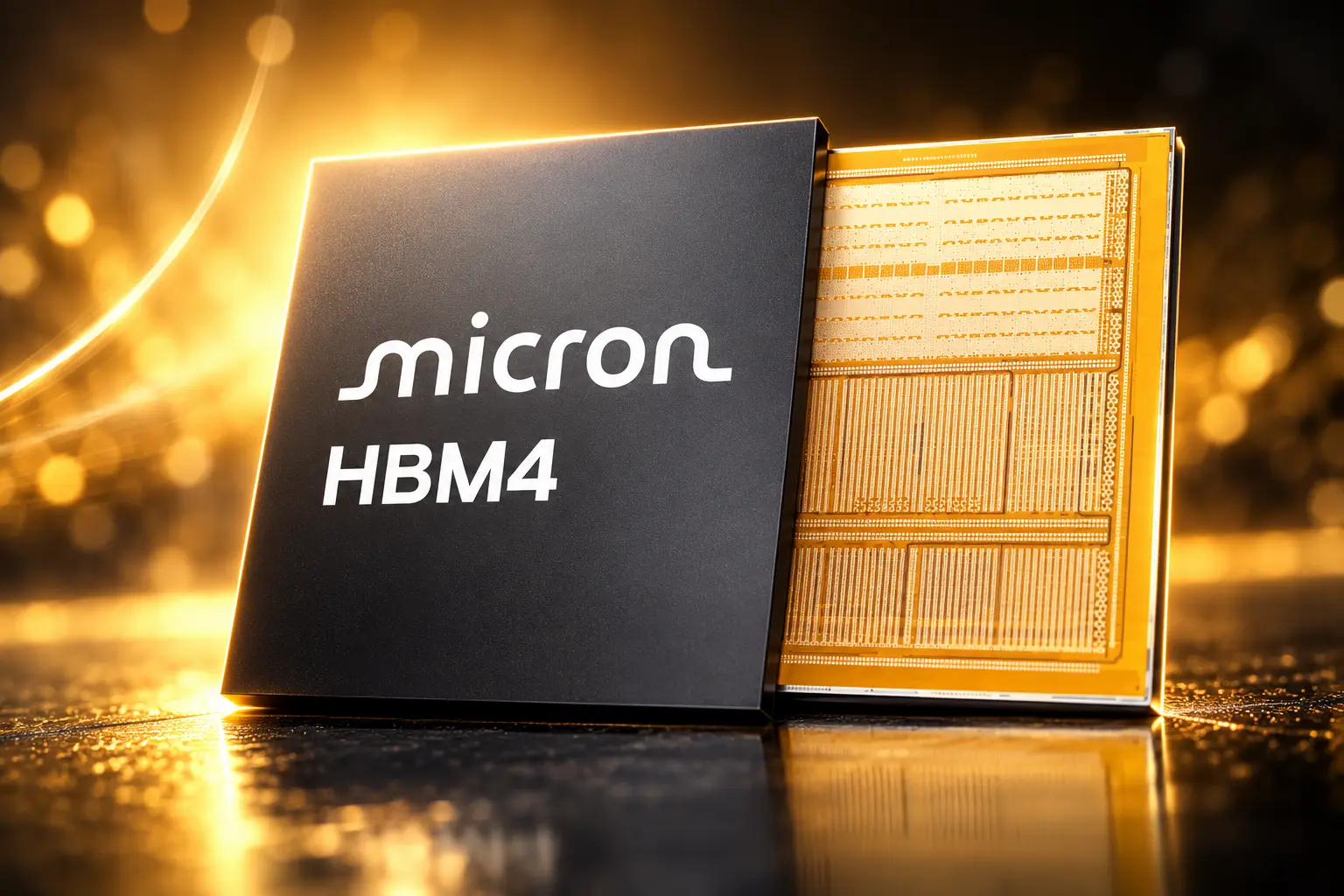
Most of 2027 Is Already Spoken For
On the September 30, 2026 call, Mehrotra told investors the RAM shortage does not crest with this year’s tightness. He said demand beats supply in calendar 2027 and 2028, and that those years look tighter than 2026. Prepared remarks posted with the call put the same forecast in writing, expecting memory and storage conditions to be tighter in 2027 and 2028 than they were in 2026. He also said Micron does not have line of sight to when supply and demand return to balance.
In calendar 2027 as well as 2028, we see demand exceeding supply. In fact, we see greater tightness in the industry in 2027 and in 2028 versus 2026. Overall, supply-demand environment is only getting tighter.
Sanjay Mehrotra, chairman and CEO, Micron fiscal Q4 2026 earnings call
Two sold-out figures sit on that call and they are not the same pile. More than 75 percent of Micron’s total 2027 output is already committed, and Mehrotra said most talks with customers have moved to 2028. Separately, the company has completed agreements for the vast majority of its calendar 2027 HBM bit supply, at prices well above 2026. HBM bits, he said, will keep growing faster than conventional DRAM through 2028. Micron is also building a custom HBM4E stack with Nvidia, branded NVHBM, for the next GPU and NVLink Fusion platforms. That product is another claim on future wafers, not a release valve for PC DIMMs.
The contracts underneath those figures are take-or-pay. Micron has signed 26 strategic customer agreements that it estimates at over 35 percent of revenue through 2030, with customer commitments of $32 billion, most of it cash. Some of those deals now run into 2031. Three-quarters of that contracted revenue has a set pricing framework, much of it in bands with floors and ceilings. The shortage is not an accident the company is racing to unwind. It is a book it can already see.
HBM Takes a Bigger Slice of Every Wafer
HBM and ordinary DRAM share the same front-end lines. Every wafer steered into a stacked AI part is a wafer that does not become a PC stick, a phone package, or a console chip. Samsung Electronics executive vice president Kim Taewoo said HBM is on track to take nearly 30 percent of the DRAM industry’s wafer capacity in 2027, up from about 20 percent now. He noted that HBM and conventional DRAM compete for the same capacity, so further HBM growth squeezes the rest of the mix. Industry estimates circulating with that remark put HBM’s wafer draw at roughly three times that of conventional DRAM, which is why a 10-point shift in wafer share does not move consumer bits one-for-one.
Samsung made a similar call in July, saying the shortage could run through 2028. SK hynix is in the same three-supplier HBM club. TrendForce now forecasts the blended average selling price of HBM to jump 121 percent in 2027, a mix of tight supply and a heavier share of costlier HBM4. Micron’s own bit-growth math is not a flood. It sees industry DRAM shipments growing in the mid-20s percent range in calendar 2026, then in the low-20s in 2027 and 2028, with the industry still short in both later years. NAND follows a similar path, with industry bits in the low-20s this year and the mid-20s in 2027 and 2028, still constrained. The extra bits are real. They are not aimed at the shelf where a gamer buys 32GB.
Investor chatter after the call treated that math as the profit engine, not a bug, because the take-or-pay paper now runs past 2030. Gaming accounts mapped the same sentences onto living-room hardware. Both readings can be true at once. The wafers still only ship once.
How Console Prices Moved in 2026
Xbox, Sony, Nintendo, and Valve all moved prices this year, and they pointed at the same bill of materials. Xbox was the most explicit. In a June 25, 2026 post, the company said that from August 1 it would raise 512GB models by $100 and 1TB models by $150, and that it would drop the 2TB Series X. It said it had already raised US prices by $20 to $70 last October, then spent months with suppliers hoping to avoid another round. The post said memory prices have increased 2.5x, with another doubling expected by fall 2027. Consoles, Xbox added, are typically sold for less than they cost to make, which is why a memory spike shows up faster on a Series X than on a phone that still carries a margin.
US LIST PRICES AFTER THE 2026 RESETS
| Device | US price | What changed |
|---|---|---|
| Nintendo Switch 2 | $499.99 | Up $50 on Sept. 1, 2026, from $449.99 |
| Xbox Series S 512GB | $499.99 | Up $100 on Aug. 1, 2026 |
| Xbox Series S 1TB | $599.99 | Up $150 on Aug. 1, 2026 |
| PlayStation 5 Digital | $599.99 | Second 2026 increase |
| PlayStation 5 (disc) | $649.99 | Second 2026 increase |
| Xbox Series X 1TB digital | $749.99 | Up $150 on Aug. 1, 2026 |
| Xbox Series X 1TB disc | $799.99 | Up $150 on Aug. 1, 2026 |
| PlayStation 5 Pro | $899.99 | Raised $150 in 2026 |
| Steam Machine 512GB | $1,049 | June 2026 launch price |
| Steam Machine 2TB | $1,349 | June 2026 launch price |
The Series X now sits $300 above its $499.99 launch price from 2020. The Series S 512GB sits $200 above its $299.99 launch price. Valve put the Steam Machine on sale in June 2026 at $1,049 for the 512GB model and $1,349 for 2TB, and said RAM and storage costs had moved quickly. Ampere Analysis analyst Piers Harding-Rolls had put a starting range around $700 to $800; Valve did not hit it. If a next Xbox or PlayStation lands while Mehrotra’s 2027 and 2028 tightness is still in force, it buys into the years he just described as worse, not the years when a new Idaho room is still ramping.
After 29 Years, Crucial Ships Its Last Kits
The consumer tell arrived before this earnings call. On December 3, 2025, Micron said it would exit the Crucial consumer business, ending 29 years of selling RAM and SSDs to builders and upgraders. Shipments through the consumer channel ran until the end of fiscal Q2, in February 2026. Warranties stay in force. Micron-branded enterprise products still go to commercial buyers. By this earnings period, the DIY brand was already gone from Micron’s own plan.
Sumit Sadana, then executive vice president and chief business officer, put the reason in one statement. “The AI-driven growth in the data center has led to a surge in demand for memory and storage,” he said. “Micron has made the difficult decision to exit the Crucial consumer business in order to improve supply and support for our larger, strategic customers in faster-growing segments.” Crucial’s own site still greets visitors with that wind-down note. The company that used to sell you a 32GB kit now writes 26 take-or-pay deals with the buyers who can prepay billions. PC builders did not lose a vendor in a vacuum. They lost the one Micron-owned channel that stood between a wafer and a retail DIMM.
The Spec Sheet Shrinks on PCs and Phones
TrendForce’s September 30 note on fourth-quarter contracts is the other half of the same squeeze. Suppliers are still steering advanced lines to servers, so the market stays short even as some consumer demand cracks. The firm projects conventional DRAM prices to rise 10 to 15 percent quarter on quarter in the fourth quarter of 2026, with NAND flash up 15 to 20 percent. HBM blended prices are seen up 15 to 20 percent in that same quarter. Enterprise SSDs are the only group TrendForce expects to accelerate, on cloud buying for inference and cache, with most extra supply already spoken for.
WHERE THE CUTS SHOW UP IN HARDWARE
- Notebooks: Higher DRAM costs are hitting sales, yet PC makers still buy ahead of a tight 2027, and TrendForce says PC DRAM supply could decline next year as more capacity moves to servers.
- Mainstream PCs: Brands are cutting SSD capacities in volume models to hold the bill of materials, so both purchase volumes and average storage per box fall.
- Phones: Rising costs and the end of cheap inventory are suppressing production; brands buy the minimum eMMC and UFS they need to keep a supplier relationship.
- Graphics memory: Some PC brands are looking back at GDDR6 to save money, while GDDR7 demand is being pulled by AI chips and suppliers keep trimming GDDR6 output.
Micron’s own prepared remarks match that split. PC and mobile industry revenue can still grow this calendar year at the premium end, it said, even with potential double-digit unit declines in both markets. Flagship PCs and phones with more DRAM and NAND keep getting the bits. The cheap configurations eat the cuts. Mehrotra also said server unit growth stays in the high-teens percent range in 2026 and 2027, with content growth a bit slower than earlier hopes because memory is tight. Cloud buyers are not de-speccing boxes so they can ship more systems. Consumer brands are de-speccing boxes so they can ship at all.
Cleanrooms Due in 2028 Still Serve AI First
Micron’s construction calendar is long, and management was plain that first wafers are not a flood of cheap RAM. Cleanrooms take years to build. After the first wafer, output ramps slowly. Idaho’s ID1 plant is on track for wafer output in mid-calendar 2027. ID2 is due in late calendar 2028. The first New York fab is slated for initial wafers in calendar 2030. A Japan DRAM expansion is aimed at late 2028. Taiwan’s Tongluo site is due for meaningful shipments in mid-2027. Singapore’s HBM packaging line is ahead of plan for early 2027 output, and a new Singapore NAND plant is due in the second half of 2028. Those dates are real. They are also stacked behind HBM, packaging, and node transitions, not behind a plan to restock Crucial’s old customers.
WHEN THE NEW ROOMS START
- Early calendar 2027: Initial output from the Singapore HBM packaging facility.
- Mid-calendar 2027: Idaho ID1 wafer output and meaningful shipments from Tongluo in Taiwan.
- Late calendar 2028: Idaho ID2 wafer output and initial output from the Japan DRAM expansion.
- Second half of calendar 2028: Initial output from the new Singapore NAND plant.
- Calendar 2030: Initial wafer output from the first New York fab.
Mehrotra said that even with new cleanroom space in 2028, tightness continues, because rooms take a long time to build and production only ramps after the first wafer. Industry DRAM bit growth in those years is still only in the low-20s percent, and HBM is still the faster-growing slice. The $25 billion of first-half spending buys more of that mix. It does not buy a return of $8 DIMMs. Customers who already signed through 2031 are not waiting on a 2028 ribbon-cutting to know what they will pay.
Mehrotra said he still has no line of sight to when supply and demand return to balance. The contracts that lock the next few years already run into 2031.

The Court Revisits the Climate Nuisance Door It Left Open

ChatGPT Now Compiles Live Interfaces With GPT-6

A Tanker Attack Moves the War Into Qatar’s Waters

Personio Buys Circula to Own the DATEV Channel

Bluesky Files for .bsky and Enters the Registry Queue

Microsoft’s 96% Cyber Score Sits at 86.3% on the Board

Musk’s $914 Billion Lead Is a Public SpaceX Bet

Free Live Sports Streaming in 2026: What to Watch Without Cable

The Odyssey’s IMAX Film Run Hit a 41-Theater Limit

Endgame Encore’s $86 Million Trial for Infinity Vision
-
 NEWS3 months ago
Microsoft’s 96% Cyber Score Sits at 86.3% on the Board
-
 BUSINESS5 months ago
Musk’s $914 Billion Lead Is a Public SpaceX Bet
-
 SPORTS4 months ago
Free Live Sports Streaming in 2026: What to Watch Without Cable
-
 ENTERTAINMENT3 months ago
The Odyssey’s IMAX Film Run Hit a 41-Theater Limit
-
 ENTERTAINMENT4 months ago
Endgame Encore’s $86 Million Trial for Infinity Vision
-

 ENTERTAINMENT2 years ago
Andrew Garfield’s Spider-Man Films Are No Longer Free
-

 NEWS5 months ago
Singapore’s 3×3 and Surfing Debuts Miss the Medal Stand
-

 NEWS7 months ago
White Sands Footprints Put People in Ice Age New Mexico