
NEWS
EU Airports Lose the EES Pause With Winter Ahead
The EU Entry-Exit System lost its six-hour congestion pause on 6 September, leaving winter traffic to 29 national desks, two pre-registration apps.

The EU Entry/Exit System lost its six-hour congestion pause on 6 September, leaving 29 Schengen borders without an official off switch. Ryanair on 7 September asked Brussels to restore that flexibility until April 2027, after summer waits of two to three hours at Krakow, Lisbon, Milan and Rome.
The Commission is holding the line with 150 million recorded entries and exits. Those totals were logged while member states could still freeze fingerprint and face capture when a hall seized up. Winter traffic now hits the same kiosks without that cover.
The Six-Hour Pause Died on 6 September
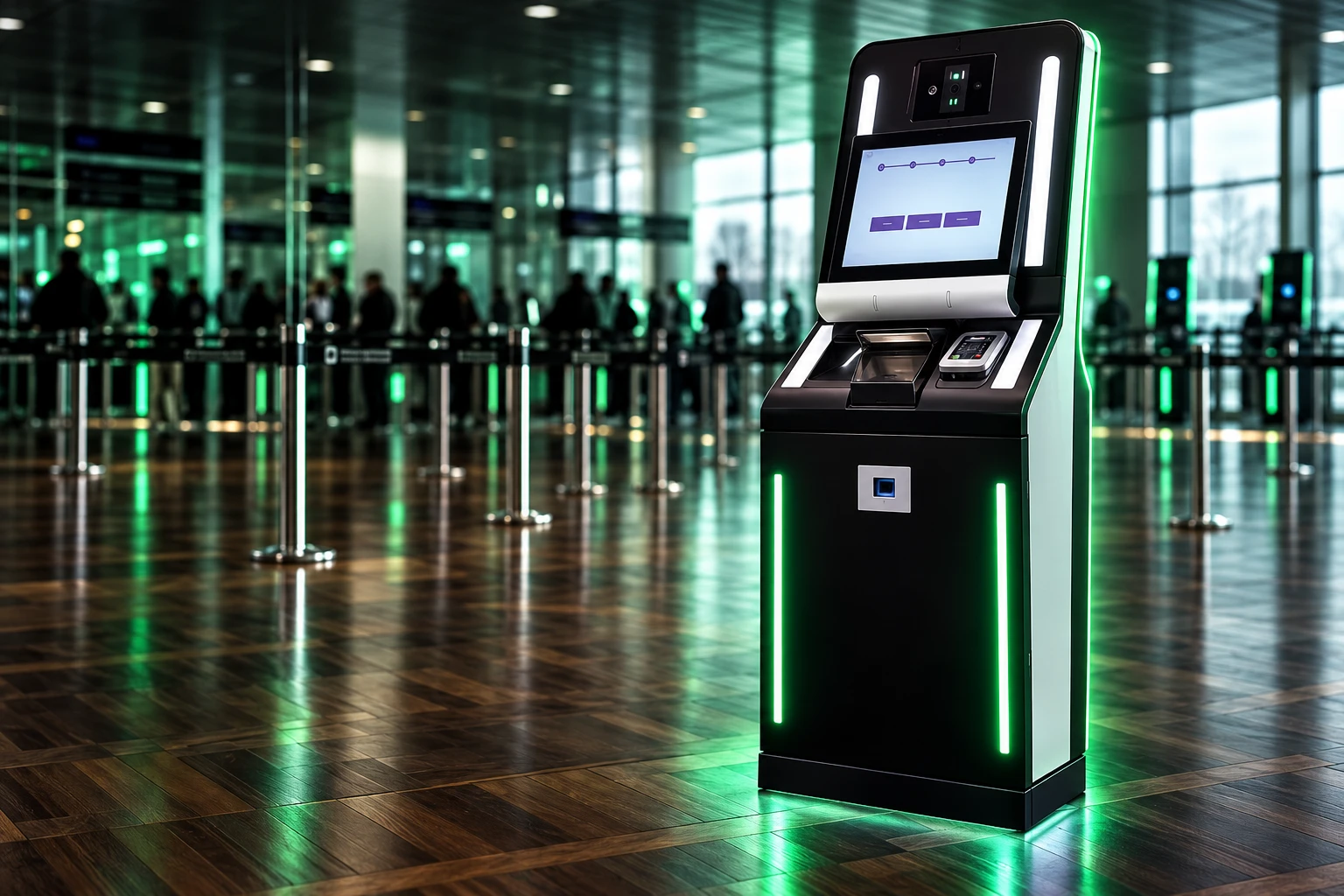
EES went live on 12 October 2025 and ran a 180-day progressive start that eu-LISA, the agency that operates the central system, says lasted until 9 April 2026. From 10 April it has been in full use at the external borders of 25 EU countries plus Iceland, Liechtenstein, Norway and Switzerland. Ireland and Cyprus sit outside it. For eligible non-EU visitors on a short stay, the system stores passport data, fingerprints and a facial image, then calculates the 90 days allowed in any 180-day window. Passport stamping for those travellers stopped on 10 April.
The congestion tool sat in Regulation (EU) 2025/1534. After the progressive start ended, a member state could order a partial pause of up to six hours at a named crossing if traffic made waiting times excessive, and skip biometric registration for that burst. If fewer than 80% of files opened in the first phase held biometric data, the law stretched that 90-day window by 60 days. The pause that lapsed on 6 September was that longer window. Partial suspension still meant collecting the biographic record. Full suspension, used for a system failure, collected nothing. In both cases the state had six hours to tell the Commission and eu-LISA why.
EES applies to visa-required and visa-free third-country nationals on short stays. EU, Icelandic, Liechtenstein, Norwegian and Swiss citizens are not enrolled, and several other groups are carved out, including most holders of long-stay visas or residence permits issued by an EES country. The Commission’s public guidance for EES travellers also points people to an online stay checker. First-time enrolment is the slow step. Return trips are meant to be a biometric match against the file already on the system.
THE EES LEGAL WINDOWS
- 12 October 2025: Progressive start begins. States may roll the system out in stages and keep stamping passports.
- 10 April 2026: Full operation starts at external crossings. Carrier pre-departure checks for certain visa holders also take effect.
- 1 July 2026: Airlines for Europe, ACI Europe and IATA tell the Commission the situation has reached a critical point.
- 7 July 2026: Belgium, France, Germany, Greece, Italy, Malta, the Netherlands, Portugal and Switzerland ask to keep the pause past September.
- 6 September 2026: The Article 7 congestion pause expires.
- 7 September 2026: Ryanair asks for an extension through April 2027.
Markus Lammert, a Commission spokesman for internal affairs, described the old tool in July as a way to freeze biometrics without shutting the whole system. “Suspension of the biometrics doesn’t need suspension of the system,” he said. That sentence no longer has a six-hour legal hook for peak demand.
The 150 Million Figure Predates Full Enforcement
Brussels has used the stock of records as proof the system works. In early July, after meeting airline and airport groups, a Commission spokesperson cited 110 million trips and 45,000 refused visitors. On 27 July, the Directorate-General for Migration and Home Affairs said the system had registered over 145 million entries and exits since launch. In August, Lammert called EES “effective” and a “well-working system” that had registered 150 million entries and exits and 45,000 refusals. A Commission spokesperson on 28 August repeated the 150 million figure, put refusals above 45,000, and said more than 1,200 cases involved people described as a threat to internal security.
HOW THE COMMISSION’S TALLY MOVED
| Date | What it published |
|---|---|
| Early July 2026 | 110 million trips and 45,000 refusals |
| 27 July 2026 | More than 145 million entries and exits |
| August 2026 | 150 million entries and exits and 45,000 refusals |
eu-LISA’s first-quarter 2026 report, covering January to March while some crossings were still catching up, counted 19,985 refusals of entry. The most common ground, 7,202 cases, was that the purpose and conditions of the planned stay had not been sufficiently justified. Ukrainian nationals were the largest group refused in that quarter, at 4,771, followed by Albania and Moldova. Those are border decisions the old stamp system already allowed. EES’s claim is that the file now follows the traveller across 29 countries and flags a stay that has run out.
Officials also said in July that the system worked without issues at a large majority of about 1,500 border crossing points, with 20 recognised as “difficult spots.” ACI Europe later put some July waits at five hours. Ryanair’s named airports, Krakow, Lisbon, Milan and Rome, sat in the two-to-three-hour band through the summer. Lisbon had already seen seven-hour queues earlier in the year and paused biometric checks for a stretch. The 20-spot line and the five-hour line can both be true, because holiday airports are the spots that matter to the carriers now asking for the pause back.
Uku Särekanno, a Frontex deputy executive director, has said first-entry fingerprints are “probably the most challenging part” of the rollout and that the situation will settle in one or two years. He also said there was “no intention” of further easing beyond September. Magnus Brunner, the commissioner for home affairs and migration, told industry groups on 5 July that the rules already supplied “built-in flexibility” and that the Commission would help states still in trouble, while refusing a summer-wide halt.
Nine Capitals Asked to Keep the Switch
The 7 July letter did not come from airlines. It came from the governments that run the desks. Belgium, France, Germany, Greece, Italy, Malta, the Netherlands, Portugal and Switzerland told Brunner they had hit “significant difficulties” in the first months of full operation and wanted the safeguard kept past 6 September. France’s interior ministry, in the same month, said EES had “already proven its worth,” citing 110 million entries and exits and more than 44,000 refusals, including more than 1,100 people classed as a security concern. Paris can praise the database and still want a queue valve. Both positions were in the file at once.
THE GOVERNMENTS ON THE 7 JULY LETTER
- Belgium: Asked Brussels to keep the exceptional-queue pause after 6 September.
- France: Signed the letter while its interior ministry publicly defended the system’s security record.
- Germany: Joined the request; Frankfurt was still logging long third-country queues in early September.
- Greece: Had already tried a nationality-based halt for British visitors, which the Commission said the rules do not allow.
- Italy: Rome airport managers had warned of a summer “catastrophe” if biometric capture stayed mandatory in peak hours.
- Malta, the Netherlands, Portugal: Tourist-entry states on the same text.
- Switzerland: Not an EU member, but it runs EES and signed with the eight EU states.
On 1 July, Airlines for Europe, ACI Europe and IATA had written that they had “reached a critical point.” “Airlines face half-empty planes at gate closing time, while passengers are stuck in border control queues,” the letter said. They wanted a complete EES halt whenever volume exceeded what a control hall could process, and a lasting mechanism for “clearly defined exceptional circumstances.” Thomas Reynaert, IATA’s senior vice president for external affairs, said after the sunset that extending partial suspension beyond 6 September was “absolutely necessary until the end of the winter season,” while stressing that IATA is “fully supportive of EES.”
Ryanair’s ask is more specific. The carrier wants an EES derogation until April 2027 so airports can fix kiosks, hire, and run the system before the next summer peak. Neal McMahon, its chief operating officer, put the blame in Brussels.
The EU’s handling of EES has been a shambles from start to finish. Airlines, airports and border authorities repeatedly warned Brussels that the rollout was not ready, that it would increase processing times and that it would create excessive queues for passengers. Those warnings were ignored, with EU citizens the ones delayed and disrupted. Passengers should not be made pay the price for the EU’s failed EES rollout.
Neal McMahon, Ryanair chief operating officer, 7 September 2026
EES enrols non-EU short-stay travellers, not EU citizens, but a jammed third-country hall still backs up the building. In one June case at Milan Linate, an Easyjet flight waited nearly an hour and left with 34 of 156 booked passengers. That is the “half-empty plane” the 1 July letter described, written onto a departure board.
The Pre-Registration App Still Covers Two Countries
Frontex built a workaround that does not need a legal pause. The Travel to Europe app lets a non-EU traveller with a biometric passport pre-register passport and facial image within 72 hours of arrival or departure, and fill the conditions-of-entry questionnaire. It does not replace the border check. Fingerprints still have to be taken at the crossing, in front of a guard, for technical reasons. Frontex made the app available to states in autumn 2024. Use is voluntary. Each capital decides if, when, how and where to plug it in.
Sweden went first, at Arlanda and then Bromma, Landvetter, Sturup and Skavsta. Portugal became the second, starting at Lisbon, weeks before the 10 April full-operation date, after the airport had already lived through seven-hour queues. On 3 August the app’s publisher, the European Union, told users it could be used for entering Portugal and Sweden and that more countries would be added later. Early Frontex figures put the average time saved at 23 seconds a passenger. That is not nothing in a 400-person bank, and it is not a substitute for a working kiosk lane.
Chris Borowski, a Frontex spokesman, said most border authorities had focused on getting the core process running before layering the app on top. That choice is now the operating model: 27 of 29 EES countries still meet first-time travellers with a blank screen at the desk. Faro, in the one southern state that switched the app on, was telling passengers in mid-August they could clear border control in under five minutes. The legal duty is the same in Faro and in a five-hour Lisbon hall. The kit is not.
WHAT STILL IS NOT IN PLACE
- The app: Live for entry in Sweden and Portugal only, 11 months after Frontex handed it to member states.
- Fingerprints: Still captured at the crossing even when the traveller has pre-registered a face and passport.
- Kiosks: Ryanair and airport groups say hardware still fails in peak banks, which is why they wanted the six-hour freeze kept.
- Staffing: Commission officials have pointed to short shifts as a cause of delay separate from the software, which does not add officers on a Saturday in October.
On 5 September, the day before the pause lapsed, a traveller at Frankfurt described a third-country queue that had not moved in 40 minutes, with two officers on the desks. That is a staffing picture, not a legal one, and it is what winter half-term looks like if the 20 “difficult spots” are the airports people actually fly to.
Who Pays When a Queue Eats a Flight?
When inbound EES holds a connecting passenger, the onward aircraft often leaves on time. Regulation 261/2004 pays cash, 250, 400 or 600 euros by distance, when an airline delay, cancellation or denied boarding costs the passenger three hours or more, unless the carrier proves extraordinary circumstances beyond its control. A state border check sits outside the carrier’s operation in that case law. Airport-staff and security events are the kind of outside cause airlines already use. A passenger who misses a departure because fingerprint enrolment ran long usually buys another ticket. The airline that waited, as Easyjet did at Linate, eats the empty seats and the disruption. The airline that did not wait keeps the slot.
WHO EATS THE MISSED CONNECTION
- The passenger: Loses the seat and, in most inbound-queue cases, has no 261 cash claim because the aircraft was not late.
- The airline that waits: Departs light, as with 34 boarded of 156 booked at Linate, and still owes care if it then runs late.
- The border authority: Faces the same crowd with no six-hour biometric freeze and no extra officers written into the regulation.
That split is why Ryanair’s language about passengers “paying the price” and IATA’s language about half-empty aircraft can sit in the same complaint. They are describing two invoices for the same queue. Neither invoice lands on the Commission’s 45,000 refusals, which measure people turned away, not people who missed a 19:10 departure after a two-hour enrolment.
Winter Traffic Will Meet 29 Different Desks
A Commission spokesperson said in early September that the system had “broadly worked well over the summer” and that, until 6 September, states could still suspend biometric registration in exceptional circumstances. “We’re in close contact with those few member states where adjustments are needed,” the spokesperson said. There is no new regulation on the table that restores Article 7(3). October half-term and the Christmas and New Year banks will be the first peak processed under that silence.
Some posts already treated 6 September as a date on paper. Greece’s attempt to spare British visitors, Lisbon’s earlier halt, and a French pause at Dover in May showed how capitals used the flexibility when a hall failed. Without the six-hour notice to Brussels, the same officers can still slow a lane, close a kiosk for “maintenance,” or let a queue form until a flight has gone. That is a 29-speed border with the same central database. It is also how overstay alerts get noisy, which is the risk the Commission itself cited in July when it refused a patchwork halt: a traveller enrolled on the way in and not recorded on the way out can look like an overstayer on the next visit.
WHAT WE KNOW
- The law: The Article 7 congestion pause ended on 6 September and has not been replaced.
- The stock: The Commission’s latest named public tally is 150 million entries and exits and 45,000 refusals.
- The app: Still a two-country tool, with fingerprints taken at the desk.
WHAT IS UNCONFIRMED
- Quiet throttles: Whether individual states will keep skipping biometrics in peak banks without notifying Brussels.
- A winter instrument: Whether the Commission will put a new exceptional-queue tool on the table before October half-term.
- Kiosk repair: Whether the hardware and staffing Ryanair wants fixed by April 2027 will actually move before Christmas.
P&O Ferries has already told foot and coach passengers at Dover that French EES checks still mean biometrics at the juxtaposed controls. That notice is the system as it now stands: the central file is on, the six-hour switch is off, and each crossing will show whether a kiosk, an officer and, in two countries, a 23-second app can clear a winter bank without a legal pause behind them.

The Court Revisits the Climate Nuisance Door It Left Open

ChatGPT Now Compiles Live Interfaces With GPT-6

A Tanker Attack Moves the War Into Qatar’s Waters

Personio Buys Circula to Own the DATEV Channel

Bluesky Files for .bsky and Enters the Registry Queue

Microsoft’s 96% Cyber Score Sits at 86.3% on the Board

Musk’s $914 Billion Lead Is a Public SpaceX Bet

Endgame Encore’s $86 Million Trial for Infinity Vision

Free Live Sports Streaming in 2026: What to Watch Without Cable

The Odyssey’s IMAX Film Run Hit a 41-Theater Limit
-
 NEWS3 months ago
Microsoft’s 96% Cyber Score Sits at 86.3% on the Board
-
 BUSINESS5 months ago
Musk’s $914 Billion Lead Is a Public SpaceX Bet
-
 ENTERTAINMENT3 months ago
The Odyssey’s IMAX Film Run Hit a 41-Theater Limit
-
 SPORTS4 months ago
Free Live Sports Streaming in 2026: What to Watch Without Cable
-
 ENTERTAINMENT4 months ago
Endgame Encore’s $86 Million Trial for Infinity Vision
-

 ENTERTAINMENT2 years ago
Andrew Garfield’s Spider-Man Films Are No Longer Free
-

 NEWS5 months ago
Singapore’s 3×3 and Surfing Debuts Miss the Medal Stand
-

 NEWS1 month ago
An AI Lung Drug Shifted Biological Age Clocks in Patients