
NEWS
Sudan’s Silent Giants: The Country With More Pyramids Than Egypt

Most people picture Egypt when pyramids come up. But here’s the twist — Sudan quietly holds the crown for having the most pyramids anywhere in the world.
More Pyramids, Less Spotlight
Sudan’s count is staggering — over 240 known pyramids, nearly double Egypt’s 118. These aren’t copies or afterthoughts; they’re remnants of the ancient Kingdom of Kush, which thrived along the Nile for centuries. The Kushite rulers built them mainly between 800 BC and 300 AD, long after Egypt’s great pyramid age had passed.
The thing is, many travellers don’t even know they exist. The UNESCO-listed sites at Meroë and Nuri sit far from crowded tour buses, often visited by no more than a handful of people a day. Compared to Egypt’s bustling Giza plateau, it’s a world apart — quiet, almost eerie.
And yet, these pyramids tell a story every bit as fascinating.
The Kushite Legacy That Outshines Numbers
At their peak, the Kushite pharaohs even ruled Egypt — the 25th Dynasty, often called the “Black Pharaohs” period. When they returned south, they brought with them Egyptian burial customs but adapted them to their own style.
Unlike the broad-based Egyptian pyramids, Sudan’s Kushite pyramids are tall, narrow, and sharply pointed. They rise like stone spears from the desert, often grouped closely together. Many are decorated with reliefs showing scenes of gods, battles, and offerings to the dead.
One short sentence: the desert has guarded them well.
But the years haven’t been kind. In the 19th century, Italian treasure hunter Giuseppe Ferlini famously blew the tops off many pyramids searching for gold. He found some — but the damage was permanent.
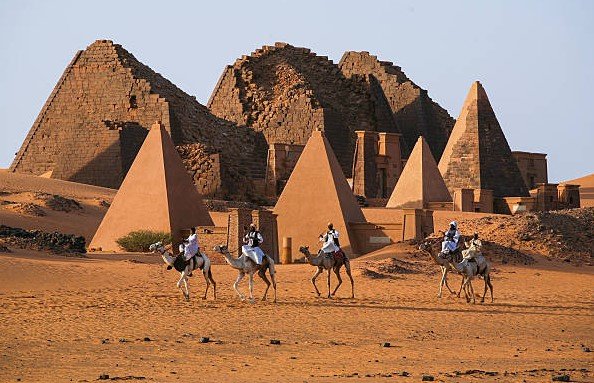
How Sudan Surpassed Egypt in Pyramid Count
Sudan’s abundance boils down to both time and tradition. The Kushite rulers kept building pyramids long after Egypt had shifted to other tomb designs. And they built them for more than just kings — queens, princes, and high officials often got their own.
If you compare the numbers side by side, the difference is striking:
| Country | Approx. Number of Pyramids | Notable Sites |
|---|---|---|
| Sudan | 240+ | Meroë, Nuri, El Kurru |
| Egypt | 118 | Giza, Saqqara, Dahshur |
In essence, Sudan’s royal cemeteries became densely packed with structures over centuries, creating one of the most concentrated pyramid landscapes in the world.
Why Most People Haven’t Heard of Them
Political instability, limited tourism infrastructure, and decades of conflict have kept Sudan’s ancient wonders off the typical traveller’s radar. The country has faced sanctions, unrest, and economic crises that made archaeological work and tourism difficult.
Even so, archaeologists keep making discoveries. In recent years, teams have used drones and satellite imagery to find previously unknown pyramid sites hidden under desert sands.
Some locals hope that one day, peace and stability could open the floodgates to more visitors — though others fear the crowds could strip away the sites’ rare solitude.
A Different Kind of Pyramid Experience
For the few who make it to Meroë, the experience is surreal. There are no fences keeping you back, no hordes of selfie sticks. You can stand alone at sunrise, watching the sun cast long shadows across stone that’s been there for over 2,000 years.
A guide might tell you stories of Amanitore, one of the great Kandake (queen mothers) who ruled Kush. You might notice how the desert wind whistles through the gaps in weathered stone. You’ll almost certainly leave wondering how such grandeur remains so hidden in plain sight.
And maybe, just maybe, you’ll remember Sudan next time someone says “pyramids” — because history isn’t always where the postcards tell you to look.

The Court Revisits the Climate Nuisance Door It Left Open

ChatGPT Now Compiles Live Interfaces With GPT-6

A Tanker Attack Moves the War Into Qatar’s Waters

Personio Buys Circula to Own the DATEV Channel

Bluesky Files for .bsky and Enters the Registry Queue

Musk’s $914 Billion Lead Is a Public SpaceX Bet

Microsoft’s 96% Cyber Score Sits at 86.3% on the Board

Endgame Encore’s $86 Million Trial for Infinity Vision

Free Live Sports Streaming in 2026: What to Watch Without Cable

Andrew Garfield’s Spider-Man Films Are No Longer Free
-
 BUSINESS4 months ago
Musk’s $914 Billion Lead Is a Public SpaceX Bet
-
 NEWS2 months ago
Microsoft’s 96% Cyber Score Sits at 86.3% on the Board
-
 SPORTS3 months ago
Free Live Sports Streaming in 2026: What to Watch Without Cable
-
 ENTERTAINMENT3 months ago
Endgame Encore’s $86 Million Trial for Infinity Vision
-
 ENTERTAINMENT2 years ago
Andrew Garfield’s Spider-Man Films Are No Longer Free
-

 NEWS4 months ago
Singapore’s 3×3 and Surfing Debuts Miss the Medal Stand
-

 ENTERTAINMENT1 month ago
Sterling Point Holds No. 2 on Prime Video After 32 Days
-
 NEWS6 months ago
White Sands Footprints Put People in Ice Age New Mexico