ENTERTAINMENT
Would You Survive a Scream Movie?
Would you survive a Scream movie? The final girl test skips the no-sex joke and asks if you spot the danger friends miss and distrust a killer who looks dead.

You have heard the party rules. Skip the sex, skip the beer, and never say you will be right back. In Scream, the girl who lives breaks the first of those rules, then ends the night with a gun.
She lives because she is the final girl, the person who treats small strange details as a pattern and keeps moving after she is hurt. Friends who laugh those details off are the ones a masked killer can reach.
This page gives you Randy Meeks’ list from the 1996 film, the harder lists in the sequel and the trilogy, and a plain way to line your own habits up with the people who last to the credits.
What Rules Does Randy Meeks Give in Scream?
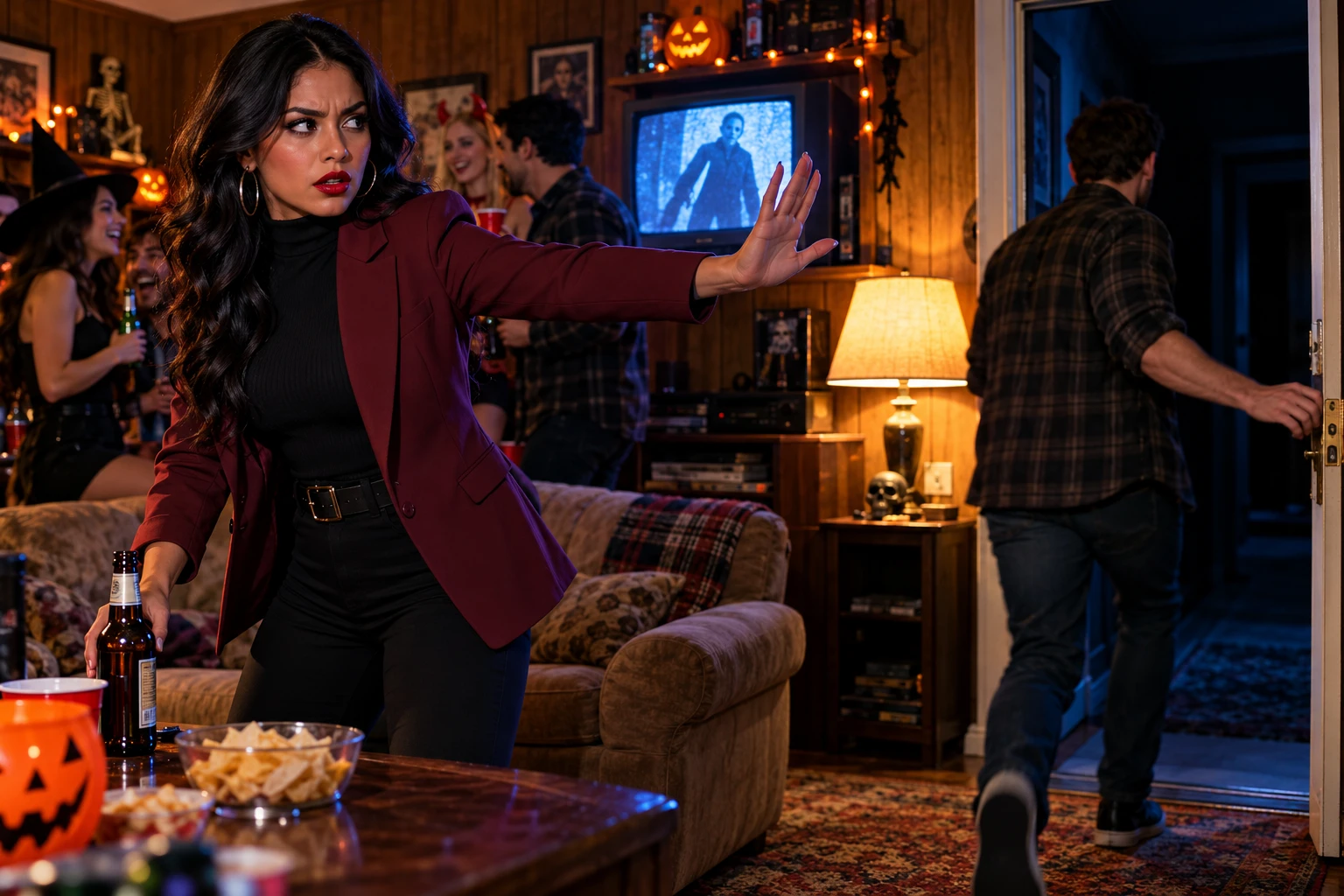
At a house party, with Halloween paused on the television, Randy Meeks tells the room there are certain rules one must abide by in order to successfully survive a horror movie. Number one, you can never have sex. He puts it more bluntly a moment later: sex equals death. Number two, you can never drink or do drugs. He calls that a sin, and an extension of the first rule. Number three, you never, ever, under any circumstances, say “I’ll be right back,” because you will not be back.
Stu Macher offers to grab another beer, asks if Randy wants one, and then announces that he will be right back. Randy warns him that pushing those rules gets you killed. The crowd boos the sex ban and cheers the drinking ban, bottles already in the air. The clerk from the video store is describing the slashers on his shelf, inside a party that is already breaking them.
Wes Craven’s film, written by Kevin Williamson, puts that speech in the mouth of a fan so the audience can hear the old code out loud. The code is what a lot of survival quizzes still grade you on. The night in the house does not grade that way.
Who Lives When the Scream Rules Break?
The 1996 film lets you check each rule against a person in the room. The rows do not line up with who is breathing at dawn.
| Randy’s rule | Who breaks it | What that night does |
|---|---|---|
| You can never have sex | Sidney Prescott, with Billy Loomis | She lives, and she shoots him when he surges up again |
| You can never drink or do drugs | Randy drinks during the speech; Tatum goes for beer | Randy survives that night; Tatum is killed |
| Never say you will be right back | Stu Macher, as a joke on the way to the kitchen | He dies later, and he is one of the killers |
Sidney goes upstairs with Billy during the same party and has sex with him. On Randy’s first rule, that choice should finish her. She is still alive at the end, and the shot that stops Billy, when he lunges back for the last shock, is hers. She tells him this is not her movie.
The drink rule splits in half inside one house. Randy is holding a beer while he scolds everyone else, and he is still standing when the first film ends, able to help Sidney, her father, and Deputy Dewey. Tatum goes for more beer and does not come back. Alcohol is not a clean sorting tool, even before you notice that one of the men listening to the speech is already a killer.
Stu’s exit line is the joke the scene is built to land, and he does die before the credits. He dies as one of the two people behind the mask, stopped by Sidney, not as a harmless guest punished for a catchphrase. The line marks him for the audience. It does not explain the murder he has already joined.
What Is a Final Girl in a Horror Movie?
The name for the woman who lasts, and who carries the last fight, comes from Carol J. Clover. She set the case out in her 1987 essay on the slasher film, published in the journal Representations, and expanded it in the 1992 book on modern horror, Men, Women, and Chain Saws.
In that narrow sense, a final girl is the young woman left from a group a killer hunts. She is the one who finds the bodies, understands how wide the danger has become, and is chased, cornered, and wounded. The camera stays on her while she screams, staggers, falls, gets up, and screams again. She either lasts long enough for a rescue or she kills the threat herself. Victim and hero are the same person, and she is the only one the film bothers to build in any psychological detail.
She is intelligent, watchful, level-headed; the first character to sense something amiss and the only one to deduce from the accumulating evidence the patterns and extent of the threat; the only one, in other words, whose perspective approaches our own privileged understanding of the situation.
Carol J. Clover, “Her Body, Himself: Gender in the Slasher Film,” Representations, 1987
That is a tighter job than “the girl who does not die.” Lila Crane walks out of Psycho (1960) because a man stops Norman Bates, so on these terms she is a survivor rather than the final girl. Clover also ties the slasher’s family sickness and its knife, rather than a gun, back to that film. The final girl has to hold the fear and then move toward the killer, even in the stories where a man still fires the last shot.
How Do Laurie Strode and Sidney Prescott Differ?
Laurie Strode Before Sam Loomis Arrives
Laurie Strode, played by Jamie Lee Curtis in Halloween (1978), is the teenager later guides treat as the model. She babysits, runs errands for her father, and is shy about asking a boy out. She also takes a nervous pull of a friend’s marijuana, so the spotless record people repeat is already a little smudged in the film itself.
- The watch: She notices a masked shape her friends explain away.
- The children: She keeps the kids she is minding away from Michael Myers.
- The fight: She holds him off inside the house after she is hurt.
- The shot: The psychiatrist Sam Loomis arrives and shoots Michael.
Laurie has done the watching and the fighting. She has not been left to finish the night alone. Early slashers often still hand the last moment to a man, and Halloween is the clear case. By 1980, Clover argues, policemen, fathers, and sheriffs are on screen only long enough to look lost, and the girl has to save herself.
Sidney Prescott After the Party
Sidney Prescott, played by Neve Campbell, starts Scream nearer that shy shape and then leaves it. Drew Barrymore, the biggest name in the cast, is killed in the opening, so looking like the star does not protect anyone. Sidney already knows the movies Randy is quoting. She still has sex with Billy, and she still has to survive him, because Billy is one of the people in the mask, with Stu beside him.
Her useful line is short. She tells him it is not her movie, and she shoots him in the head when he comes back. What changes between Laurie and Sidney is who is allowed to close the night. Laurie has watched and fought, and a man with a gun still ends it. Sidney has broken the rule Randy treats as fatal, and the shot that stops Billy is hers.
How Do Scream Sequel and Trilogy Rules Change?
In Scream 2 (1997), Randy tries to update the speech. The body count is always bigger. The death scenes are always more elaborate, more blood and more gore, because that is what the audience now expects. He is cut off before a third rule. The teaser trailer finishes the sentence the film withholds: never, under any circumstances, assume the killer is dead.
That missing line is the one the plots keep. It matches Billy’s last lunge in the first film. It matches the second film’s ending, when Mickey lurches up after he seems finished and Sidney and Gale Weathers shoot him again. Sidney also puts a bullet in Mrs. Loomis, a check against a body that already looks done. Do not assume the killer is dead. Randy himself does not survive that sequel. The next list has to arrive without him.
In Scream 3 (2000), his rules play on a videotape he left behind. He says on the tape that giving up his virginity was probably a bad idea, which is the sex rule applied to his own death after the fact. He also tells you to drop the sequel rules if the story is hauling up an old secret. You are then in the closing chapter of a trilogy, and he has a new set.
RANDY’S TRILOGY TAPE
- The killer: He is treated as more than human, and the tape says stabbing or shooting will not finish him.
- The cast: Anyone can die, including the lead, and Randy aims that line at Sidney.
- The past: Whatever you think you settled in the earlier films is about to break open.
The third film follows the past rule more closely than the superhuman one. Roman is Sidney’s half-brother, and the earlier murders trace back to him, including footage he showed Billy of Billy’s father with Sidney’s mother. Roman is not a ghost. He wears a bulletproof vest, Sidney survives a shot because she is wearing one too, and stabbing him does not keep him down. The demand for a frozen head or a bomb is the joke version of a plainer habit. A quiet body is not a safe body.
The series keeps staging a new speech after that. In Scream VI, Mindy’s list says everything is bigger than last time, tells you to expect the opposite of the previous film, and warns that legacy characters are not safe and that leads can be spent to keep the franchise going. The stable warning, under the new wording, is the one Randy was cut off before finishing.
Which Habits Match a Scream Survivor?
Asked how they would last in a horror movie, people reach for the same short plan: do not look, do not go downstairs, do not be curious. That plan describes the friends who die while the film is still introducing the town. The final girl looks for the killer. Clover has her tracking him to a forest hut or an underground labyrinth, and she treats that search, not the absence of a drink, as the courage.
THE CHECK AGAINST YOUR OWN NIGHT
- The small sign: You notice the detail your friends explain away, a shape, a lie, a caller who knows too much.
- The liked suspect: You can picture the person you trust as the one in the mask.
- The still body: You do not treat a fallen killer as finished work.
- The rescue: You are not waiting on a parent, a cop, or a boyfriend to end it.
Spotting the odd detail and checking a body that has gone still are the habits these films reward. A plan that stops at staying pure and waiting upstairs is a bet on the rule Sidney breaks, in a house where the boyfriend can wear the mask. You do not need a point total. Two honest answers tell you which film you are actually in.
Who Was the Final Girl Built to Please?
The character reads as a win for the woman on screen, and Clover did not take it that way. She writes that treating the final girl as a feminist step is wishful thinking, given what the figure is built to do. Her nerve, her practical skill, and her sexual reluctance mark her as boyish, a little apart from the other girls, while the killer is not fully masculine either. A young male viewer can feel the terror and still feel that the person fighting looks enough like a hero he already understands.
The rental counter pointed the same way. Clover asked employees at video stores who was taking these films home. For I Spit on Your Grave (1978), the report she gives is nine times out of ten male viewers, most of them young. She describes groups of boys cheering the killer, then cheering the girl who fights him, without the film asking them to drop the idea that competence belongs to men. Female deaths run longer and closer. Male deaths are often quicker, or off screen, and the boys in the seats are not invited to feel stupid for surviving.
The names do some of that work. They can sit on a boy or a girl, which lets the heroism stay legible as male even while a woman carries it.
- Laurie: Halloween (1978), and Sam Loomis still fires the saving shot.
- Ripley: Alien (1979), which Clover says owes a clear debt to the slasher film.
- Terry: Motel Hell (1980).
- Stevie: The Fog (1980).
- Marti: Hell Night (1981).
- Stretch: The Texas Chainsaw Massacre 2 (1986).
Sidney’s name sits in that same line, a name a boy could carry, even though the 1996 film lets her want sex and still be the hero. The limit is easy to miss while you root for her. She is terrorized for most of the running time. The hero part arrives late, after the screaming, which is the shape Clover said the slasher needed in order to keep its audience.
Where Do Final Girls Appear Outside Slasher Films?
Ripley is the handoff Clover herself marks. She warns the crew, then has the skill to face what they would not take seriously. The same outline shows up once the masked suburb is gone. Clarice Starling in The Silence of the Lambs (1991) walks toward the danger with her notes and her nerve. Ellie in The Last of Us (2013) carries the survival skill as the point of the story. You do not need Ghostface for the check to apply. You need someone who sees the pattern and is still in the room when the louder characters are gone.
Frequently Asked Questions
Who Was Horror’s First Final Girl?
There is no settled first. Clover built the term from slashers of the late 1970s and the 1980s, and later guides treat Laurie Strode as the model. Sally Hardesty in The Texas Chain Saw Massacre (1974) and Jess Bradford in Black Christmas are earlier women who last through a killing spree. Lila Crane survives Psycho only because a man stops Norman Bates. If you want the narrow meaning, look for the woman who investigates and then fights, not only the woman still breathing.
Is a Scream Queen the Same as a Final Girl?
A scream queen is the actor, a star audiences know from horror roles. A final girl is the character inside one story, the person the film follows into the last fight. Jamie Lee Curtis gets called a scream queen because of Laurie, and Laurie is the final girl of Halloween. The two titles meet on the same person only when the actor is famous for playing that survivor. Plenty of scream queens die in the films that made them famous.
Does Gale Weathers Count as a Final Girl?
Gale survives the first Scream and matters in the last fight, and Dewey survives it too, so the film never really leaves one person standing. Sidney is still the final girl in Clover’s sense, because the story develops her fear in detail and stays with what she sees. Gale begins closer to an obstacle, and to a suspect, than to the person who reads the pattern. In this series, living through the night is common. Being the mind the film thinks with is rarer.
Can a Young Man Fill the Final Girl Role?
Later criticism sometimes says yes, and reaches for a wider label so the plot job is not locked to a woman. A Nightmare on Elm Street 2: Freddy’s Revenge and Friday the 13th: The Final Chapter put a young man in the structural spot Clover gave the final girl. Her 1987 argument still assumed a young woman, because she thought audiences would accept raw terror on a woman’s face and reject it on a man’s. A male survivor can hold the position in the story. He was not the figure that essay described.
Do Scream Survival Rules Apply in Real Life?
No rule on Randy’s list reaches out of the screen and sorts real people. Inside the films, sex and drinking are signals the older slashers used, and Scream quotes them so it can break them for Sidney. A character dies in these movies when the plot needs a body and that character has stopped reading the room. Your beer, on a real Friday, is not what the mask is tracking. The habit worth borrowing is the dull one: notice the detail, and do not trust a threat that has only gone quiet.
Sidney’s last useful move in the first film is the unglamorous one. Billy is down, the room thinks the night is over, and she still has the gun ready when he moves. If you keep one line from the party, keep the sentence Randy does not get to finish until a trailer and a sequel sell it: a killer who looks dead is a killer you have not checked.


The Court Revisits the Climate Nuisance Door It Left Open

ChatGPT Now Compiles Live Interfaces With GPT-6

A Tanker Attack Moves the War Into Qatar’s Waters

Personio Buys Circula to Own the DATEV Channel

Bluesky Files for .bsky and Enters the Registry Queue

Microsoft’s 96% Cyber Score Sits at 86.3% on the Board

Musk’s $914 Billion Lead Is a Public SpaceX Bet

Skrilla’s 6-7 Became Word of the Year by Meaning Nothing

Free Live Sports Streaming Without Cable: An Antenna and App Guide

Xbox Puts 15-Hour Caps on Game Pass Cloud Play
-
 NEWS4 months ago
Microsoft’s 96% Cyber Score Sits at 86.3% on the Board
-
 BUSINESS6 months ago
Musk’s $914 Billion Lead Is a Public SpaceX Bet
-
 ENTERTAINMENT1 year ago
Skrilla’s 6-7 Became Word of the Year by Meaning Nothing
-
 SPORTS4 months ago
Free Live Sports Streaming Without Cable: An Antenna and App Guide
-
 GAMING2 months ago
Xbox Puts 15-Hour Caps on Game Pass Cloud Play
-

 ENTERTAINMENT5 months ago
Endgame Encore’s $86 Million Trial for Infinity Vision
-

 BUSINESS2 years ago
Retail Banking vs Commercial Banking: Who Each Side Serves
-

 ENTERTAINMENT2 years ago
Andrew Garfield’s Spider-Man Films Are No Longer Free