
SPORTS
13 Times London 2012 Olympics Nearly Collapsed: Fact and Fiction
Archer’s list of 13 Times London 2012 Olympics Nearly Collapsed mixes a real guard crisis with scenes the audit never published. Here is what you can check.

You can remember London 2012 as the Games that held together. The ceremony ran, the medals came, and the summer left a story about a country that could still stage a huge event. The phrase 13 times London 2012 Olympics nearly collapsed comes from somewhere else: Jeffrey Archer, writing in September 2025 about what the Games security chief told him years later.
The public audit is calmer, with one hard exception. On 5 December 2012 the National Audit Office called the Games a success and said they passed without a major transport failure or a major security incident. The exception is venue security, a cost missing from the 2007 plans, and then a contractor that ran short of trained guards in the month of the opening ceremony.
This page puts the two accounts side by side. You get the review’s results, the guard crisis, three disruptions that police and organisers actually logged, what Archer says was kept off the front pages, and a way to test each claim against a date.
What Did the Post-Games Review Count as Success?
The review is a value-for-money report to Parliament, not a behind-the-scenes memoir. In the National Audit Office post-Games review, the office lists the public wins it is willing to stand behind: the ceremonies, the tickets, the volunteers and the medals. Those counts are the baseline. A near-collapse only makes sense next to a Games that did, in the auditor’s view, come off.
| Counted by the review | Number |
|---|---|
| Tickets sold, Olympics and Paralympics combined | 11 million |
| Volunteers recruited and deployed | 70,000 |
| Olympic medals | 65 |
| Paralympic medals | 120 |
Amyas Morse, then head of the National Audit Office, put the security judgment in a line that later anecdotes tend to skip. The Games passed off without a major transport disruption or a major security incident. Visitors still hit ordinary snags, including team buses that lost their way, and the auditor’s bar for “major” was a break that stopped the event, not a rough hour on the road.
Few could have envisaged how successful the London 2012 Games would turn out to be. The construction programme was completed on time and within budget, 11 million tickets were sold and our athletes excelled. Crucially, the Games passed off without major transport disruption or security incident.
Amyas Morse, head of the National Audit Office, post-Games review, 5 December 2012
The construction line in that quote is about the venues programme, not about every operational bill. Security is the chapter where the money and the staffing both moved late, which is why the guard contract is the place to start if you want the crisis that ministers had to fix in public.
How Did Venue Security Leave the 2007 Budget?
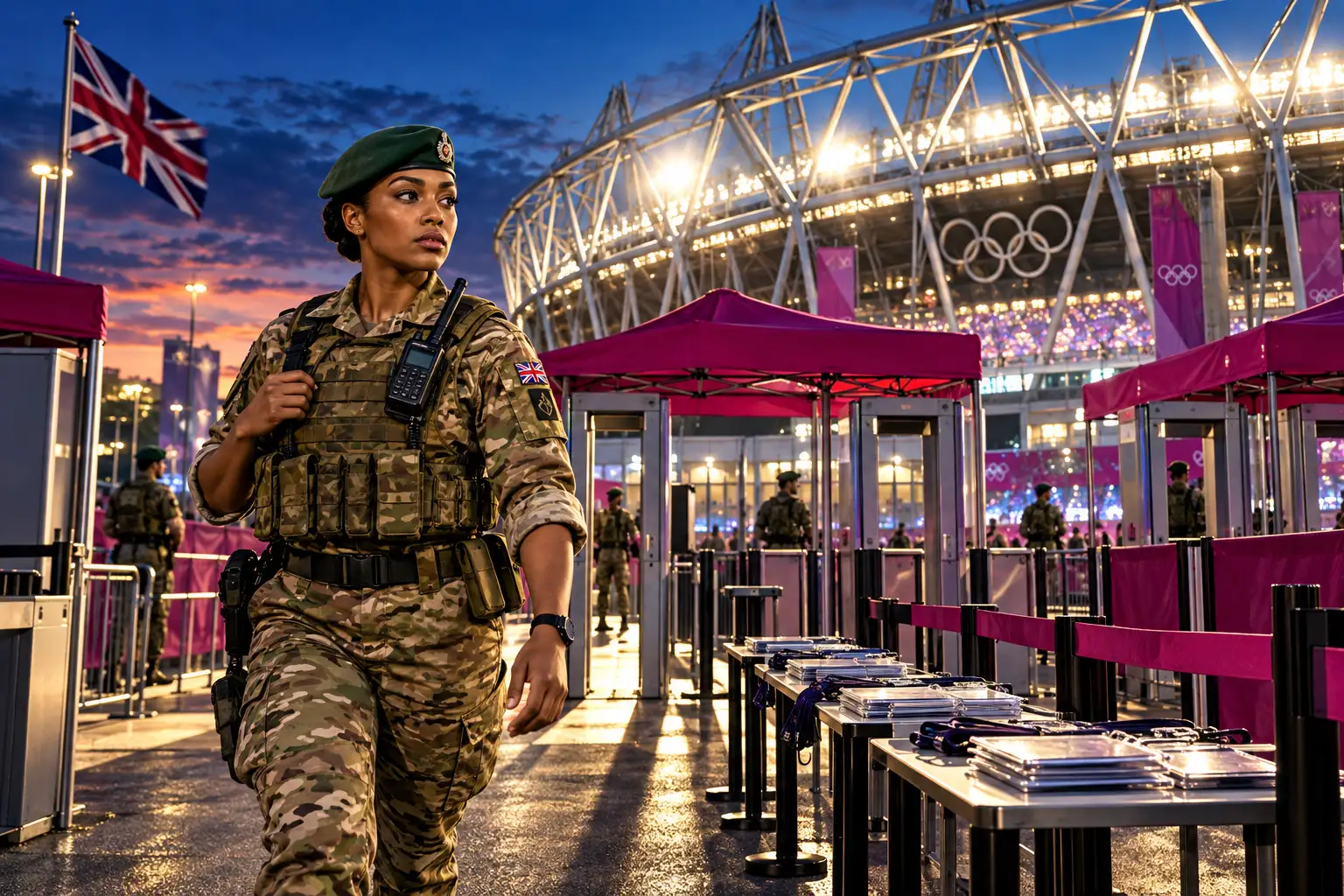
Venue security is the bill the original package did not contain. The executive summary says the 2007 Public Sector Funding Package had no provision for it until 2010, and it puts the anticipated final cost met from the package at £514 million after the guard requirement climbed through 2011. G4S, hired to staff the venues, then told the organisers it could not fill the contract. Extra troops and police covered the gaps, and the opening ceremony still took place.
THE SECURITY COUNTDOWN
- 2007: Ministers set the Public Sector Funding Package with no venue-security provision inside it.
- 2010: Venue security enters the package.
- 2011: The number of guards required rises to over 20,000, from a previous estimate of 10,000.
- 11 July 2012: G4S tells LOCOG and the Olympic Security Board it cannot supply the full number of guards in its contract.
- 12 July 2012: Ministers call up as many as 3,500 extra troops.
- 27 July 2012: The opening ceremony goes ahead.
- 5 December 2012: The audit says the Games passed without a major security incident.
That countdown is the documented near-collapse. Sixteen days separate the G4S warning from the ceremony. The venues were staffed because the military and the police moved, not because the contract recovered on its own. Calling the fortnight free of a major security incident is the auditor’s judgment, and it sits next to a staffing failure that was public, late and large enough to pull soldiers onto venue gates.
Blame for the missed guard count sits with the company in the Home Affairs Committee’s verdict on G4S. MPs pointed to flawed management information and to reassurances that continued after senior staff could see the shortfall. They said Nick Buckles, the chief executive, met the home secretary the day before the failure was admitted and did not tell her, though he had known about the gap for a week. The operation held. The contract did not.
What Did Police and Organisers Log That Week?
Three other disruptions from those weeks are in police or organiser statements. None of them cancelled a session. Each of them is smaller, or dated differently, in Archer’s retelling than in the contemporaneous account. Read them in the order they happened, because the flag row came first, the bridge stunt next, and the cycle ride on the night itself.
The Flag Error at Hampden Park
Women’s football had already started in Glasgow before the ceremony in London. On 25 July 2012 at Hampden Park, a video package showed the North Korean players beside the South Korean flag. The team walked off. Kick-off had been set for 7:45pm and the match eventually started at 8:50pm, after the pictures were corrected. North Korea beat Colombia 2-0.
Paul Deighton, chief executive of the organising committee, called it simple human error and said steps were in place so it would not happen again. Coach Ui Gun-sin said the team was not going to play unless the problem was solved properly, because the players could not be shown with the South Korean flag. LOCOG apologised to the team and to its National Olympic Committee. A first draft of that statement used the wrong formal country names and had to be reissued, which shows how thin the protocol was even after the apology.
Archer credits Sebastian Coe with a personal apology that settled the row, and he remembers the South Korean anthem as part of the mistake. The statement issued that night describes the flag on the screen. If you are checking a retelling, the flag is the error the organisers owned in public.
The Tower Bridge Dive and the Games Lanes
Taxi drivers spent that month angry about Olympic lanes. Black cabs could already use about two thirds of a network of roughly 100 miles, and drivers wanted the rest, arguing that a busy summer had been closed to them. On 23 July 2012, during a slow, horn-heavy drive across Tower Bridge, a man in the protest dived headfirst into the Thames. The marine policing unit pulled him out and arrested him for a public order offence. The drop was about 8 metres. The group that called the protest said it did not condone the jump.
THE RECORDED DATE
- Archer’s timing: His quiz places the dive on the eve of the opening ceremony.
- The police timing: Officers put the jump at about 4pm on 23 July 2012.
- The ceremony: The opening was on 27 July 2012, four days later.
A similar go-slow had already filled Parliament Square the week before. The dive tied up a rescue boat and could have killed the man who jumped. It did not stop the Games, and it was not the night before the ceremony. Any version that says “the eve” has moved the day.
The Critical Mass Ride Near the Olympic Park
Critical Mass is a monthly cycle procession. On opening night it made for the roads reserved for Games traffic. Police said they had tried to settle a route with riders beforehand. The procession crossed the Thames anyway, split into smaller groups, and some of those groups reached Stratford while the ceremony was under way. Officers then detained cyclists at Bow Flyover and in Warton Road.
- The crowd: Up to 500 people gathered near Waterloo by 6pm, against a usual ride of about 100.
- The first tally: More than 130 people were arrested under section 12 of the Public Order Act.
- The later tally: Police put the arrests at 182, including a 13-year-old, and charged three people.
- The force used: One transport officer used CS gas during the detentions.
- The bail terms: Conditions included staying out of Newham on a bicycle and keeping 100 metres from Olympic venues.
Reporters on the cordon described cyclists being placed on buses as the ceremony drew to a close, with officers and riders still talking. The show in the stadium was not abandoned. Archer’s scene, in which cyclists hold the Queen on the road long enough that the ceremony cannot start, is not the order in those accounts. The three people who were charged are also easy to misread as the whole story. They are the charging figure. The detention figure is 182.
What Does Jeffrey Archer Say Was Kept Quiet?
Archer’s essay of 23 September 2025 is the source of the “13 times” framing. He writes that he asked Sebastian Coe, in Monaco, what had gone wrong, and that Coe told him the North Korea flag story and then pointed him to Commander Bob Broadhurst, the officer who had run Games security. A former murder-squad detective, John Sutherland, made the approach. Archer says Broadhurst then described 13 incidents the public had not been told, including things Coe himself had not known.
He names two of them with any scene attached. One is the cyclists, cast as a rehearsed plan to delay the Queen until the ceremony could not happen. The other is a cyber-attack on opening night which, in his telling, could have cut the stadium lights in front of the television audience. He sums up Broadhurst’s standard for the job in plain terms: a successful security operation has no headlines and no heroes. He says he put all 13 into the novel End Game and added nine of his own, so a reader is meant to guess. In that essay, Sebastian Coe scores 19 out of 22, and Archer says nobody he had asked had managed the full set.
The difficulty, if you want the history rather than the puzzle, is that the 13 are not listed. Interviews around the book’s publication sometimes give the commander’s share as 14 rather than 13. Hold the essay’s split, 13 from Broadhurst and nine invented, unless a numbered list is actually published. Archer’s own fact-or-fiction quiz later marks individual scenes, which helps, and it is still his key.
On that quiz the cyber-attack is marked as fact. Nothing in the post-Games review describes an attempt to black out the stadium. A security chief can have shared a scare that never reached a public report. That scare does not sit in the same drawer as the G4S warning of 11 July, which does. Scenes he has been willing to mark as fiction include tampered samples for Usain Bolt and Mo Farah, a nerve-gas plot, a kidnapped athlete, a Fathers 4 Justice plane over the closing ceremony, bodies in the long-jump pit, a stand reserved for fake tickets, and a police officer pushed under a Tube train.
Sorting the 13 Times London 2012 Olympics Nearly Collapsed
Use this when a clip, a quiz answer or a chapter makes a near-miss sound settled. “Documented” means a police, organiser, auditor or published-contract source. “Archer’s account” means the scene rests on what he says Broadhurst told him.
| Incident | Status | What you can check |
|---|---|---|
| G4S cannot fill its guard contract | Documented | Told organisers on 11 July 2012; up to 3,500 extra troops called the next day |
| Venue security missing from the 2007 package | Documented | No provision until 2010; anticipated final cost £514 million |
| Critical Mass on opening night | Documented, scale often misstated | More than 130 arrested that night; later tally 182; three charged; ceremony continued |
| South Korean flag before North Korea played | Documented | Hampden Park, 25 July 2012; kick-off moved from 7:45pm to 8:50pm; North Korea won 2-0 |
| Man dives from Tower Bridge | Documented, date often slipped | About 4pm on 23 July 2012, not the eve of the ceremony |
| Cyber-attack on the stadium lights | Archer’s account | Marked fact on his quiz; not described in the audit |
| Ceremony minutes from cancellation | Archer’s account | Police accounts show the ceremony under way while cyclists were detained |
| Queen filmed with James Bond | Documented performance | A rehearsed part of the ceremony, not a security failure |
| West Ham rent of £2.5 million a year | Documented later | Contract details published in 2016; not a Games-time collapse |
| Bombings the day after the bid | Documented history | 7 July 2005, 52 people killed, seven years before the Games |
If a row says Archer’s account, the honest next step is his quiz or, later, Broadhurst’s own book, not a line in the audit. The rows that change what a government had to do in public are the guard contract, the flag delay, the arrests and the dive.
Where Did the Public Funding Package End Up?
The package is the ceiling ministers defended, and it is not every public pound spent on the Games. The December 2012 summary’s money outcome was a possible underspend of £377 million, and only if no further costs landed. The office tied that hope to the athletes’ village conversion and to supplier contracts still open, and said the exact result would not be known until 2014.
| Line in the December 2012 summary | Figure |
|---|---|
| Public Sector Funding Package | £9,298 million |
| Anticipated final cost to the package | £8,921 million |
| Underspend if no further pressures | £377 million |
| Sum originally available to the Olympic Delivery Authority | £8,099 million |
| Anticipated final cost of the ODA programme | £6,714 million |
| Anticipated final cost of venue security from the package | £514 million |
Read the build line and the security line together. The delivery authority’s programme was expected to finish under the sum available to it, and venue security was met from the same package rather than by breaking the ceiling. That is contingency doing the job it was funded to do. It is also why one true sentence can say the package was heading under its cap while another true sentence says security was a bill nobody had written in 2007.
MPs added the limit that belongs with any victory lap, in the Public Accounts Committee’s post-Games conclusions. The underspend is against the package only. Other public costs of the Games and the legacy sat outside it, and the committee asked the department for a fuller public picture. An underspend against £9,298 million is not a receipt for every pound the summer cost.
What Did the Olympic Stadium Cost After the Games?
In December 2012 the audit said most venues on the Olympic Park had a long-term user and the stadium did not. The tenant argument ran on for years. When the legacy corporation was required to publish the West Ham contract, the figures looked like this.
| Term in the published contract | Figure |
|---|---|
| Annual rent while in the Premier League | £2.5 million |
| Annual rent if relegated | £1.25 million |
| West Ham’s contribution to the conversion | £15 million |
| Conversion cost | £272 million |
| Stadium cost once conversion is included | £701 million |
| Capacity after conversion | 60,000 |
The public side kept the running costs of the ground. The 2012 uncertainty and the later contract are a before and after, not two rival facts. The stadium did not nearly stop the Games. It became the part of the bill that stayed politically live long after the medals. On the same MPs’ report, projections for paying the Lottery back from Park land sales did not show a first payment until the mid-2020s, because the legacy corporation, not the Lottery distributors, controlled when those plots were sold.
How to Test a Near-Collapse Claim
A smooth broadcast and a rough control room can describe the same night. The test is whether the rough edge changed a public decision, and whether someone other than a novelist has dated it.
FOUR CHECKS BEFORE YOU REPEAT A NEAR-MISS
- The calendar day: If a story says “the eve” or “minutes before”, find the police or organiser date and keep that one.
- The charging figure: Three people charged is not the same fact as more than a hundred people arrested.
- The document type: A novelist’s quiz marked fact is his label; an audit or a force statement is a public record.
- The budget line: An underspend against the package is not proof that every public bill was small, because some costs sat outside it.
Run those checks and the summer falls into two piles. One pile changed what the government had to do in the open: the guard contract, the troops, the flag delay, the arrests and the dive. The other pile is a briefing remembered by a novelist, plus scenes he says he made up. Both can be worth your time. Only the first pile is a history of what nearly stopped London 2012.
Frequently Asked Questions
Is End Game a True Story About London 2012?
End Game is a novel, the last William Warwick book, published by HarperCollins on 23 September 2025 priced at £22. The police commander in its pages is fictional. Archer says he built the plot from incidents the real security chief described and from scenes he invented, then invited readers to tell the two apart.
Did the Queen Appear With James Bond?
Yes. The opening ceremony included a filmed sequence of Queen Elizabeth II with Daniel Craig as James Bond, and it was a rehearsed part of the show rather than a security scare. Archer lists it among the things that really happened. It does not belong on a list of moments that nearly stopped the Games.
Did North Korea Hear the Wrong Anthem?
The organisers’ statement from that night describes the South Korean flag on a big screen beside the North Korean players, not a wrong anthem. Archer remembers the South Korean anthem as well. If you are checking a retelling, use the flag wording in the apology, because that is the mistake LOCOG actually owned.
Who Paid for the Extra Soldiers?
The Ministry of Defence supplied the extra troops, and police moved in beside them, after G4S missed its number. The Public Accounts Committee said the company paid a price for that failure. The post-Games review does not set out one finished bill for the extra military days, because compensation talks were still open when MPs took evidence.
What Is Panic Slowly?
Panic Slowly is the book Archer says Commander Bob Broadhurst has written about Games security. In the essay that introduced the 13 incidents he describes it as still unpublished. Until that book appears, there is no public list from Broadhurst himself of the incidents Archer credits to him.
The audit’s clean line and Archer’s private list can both be true in a narrow sense: the ceremony was not stopped, and several bad hours never became the story the country watched. What you can still check is the guard contract, the flag, the ride and the dive. What you cannot check is a numbered list of 13 that the man who ran the operation has not published.

The Court Revisits the Climate Nuisance Door It Left Open

ChatGPT Now Compiles Live Interfaces With GPT-6

A Tanker Attack Moves the War Into Qatar’s Waters

Personio Buys Circula to Own the DATEV Channel

Bluesky Files for .bsky and Enters the Registry Queue

Microsoft’s 96% Cyber Score Sits at 86.3% on the Board

Musk’s $914 Billion Lead Is a Public SpaceX Bet

Skrilla’s 6-7 Became Word of the Year by Meaning Nothing

Free Live Sports Streaming Without Cable: An Antenna and App Guide

Xbox Puts 15-Hour Caps on Game Pass Cloud Play
-
 NEWS4 months ago
Microsoft’s 96% Cyber Score Sits at 86.3% on the Board
-
 BUSINESS5 months ago
Musk’s $914 Billion Lead Is a Public SpaceX Bet
-
 ENTERTAINMENT1 year ago
Skrilla’s 6-7 Became Word of the Year by Meaning Nothing
-
 SPORTS4 months ago
Free Live Sports Streaming Without Cable: An Antenna and App Guide
-
 GAMING2 months ago
Xbox Puts 15-Hour Caps on Game Pass Cloud Play
-

 BUSINESS2 years ago
Retail Banking vs Commercial Banking: Who Each Side Serves
-

 ENTERTAINMENT4 months ago
The Odyssey’s IMAX Film Run Hit a 41-Theater Limit
-
 ENTERTAINMENT5 months ago
Endgame Encore’s $86 Million Trial for Infinity Vision