
NEWS
First Orion Sells T-Mobile Call Badges It Also Scores
First Orion’s Mobile Originated Branded Calling puts paid logos on T-Mobile field phones, while the same firm still helps decide which unlabeled calls look.

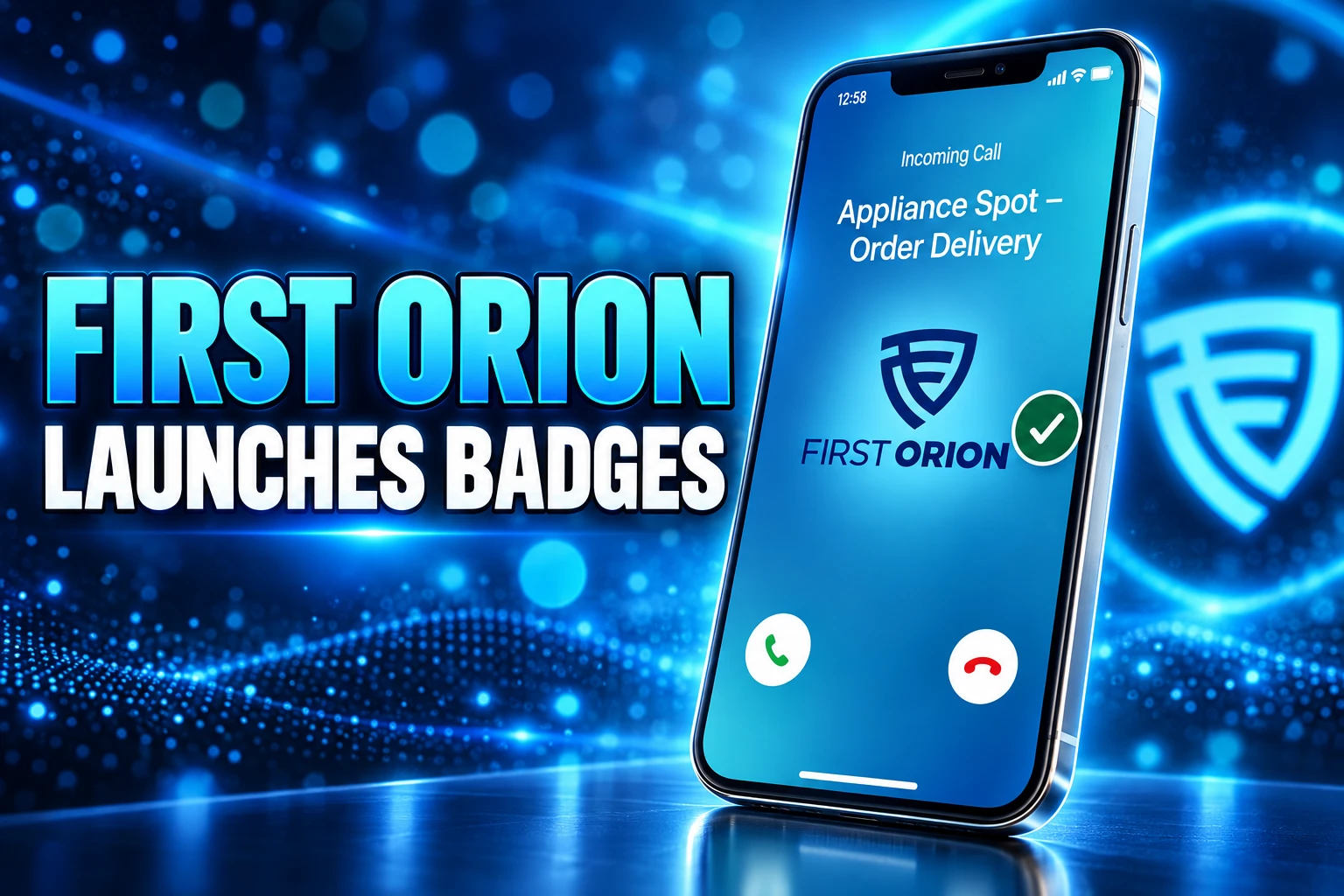
First Orion opened Mobile Originated Branded Calling with T-Mobile on July 21, 2026. Enrolled businesses can now place a verified name, logo, call reason, and preferred callback number on a call that starts on an employee’s cell phone, not a contact-center dialer.
The North Little Rock company calls that an industry-first wireless provider deployment. The catch buried in its own help pages is simpler. First Orion already helps decide when a T-Mobile call looks like spam, then sells the badge that makes the next call look like a brand.
Brand Logos Move Onto Field Phones
Contact-center branded calling has been around for years. MOBC is the field version. A salesperson, nurse, or claims adjuster dials from a T-Mobile handset, and the person who picks up can see business identity instead of a naked mobile number.
First Orion split the product into three stacked pieces. Businesses enroll through First Orion, get approved, then pick names, callback numbers, logos, and optional call reasons. Outbound calls from authorized mobile lines show that package on supported devices.
THE THREE MOBC LAYERS
| Layer | What the recipient sees | Reach First Orion describes |
|---|---|---|
| Business Number ID (BNID) | A chosen callback number in place of the employee’s own line | T-Mobile and non-T-Mobile subscribers |
| INFORM with Authentication | An authenticated business name or calling department | Verified text identity on the ringing screen |
| INFORM with Logo | Authenticated logo plus an optional call reason | The richest on-screen brand of the three |
Julie Fowler, First Orion’s vice president of sales engineering and strategic initiatives, tied the launch to trust, engagement, and “the integrity of every outbound call.”
This collaboration represents a major step forward for branded communications. By enabling branded calling directly from mobile devices, First Orion and T-Mobile are helping businesses to build trust and improve engagement with customers, as well as protect the integrity of every outbound call.
Julie Fowler, Vice President, Sales Engineering & Strategic Initiatives, First Orion
The company posted the same news on its account the day of the launch.
We're excited to announce the launch of Mobile Originated Branded Calling (MOBC) with @TMobile. Read more: https://t.co/8gWHz8LyhF pic.twitter.com/Vd60mS2ehW
— First Orion (@FirstOrionCorp) July 21, 2026
MOBC is listed as live for eligible T-Mobile business customers in the United States, Puerto Rico, and the U.S. Virgin Islands, with broader expansion described in that July 21 notice as planned through the year. First Orion did not name the next markets in later posts that followed.
First Orion Labels T-Mobile Calls and Sells the Overlay
Business Number Registration is the free front door. First Orion says it tells carriers and mobile analytics engines who a business is and why it is calling. In the same help article, the company says it is the mobile analytic engine for T-Mobile and Boost, and that it uses registration data to influence how calls are labeled on both networks.
That is the dual role. On T-Mobile, First Orion is in the scoring path that can attach “Potential Spam.” On Boost, common labels it lists include “Possible Scam” or “Possible Spam.” AT&T’s comparable tag in the same article is “Spam Risk.” Verizon’s is “Potential Spam.” First Orion also says it does not share registration data directly with Verizon’s provider, TNS, and that each carrier and its engine still decide the final label.
INFORM then sells the opposite of a warning: a verified name, and at the top tier a logo. Spam scoring and branded display are sold as a pair on the same call path. One product tries to keep a number out of the warning bin. The other tries to put a brand where a number used to be.
First Orion is careful on the page. It will not guarantee labeling outcomes across carriers, and it points businesses to “Call Behavior Best Practices” if they want fewer scam tags. The commercial logic still holds. The firm that helps mark unlabeled T-Mobile traffic is the branded-calling partner T-Mobile business customers must enroll through for MOBC.
Who Can Enroll in Mobile Originated Branded Calling?
BNID is not a consumer feature and it is not automatic. First Orion’s Business Number ID FAQ limits registration to T-Mobile for Business customers that are not sole proprietors and that hold a valid EIN. The originating line has to be a T-Mobile for Business number that is still active on the account.
BNID ENROLLMENT RULES
- Carrier account: The business must be a T-Mobile for Business customer, not a consumer line that happens to be used for work.
- Legal form: The business cannot be a sole proprietorship.
- Tax ID: It must have a valid registered EIN.
- The handset number: Rejected numbers are checked against a simple list, a T-Mobile for Business number, the correct number, and still one of the account’s numbers.
Service terms dated December 15, 2025 describe BNID as a signaling swap. A Preferred Display Number replaces the Calling Number, which is a T-Mobile MSISDN. A calling number maps to only one display number. A TfB Subscriber, in those terms, is a business entity other than a sole proprietor, not an individual consumer.
That gate is the quiet line in the product. A plumber or independent agent on a personal T-Mobile phone cannot buy the same on-screen identity a regional contractor with an EIN can. First Orion’s public INFORM plans are marketed to “businesses of any size,” including a claim of 16,000+ businesses. MOBC’s number-swap layer is narrower than that slogan.
Callback Routing Hides the Employee’s Own Line
The launch list of benefits puts “protection of employee mobile numbers through preferred callback routing” next to higher answer rates. Return calls go to a centralized business number, not the person who just rang.
BNID’s own FAQ is blunt about the display trick. A T-Mobile device places the call, and the recipient sees a different number. Preferred Display Numbers are what the called party sees. Assigned Calling Numbers are the lines that originate the traffic.
For a company, that is a privacy feature. A customer who misses the call hits a main line, a queue, or a hunt group instead of a worker’s personal cell. For the customer, the person who just spoke can disappear. The next call may reach a different employee, an after-hours menu, or a mailbox that does not know the conversation.
MOBC therefore does two jobs at once. It brands the outbound hop so more people answer, and it strips the worker’s own MSISDN off the return hop. Field work starts to look like a contact center, even when the voice is standing in a driveway.
Free Registration Still Leaves 45% Unanswered
First Orion already offers free business number registration, with no registration cost advertised on its registry pages. That is the trust floor: tell the analytics engines you are legitimate. It is not the same as showing a name on the ringing screen.
On September 2, 2026, First Orion published a survey of businesses that had finished that free registration. On average those businesses said their calls still went unanswered 45% of the time. The company’s write-up of that survey is the sales handoff. Registration verifies a number on the back end. It does not tell the person holding the phone who is calling or why.
A separate First Orion pricing line is aimed at the consumer side of the same fear.
THE ANSWER-RATE GAP FIRST ORION CITES
- Unrecognized numbers: 9 in 10 people said they do not answer calls from numbers they do not recognize, per First Orion’s INFORM pricing page.
- After free registration: Registered businesses still reported a 45% unanswered share in the September 2, 2026 survey.
- After adding a logo: Five already-branded firms First Orion monitored, in financial services, insurance, legal, healthcare, and automotive, then saw answer-rate gains from 1% to 21% when they upgraded to a logo program.
Those figures are not a MOBC field trial. They are the funnel around it. Free registration leaves a hole. Paid INFORM tries to close it. Logo is the upsell on top of name-only branding. MOBC takes that paid stack out of the dialer and drops it on a mobile employee.
What Branded Calling Costs After Enrollment?
First Orion did not post a separate public rate card labeled MOBC. Eligible T-Mobile business customers still enroll through First Orion, and INFORM is the branded display product on the public price list. Monthly packages start at 250 branded calls for $31, with one branded name and six phones.
INFORM MONTHLY PLANS
| Monthly volume | Price | Names and phones |
|---|---|---|
| 250 branded calls | $31 | 1 branded name and 6 phones |
| 500 branded calls | $52 | Up to 2 branded names and 8 phones |
| 1,000 branded calls | $104 | Up to 4 branded names and 18 phones |
| 20,000 branded calls | $0.0600 per call, $1,200 | Volume tier; $1,200 monthly minimum on 20K+ plans |
Above that, First Orion lists $0.0550 per call from 25,001 to 50,000, $0.0450 from 50,001 to 200,000, $0.0400 from 200,001 to 500,000, and $0.0350 from 500,001 up. Calls are billed per tier, not retroactively. Plans under 20,000 calls a month are billed monthly and can be canceled or upgraded at any time. Plans above 20,000 require an annual agreement. A $1,200 monthly minimum applies on 20K+ plans beginning with the first full billing cycle.
A June 3, 2026 First Orion notice on the self-service portal said businesses can configure branded displays with up to 32 characters, including business name and reason for calling, and that setup can take as little as 10 minutes after vetting. That portal path is the mass-market INFORM meter. MOBC still has to clear the T-Mobile for Business and EIN checks before a field phone can wear the same clothes.
The FCC Still Tells People Not to Pick Up
The reason a logo has a price is that the default advice is still to ignore the ring. The FCC’s consumer guide on unwanted calls tells people not to answer calls from unknown numbers, and to hang up if they do. A later FCC fact sheet on call branding put the limit of STIR/SHAKEN in one line. The framework can help show that a number may not be spoofed. It does not tell the recipient who is calling.
Paid branded calling is the commercial fill for that hole. T-Mobile business customers who clear First Orion’s gate can put a name and logo on a mobile-originated call. Everyone else is still an unknown number in a market where First Orion says 9 in 10 people will not pick up, and where even free-registered businesses report 45% unanswered.
The company’s own roadmap kept moving after July without changing that U.S. MOBC map. On August 25, 2026, TMC named INFORM Branded Calling a Communications Solutions Product of the Year winner. On September 30, 2026, First Orion and Vodafone launched INFORM in Ireland, after the United Kingdom and Germany, using a CAMARA-based network API. That is a separate product track. The July 21 MOBC notice still listed the United States, Puerto Rico, and the U.S. Virgin Islands as the live mobile-originated footprint.
A T-Mobile field phone can now carry a vetted brand. The scoring engine behind the warning on the next unlabeled call is still, on that carrier, the same vendor selling the badge.

Saquon Barkley’s Hamstring Leaves the Eagles Thin in London

The Online US Passport Still Needs a Witnessed Oath

Ken Urker Died on His Birthday With No Cause Named

FOX Ices Portnoy After Ohio State’s Access Fight

Micron’s Record Memory Profits Lock RAM Tight Through 2028

Musk’s $914 Billion Lead Is a Public SpaceX Bet

Microsoft’s 96% Cyber Score Sits at 86.3% on the Board

Free Live Sports Streaming in 2026: What to Watch Without Cable

Endgame Encore’s $86 Million Trial for Infinity Vision

The Odyssey’s IMAX Film Run Hit a 41-Theater Limit
-
 BUSINESS4 months ago
Musk’s $914 Billion Lead Is a Public SpaceX Bet
-
 NEWS2 months ago
Microsoft’s 96% Cyber Score Sits at 86.3% on the Board
-
 SPORTS3 months ago
Free Live Sports Streaming in 2026: What to Watch Without Cable
-

 ENTERTAINMENT4 weeks ago
Sterling Point Holds No. 2 on Prime Video After 32 Days
-
 ENTERTAINMENT3 months ago
The Odyssey’s IMAX Film Run Hit a 41-Theater Limit
-
 ENTERTAINMENT3 months ago
Endgame Encore’s $86 Million Trial for Infinity Vision
-

 ENTERTAINMENT2 years ago
Andrew Garfield’s Spider-Man Films Are No Longer Free
-

 NEWS4 weeks ago
G20 Cheers AI Investment After Bailey’s Frontier Cyber Warning