
NEWS
Microsoft’s NHS Lock-In Now Faces a Competition Inquiry
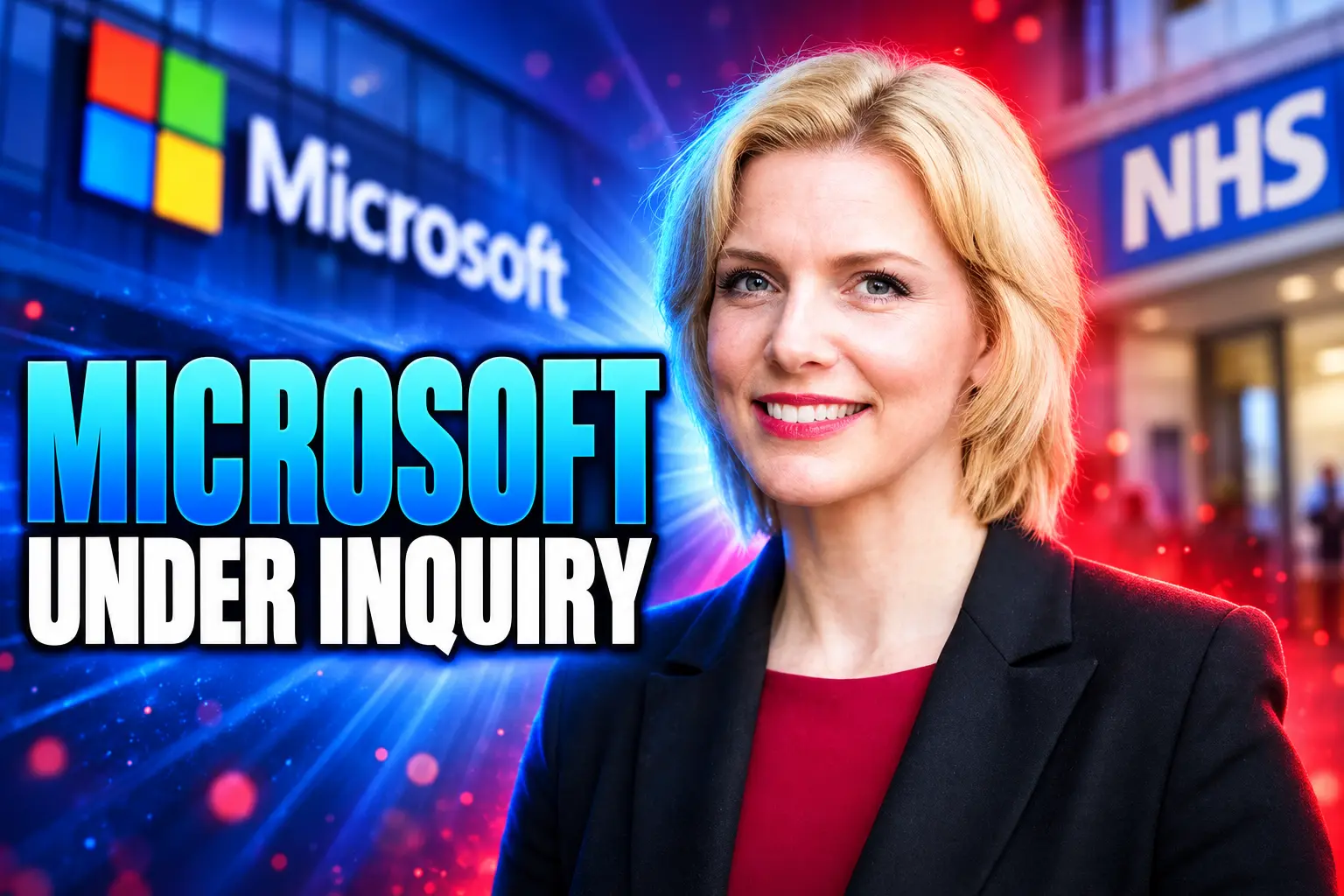
Niblett said Microsoft ripped off the NHS. Department figures and a live CMA case now test that lock-in claim with hard numbers.

Samantha Niblett told a Commons committee on 19 November 2025 that Microsoft had ripped off the NHS. The Labour MP for South Derbyshire, sitting on the Science, Innovation and Technology Committee, offered no contract papers that afternoon. Chair Chi Onwurah sounded surprised. Niblett, who sold technology to public bodies before she entered parliament in 2024, answered: “Well, it has.”
The line travelled. What followed, in written answers and at the competition watchdog, is the part that still stands. Health-department Microsoft spending is mostly renewal. Britain’s digital department has not formally reviewed the national Microsoft buying deal. And the Competition and Markets Authority is now testing whether that software hold limits choice.
Niblett Told Ministers Microsoft Ripped Off the NHS
The session was the last of the committee’s inquiry into the digital centre of government. Witnesses were Ian Murray, then minister for digital government and data, and Emily Middleton, director general for digital centre design at the Department for Science, Innovation and Technology.
Niblett put Microsoft’s public-sector method in one charge. Cheap entry deals, she said, lock a department in, then the bill climbs.
I know for a fact how Microsoft have ripped off the NHS.
Samantha Niblett MP, Science, Innovation and Technology Committee, 19 November 2025
She pointed to a five-year NHS deal for productivity tools put at more than £700 million, and to a Cabinet Office total for Microsoft software licences. She also said she had heard that the Department for Environment, Food and Rural Affairs had renewed Windows 10 after the product was out of date, then paid extra for security. Murray called it a “good question” and did not answer the rip-off claim.
A Microsoft spokesperson said the NHS buys through a national pricing framework negotiated by the UK government, “ensuring both transparency and value for money.” The firm said the government spreads its technology budget across suppliers, and that Microsoft is one of them.
The hearing gave the country a phrase. It did not give it an invoice. Niblett kept asking for those numbers in writing.
The £1.9 Billion Microsoft Licence Year
Georgia Gould, answering for the Cabinet Office on 16 July 2025, set out the licence total that sat behind Niblett’s attack. Full Microsoft spend is not held in one place, she said, because departments buy for themselves. The Crown Commercial Service does run the national discount route.
That route is the Strategic Partnership Arrangement 2024, known as SPA24, which took effect in November 2024 and runs to 2029. Gould said public bodies had spent approximately £1.9 billion on Microsoft licences through third-party resellers in the 2024-25 financial year, counting SPA24 and its predecessor DTA-21.
CCS has said it expects about £9 billion to flow through the five-year memorandum. That is a forecast of use, not a signed promise to spend. Murray later told Niblett the memorandum “does not represent a commitment to spend, but instead provides eligible public sector organisations with access to discounted pricing.”
THE PUBLIC MICROSOFT BILL
| What was counted | Figure | Scope |
|---|---|---|
| Microsoft licences, 2024-25 | About £1.9 billion | Public sector via SPA24 and DTA-21 |
| SPA24 expected use over five years | About £9 billion | CCS forecast, not a spend cap |
| NHS productivity tools, five years | More than £700 million | Cited in the November hearing |
| DHSC Microsoft licences, Dec 2024 to Dec 2025 | £4.8 million | Core health department only |
| Share of DHSC internal technology spend | 25.2% | Same 12-month window |
| Palantir NHS Federated Data Platform | £330 million | Forecast value of the 2023 award |
Those lines are different piles of money. The £1.9 billion is licences across the public sector. The NHS productivity figure is a health-service deal. The £4.8 million is the core Department of Health and Social Care, not NHS England. Mixing them is how a committee soundbite turns into a mushy total.
84.8 Percent of Health’s Microsoft Spend Is Renewal
Niblett’s written questions after the hearing did what the oral session did not. On 11 December 2025, health minister Karin Smyth said that from 4 December 2024 to 5 December 2025 the department spent £4.8 million on Microsoft software licences and services. That was 25.2% of its internal technology spend.
A follow-up answer split the same year. New implementations took 15.2%. Renewal and maintenance of existing systems took 84.8%. In the previous 12 months the split was 0% new and 100% renewal.
WHAT THE HEALTH DEPARTMENT’S MICROSOFT MONEY DID
- The 2024-25 year: 15.2% of DHSC Microsoft spend went on new service implementations, 84.8% on keeping current systems.
- The year before: None of the department’s Microsoft spend in that window was booked as new implementations.
- The share of the tech budget: Microsoft licences and services were 25.2% of DHSC internal technology spend in the later year.
- The limit of the figure: It is the core department, not the NHS five-year productivity deal.
That is the lock-in in a spreadsheet. Most of the cash is not buying a new clinical tool. It is paying to stay on the stack already installed. Emran Mian, permanent secretary at DSIT, has told MPs the SPA24 deal drove lower prices and that some buyers waited to renew until it was signed. A discount on a product you cannot leave is still a discount. It is also still a trap if the next renewal is the only realistic choice.
How Windows 10 Still Costs Public Bodies After Support Ended
Niblett’s Defra example was the weakest part of her attack, and she framed it as something she had heard. Microsoft stopped mainstream Windows 10 support on 14 October 2025. Defra permanent secretary Paul Kissack later told the Public Accounts Committee that after a Windows 10 refresh, “all laptops were upgraded to Windows 11 by March 2025.” Defra had already spent £312 million modernising IT in the 2022-23 to 2024-25 spending period, including taking 31,500 Windows 7 laptops off the estate.
The wider public sector did not all make that jump on time. Bodies that still needed Windows 10 bought a year of Extended Security Updates rather than move every machine.
WHERE THE WINDOWS 10 BILL LANDED
- The cut-off: Mainstream Windows 10 security updates stopped on 14 October 2025 unless a device was on paid extended updates.
- South Yorkshire Police: Awarded Phoenix Software £171,906 for Windows 10 Extended Security Updates from 14 October 2025 to 13 October 2026, covering South Yorkshire and Humberside, which still run legacy applications.
- The Defra record: Kissack’s letter put laptops on Windows 11 before the October cut-off, which undercuts Niblett’s specific Defra story even as other forces paid to stay on the old system.
That is the second bill inside the first. When a department cannot move off a Microsoft generation, it pays Microsoft, or a reseller, to keep patching it. The UK’s cyber exposure was already on the committee’s mind that Wednesday, including Britain’s place as one of the most targeted countries. Paying extra to run retired software is a strange way to meet that risk.
Microsoft’s Business Software Now Faces a CMA Inquiry
The charge Niblett could not document in Room 8 now sits with a regulator that can demand the files. On 14 May 2026 the CMA opened a strategic market status investigation into Microsoft’s business software. It is the fourth such case under the Digital Markets, Competition and Consumers Act 2024. The statutory deadline for a designation notice is 13 February 2027. The CMA’s own timetable pointed to a proposed decision in October 2026.
Chief executive Sarah Cardell said hundreds of thousands of UK customers rely on Microsoft’s systems, and that the job is to see whether targeted action is needed so organisations get choice, innovation and competitive prices. The inquiry looks at productivity software (including Copilot), Windows, Windows Server, SQL Server and security tools. The mechanisms named are bundling, weak interoperability and default settings, the same levers Niblett described as cheap-then-expensive lock-in.
Our aim is to understand how these markets are developing, Microsoft’s position within them and to consider what, if any, targeted action may be needed to ensure UK organisations can benefit from choice, innovation and competitive prices.
Sarah Cardell, Chief Executive, Competition and Markets Authority, 14 May 2026
The CMA had already found, in its 2025 cloud market investigation, that Microsoft licensing reduced competition in cloud. On 31 March 2026 it said an SMS designation would let it act on that licensing concern. Microsoft said it would cooperate.
THE DATES THAT TURNED A SOUND BITE INTO A CASE
- November 2024: SPA24 takes effect, offering public bodies discounted Microsoft prices through resellers.
- 14 October 2025: Windows 10 mainstream support ends.
- 19 November 2025: Niblett tells Murray Microsoft has ripped off the NHS.
- 11 December 2025: Smyth reports DHSC’s £4.8 million Microsoft spend and 25.2% share of internal technology spend.
- 31 March 2026: The CMA says it will open an SMS investigation into Microsoft’s business software in May.
- 14 May 2026: The investigation opens; the invitation to comment closes on 4 June 2026.
- 13 February 2027: Statutory deadline for an SMS decision notice.
Niblett asked DSIT in June 2026 whether it had reviewed SPA24 in light of the CMA’s cloud-licensing findings. Murray said it had not. The Government Commercial Agency, formerly CCS, still runs the memorandum. Individual bodies still decide what to buy.
British Firms Still Wait Behind the Discount Framework
The political ask on 19 November 2025 was not only cheaper Microsoft. MPs wanted more of the public computing budget to reach British suppliers. Murray said the Government Digital Service and DSIT were trying to coordinate buying, and he talked up better access for smaller UK firms. A Cabinet Office procurement note already tells central departments to set three-year targets for direct spend with small and medium-sized enterprises.
Middleton told the same inquiry there is “serious fragmentation” in digital spending. The committee put public-sector digital technology spend at over £26 billion a year. A national Microsoft discount can look like the cure for that scatter. It can also freeze the scatter in one vendor’s catalogue, which is the complaint British sellers have made for years when they try to replace a slice of Office, Windows or cloud.
SPA24 does not force a hospital or a ministry to buy Microsoft. In practice, staff already trained on Word, Teams and Azure, plus the sunk cost of identity and device management, do most of that forcing. The CMA’s customer research for the SMS case is aimed at exactly that question: what alternatives UK buyers think they have, and whether they can switch.
Palantir’s NHS Platform Hits a 2027 Break Clause
Emily Darlington used the same session to ask why Britain leans on foreign firms such as Palantir, which holds a £330 million NHS contract for the Federated Data Platform awarded in November 2023. That deal is a seven-year path with a break in early 2027. Critics on the committee have said the contract leaves the NHS renting a service, with software and know-how staying with the supplier. Ministers have pointed to extra operations and shorter discharge delays in trusts that use the platform, while a government review of whether to extend the contract has been under way.
The Palantir fight is a different product and a different firm. The exit problem is the same one Niblett named for Microsoft. Once a national service runs on one company’s tools, the renewal starts to look cheaper than the migration, even when MPs hate the invoice.
Niblett’s November line still outruns the evidence she put on the table that day. The health department’s own split, Gould’s licence total, and an SMS clock that runs to 13 February 2027 are the record she did not have in the room. DSIT has still not formally reviewed the memorandum that prices the stack.

Saquon Barkley’s Hamstring Leaves the Eagles Thin in London

The Online US Passport Still Needs a Witnessed Oath

Ken Urker Died on His Birthday With No Cause Named

FOX Ices Portnoy After Ohio State’s Access Fight

Micron’s Record Memory Profits Lock RAM Tight Through 2028

Musk’s $914 Billion Lead Is a Public SpaceX Bet

Microsoft’s 96% Cyber Score Sits at 86.3% on the Board

Free Live Sports Streaming in 2026: What to Watch Without Cable

Andrew Garfield’s Spider-Man Films Are No Longer Free

Endgame Encore’s $86 Million Trial for Infinity Vision
-
 BUSINESS4 months ago
Musk’s $914 Billion Lead Is a Public SpaceX Bet
-
 NEWS2 months ago
Microsoft’s 96% Cyber Score Sits at 86.3% on the Board
-
 SPORTS3 months ago
Free Live Sports Streaming in 2026: What to Watch Without Cable
-
 ENTERTAINMENT2 years ago
Andrew Garfield’s Spider-Man Films Are No Longer Free
-

 ENTERTAINMENT4 weeks ago
Sterling Point Holds No. 2 on Prime Video After 32 Days
-

 ENTERTAINMENT3 months ago
The Odyssey’s IMAX Film Run Hit a 41-Theater Limit
-
 ENTERTAINMENT3 months ago
Endgame Encore’s $86 Million Trial for Infinity Vision
-

 NEWS4 weeks ago
G20 Cheers AI Investment After Bailey’s Frontier Cyber Warning