
Kingston Technology has put its weight behind the booming industrial PC market, rolling out an expanded line of design-in memory and industrial SSDs built for mission-critical work. The move lands as factories, smart logistics hubs, and edge networks across Asia Pacific race to upgrade. For OEMs tired of mid-lifecycle component swaps, this is the news they have been waiting for.
Why Kingston Is Doubling Down on Industrial PCs Right Now
The push comes at a moment when digital transformation is no longer optional. Industrial PCs, edge systems, and embedded platforms are quietly running everything from assembly lines to surveillance grids and 5G base stations.
Kingston says demand is climbing fastest in advanced manufacturing, smart logistics, and digital infrastructure. The company is anchoring its strategy on its long-running “Built on Commitment” philosophy, which promises consistent performance, controlled supply, and zero surprises.
That message is resonating with customers who have been burned by sudden firmware tweaks or part substitutions during a build cycle. Stability, in this segment, is currency.
Inside the Design-In Memory and Industrial SSD Lineup
The new portfolio splits into two clean buckets, each engineered for systems that simply cannot fail in the field.
The Design-In DRAM modules are built to JEDEC industry specifications, giving system designers the confidence that performance will hold steady over years of deployment. They are aimed squarely at industrial and embedded boards where downtime is not an option.
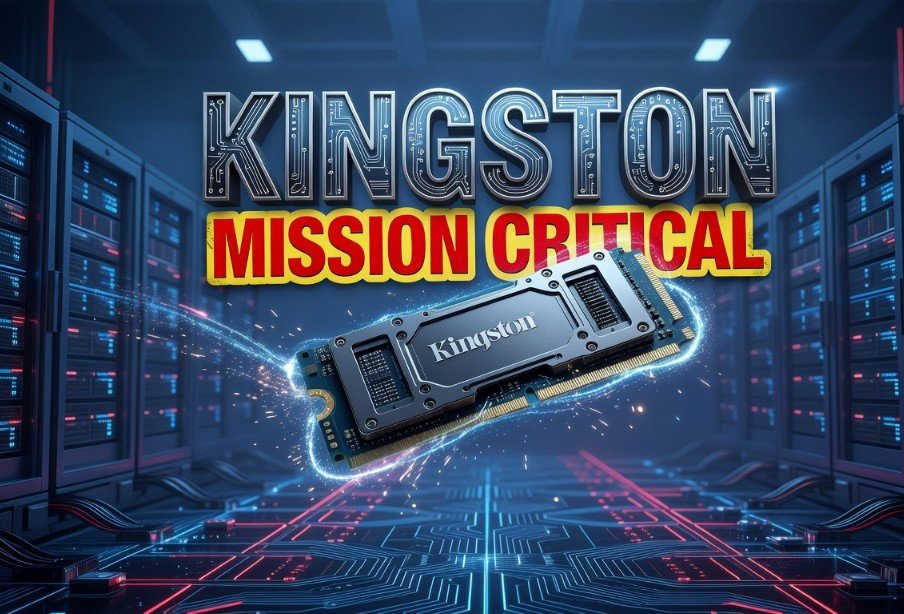
On the storage side, Kingston’s Industrial SSDs come in both SATA and NVMe flavors across multiple form factors. They support commercial and industrial operating temperature ranges, which matters when drives are baking inside a factory cabinet or freezing inside a logistics truck.
- Advanced controllers for steady I/O under stress
- Wear-leveling to stretch NAND lifespan
- Garbage collection for sustained write performance
- 3D NAND technology for density and endurance
What System Designers and OEMs Actually Get
Hardware is only half the story here. Kingston is selling trust, and the fine print backs it up.
Partners get controlled bill of materials, firmware consistency, product change notification support, and full lifecycle management. In plain English, the chip you qualify on day one is the chip you receive two years later.
That promise extends to applications few people think about until they break. Retail point-of-sale terminals, transportation systems, surveillance setups, networking gear, and industrial automation lines all sit on this kind of memory and storage.
Snapshot: Design-In Memory vs Industrial SSD
| Feature | Design-In DRAM | Industrial SSD |
|---|---|---|
| Standard | JEDEC compliant | SATA and NVMe |
| Form Factors | Multiple module types | Multiple form factors |
| Temperature | Industrial grade | Commercial and industrial |
| Key Tech | Consistent performance | 3D NAND, wear-leveling |
| Target User | OEMs, system designers | OEMs, integrators |
The Numbers Behind Kingston’s Quiet Dominance
Kingston is not a flashy brand, but the receipts speak loud. The company has been named the No. 1 supplier of channel SSDs for eight years running.
It has also held the top spot as the No. 1 third-party supplier of DRAM modules for an eye-watering 22 years. That track record is exactly what an OEM wants behind a five-year industrial deployment.
Key callout: Kingston’s reach already covers gamers with the FURY line, professionals with IronKey encrypted drives, and now industrial builders with a focused design-in portfolio. One playbook, many verticals.
How This Move Reshapes the Edge Computing Race in Asia
The timing matters. India is pushing Digital India, Southeast Asia is wiring up smart ports, and manufacturers across China, Taiwan, and the Philippines are stacking AI inferencing closer to the machine floor.
Every one of those projects needs memory and storage that will not flinch. Private 5G rollouts, AI at the edge, and cybersecurity appliances are all hungry for components with predictable lifecycles.
Kingston is betting that engineers will choose the vendor that picks up the phone two years after the build is signed off. For mission-critical work, that human factor still beats raw specs.
Quick take for buyers considering the switch:
- Lock in BOM stability early in the design phase.
- Match SSD temperature grade to the actual deployment site.
- Ask for PCN documentation in writing before procurement.
- Plan firmware validation for the full product lifecycle.
Kingston’s expanded design-in memory and industrial SSD push is a reminder that the loudest tech stories are often built on the quietest parts. Behind every smart factory, secure terminal, and self-driving forklift sits a tiny module that simply has to work, year after year, without complaint. For the engineers carrying those projects on their shoulders, this kind of reliability is more than a spec sheet. It is peace of mind. Share your thoughts in the comments below and tell us how memory and storage choices are shaping your own industrial projects.