The International Olympic Committee’s executive board signed off the first venue plan for the 2030 Winter Olympics on Monday, sending long-track speed skating about 500 miles north of the French Alps to the Thialf arena in Heerenveen, Netherlands, and moving curling, figure skating, ice hockey, and short track from the Riviera city of Nice to Lyon. The decision, the IOC said, delivers “a more compact overall Games footprint” and “significant cost efficiencies” for the Games branded Alpes 2030. It also makes those Games the first Winter Olympics to be staged across more than one country.
The board approved Thialf as the proposed speed skating venue, though contract talks with its owners are still open. It confirmed Courchevel and Val d’Isère as the two Alpine skiing resorts, and it relocated every indoor ice sport off the French Riviera. Nice loses every Olympic event it had been due to host. The final, fully integrated masterplan, including the detailed allocation of disciplines inside each cluster, will be released at a later date.
What the IOC approved on Monday
The IOC executive board approved the first changes to the Alpes 2030 venue masterplan on 22 June 2026, formalising the bid’s plan to send long-track speed skating out of France. The proposals had been validated by the Organising Committee for the Olympic Games, the OCOG, at its 19 June meeting. They are the outcome of a comprehensive review conducted by the OCOG with the IOC, the International Federations, and public authorities.
Four clusters remain in the new shape: an ice cluster in Lyon, a speed skating venue in Thialf in Heerenveen, an Alpine skiing cluster split between Courchevel and Val d’Isère, and the existing mountain venues in the Briançon and Haute-Savoie areas. The IOC said the compact concept is “still organised around four clusters.”
“The proposed updates maintain or enhance the athlete experience, ensure high-quality fields of play, and strengthen operational and financial feasibility, while delivering a more compact venue concept still organised around four clusters,” the IOC said in its 22 June statement, per the first approved changes to the Alpes 2030 venue masterplan. The agreed adjustments are aimed at preserving the overall vision of the Alpes 2030 Games while ensuring a balanced approach across athlete experience, operational delivery, financial sustainability, and territorial coherence. Each cluster still has specific venues to settle. The shift also makes 2030 the first Winter Olympics to be staged in more than one country.
This is the first IOC executive board sign-off on the masterplan since the Games were awarded in July 2024. The OCOG has more technical work to finish before the board issues a final approval. The precise allocation of venues remains under development, the IOC said, and will be submitted to the board at a later stage.
| Cluster | Sports | Status |
|---|---|---|
| Lyon, France | Curling, figure skating, ice hockey, short track | New cluster, venues to be confirmed |
| Heerenveen, Netherlands | Long-track speed skating | Approved as proposed venue, talks with owners ongoing |
| Courchevel, France | Alpine skiing (technical events) | Existing |
| Val d’Isère, France | Alpine skiing (speed events) | Existing |
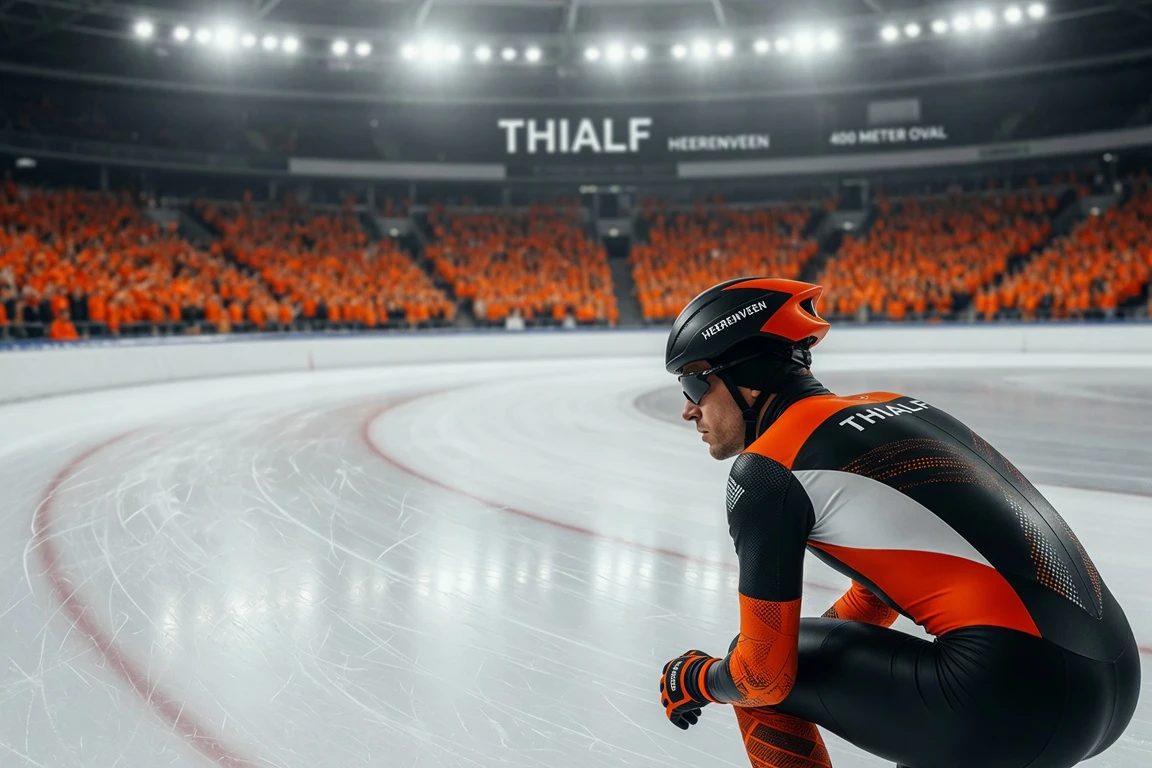
Why Heerenveen, not Turin
Two pre-existing 400-metre ovals were in the running for speed skating: Thialf in Heerenveen and Oval Lingotto in Turin, host of the 2006 long-track events. Italy dropped out earlier in 2026, leaving Heerenveen as the remaining option.
Heerenveen won out for several reasons. The IOC’s 22 June release calls Thialf “a world-class facility with strong public support” and notes it “offers favourable cost/revenue possibilities.” Thialf seats 12,500, and the Netherlands is speed skating-crazed, per NBC Sports. NBC called Thialf “the sport’s equivalent of Wrigley Field or Fenway Park.” The OCOG started exclusive talks with Heerenveen on 11 May 2026.
The lane for sending speed skating out of France was opened by the 2030 bid itself. The French Alps 2030 candidature said long-track would have to go abroad, citing “the absence of an existing one in the host country.” The IOC executive board approved Thialf on 22 June, “pending completion of OCOG discussions with venue owners.” For more on the decision, see the site’s earlier piece on why France is sending speed skating to Heerenveen.
How Nice was emptied, and Lyon stepped in
Nice was the original southern ice sports hub. The 2023 bid grouped curling, figure skating, ice hockey, and short track inside one Riviera cluster, a creative answer to a country with no speed skating oval. That whole cluster is now gone.
The trigger was Eric Ciotti, the far-right mayor of Nice, who was elected in March. Ciotti blocked plans to convert the Allianz Riviera football stadium into a temporary ice hockey rink, citing disruption to OGC Nice’s football schedule and what he called financial and environmental risks in turning the pitch to ice. The OCOG also explored Stade Charles-Ehrmann and Stade Marcel-Volot but found them too costly or logistically challenging to convert. None of the Nice options survived the review.
The OCOG turned north. Lyon had already offered to take the events, and on 29 May the organising committee said “the Lyon Metropolis now appears to be the solution capable of responding to this situation.”
The IOC framed the swap as a financial win: “This evolution supports a more compact overall Games footprint and enables significant cost efficiencies, while maintaining a high-quality competition and athlete experience.” Specific Lyon venues, including LDLC Arena, Eurexpo, Halle Tony Garnier, and Palais des Sports de Gerland, are still under discussion. Final allocations will be submitted to the IOC at a later stage.
We know we have very little time, little money. But we can deliver a Games that will honour our vision and ambition.
Edgar Grospiron, president of the French Alps 2030 organising committee, said this at a media conference in Milan.
The first multi-country Winter Games
The shift turns the 2030 French Alps Games into the first Winter Olympics with competition in more than one country. The Summer Games have split events across borders before, Stockholm 1956 equestrian, Hong Kong 2008 equestrian, and Tahiti 2024 surfing, but no Winter edition has. Heerenveen, Netherlands, will host the only Olympic event held outside France. Speed skating in Heerenveen makes the Netherlands the first country outside the host to stage a Winter Olympic event.
The travel math is the largest of any Winter Games. Heerenveen sits about 500 miles north of Lyon, a longer shuttle than most host cities’ outlying venues. The Games are scheduled for 1 to 17 February 2030, and the contract for Thialf has to close well before then. The IOC’s “compact footprint” language is now stretched across two nations and most of western Europe. Athletes, officials, and broadcasters will be the ones to absorb the wider geography.
The 2023 bid that locked in this geography
The geography of the 2030 Games was effectively set in 2023. The IOC’s Future Host Commission nominated the French Alps as its preferred 2030 host on 29 November 2023. The 142nd IOC Session in Paris approved the bid on 24 July 2024, subject to a financial guarantee from the French government by October 2024. The bid had not included a full masterplan, and a speed skating venue was not on the original list of French facilities.
The decision was bundled with Utah 2034 to take advantage of the Paris Session in 2024. GamesBids, an Olympic bid tracker, argues the IOC “ignored its own Olympic Charter” by skipping its “Strategic Dialogue” stage, and that “plans and venue guarantees were never solidified.” Both Switzerland and Sweden were also vying for the Games. France itself did not have an existing speed skating oval, the original reason speed skating had to go abroad.
The financial guarantee came through in October 2024, when Prime Minister Michel Barnier wrote to IOC President Thomas Bach to confirm French government support. The venue issues have kept building since. The 22 June executive board approval is the IOC’s first formal restructuring of the original bid, and a reminder of France’s countdown to the 2030 Games.
What’s still TBD
The 22 June release opens a new phase of technical work before the IOC’s executive board can issue a final masterplan. Four things still need to land.
None of the four ice sport venues in Lyon are confirmed. The contract for Thialf is still open. The IOC has not set a date for the final masterplan.
- Specific venues in Lyon for curling, figure skating, ice hockey, and short track speed skating
- The contract with Thialf’s owners in Heerenveen
- The sports programme for 2030, including any new disciplines added
- The final, fully integrated venue masterplan to be released later in 2026
Frequently Asked Questions
When and where will the 2030 Winter Olympics take place?
The 2030 Winter Olympics, officially the XXVI Olympic Winter Games and branded Alpes 2030, are scheduled for 1 to 17 February 2030 in the French Alps. Speed skating will be held at the Thialf arena in Heerenveen, Netherlands.
Why is speed skating being held in the Netherlands and not France?
France has no 400-metre speed skating oval. The 2030 bid said openly that long-track would have to be staged abroad, “given the absence of an existing one in the host country.” Heerenveen and Turin were the two finalists. Italy dropped out, leaving Thialf as the proposed venue.
Why did ice sports move from Nice to Lyon?
Ciotti, elected mayor of Nice in March, blocked the use of the Allianz Riviera football stadium for ice hockey, citing disruption to OGC Nice’s schedule and concerns about turning the pitch to ice. Without a workable Nice venue, the organising committee moved curling, figure skating, ice hockey, and short track to Lyon.
What events will be held in Lyon?
Curling, figure skating, ice hockey, and short track speed skating. Specific venues, including LDLC Arena, Eurexpo, Halle Tony Garnier, and Palais des Sports de Gerland, are under consideration. The IOC will confirm final venues at a later stage.
Is this the first time a Winter Olympics has been held in multiple countries?
Yes. The 2030 Games are the first Winter Olympics with competition in more than one country. The Summer Games have split events across borders before, Stockholm 1956 equestrian, Hong Kong 2008 equestrian, and Tahiti 2024 surfing, but no Winter edition has done it.