Leaks put the Google Pixel 11 Pro XL at a $1,299 starting price, a clean $100 jump from last year, while the base configuration reportedly drops to 12GB of RAM from 16GB. Google’s devices chief has already confirmed price adjustments across the lineup and blamed a supplier-driven memory crisis that sent RAM costs up sixfold.
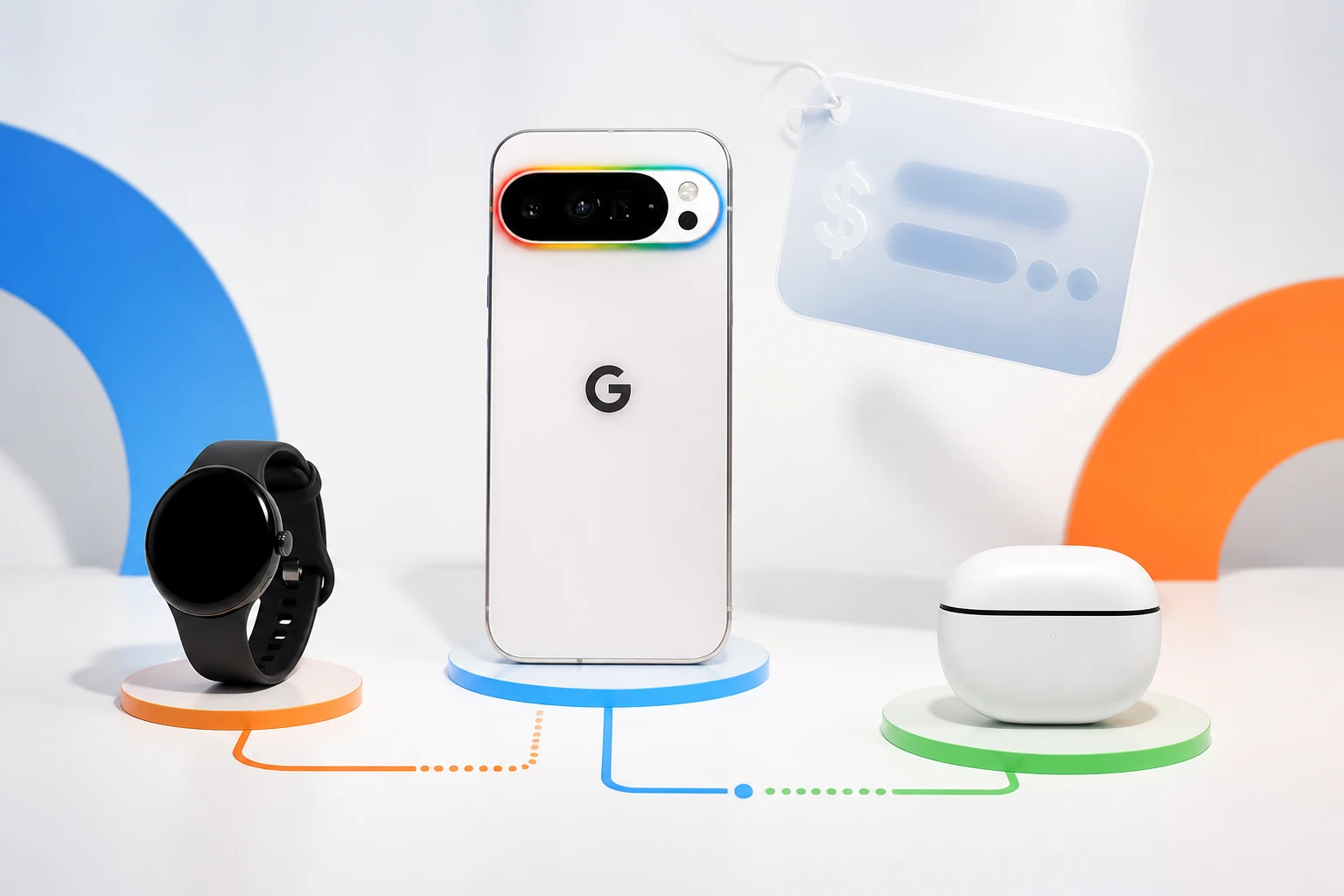
The hike lands four days before the Made by Google event on August 12. At that money the phone no longer sells itself on camera software and Gemini tricks alone. The second-order move is clear: turn the handset into the on-ramp for a discounted watch or buds that lock the buyer into Health, Wallet, Home and recurring AI services.
The $100 Jump and the 12GB Base
Multiple leaks, including those summarized by PCMag and Android Headlines, converge on the same US entry prices. The standard Pixel 11 starts around $899. The Pro lands near $1,099. The Pro XL hits $1,299. The Fold sits at $1,899. All figures sit $100 above the Pixel 10 equivalents in most reports.
Storage gets a floor raise. Every model is expected to open at 256GB instead of 128GB. That helps on paper. The Pro and Pro XL base variants, however, are said to ship with 12GB of RAM. Only the 512GB and higher SKUs keep 16GB. The result is a flagship that costs more while carrying less memory than its predecessor on the volume configuration.
| Model | Rumored Start | Base RAM | Base Storage | YoY Price |
|---|---|---|---|---|
| Pixel 11 | $899 | varies | 256GB | +$100 |
| Pixel 11 Pro | $1,099 | 12GB | 256GB | flat or +$100 |
| Pixel 11 Pro XL | $1,299 | 12GB | 256GB | +$100 |
| Pixel 11 Pro Fold | $1,899 | 12/16GB | 256GB | +$100 |
These numbers remain unconfirmed until the stage lights hit. European leaks track a similar €100 lift. Google itself has refused to publish exact tags until the event.
Memory Costs Rose Six Times Overnight
Shakil Barkat, Google’s vice president of devices and services, told 9to5Google the company faces a “severe, supplier-driven RAM memory crisis.” He cited Morgan Stanley data showing the cost of one gigabyte of RAM climbing from $2.80 in 2025 to $12 in 2026. That is a sixfold jump driven largely by AI data-center demand.
Barkat said Google had “shielded our consumers from supply fluctuations for as long as possible” but that “the economics have fundamentally shifted.” Price adjustments will roll out “dynamically to match supply realities” across the entire Pixel family, watches included. The same pressure has already lifted Apple Mac and iPad prices and forced every major Android maker higher.
Google is also running a “dedicated effort” to cut Android and app memory footprints so devices can run well on less RAM. That engineering push is the company’s attempt to blunt the hardware hit. It will not erase the sticker shock.
Software Perks Meet a Higher Bar
Pixels have always sold the experience first. Call Screen, Live Translate, excellent computational photography and early Android builds still matter. The Pro models also include a free year of Google AI Pro. That plan normally runs at the Google AI Pro plan at $19.99 per month and layers 5 TB of storage, higher Gemini limits, YouTube Premium Lite, Google Home Premium and Google Health Premium.
A $240-ish annual value sounds generous. Many buyers already pay for Google One. Others simply do not care about Gemini enough to price it into a $1,300 phone. A free year also becomes a subscription cliff twelve months later. Temporary store credit has the same problem: it feels like a rebate, not a permanent upgrade.
- Higher Gemini usage and Deep Research limits
- 5 TB cloud storage across Drive, Photos and Gmail
- YouTube Premium Lite ad-light viewing
- Home Premium event history and Health coaching
Those extras help. They do not close a $100 gap plus a RAM step-down when the competition ships faster silicon and longer battery life out of the box.
Why the Tensor Gap Still Shows
Google’s in-house Tensor silicon continues to trail the leading Qualcomm Snapdragon chips in sustained performance and efficiency. Everyday tasks feel smooth. Gaming frame rates and battery endurance do not match the best of the rest. That gap is documented year after year, including in recent analysis of how Tensor still trails the top Snapdragon chips even after process-node moves.
Buyers who want raw speed already look elsewhere. Pixel customers accept the trade-off for software polish and camera consistency. Raising the price while cutting base RAM tests that acceptance. The phone needs something tangible that sits on the wrist or in the ear every day, not another software trial that expires.
Deep Bundles Become the Real Product
The aggressive path is straightforward. Sell the Pro XL with a heavily discounted Pixel Watch 5 or include the Pixel Buds Pro 2 for little or no extra cost. Current Pixel Buds Pro 2 list pricing sits near $229; street prices already drop lower. Rumored Watch 5 tags start around $400 for the smaller Wi-Fi model. A $200 add-on price for the watch or a free-or-near-free buds offer would reframe the $1,299 phone as a $1,500-plus ecosystem package that feels like a deal.
Google has run free Buds promotions with earlier Pixel launches. Those worked because the accessory was free. This time the discount must be large enough that the combined receipt still looks smarter than buying a Galaxy or iPhone plus separate gear. Short-term accessory margin takes a hit. Longer-term the buyer starts using Google Health metrics, Wallet payments, Maps timelines and Home controls daily. That stickiness is harder to unwind than a phone trade-in.
Recent Pixel Watch 5 leak details already show Google leaning on software and Gemini features rather than a radical silicon jump. Pairing that watch with the new phone at a sharp discount simply accelerates the same strategy.
there’s never been an increase in memory prices like the world’s going through right now.
Barkat’s line captures the supply shock. It also underscores why a pure hardware defense no longer works. Google cannot control DRAM contracts. It can control how much of the Pixel experience travels with the buyer after the unboxing.
Who Gains and Who Walks
Flagship shoppers comparing the Pro XL to the Galaxy S26 Ultra (also $1,299) or the iPhone 17 Pro Max ($1,199) will weigh silicon, battery and raw specs first. On that ledger the Pixel still trails. The Pixel 11 Pro XL against the Galaxy S26 Ultra matchup already frames the risk: Google is asking for Ultra money while shipping a known performance gap.
Ecosystem buyers who already live in Gmail, Photos, Maps and YouTube see different math. A free or cheap watch that feeds Health data straight into the same account, or buds that keep Gemini ready in every pocket, changes the daily value calculation. Those users stay. Spec hunters leave. The memory crisis simply accelerates the split that already existed.
Google’s own AI data-center appetite helped drive the very memory shortage now raising its phone costs. That irony is not lost on observers. The company cannot reverse the commodity spike. It can only decide whether the next Pixel is sold as a camera phone or as the cheapest ticket into a broader, stickier Google hardware circle.
August 12 Will Show the Choice
Four days remain until the official tags appear. If Google merely repeats the free-year AI Pro offer and a modest store credit, the $1,299 Pro XL will face the same value questions every prior Tensor phone has faced, only louder. If the company pairs the phone with a $200 Watch 5 or near-free Buds Pro 2, the conversation shifts from “why is this more expensive” to “how much of the Google stack do I actually want on my body.”
The memory crisis is temporary in calendar terms and permanent in strategic ones. Once component costs force every maker higher, the brands that own the surrounding services and wearables hold the stronger hand. Google already owns both. The only open question is whether it is willing to spend short-term accessory margin to prove it.
That is the aggressive move the price now demands.