Utah State University, Hi Tech Solutions and Brigham City advanced a memorandum of understanding Monday to plan a nuclear training and research campus next to the USU Brigham City site. The Center for Energy Research & Technology, or CERT, aims to supply operators, tradespeople and technicians for advanced reactors, defense work and the supply chain before the state’s small modular reactors come online.
The deal locks in university land, city permitting muscle and industry financing for a facility that organizers say can start construction by 2028. It sits inside Governor Spencer Cox’s Operation Gigawatt push to double Utah’s power capacity and build a full nuclear ecosystem around Holtec SMR-300 technology.
Campus Size, Cost and Early Headcount
Plans remain preliminary. The first phase calls for a roughly 20,000-square-foot facility. Initial construction could reach $100 million if funding and approvals clear. Organizers expect about 20 full-time employees by 2029, with growth as programs expand.
Hi Tech Solutions co-founder and chief operations officer Chris Hayter said the CERT Campus would expand hands-on training, certification and applied research in nuclear operations, maintenance, safety, engineering and advanced manufacturing. “We are proud to bring together industry, higher education, and local government to strengthen Utah’s energy capabilities, increase economic growth, and help power America’s nuclear renaissance,” Hayter said.
| Element | Detail |
|---|---|
| First-phase size | About 20,000 square feet |
| Target construction start | By 2028 |
| Initial cost range | Up to $100 million |
| Staff by 2029 | Approximately 20 full-time |
| Focus areas | Operations, maintenance, QA, manufacturing, simulation labs |
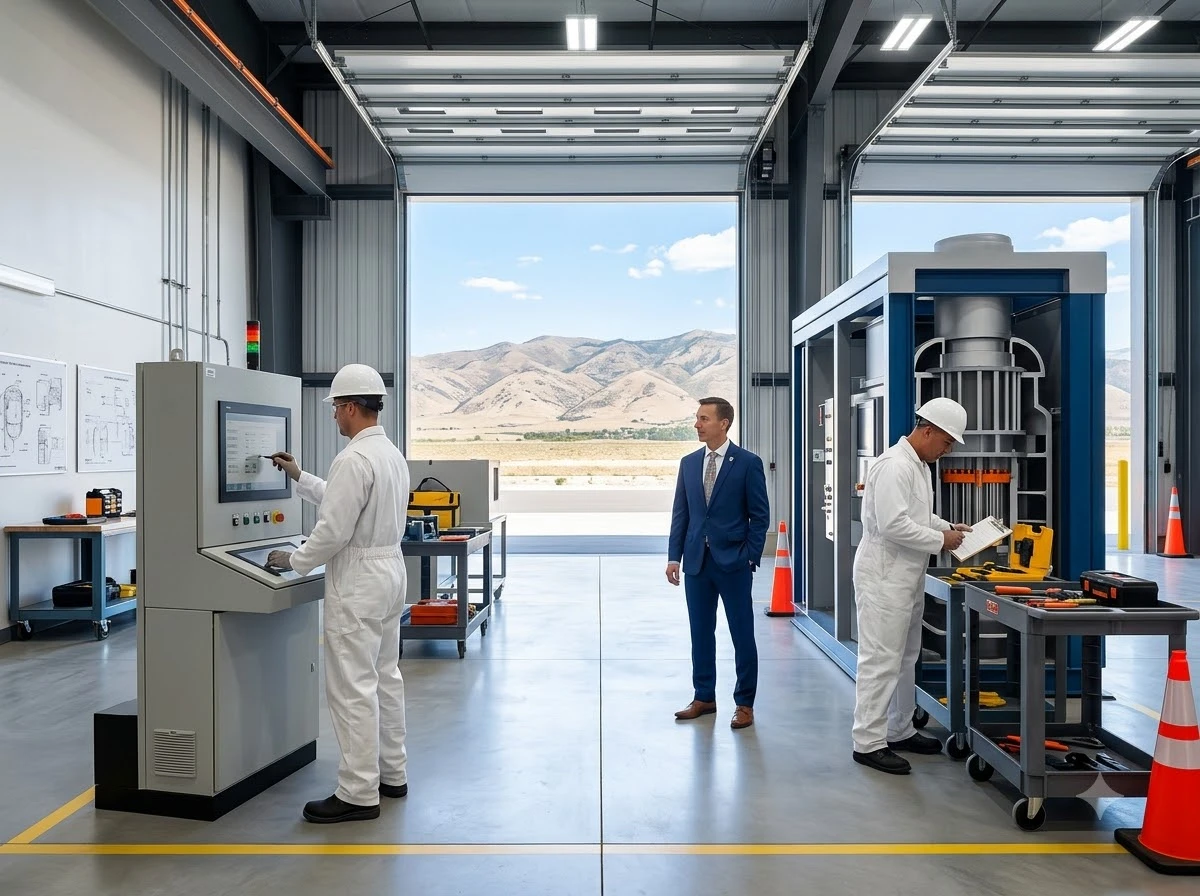
The campus will sit on underused university-owned property under a long-term ground lease. Programs will include professional certifications, technical trades, apprenticeships and applied research labs sponsored by industry.
Nuclear Employers Already Struggle to Hire
The timing tracks a documented labor squeeze. The U.S. nuclear sector employed 67,900 workers in 2024 across fuels and generation, essentially flat from the prior year. Employers reported sharp difficulty finding qualified people. 63 percent of nuclear manufacturing employers called hiring “very difficult,” the highest rate among electric power generation sectors. More than 80 percent of employers across construction, manufacturing, utilities and related fields reported at least some hiring trouble.
Nuclear engineers, reactor operators and technicians rank among the highest-paid roles in power generation. Median salaries top $100,000 for several of those jobs, and many do not require four-year STEM degrees. Yet the mid-career bench is thin and retirements are rising. National analyses project the need for several times the current workforce if the country is to expand capacity and build advanced reactors.
- Hiring pain: 63% of nuclear manufacturing employers rated it very difficult in 2024 surveys.
- Pay premium: Nuclear engineer median $127,520; reactor operator $122,610; technician $104,240.
- Pipeline gap: Employers expect growth in construction and fuels, but qualified candidates lag.
- Trades bottleneck: Nuclear-grade certifications for welders, pipefitters and related roles take years and do not transfer easily from conventional work.
Crowd reaction on X quickly noted the sequence. One energy analyst account observed that reactor announcements have been outrunning the people needed to operate them, and that routing transitioning service members into plant roles is among the fastest credible staffing paths. The open question remains whether planning MOUs convert into funded buildings.
How USU, the City and Hi Tech Divide Duties
Under the MOU the three parties split work to keep the project viable over time. USU supplies USU academic leadership and ground lease, curriculum development, faculty, research capacity and administration of credentials and degrees. Brigham City handles site master planning, infrastructure coordination, economic development and local permitting. Hi Tech Solutions acts as master developer: financing, construction coordination, industry equipment, technology and internship or job pathways.
USU President Brad Mortensen tied the project to the university’s land-grant role. “Working alongside Brigham City and Hi Tech Solutions, we have an opportunity to explore new approaches to technical training and research that prepare students for high-demand careers, support economic growth and strengthen Utah’s leadership in energy and national defense,” Mortensen said.
House Speaker Mike Schultz and Senate President J. Stuart Adams both praised the alignment of education, industry and community. Schultz noted that as coal capacity retires over the next decade or two, nuclear must be ready to step in at low cost. The campus is framed as one piece of that framework.
We lack both on the trade side and the skilled workforce side, and we lack from the engineering and education side in our industry. So this looks like a catalyzation of two entities and just the beginning of sharing this with other education institutes, trade schools, and other groups from the private sector coming together to build out campuses and to build out facilities to train the next generation of advanced nuclear workforce and advanced energy workforce.
Chris Hayter, co-founder and COO, Hi Tech Solutions, press conference
Veterans Get a Direct On-Ramp
A core design goal is credentialing, apprenticeship and transition programs that convert military technical experience into nuclear plant operations, maintenance, engineering support and safety roles. Hi Tech has previously set a target of hiring more than 1,000 veterans across its Utah work. The campus is meant to make those pathways local and structured rather than ad-hoc.
Non-traditional students and skilled trades workers will also find routes that do not require a traditional four-year degree first. Simulation labs and equipment testing are planned so industry can validate skills on site.
- Targeted degree and certificate pathways for veterans using SkillBridge-style models.
- Apprenticeships in nuclear operations, quality assurance and advanced manufacturing.
- Industry-sponsored labs for equipment testing and procedure validation.
- Internship and direct employment pipelines into Hi Tech and partner projects.
Brigham City sits in northern Utah’s defense and aerospace corridor, which organizers say helps with both talent recruitment and dual-use technology work.
Part of a Larger Brigham City Nuclear Ecosystem
The training campus is not a standalone education project. In November 2025, Hi Tech Solutions and Holtec International, working with the state and Brigham City, announced plans for a full nuclear energy ecosystem. That package includes manufacturing of components for Holtec’s SMR-300 reactors, the workforce hub, and longer-term deployment of small modular reactors in Utah and the Mountain West.
Earlier materials describe 750 million in private investment and 1,300 jobs in Phase 1, with hundreds of construction roles and more than 600 long-term positions projected across phases. A permanent state-of-the-art training campus was already committed for 2028 in the 2025 MOU between the state, Hi Tech and Holtec. Monday’s agreement with USU and the city turns that commitment into a concrete land and academic partnership adjacent to an existing campus.
- May 2025: State, Hi Tech and Holtec sign MOU for Mountain West nuclear ecosystem including training campus by 2028.
- November 2025: Public announcement of Brigham City hub with manufacturing, training and future SMR deployment under Operation Gigawatt.
- August 24, 2026: USU, Brigham City and Hi Tech sign MOU for CERT Campus on university land.
- Target 2028: Construction start on first 20,000-square-foot phase if funding clears.
- Early 2030s: First SMRs targeted for operation in the broader plan.
Hi Tech has also referenced related projects with Fulcrum Point Holdings in Brigham City and Green River that would draw on the same trained workforce. Separately, USU signed a research MOU with Idaho National Laboratory earlier in 2026 focused on nuclear and energy topics, giving the university another channel for applied work.
What the Pipeline Is Built to Unlock
The second-order effect is capacity. Without certified operators, maintenance techs, quality specialists and nuclear-grade trades, SMR factories and plants stay on paper. By placing a university-backed training and R&D hub in the same city as the planned manufacturing and potential reactor sites, Utah is trying to close that loop locally. Graduates and apprentices can stay in northern Utah rather than being imported or lost to other states.
Operation Gigawatt, launched in October 2024, sets a goal of roughly doubling Utah’s generating capacity within a decade. Nuclear is one pillar alongside geothermal, natural gas and transmission upgrades. Data-center and AI load growth has raised the stakes; some proposed campuses in the region could draw multiple gigawatts. Reliable baseload that is also low-carbon is the product the state is selling.
The MOU itself authorizes evaluation, planning and advancement. It is not a final construction contract or appropriation. Funding sources, detailed curriculum, exact campus design and additional industry partners are still to be locked. Brigham City’s mayor still needed city council approval for the formal city signature in some reports. Yet the land commitment from USU and the master-developer role for Hi Tech give the project more concrete footing than many workforce announcements that never leave the press release stage.
If the first phase opens on schedule, Brigham City becomes one of the few places in the country where a student or veteran can train for advanced nuclear work within walking distance of both a university campus and an emerging manufacturing cluster. That combination is what the partners are betting will turn Utah’s nuclear paper plans into operating plants and exported components.
The campus starts as a planning document. Its value will be measured in certified welders, operators and engineers who stay in the region when the first SMR modules need crews.