The Namibia National Olympic Committee named a team of 12 athletes on Friday for the Dakar 2026 Youth Olympic Games, set for 31 October to 13 November in Senegal. Eight coaches and technical officials plus three management staff will travel with them.
The squad covers seven sports and marks Namibia’s return to the Youth Olympics on the continent that will host an Olympic sports event for the first time.
The 12 Athletes and Their Seven Codes
Swimming supplies the largest group with four names. Beach volleyball, cycling and the rest fill out a compact multi-code side.
| Sport | Athletes |
|---|---|
| Athletics | Elkana Iileka |
| Beach volleyball | Matheus Nahenda, Nathanael Ndemukulunga |
| Boxing | Kalenga Abraham |
| Cycling | Mike Baartman, Bianca Nell |
| Swimming | Lorenzo Esterhuizen, Nathan Bock, Madison Bergh, Roselinda Matyayi |
| Triathlon | James Langford |
| Beach wrestling | Shithigona Shipopyeni |
The NNOC said the group reflects a commitment to the next generation and international exposure. Coaches include Hafeni Elias (athletics), Aloisius Ishitile (beach volleyball), Lungameni Ipunduka (boxing), Hans du Toit and Ermin van Wyk (cycling), Jean-Michael Leitner (swimming), Adele de la Rey (triathlon) and Luis Forcelledo Paz (beach wrestling).
Why Dakar Changes the Frame for African Teams
Dakar 2026 is the first Olympic sports event on African soil. Roughly 2,700 athletes will compete across 25 competition sports and 10 engagement sports. The IOC set participation principles that prioritise all 54 African National Olympic Committees and give the host strong representation where possible.
Venues sit in Dakar, Diamniadio and Saly. The programme limits each sport to one discipline and aims for full gender balance: 73 events per gender plus seven mixed. Maximum age is 17. Beach volleyball, beach wrestling, triathlon and cycling road all appear, matching several of Namibia’s selections.
The motto “Africa Welcomes, Dakar Celebrates” and the emphasis on Teranga, Senegal’s hospitality spirit, frame the Games as more than a competition. A Youth Refugee Olympic Team of Africa-based athletes will also debut. For a mid-sized NOC such as Namibia the continental stage lowers travel and cultural barriers that have shaped earlier overseas editions.
Namibia’s Uneven Youth Olympic Trail Since 2010
Namibia’s prior Youth Olympic results show sharp swings in team size and focus.
| Edition | Host | Athletes (M/W) | Total |
|---|---|---|---|
| 2010 | Singapore | 3/3 | 6 |
| 2014 | Nanjing | 6/24 | 30 |
| 2018 | Buenos Aires | 0/11 | 11 |
| 2026 | Dakar | TBC | 12 |
The 2014 peak came largely from a women’s football team. Later editions trimmed back. Across all Youth Olympics Namibia has collected one bronze, won by Quinn Reddig. Senior Olympic medals remain five silvers, four of them from Frankie Fredericks and one from Christine Mboma in 2020.
The new 12-athlete group sits close to the 2018 total and far below 2014. It spreads talent across individual and small-team codes rather than one large squad. That pattern of measured multi-code investment has kept Namibia present every Summer Youth Olympics since the format began.
Maike Betts Takes the Lead Role
Former Olympic rower Maike Betts serves as chef de mission. She also sits on the NNOC board as athletes’ representative and has worked in international sport management.
I am honoured to lead Team Namibia at the Dakar 2026 Youth Olympic Games, a historic milestone as the first Olympic event to be held on African soil. As an Olympian, I understand the impact that opportunities like these can have on a young athlete’s journey. Having also spent the past several years working in international sport management and administration, I am committed to ensuring our athletes are fully prepared, well supported, and able to perform at their best in Dakar. Beyond the competition, I hope this experience will inspire them, help shape their future sporting careers, and contribute to their growth as confident young leaders and ambassadors for Namibia.
Betts made that statement in the NNOC release. Support staff are physiotherapist Kara Scheepers and press attaché Vincentius Boois. The full delegation therefore runs to 23 people around the 12 competitors.
- Chef de mission: Maike Betts
- Physiotherapist: Kara Scheepers
- Press attaché: Vincentius Boois
- Coaches: eight specialists covering each entered code
That structure gives the young athletes experienced day-to-day cover while giving the officials themselves high-level Games experience that can feed back into domestic programmes.
Beach Codes and the Swimming Core
Four swimmers form the biggest single contingent. Lorenzo Esterhuizen, Nathan Bock, Madison Bergh and Roselinda Matyayi head to the pool. Young swimming pathways elsewhere have shown how junior international starts can accelerate careers, a point also visible among other young swimmers chasing Olympic pathways.
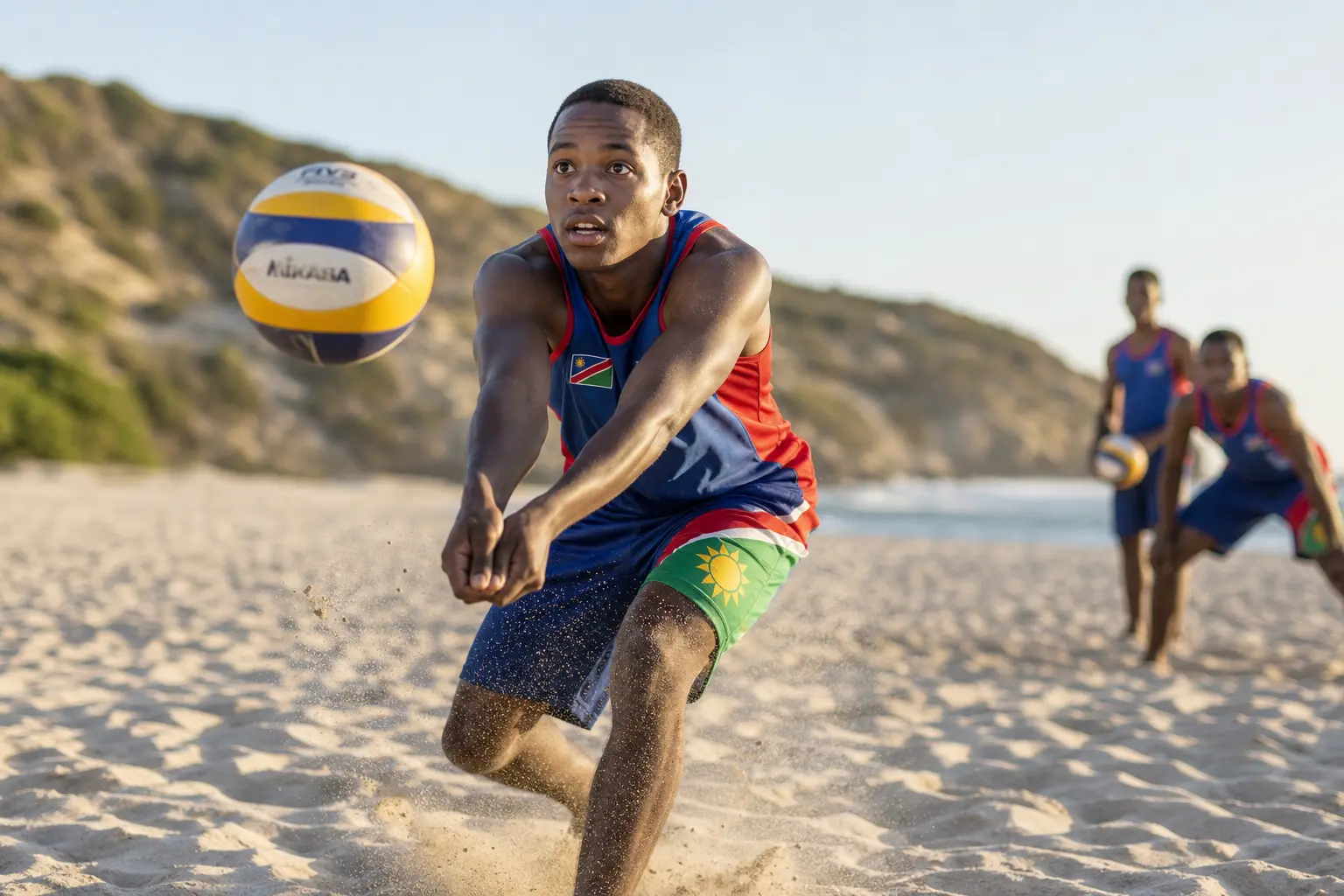
Beach volleyball pair Matheus Nahenda and Nathanael Ndemukulunga and beach wrestler Shithigona Shipopyeni fit the Dakar programme’s coastal emphasis. Boxing’s Kalenga Abraham steps into a code that has long carried Namibia’s senior Olympic hopes, even as promoters face Namibia’s wider boxing cost pressures. Cyclists Mike Baartman and Bianca Nell, triathlete James Langford and athlete Elkana Iileka complete the list.
The spread covers both traditional Namibian strengths and newer beach formats that the IOC designed for African conditions and existing venues.
What a Lean Team Signals for the Next Cycle
The NNOC has already linked Dakar preparation to its broader 2026-2028 strategy, which also covers the Glasgow Commonwealth Games. Olympic Solidarity support and national ministry backing appear on the NNOC’s Dakar 2026 preparation page. A selection policy sets the criteria; the final 12 names show the outcome of that process.
Twelve athletes will not flood medal tables. They will, however, gain exposure on a home-continent stage that earlier Namibian youth teams never had. Officials gain operational miles. The pattern that began with six athletes in Singapore in 2010 now continues with a focused group that can feed senior pipelines for Los Angeles 2028 and beyond.
Local chatter on the announcement stayed modest in the first hours, while neighbouring federations simultaneously named their own chefs de mission. The shared African milestone is the quieter current running under the individual team news.
Frequently Asked Questions
When and where are the Dakar 2026 Youth Olympic Games?
The Games run from 31 October to 13 November 2026 across venues in Dakar, Diamniadio and Saly in Senegal. They are the fourth Summer Youth Olympic Games and the first Olympic sports event ever staged on the African continent.
How many athletes is Namibia sending to Dakar 2026?
Namibia is sending 12 athletes plus eight coaches and technical officials and three team management and support staff, for a total delegation of 23.
What is the age limit for Youth Olympic athletes in Dakar?
The maximum age is 17 at the time of the Games. International Federations set the precise age bands for each sport so they align with existing junior pathways.
Which sports will Namibia contest at the Youth Olympics?
The seven codes are athletics, beach volleyball, boxing, cycling, swimming, triathlon and beach wrestling. Swimming has four athletes; the others have one or two each.
Has Namibia won medals at previous Youth Olympic Games?
Yes. Namibia has one Youth Olympic medal, a bronze won by Quinn Reddig. The country has appeared at every Summer Youth Olympics since Singapore 2010.
Who is the chef de mission for Team Namibia?
Former Olympic rower Maike Betts, who also serves as the NNOC athletes’ representative, leads the team as chef de mission.