
Microsoft is pushing through the third Xbox price increase in just over a year, raising console prices by $100 to $150 worldwide effective August 1, 2026. The Series S 512GB moves up by $100, every 1TB model by $150, and the 2TB Series X is being discontinued. Microsoft cited console memory and storage costs that have risen more than 2.5x since 2024 and that the company expects to double again by fall 2027.
The price hike landed the same day Apple raised prices across most Macs, iPads, and home devices, with increases ranging from 18% to nearly 33%, citing the same squeeze. Together, the two moves turn a component crunch into a consumer one: AI data centers, including OpenAI’s Stargate project on track to consume up to 40% of global DRAM output, are pulling memory production toward higher-margin chips, and the cost is showing up at the checkout.
What Microsoft Just Did to Xbox Prices
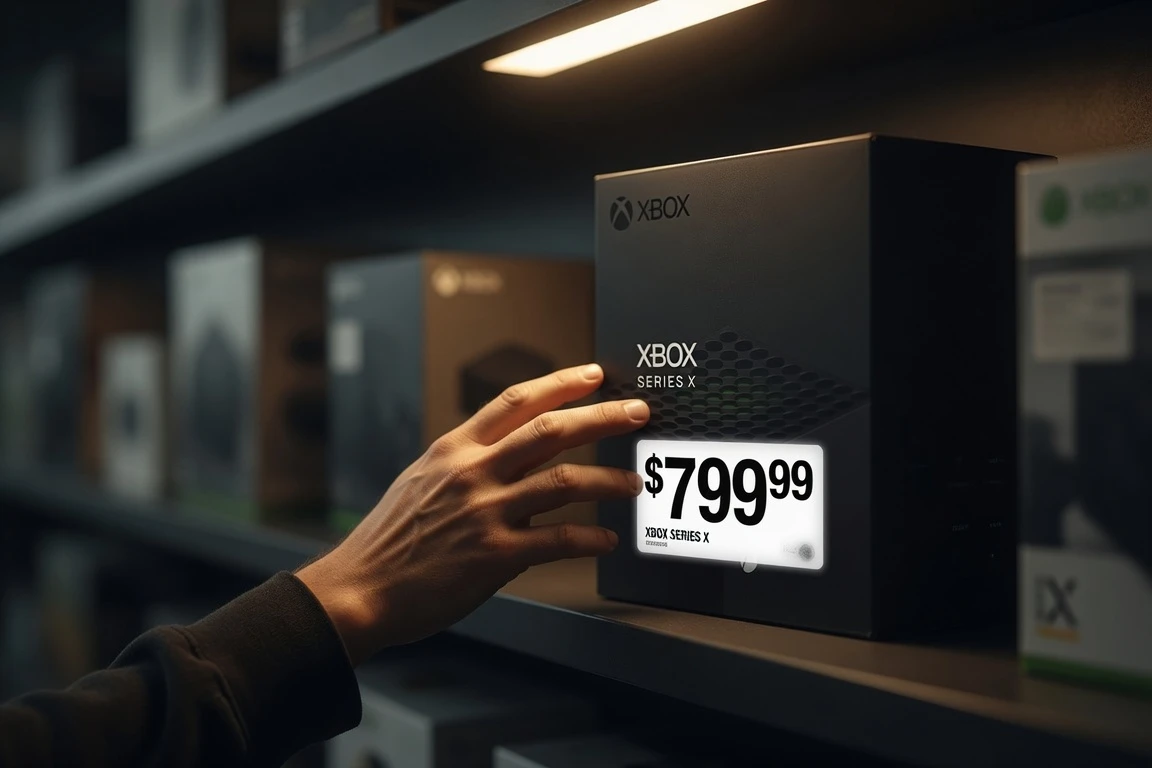
Microsoft’s official price list takes effect August 1, 2026. The cheapest model, the 512GB Series S, moves from $399 to $499. The 1TB Series S goes to $550. The all-digital Series X 1TB goes from $599 to $749. The disc-drive Series X 1TB, the company’s flagship, rises to $799. The new $799.99 disc-drive Series X sits $300 above the $499 the original Xbox Series X launched at in November 2020, a 60% increase in five and a half years.
| Model | Old price | New price (from Aug 1, 2026) | Microsoft’s stated increase |
|---|---|---|---|
| Xbox Series S 512GB | $399 | $499 | +$100 |
| Xbox Series S 1TB | $499 | $550 | +$150 |
| Xbox Series X 1TB all-digital | $599 | $749 | +$150 |
| Xbox Series X 1TB with disc drive | $649 | $799 | +$150 |
Forbes notes the August bump is the second Xbox price hike in less than a year, with Microsoft having previously raised prices in October 2025 by $20 to $70. Microsoft’s blog post framed the increase as the only path available given component economics. “We hoped another price increase would not be necessary, and we have spent the last several months working with suppliers on options,” Microsoft’s official June 25 Xbox price update said. The company is also sunsetting the 2TB Series X it introduced in 2024, citing component costs.
Apple Hit the Same Wall, on the Same Day
Apple’s price reset went out the same afternoon, with the company’s largest increases since the Vision Pro launch. The MacBook Neo, Apple’s budget laptop aimed at students, jumped from $599 to $699. The 13-inch MacBook Air moved from $1,099 to $1,299. The 14-inch MacBook Pro went from $1,699 to $1,999. The iPad Air rose from $599 to $749, and the entry iPad Pro went from $999 to $1,199.
| Product | Old price | New price |
|---|---|---|
| MacBook Neo (base) | $599 | $699 |
| MacBook Air 13-inch | $1,099 | $1,299 |
| MacBook Pro 14-inch (M5) | $1,699 | $1,999 |
| iPad Air 11-inch | $599 | $749 |
| iPad Pro 11-inch (Wi-Fi) | $999 | $1,199 |
Apple’s stock closed more than 6% lower on Thursday, the steepest single-day fall since April 2025. Apple CEO Tim Cook told The Wall Street Journal last week the increases had become unavoidable. “This is a hundred-year flood,” Cook said. “I’ve never seen anything like it in any area in over 40 years.”
Apple’s pricing playbook has long been to drop the cheapest option, push buyers to higher storage tiers, or steer them to Pro models. In May, Apple removed the $599 256GB Mac mini from its lineup, with the entry model now starting at $799. Counterpoint Research’s Tarun Pathak estimates the higher component costs could add roughly $200 per iPhone for Apple, with price increases of $150 to $200 weighted toward higher-memory configurations. IDC estimates roughly 54% of iPhones shipped since 2022 will not support the full new Siri experience, a factor that pushes Apple toward higher-memory configurations across the lineup.
Where the Memory Went: AI Data Centers
The capacity crunch traces to the same customers sitting on both companies’ supply chains: AI data center operators. OpenAI’s Stargate initiative is on track to consume up to 40% of global DRAM output through a deal with Samsung and SK Hynix for up to 900,000 wafers per month. Samsung and SK Hynix together control roughly 70% of the global DRAM market and 80% of the high-bandwidth memory market.
All three memory makers that dominate the industry have made their priorities for 2026 explicit.
- Samsung is scaling HBM production capacity by roughly 50% in 2026 to serve AI customers, while extending DDR4 lifecycles to free up capacity.
- SK Hynix has HBM capacity sold out through 2026 and is preparing to raise $29 billion via a Nasdaq listing.
- Micron announced in December 2025 it will exit its Crucial consumer memory brand by February 2026, ending three decades of retail SSD and DRAM sales to redirect output at AI and data center customers.
Micron’s most recent quarter illustrates the trade. The company reported revenue quadrupling year over year and a gross margin jump from 39% a year ago to 84.9%, a level CNBC noted surpasses Nvidia and Meta. Counterpoint Research says memory and storage prices have quadrupled in the past three quarters as suppliers steer more production toward the high-bandwidth memory used in AI servers. Samsung and SK Hynix are scaling capacity, but most of the new wafer output is committed to HBM and Stargate. An Investing.com analysis projects HBM to account for roughly 25% of total DRAM wafer production in 2026, with demand growing around 70% year on year.
Why Consoles Get Hit Harder Than Phones and PCs
Microsoft’s Xbox Wire post made the console-specific bind explicit. The components crunch is hitting the entire consumer electronics industry, but consoles carry a structural disadvantage. There is no margin cushion to absorb the cost increase.
Unlike phones, computers, speakers, and other consumer devices, consoles are typically not sold at a profit, but instead for less than they cost to make.
Higher-capacity storage models pack more of the constrained chips per unit, which is part of why Microsoft is killing the 2TB Series X. A 2TB Xbox draws more NAND and more DRAM than a 512GB model, so it sits at the intersection of two of the most squeezed parts. Sony is exposed to the same arithmetic: the console memory crunch hitting PlayStation 6 timing has Forbes reporting management at Sony considering a delay on the release of the PlayStation 6.
The broader Xbox business is also under pressure. Microsoft’s reported Xbox spin-off talks land in the same window, with the gaming unit’s margins reportedly sliding toward 3%. The memory crisis behind Xbox’s Project Helix delay sits on top of the same supply picture, with Microsoft confirming Helix will not appear at the Xbox Games Showcase. Both companies are developing next-generation hardware against a component backdrop that has worsened at every quarterly check in 2026.
What Buyers Will Pay Through 2027
Microsoft’s stated forecast is that console memory and storage prices will double again by fall 2027, a separate doubling on top of the more-than-2.5x increase the company has already absorbed since 2024. The post did not break down DRAM and NAND individually.
Unfortunately, console storage and memory prices have increased by more than 2.5x and we expect another doubling by the fall of 2027.
Apple’s statement on Thursday pointed in the same direction. “The consumer electronics industry is facing an unprecedented challenge,” the company said. “The rapid expansion of AI data centers has created an extraordinary surge in demand for memory and storage. We have never seen a component price increase this much, this quickly.” Apple added that it has reached a point where the company needs to begin raising prices on a number of products, leaving the door open to more increases down the line.
Apple’s pricing playbook has long been to drop the cheapest option, push buyers to higher storage tiers, or steer them to Pro models. In May, Apple removed the $599 256GB Mac mini from its lineup, with the entry model now starting at $799. Counterpoint Research’s Tarun Pathak estimates the higher component costs could add roughly $200 per iPhone for Apple, with price increases of $150 to $200 weighted toward higher-memory configurations. IDC sees Apple’s average selling price rising 12% this year, helped by a richer product mix and the expected launch of a foldable iPhone. IDC also expects all new iPhone models to move to 12GB of RAM as Apple looks to avoid selling new devices without access to the full suite of Apple Intelligence features.
The Programs Microsoft Is Adding to Cushion the Bite
Microsoft’s Xbox Wire post paired the price increase with a slate of access programs aimed at softening the hit for buyers who want in now. The company is making Buy Now, Pay Later options easier to use on eligible Xbox hardware through Microsoft Stores, allowing short-term interest-free installments. It is also working with partners on 0% APR financing for up to 12 months on eligible hardware, with lower monthly payments. A new “previously played” program will let players trade in used consoles at participating retail partners, with the refurbished units then sold at lower prices. Microsoft Stores will also stock Certified Refurbished Xbox consoles at up to $100 off MSRP.
That discount alone wipes out the $100 Series S 512GB bump on the refurbished tier. Financing and trade-in spread the cost over time; they do not lower it. The underlying memory bill still runs through the company’s supply chain.
Frequently Asked Questions
Why is Microsoft raising Xbox prices?
Console memory and storage prices have risen more than 2.5x since 2024, and Microsoft expects another doubling by fall 2027. Because consoles are sold below cost, the company is passing the increase on rather than absorbing it.
Did Apple raise prices too?
Yes, on the same day. Apple raised prices across most of its lineup on June 25, 2026: the MacBook Neo went from $599 to $699, the 14-inch MacBook Pro went from $1,699 to $1,999, and the iPad Pro 11-inch rose from $999 to $1,199. Increases across the full list ranged from 18% to nearly 33%.
What is driving the memory price spike?
AI data centers are absorbing the share of memory production that consumer electronics used to count on. OpenAI’s Stargate initiative has secured up to 900,000 DRAM wafers per month from Samsung and SK Hynix, a volume that works out to roughly 40% of global DRAM output.
Will memory costs come down before 2027?
Microsoft’s stated forecast points to memory costs doubling again by fall 2027, with no near-term relief visible from the supply side. Samsung and SK Hynix are adding capacity, but most of the new wafer output is committed to high-bandwidth memory and Stargate, not consumer parts.
Should I buy an Xbox now or wait?
Microsoft’s forecast points to memory prices doubling again by fall 2027, so waiting does not bring relief. The company is adding Buy Now, Pay Later options, 0% financing for up to 12 months, and Certified Refurbished consoles at up to $100 off MSRP for buyers who want a lower entry price.