The 2026 World Cup is the biggest football tournament ever staged, and the four business lessons inside it are not about the eventual winners. They live in the 40-year-old goalkeeper who turned Spain away with a 50,000-follower Instagram account and woke up with 15.5 million, in the smallest country ever to qualify for a World Cup, and in the non-sponsor brands whose stadium signs got taped over for the month. FIFA put up a record prize pot and the official 2026 World Cup tournament page at FIFA confirms 48 teams are playing 104 matches across three host countries for the first time; the playbook for everyone else is sitting in what those teams and brands did with the stage they were handed.
Every one of the four lessons below comes from a story this tournament has already produced in 2026, and every one is something a one-person business, a five-person team or a small brand can copy next week. None of them cost FIFA a cent. Most of them are moves the internet has been waiting for someone to make, and the smaller players made them first.
Smaller Players Are the Real Headline
- 48 teams, 104 matches across 16 host cities in three countries
- $655 million in total prize money, up 50% on Qatar 2022
- $50 million to the champions, $33 million to the runners-up
- 40-year-old Vozinha faced 27 Spain shots and saved 7
- Cape Verde population about 500,000; Curaçao about 150,000
Cape Verde had never played a World Cup match before this summer. Its goalkeeper, Vozinha, plays his club football in Portugal’s second tier, and his Instagram following the morning of the Spain game sat somewhere around 50,000. He walked off the pitch in Atlanta at 0-0, having denied Lamine Yamal, Rodri and Fabián Ruiz, and the number on his profile started moving in a way no one in football had seen before. Within days he had passed Patrick Mahomes, Victor Wembanyama and Travis Kelce, and he now sits above 15.5 million followers, according to the playbook behind a 15M-follower goalkeeper brand built overnight.
The trigger was not the goalkeeper himself. Brazilian broadcaster CazéTV, which is airing every World Cup match, watched Vozinha frustrate Spain and told its audience to stop what they were doing and follow him. One instruction, repeated to millions, executed in minutes. New Zealand defender Tim Payne had the same pattern a week earlier, going from 4,715 followers to more than 4 million in less than a week after Argentine creator Valen Scarsini singled him out as the tournament’s least-known player and asked his audience to back him. The audience was already watching; someone gave them a reason to move, and a name to move toward.
The Forbes breakdown of Vozinha’s surge, and the parallel Payne story covered on the same site, point to a sequence that travels beyond football: do the work long before the spotlight arrives, give people one obvious action to take, and be worth championing when they get there. The two goalkeepers in this tournament who did it best both had careers nearly two decades long. Their followers did not. The same sequence is already playing out for any business that pairs a long-prepared craft with a single, sharp call to action. For related reading on the Cape Verde-Spain match itself and how it played into U.S. news cycles, see how Cape Verde’s Spain draw connected to a hurricane name. The business angle is the same angle in a different uniform.
A 30-Second Pause Can End Your Run
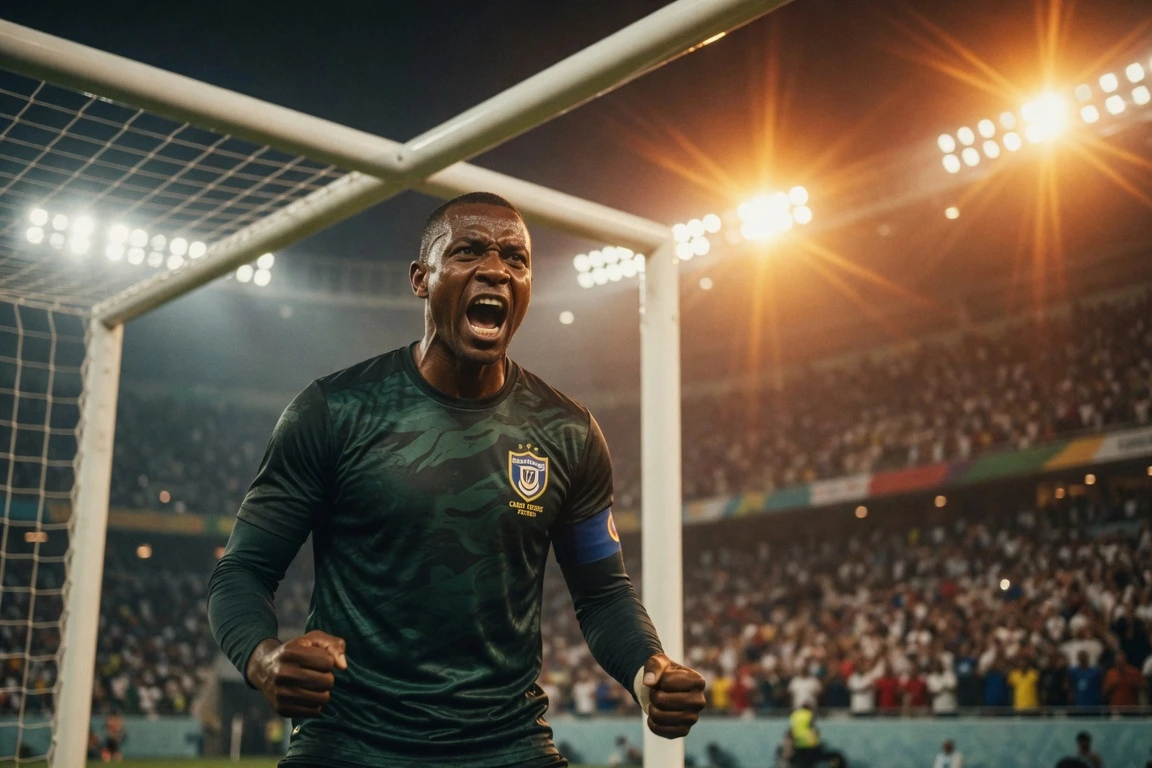
Curaçao is, by population, the smallest country ever to qualify for a men’s World Cup. Livano Comenencia scored for the Caribbean island nation against four-time champion Germany in Houston and pulled the score level at 1-1. Then came the hydration break, a FIFA-mandated pause introduced at this tournament to help players handle summer heat across the U.S., Canada and Mexico.
According to the AP report republished on Seattle sports media, Alan Shearer, the former England striker, said on The Rest is Football podcast: “I actually felt sorry for them. They scored and then it was maybe 30 seconds after that it stopped. So it’s killed their momentum.” Curaçao conceded two goals before halftime and the match finished 7-1 to Germany. The island’s first World Cup goal on the biggest stage it had ever reached was followed, inside a minute, by the end of its only real chance to win.
Hydration breaks are a peculiarity of this World Cup, and FIFA has said they will be applied regardless of venue or temperature. Critics from Roy Keane to Ronald Koeman have used them as tactical pauses rather than fluid breaks, and goals have been scored inside 10 minutes of the restart in 8 of the first 16 matches, per the AP’s reporting. For a small business owner, the lesson is not about football and not about FIFA. It is that any momentum you build can be interrupted by a pause you did not schedule, and the danger is rarely the break itself. The danger is the 30 seconds after the break, when the larger competitor has had time to regroup and you have not.
The 95th-Minute Reality of Being Ready
On a Wednesday in Houston, Caleb Yirenkyi waited almost the entire match, came off the bench, and scored in the fifth minute of second-half stoppage time to give Ghana a 1-0 win over Panama. The Guardian’s match report of the Group L game confirms he tapped in a low cross from Brandon Thomas-Asante, and the goal arrived at the exact point of a match where most substitutes have already accepted the draw. Trevoh Chalobah’s path to the same tournament looked longer. He posted on social media in 2018 about wanting a World Cup, and got his England call-up eight years later as a late injury replacement for Tino Livramento, as covered in Chalobah’s first England interview after the World Cup call-up.
The pattern holds across the tournament. The breakout stars did not arrive overnight; they arrived prepared. Vozinha had a 20-year professional career. Tim Payne had been training with the All Whites for the better part of a decade. The five minutes of stoppage time in any match, the late-night phone call, the unexpected opening on a squad sheet, are the moments every underdog business waits for. The businesses that win them are the ones that already have something to show.
The Money in Being Told to Hide
FIFA’s “clean stadium” rule, in force for the entire 39-day tournament, requires host venues to wipe away any branding that does not belong to an official World Cup sponsor. the inside look at the stadium sponsor cover-up shows the rule stretches from the exterior signage to the concession stands, and from the parking lots to the airspace above the venue. Some host cities have spent close to $500,000 making their own stadiums unrecognizable.
Levi’s Stadium in Santa Clara, the home of the San Francisco 49ers, has been renamed San Francisco Bay Area Stadium for the tournament. MetLife Stadium in East Rutherford is temporarily New York New Jersey Stadium. AT&T Stadium in Arlington is Dallas Stadium. Gillette Stadium in Foxborough is Boston Stadium. Mercedes-Benz Stadium in Atlanta got a one-off exemption because the Mercedes-Benz star on its retractable roof could not be covered without damaging the structure.
| Original stadium name | World Cup 2026 name |
|---|---|
| Levi’s Stadium, Santa Clara | San Francisco Bay Area Stadium |
| MetLife Stadium, East Rutherford | New York New Jersey Stadium |
| AT&T Stadium, Arlington | Dallas Stadium |
| Gillette Stadium, Foxborough | Boston Stadium |
| Mercedes-Benz Stadium, Atlanta | Atlanta Stadium (logo exempt) |
Levi’s, the denim brand that gave the 49ers’ stadium its name in the first place, decided not to fight the cover-up. It changed its own profile picture on social media to mimic the white tarp over its logo and ran a campaign around the joke. The Athletic’s reporting, confirmed by NBC Bay Area’s local coverage, says the brand turned a forced setback into a free global ad. That is the fourth lesson, and it is the one with the clearest price tag: every part of a business has a value, and the parts that look like liabilities are often the most useful inventory.
Four Lessons to Take Into Monday
The first week of this World Cup produced more useful material for a small business than most business schools publish in a year, because the World Cup runs on six billion viewers and zero patience. The teams, players and brands already in the knockout rounds are not the ones with the deepest pockets. They are the ones who understood the four moves below fastest.
- Back the underdog and make support cheap and obvious. CazéTV and Valen Scarsini added tens of millions of followers to two strangers by giving an audience one instruction. A small business that names a single, repeatable next step, and puts it where customers already are, runs the same play at a smaller scale.
- Guard a run while you have it. Curaçao had Germany on the ropes for less than a minute before an interruption handed the initiative back. When a sales streak or content run is working, do not switch tactics, do not redesign the page, do not take the hydration break.
- Build the work before the moment, because the moment is short. Vozinha had 20 years of professional football behind the Spain game. Trevoh Chalobah waited eight years between his first public World Cup ambition and the squad call. The skill has to exist before the chance does, or the chance becomes a missed connection.
- Treat every setback as inventory you can sell. Levi’s did not pay FIFA a sponsorship fee. It paid for the cover-up by turning the cover-up into a joke that the tournament’s broadcast cameras kept cutting to. The 30-second pause that killed Curaçao’s run is the same kind of forced reset that smaller businesses get from a price hike, a supplier failure or a public complaint; the ones that turn it into content win twice.
The knockout rounds of this World Cup have not been played yet, and the final is scheduled for July 19. The four lessons above will keep being proved out by whoever survives the next three weeks, and the rest of us will keep arguing about which one mattered most. The Scotland men’s team has its own underdog story to tell in this tournament; for related reading on what that has looked like off the pitch, see the Scotland Tartan Army’s return to the men’s World Cup. The teams and players doing this work are on television. The lessons are yours to copy.
Frequently Asked Questions
How much prize money does the 2026 World Cup winner get?
The champions of the 2026 World Cup will receive USD 50 million, with USD 33 million for the runners-up and USD 29 million for the third-placed team, according to the FIFA Council’s prize pot decision. The total pot of USD 655 million is 50% larger than the one distributed at Qatar 2022.
What is FIFA’s clean stadium rule at the 2026 World Cup?
FIFA requires every host venue to remove or cover any branding that does not belong to an official World Cup sponsor. That has renamed Levi’s Stadium as San Francisco Bay Area Stadium, MetLife Stadium as New York New Jersey Stadium, AT&T Stadium as Dallas Stadium and Gillette Stadium as Boston Stadium for the duration of the tournament.
Which was the smallest country to qualify for the 2026 World Cup?
Curaçao, with a population of about 150,000, is the smallest nation by population ever to qualify for a men’s World Cup. Cape Verde, the other debutant in this tournament’s opening week, has a population of about 500,000.
How many Instagram followers did Cape Verde’s Vozinha gain at the 2026 World Cup?
Vozinha’s Instagram following went from roughly 50,000 before Cape Verde’s 0-0 draw with Spain to more than 15.5 million within days, after Brazilian broadcaster CazéTV told its audience to follow him mid-match.
Why are there hydration breaks in the 2026 World Cup matches?
FIFA introduced mandatory hydration breaks midway through each half of every match to help players cope with summer heat across U.S., Canadian and Mexican venues. Referees pause play 22 minutes into each half for a three-minute break, regardless of weather or stadium conditions, which has drawn criticism from coaches and broadcasters.