Milan prosecutors asked Wednesday to dismiss the sports fraud case against Gianluca Rocchi, the former referee designator who ran officiating assignments for Italy’s Serie A and Serie B divisions. Italian news agency ANSA reported the request follows a two-year inquiry into whether Rocchi steered referee appointments to help Inter Milan.
Prosecutors say they found no fixed matches. They did not close the whole file, though. One allegation is heading to a different city’s courthouse, and Italian sports justice still has to weigh in on whether any rules were broken along the way.
Prosecutors Ask to Close the File
According to ANSA, prosecutors concluded there was no evidence of match fixing after two years of digging through phone records, interviews and match assignments. They said they did not identify a structured system aimed at interfering with appointments, language that reads, on its face, like a clean bill of health for Rocchi.
It is not quite that simple. The same prosecutors, Maurizio Ascione and Paolo Ielo, forwarded the case documents to sports justice authorities and to the Italian Olympic Committee’s General Prosecutor’s Office, the body known as CONI, to check whether disciplinary breaches occurred regardless of the criminal outcome.
Rocchi suspended himself from the designator’s job in late April, before any of this played out.
It would allow the legal proceedings to run their course properly, from which I am sure I will come out unscathed.
He said that in a statement carried by ANSA when he stepped aside, ending, at least for now, a run atop Italian officiating that included assigning every referee and VAR official in the country’s top two divisions.
Two Complaints, One Long Inquiry
The paper trail behind Wednesday’s request stretches back further than most casual followers of Serie A realize.
- January 2024: Hellas Verona lose 2-1 to Inter on a late goal from Davide Frattesi, a result that draws complaints from Verona’s camp about officiating.
- Autumn 2024: Michele Croce, a Verona based lawyer and Hellas Verona fan, files the complaint that opens the wider inquiry into refereeing decisions.
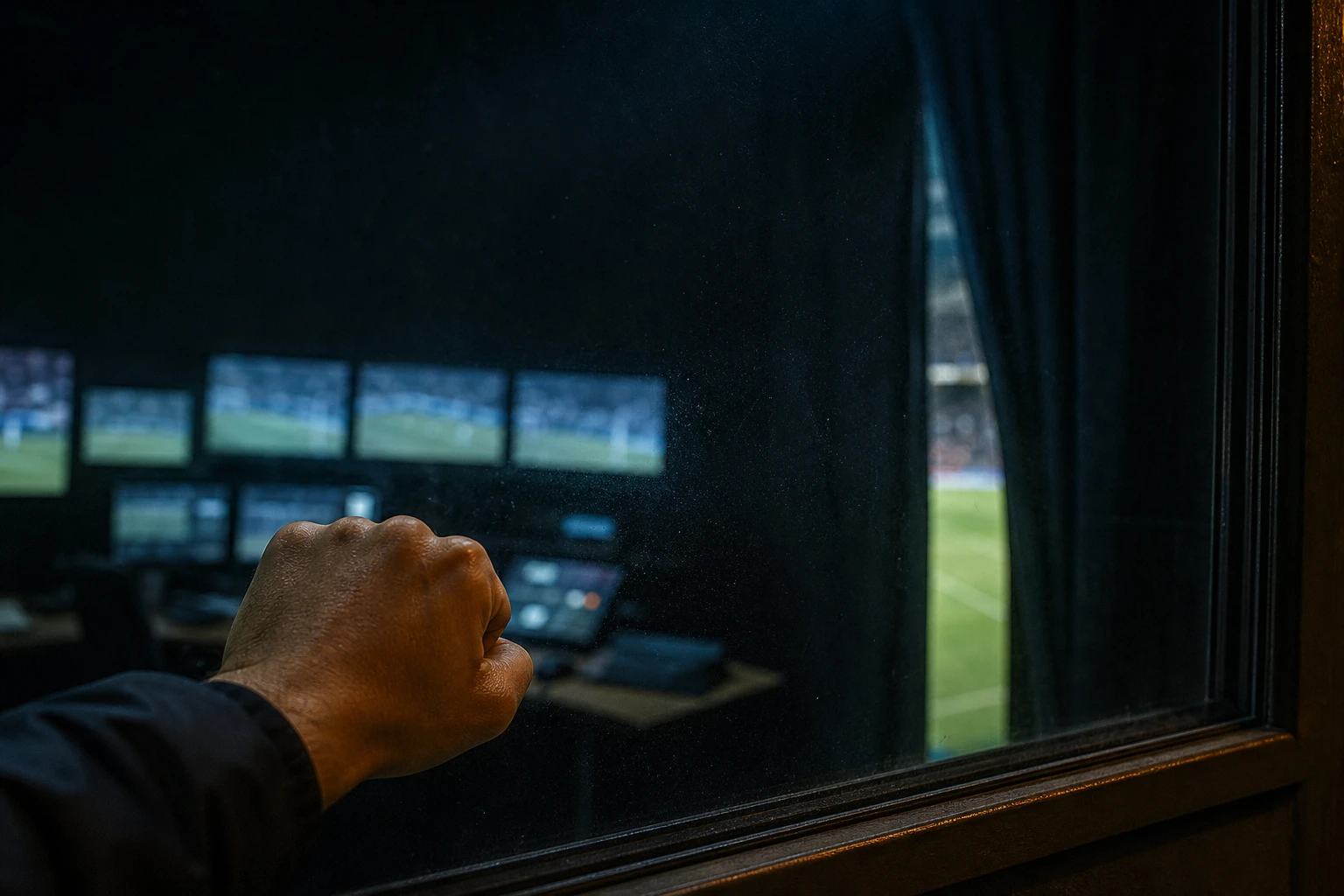
- March 1, 2025: Udinese beat Parma 1-0 on a penalty that prosecutors say Rocchi pushed VAR official Daniele Paterna to award by knocking on the video review booth’s glass.
- May 21, 2025: Assistant referee Domenico Rocca sends FIGC federal prosecutor Giuseppe Chiné a formal complaint specifically about that VAR incident.
- July 2025: Chiné’s office, having found no disciplinary conduct, asks CONI’s sports prosecutor to shelve the VAR complaint.
- April 25, 2026: Milan prosecutor Maurizio Ascione opens a criminal investigation into Rocchi for complicity in sports fraud. Rocchi self-suspends the same day.
- July 15, 2026: Ascione’s office asks to dismiss the fraud case, while sending part of it to Monza prosecutors and to sports justice.
Two separate complaints, filed a year apart by two people with no connection to each other, ended up feeding the same criminal file.
What Was Rocchi Accused Of?
Prosecutors accused Rocchi of two distinct things: pressuring a VAR official during a live match, and swapping referees to suit Inter’s preferences across a run of games. The first carried the weight of an active interference in a result. The second was slower and less visible, a pattern built match by match.
The VAR allegation centers on Udinese against Parma. Investigators suspected Rocchi left his position and repeatedly knocked on the glass of the review booth at the center in Lissone, near Milan, to draw the attention of officials reviewing a possible handball. Udinese were awarded, and converted, the penalty that won them the game.
The assignment allegation is broader and harder to prove. It rests on the idea that Rocchi, rather than dealing with Inter directly, fielded concerns relayed through intermediaries inside the refereeing world and adjusted his appointments accordingly.
- Knocking on the VAR booth’s glass during a live review, prosecutors allege, to press officials toward a penalty call.
- Pulling a referee off a match after word reached him that Inter disliked that official.
- Routing club concerns through AIA intermediaries rather than direct contact with Inter representatives.
Rocchi’s lawyer, Antonio D’Avirro, has disputed the accusations from the start, telling reporters in April that his client is a serious and correct person who contests the charges laid out in the original notice.
Four Matches, One Alleged Pattern
The assignment side of the case narrowed to four specific matches, all but one from the 2024-25 season, the year Napoli won the Scudetto with Inter finishing a single point behind. The newest addition, from this April, shows the surveillance ran right up until Rocchi’s own suspension.
| Match | Date | Referee Appointed | What Prosecutors Allege |
|---|---|---|---|
| Bologna v Inter | April 20, 2025 | Andrea Colombo | Replaced Daniele Doveri, reportedly unwelcome to Inter; Bologna won 1-0 on an Orsolini goal |
| Inter v Milan, Coppa Italia | April 23, 2025 | Daniele Doveri | Rerouted here instead, away from a possible cup final; Inter lost 3-0 |
| Inter v Verona | May 3, 2025 | Gianluca Manganiello | Chosen over Simone Sozza, whom Inter’s camp had flagged as unwanted |
| Torino v Inter | April 26, 2026 | Maurizio Mariani | Named after Inter’s camp voiced concern, prosecutors say; match ended 2-2 on a Torino penalty |
None of the four results actually broke in Inter’s favor. Bologna won, Milan won, and Torino salvaged a draw. Prosecutors appear to have weighed that outcome data heavily in deciding the pattern did not amount to an organized scheme.
Inter’s Paperwork Clears, Gravina Enters the Frame
Inter itself also had proceedings dismissed. Prosecutors ordered the case against the club closed under Italy’s corporate liability statute, since the underlying interference charges did not hold up against the company. Inter has not been formally accused at any point in the inquiry.
Four other figures from the Associazione Italiana Arbitri, Italy’s referees’ association known as the AIA, remain named alongside Rocchi, including VAR supervisor Andrea Gervasoni. Five people in total were placed under investigation, according to Italian outlet Radio Sportiva’s account of the prosecutors’ decision.
A wiretap disclosure reported by Corriere della Sera on July 8 added a sharper edge. Prosecutors now describe Rocchi as having acted in coordination with Inter figures who, they allege, benefited from a preferential relationship with Gabriele Gravina, the former Italian football federation president who resigned after the national team missed the World Cup. Gravina has not been placed under investigation.
Accounts of the case still pull in different directions.
- FIGC prosecutor Giuseppe Chiné called the swirl of media reports “untrue and even fanciful,” insisting only one complaint ever reached his office and it produced no disciplinary case.
- Inter president Giuseppe Marotta said the club has acted with complete propriety throughout and remains outside the matter, before and after Wednesday’s news.
- Milan prosecutors Maurizio Ascione and Paolo Ielo allege coordinated contact between Rocchi and Inter’s circle, even while asking to close the broader fraud claim.
Those positions are not really compatible, and Wednesday’s filing does not force anyone to reconcile them.
Calciopoli, Marotta League and a Familiar Script
Italian football has a long memory for exactly this kind of story. Calciopoli, the 2006 scandal that saw Juventus stripped of two Scudetti and dropped into Serie B over improper contact with referee assignors, remains the reference point every new inquiry gets measured against.
This one arrived with its own nickname attached before the ink was dry. Some Italian outlets dubbed it the “transalpine Negreira case”, a nod to the refereeing payments scandal that has dogged Barcelona in Spain. Fan forums leaned on an older label too: the so called Marotta League, the running joke and grievance among rival supporters that Inter’s club president quietly shapes outcomes across the league.
Sports Minister Andrea Abodi weighed in when the criminal probe first broke in April, saying the most serious issue was how the original complaint had been handled inside the football system before it ever reached prosecutors. He added a line that reads differently now that dismissal is on the table.
Should responsibilities be established, Abodi said, there would inevitably have to be consequences.
Not Fully Over
The VAR booth allegation, the one involving the knocks on the glass at Lissone, is not part of Wednesday’s dismissal at all. Prosecutors are sending that strand to their counterparts in Monza, who have territorial jurisdiction over the review center, meaning a different office now decides whether it goes further.
CONI’s sports prosecutor and FIGC’s own disciplinary system still have the full case file too, independent of whatever a criminal court eventually does with the request to dismiss. A sporting sanction does not require a criminal conviction, and Chiné’s office has already said it would reopen its own inquiry if new evidence surfaced, which is effectively what just happened.
Daniele Orsato has already taken over as Serie A and Serie B’s referee designator, drawing up next season’s assignments while Rocchi’s name still sits on prosecutors’ paperwork. That file, or what remains of it, now splits between Monza and the sports court at CONI.