Andy Burnham set out his first major policy speech as prime minister-in-waiting in Manchester on Monday, pledging a “Number 10 North” in the city and a ten-year drive for “good growth in every postcode” that he framed as the biggest transfer of power out of Whitehall in modern times. Business groups in the North and across the UK broadly backed the diagnosis. Most added that delivery is the test.
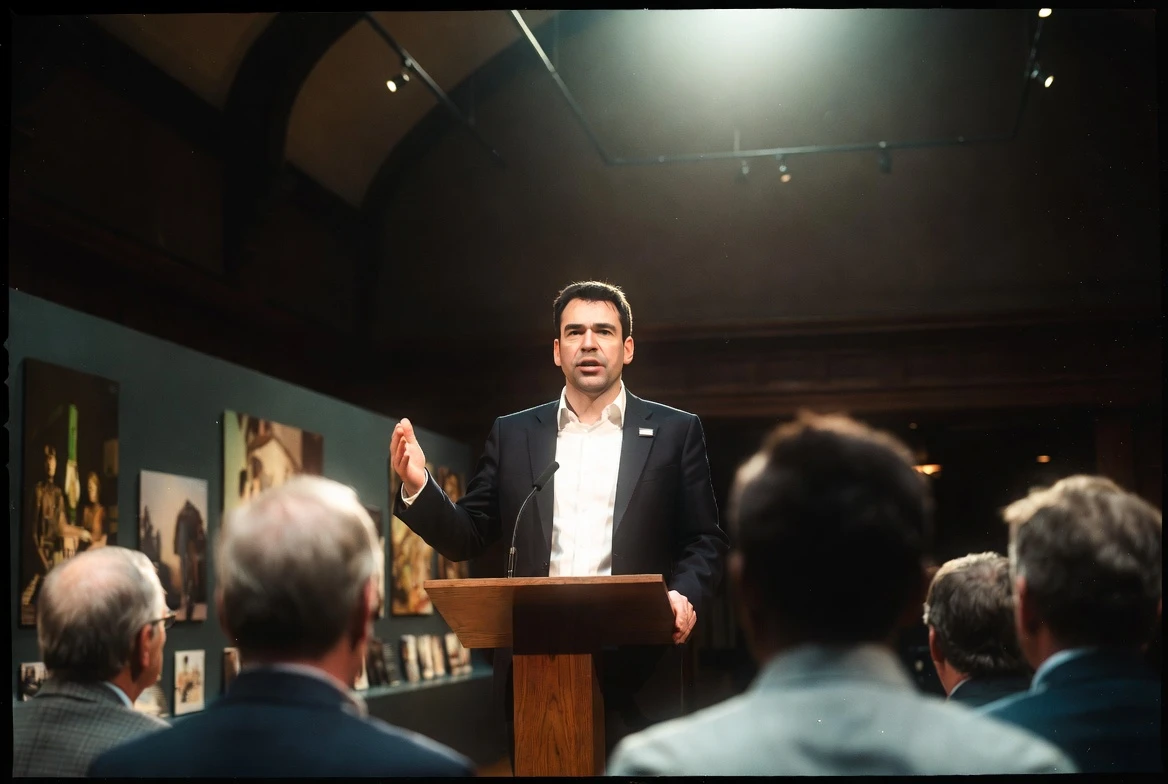
Burnham, who won the Makerfield by-election on 18 June and was sworn in as MP four days later, delivered the address at the People’s History Museum before a front row of regional mayors and senior Labour figures. Sir Keir Starmer, who announced his resignation the same day Burnham took his seat, is leaving after two years in office marked by missteps that eroded his standing with his party and the public. No rival has yet entered the Labour leadership contest, and if none does, Burnham will become prime minister by 20 July.
A ‘No 10 North’ And The Speech In Numbers
The spine of the speech was a new prime-ministerial unit in Manchester. Burnham said “No 10 North” would be the “nerve centre of a rewired Britain” and would coordinate three priority areas: reform of essential utilities, reindustrialisation, and the regeneration of places. He told the audience that Number 10 North would oversee “the biggest council house building programme since the post-war period” and pledged to safeguard “sovereign manufacturing” in steel, defence, energy and farming by giving British firms more chances to win public contracts in exchange for more work placements.
On procurement, Burnham drew a sharp line with the recent past. “For too long, UK public procurement policy has been based on chasing cut-price deals around the world rather than helping our own British-based suppliers become more stable and competitive,” he said. “From here on, every pound raised from taxpayers will work harder for them, and that approach will apply fully to the defence investment plan.” The government is under pressure to publish its long-delayed defence investment plan before a Nato summit on 7 and 8 July.
Burnham framed the package as consistent with Labour’s fiscal rules and said he would “not take risks with public finances”. The closest the speech came to a tax move was a brief hint, captured by the BBC’s economics editor, of help with living costs that could amount to small tax cuts. He closed with a rhetorical flourish: “Imagine good growth in every postcode and hope in every heart.” See Burnham’s full speech and political reaction for the line-by-line responses.
- Speech date: 29 June 2026, People’s History Museum, Manchester
- Makerfield by-election: won 18 June 2026, sworn in 22 June 2026
- Leadership deadline: if unopposed, Burnham becomes PM by 20 July
- Defence investment plan: publication expected before Nato summit, 7-8 July
- Housing pledge: “biggest council house building programme since the post-war period”
Business Largely Backs The Diagnosis
Northern business leaders read the speech as a long-awaited endorsement of the devolution case they have been making for years. Henri Murison, chief executive of the Northern Powerhouse Partnership, called it “a bold commitment to further devolution” and said giving places the tools to tackle economic inactivity, alongside devolved post-16 skills, would help turn “the structural fiscal deficits seen across many parts of the North into surpluses that can be reinvested in future regional growth.”
Wayne Jones, chair of the Greater Manchester Chamber of Commerce, said it was “good to hear Andy Burnham put greater devolution of power to the regions at the heart of his speech” and that having regional mayors had been “a step in the right direction”. Labour’s deputy leader, Lucy Powell, told BBC Radio 4’s World at One that No 10 North would be a “really powerful reimagining” of government machinery. The Liberal Democrat leader, Ed Davey, said the country urgently needed to shift power out of Whitehall into the hands of local communities rather than offer a “one-size-fits-all answer from the top”.
Burnham used the same Greater Manchester record to ground the pitch. He pointed to the ring-round of local firms that, with hundreds of companies, delivered the goal of a thousand extra work placements for young people in a single year during his nine years as Mayor. “Pull in the same direction. Move forward together,” he said. The Greater Manchester model, with public control of buses through the Bee Network, framed much of what he promised to scale nationally. See the full text of Burnham’s Manchester speech.
Where The Speech Stops Short
Firms need consistency, clarity and stability from policymakers, if business confidence is to be improved. Businesses will judge Andy Burnham’s plans on whether they deliver the boost to investment, productivity and trade desperately needed to unlock growth.
The British Chambers of Commerce, through its director-general Shevaun Haviland, set out the test most clearly. “Government must always ask whether policy passes a ‘growth delivery test’ to encourage firms to invest and grow,” Haviland said. She added a pointed figure: BCC analysis shows government-imposed costs on small and medium-sized enterprises have risen by more than 70% in just ten years.
Subrahmaniam Krishnan-Harihara, director of business policy and research at the Greater Manchester Chamber, said the speech was light on the immediate pressures facing businesses, especially SMEs. He listed the gaps: no direct reference to the rising cost of employment, to inflationary pressures from geopolitical events, or to business rates, all of which remain significant burdens for smaller firms. “The key test will be whether the new economic vision and promised devolution deliver practical, tangible support for small businesses on the ground, rather than remaining at the level of an ambitious strategy,” Krishnan-Harihara said.
Richard Caten, chief executive of infrastructure consultancy Ardent, struck a similar note. The ambition to deliver “good growth in every postcode” is welcome, but “ambition must now be matched by delivery”, with planning reform, transport, energy and utility infrastructure all needed at once. Akash Paun of the Institute for Government told the BBC he welcomed the “direction of travel” but that a “huge amount more detail” was still to come, including whether Burnham intends new mayoralties and strategic authorities across the country. The full reactions are collated at the full set of business reactions to the speech.
| Group | Welcome | Concern flagged |
|---|---|---|
| Northern Powerhouse Partnership | Bold devolution commitment | Funding must follow powers |
| British Chambers of Commerce | Local business at heart of agenda | SME costs up more than 70% in a decade |
| GM Chamber of Commerce | Long-term vision, partnership model | Speech light on employment costs and rates |
| Net Zero North West | Reindustrialisation and procurement | Needs a clear delivery plan |
| Real Estate:UK | Place-first approach to housing | Resourcing must match the ambition |
| Ardent | Infrastructure at the centre | Planning reform and utilities still to come |
The Regions With A Footnote
Industrial regions pointed to the speech as a chance to claim a clearer seat at the table. Jane Gaston, chief executive of Net Zero North West, cited the group’s recent Why Industry Matters report, which put the North West’s contribution at £270.8 billion to the UK economy, with £68.5 billion in exports and 337,000 manufacturing jobs. “The vision is encouraging,” Gaston said. “The next step is ensuring it is backed by a clear delivery plan that fully harnesses the strengths of regions like the North West.”
Vanessa Hale, chief executive of Real Estate:UK, welcomed a place-first, “good growth” approach but warned that the real-estate sector was working through a “viability crisis which has effectively stalled building activity across the country”. Enhanced local and regional authorities, she said, need extra resourcing to match the scale of their ambition. Eva Barboni, executive director of Enterprise Britain, put it more bluntly: “Devolution alone will not automatically deliver growth. We need bold measures to release the capital British start-ups and scale-ups need to grow.”
Private capital echoed the same conditional welcome. Michael Moore, chief executive of UK Private Capital, said Burnham’s focus on public and private investment working “hand in hand” to make the UK an innovation nation presented “a serious new opportunity” for building a more dynamic economy. Private capital would, in turn, back scale-ups and innovative spin-outs across the country. Each regional voice tied its support to the same condition, that new powers arrive matched by new funding and capacity. None suggested the funding question could wait.
Politics Beyond Business
The reaction outside the business world was sharper. Conservative leader Kemi Badenoch said the UK was heading for a “summer of chaos” and that Burnham’s proposals were “not radical or new but old hat“. Reform UK’s Robert Jenrick told GB News that people could not wait ten years for “radical change now”. The Green Party’s Zack Polanski struck a structural note: “Rebalancing power is vital, but what good are powers if you can’t afford to use them?”
The devolution pitch ran into geographic pushback from the Celtic nations. Plaid Cymru’s first minister, Rhun ap Iorwerth, said a “Number 10 of the North will mean very little to the people of Wales”. The SNP’s Westminster leader, Dave Doogan, accused Burnham of “making the same empty promises” to Scotland while keeping “all of Westminster’s most damaging policies, Brexit, austerity cuts and Tory spending rules”. Burnham had tried to pre-empt that critique by saying that devolution should also extend “deeper down” in Scotland, Wales and Northern Ireland.
Inside Labour, the reception was warm but watchful. The BBC’s political editor, Chris Mason, called the controlling thought of the speech “Manchesterism”, with a former mayor arguing that mayors and others deserve considerably more power. The BBC’s economics editor, Faisal Islam, was more cautious: the Manchester model “has worked for an international city”, and there are “many detailed questions about what this would actually mean in practice”. He also noted that Burnham had hinted at small tax cuts to help with living costs while sticking to existing fiscal rules. For the wider context on the timeline from Makerfield win to likely PM.
The wider reaction also illustrates the geography problem. Burnham’s plan is anchored in Manchester and the North, while mayors from West Yorkshire, the West Midlands, the North East, South Yorkshire and the Liverpool City Region sat on the front row at the People’s History Museum. Paul Bristow, the Conservative mayor for Cambridgeshire and Peterborough, told the BBC that the speech “raises more questions than it does answers”.
The Path From Manchester To Whitehall
The pitch rests on Burnham’s record as Greater Manchester mayor from 2017 to 2024, and on his argument that what worked for the city region can scale. The fiscal backdrop makes the test harder: Ruth Curtice, chief executive of the Resolution Foundation and a former director of fiscal policy at the Treasury, has written to Burnham that higher gilt yields and the war in Iran have probably already wiped out the government’s fiscal headroom. See the bond market warning sent to Burnham on the constraint Curtice flags. One open question is whether the new chancellor, expected to be named only after the leadership contest closes, will share that constraint or share Burnham’s instinct for place-based spending.
Akash Paun of the Institute for Government said Burnham was “raising expectations” of something “quite different to what we’ve seen before”, with the speech’s full detail set to follow in the weeks after he enters Number 10. If no rival enters the Labour leadership race, that move comes by 20 July. The Manchester record, held up as the benchmark by business reaction today, will be the first thing his new cabinet measures itself against.