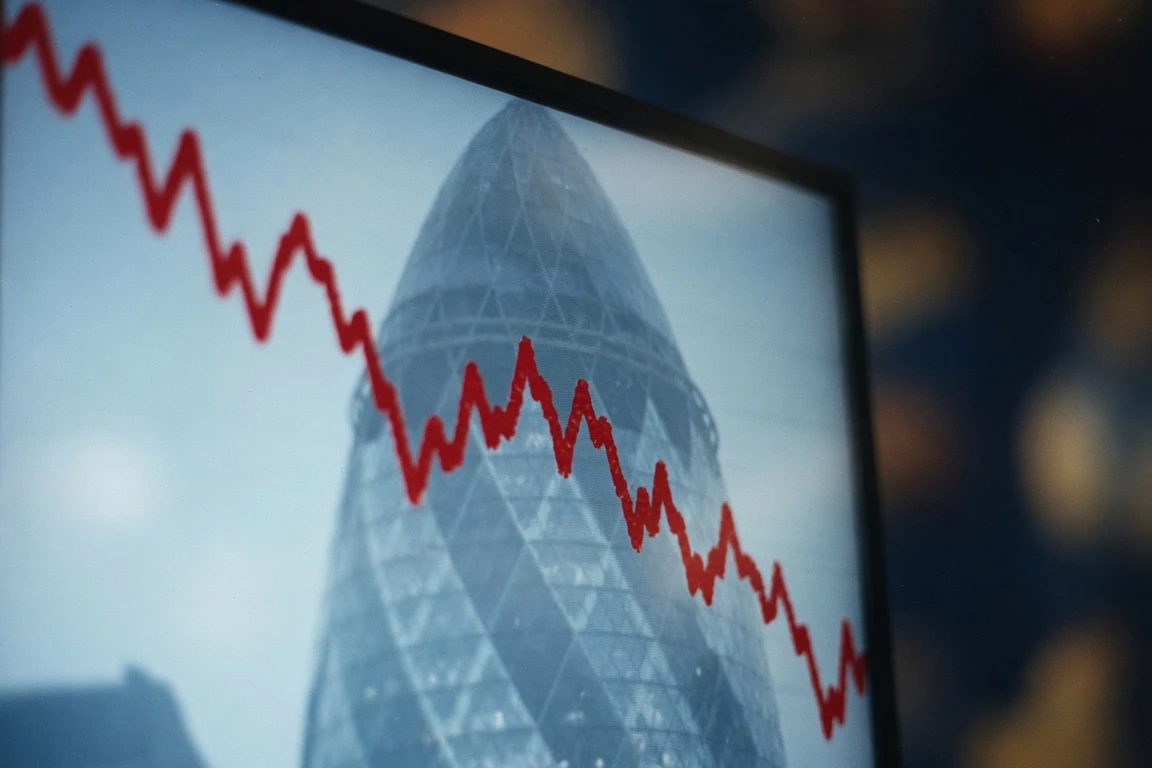
Apple’s first formal move to pass higher memory and storage costs on to customers sent the FTSE 100 down 35 points to 10,495 on Friday, capping a session that began with losses above 100 and ended with London still in the red. Apple raised prices across its MacBook and iPad ranges on Thursday, blaming an AI-driven squeeze on the chips those products depend on, and Asian markets caught the brunt of the follow-through the next morning.
Seoul’s KOSPI fell 8%, Tokyo’s Nikkei slipped 4.5%, and SoftBank slid about 14% after a New York Times report that OpenAI may push its IPO into 2027 rather than accept a valuation below $1 trillion. Hong Kong’s Hang Seng sat on the edge of a bear market after a near-20% drop from its January peak. Brent crude fell back to $72 a barrel. By the New York close, the Nasdaq had cut its early deficit to below 0.2%, with Apple, Microsoft, Amazon, Tesla and Meta in the green, but the same story was still running underneath.
Apple’s Memory Bill Just Made the AI Trade Visible
Apple’s price changes were specific. A MacBook Neo entry-level machine rose from $599 to $699, the MacBook Air 512GB moved from $1,099 to $1,299, the MacBook Pro 1TB went from $1,699 to $1,999, the iPad Air 128GB rose from $599 to $749, and the iPad Pro Wi-Fi 256GB climbed from $999 to $1,199, according to Apple’s price increases across the Mac and iPad ranges.
The company framed the move as unavoidable. “The rapid expansion of AI data centers has created an extraordinary surge in demand for memory and storage,” Apple said in a statement. “We have never seen a component price increase this much, this quickly.” CEO Tim Cook told The Wall Street Journal earlier in the week that the squeeze was unlike anything he had seen in four decades. “This is a hundred-year flood,” Cook said. “I’ve never seen anything like it in any area in over 40 years.”
Apple shares closed more than 6% lower on Thursday, the worst one-day drop since April 2025, and the broader Magnificent Seven complex lost more than 2.5%, slipping deeper into correction territory. Counterpoint Research said memory and storage prices had quadrupled in the past three quarters as suppliers steered production toward the high-bandwidth memory used in AI servers.
The market read-through was blunt.
- Apple MacBook Neo (entry): $599 to $699
- MacBook Air 512GB: $1,099 to $1,299
- MacBook Pro 1TB: $1,699 to $1,999
- iPad Air 128GB: $599 to $749
- iPad Pro Wi-Fi 256GB: $999 to $1,199
- Apple shares, Thursday close: down more than 6% (worst day since April 2025)
Asia’s Tech-Heavy Boards Take the First Hit
Samsung’s response arrives on Monday and is aimed at the other side of the same problem. The group is expected to unveil a decade-long plan worth around $648 billion, with a potential 300 trillion won earmarked for chip factories in the southwest of the country, per a Maeil Business Newspaper report cited by Samsung’s reported $648 billion Korea investment plan. The total equates to roughly 1,000 trillion won at current rates.
That plan lands against a brutal Friday for Korean and Japanese markets, both heavy with memory and AI-linked names. Deutsche Bank’s Jim Reid described the regional mood as a “mini ice-age.” SoftBank’s 14% drop came after the OpenAI IPO report; the MSCI Asia Pacific Index fell more than 3% led by semiconductor and AI-linked names.
The losses were concentrated rather than broad:
| Index or stock | Friday move | Driver |
|---|---|---|
| Seoul KOSPI | down 8% | Memory and AI selloff |
| Tokyo Nikkei | off 4.5% | SoftBank, tech weakness |
| Hong Kong Hang Seng | near 20% off January peak | On edge of bear market |
| SoftBank (Tokyo) | down ~14% | OpenAI IPO delay report |
| MSCI Asia Pacific | down more than 3% | Chip and AI unwind |
Miners Lead London Down on the Same Selloff
The FTSE 100 trimmed its losses through the afternoon, from above 100 to just over 40 points with half an hour of trading left, but the working assumption was still a global de-risking episode hitting cyclical names. Tickmill analyst Patrick Munnelly said energy was the main drag on the index, with BP down nearly 2% and Shell off more than 1%, as Brent and WTI crude moved back toward levels last seen in late February and undercut the sector’s earnings momentum.
Mining and materials were also under pressure, Munnelly said, from a stronger dollar driven by uncertainty around technology shares and inflation concerns. Antofagasta, Anglo American, Glencore and Fresnillo all retreated by more than 2%. Banks weighed on the index too, with Standard Chartered, HSBC and Lion Finance Group solidly in the red. Almost all but three of the FTSE 100’s 20 largest names ended lower, the exceptions being BAT, Unilever and National Grid, per the live UK markets blog tracking Friday’s session.
AJ Bell’s Danni Hewson noted a defensive bid elsewhere. “Property firms and housebuilders were in demand along with more defensive names,” she said. “Energy stocks continued to tumble thanks to oil prices remaining rooted below $74 per barrel. Although a vessel being struck by Iran off the coast of Oman offered a reminder to take nothing for granted despite the increase in shipping flows through the Strait of Hormuz.” Barratt Redrow added 1.5% after confirming Dean Banks will take over as CEO on September 21, succeeding David Thomas.
London’s defence names also fell, against expectations. QinetiQ dropped 2.5%, Melrose Industries slipped 2.3% and Rolls-Royce lost 1.6%, with Babcock and BAE Systems trading slightly lower, after the FT reported Keir Starmer was poised to commit at least £1 billion more to defence ahead of a long-delayed defence investment plan. Sector figures had been hoping for as much as £2.5 billion of extra funding.
The AI Trade Is Now the Story
Trade Nation analyst David Morrison said the move was about positioning, not valuations. “With the major US indices at or near all-time highs, the risks for investors who have benefitted handsomely from going ‘all in’ on the AI trade, are getting bigger,” he said. “And everyone is convinced that they can get out of the market at the top all at once.”
The OpenAI report sharpened the question. The New York Times said the company’s advisers had presented executives with the option of waiting until 2027 to go public at a $1 trillion valuation, or accepting a lower number for a faster listing. Reuters previously reported OpenAI was targeting that $1 trillion figure. Cook’s comment that Apple may have to keep raising prices suggests the same supply squeeze is forcing a margin rethink at the device end of the same chain. Counterpoint Research estimates the higher cost of components could add roughly $200 per iPhone.
Charles Stanley’s Isabel Fairlie offered a counterpoint on the consumer side. Meta’s Starfire Kylie Edition AI glasses, priced at £359 each, show how “AI glasses are shifting from high-end tech to a fashion-led lifestyle category,” she said, with Meta, Google, Apple, Samsung and Snap all now competing in the category.
Heathrow’s Trimmed Outlook Drags IAG Down
The day’s biggest single-name UK story sat outside tech. Heathrow cut its 2026 passenger forecast to a range of 80.1 million to 84.5 million, with a base case of 83.6 million, a 1.1% decline on 2025 and a cut of up to 5.8% from the 85 million it had previously expected for the year. April passenger numbers had already fallen 5.3% year on year, to about 6.7 million, per Heathrow’s 5.3% April passenger drop, as the airport cited “the ongoing impact of the Middle East conflict on some markets and short-term adjustments to travel plans.”
Adjusted EBITDA is now expected to decline by £147 million, or almost 7.4%, from 2025 levels, and by £60 million compared with the airport’s previous forecast issued in December. IAG, British Airways’ parent, slipped 0.7% on the update.
Heathrow framed the new outlook as a contingency. The forecast “reflects the risk that continued volatility in the Middle East could dampen broader traffic volumes, with impacts extending beyond the region to global travel demand over the remainder of the year,” the airport said.
Read the AI glasses shift in market context
“Property firms and housebuilders were in demand along with more defensive names… Energy stocks continued to tumble thanks to oil prices remaining rooted below $74 per barrel.”
Any extra borrowing comes with big costs. There are no wheezes out of this dark fiscal hole, only tough decisions.
Ruth Curtice, chief executive of the Resolution Foundation and a former director of fiscal policy at the Treasury, wrote the line in an open letter to Andy Burnham, the mayor of Greater Manchester widely tipped to be the next prime minister. The memo’s pitch was blunt: higher gilt yields and the war in Iran have probably already wiped out the government’s fiscal headroom. Curtice’s warning carries weight because the bond market has spent the past week reminding Westminster that UK borrowing costs are already among the highest in the G7, and any extra borrowing now comes with real costs.
Miliband Overtakes Streeting on the Chancellor Market
If Burnham does take over, the City is now betting the next chancellor will not be the bookmakers’ earlier favourite. Polymarket puts Ed Miliband, the energy secretary, at a 49% chance of becoming the next chancellor in 2026, up from around 30% at the start of the week, with Wes Streeting, the former health secretary, falling back to 11% from roughly 70% earlier in the week. Yvette Cooper sits at 16.3%, and Shabana Mahmood at 8%.
Yields on longer-dated UK government debt perked up in the same hours after touching three-month lows earlier in the week, a reminder that the gilt market has been watching Westminster closely for some time. The shift in chancellor odds lines up with ING’s view, reported by Reuters, that a more left-leaning government under Burnham has already pushed UK borrowing costs higher.
The candidate stack:
- Ed Miliband: 49% on Polymarket (up from about 30% a week ago)
- Yvette Cooper: 16.3%
- Wes Streeting: 11% (down from about 70% a week ago)
- Shabana Mahmood: 8%
Curtice’s Memo Says There Is No Fiscal Headroom
Curtice’s letter to Burnham landed the same morning. Its pitch was that the presumed next prime minister will have to stick to the existing fiscal rules and continue the “painful path of consolidation” started by Rachel Reeves if he wants to ease the cost-of-living squeeze or pursue more ambitious growth reforms. There are no wheezes out of the dark fiscal hole, she wrote, only tough decisions.
Sterling and gilts have spent the week reminding Westminster that the UK’s borrowing costs are already among the highest in the G7. The lesson of recent years is that investors are happy to finance deficits right up until the moment they are not. That is the backdrop Burnham walks into if he takes the job, and it shapes the chancellor market above.
Curtice is no outsider on this. She was director of fiscal policy at the Treasury before taking over the Resolution Foundation, so her warning carries the weight of the spending watchdog rather than a campaign group.
Climate Joins the Risk Stack at $714 Billion
Outside the markets, the Friday risk stack also grew in the climate disclosure data. CDP, the environmental disclosure platform, said companies expect extreme weather to cost them a collective $714 billion in future financial impacts, with supply chains, operations and investment plans increasingly exposed. Only 35% of companies currently recognise extreme weather as a material financial risk, even though almost half of those identified risks are deemed imminent and 62% of cities, states and regions say they are already experiencing the effects.
CDP climate director Amir Sokolowski framed the gap. “As the impact of El Niño bites, we are seeing that extreme weather is also a financial risk,” he said. “There is more still to be done.” The number matters because it sits on the same Friday that London traders were marking down oil, miners and banks for their own reasons.
Disclaimer: This article is for informational purposes only and does not constitute financial, investment, or trading advice. Markets are volatile, and figures are accurate as of publication on June 26, 2026. Past performance is not indicative of future results. Readers should consult a qualified financial professional before making investment decisions.