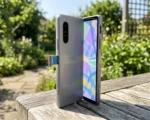
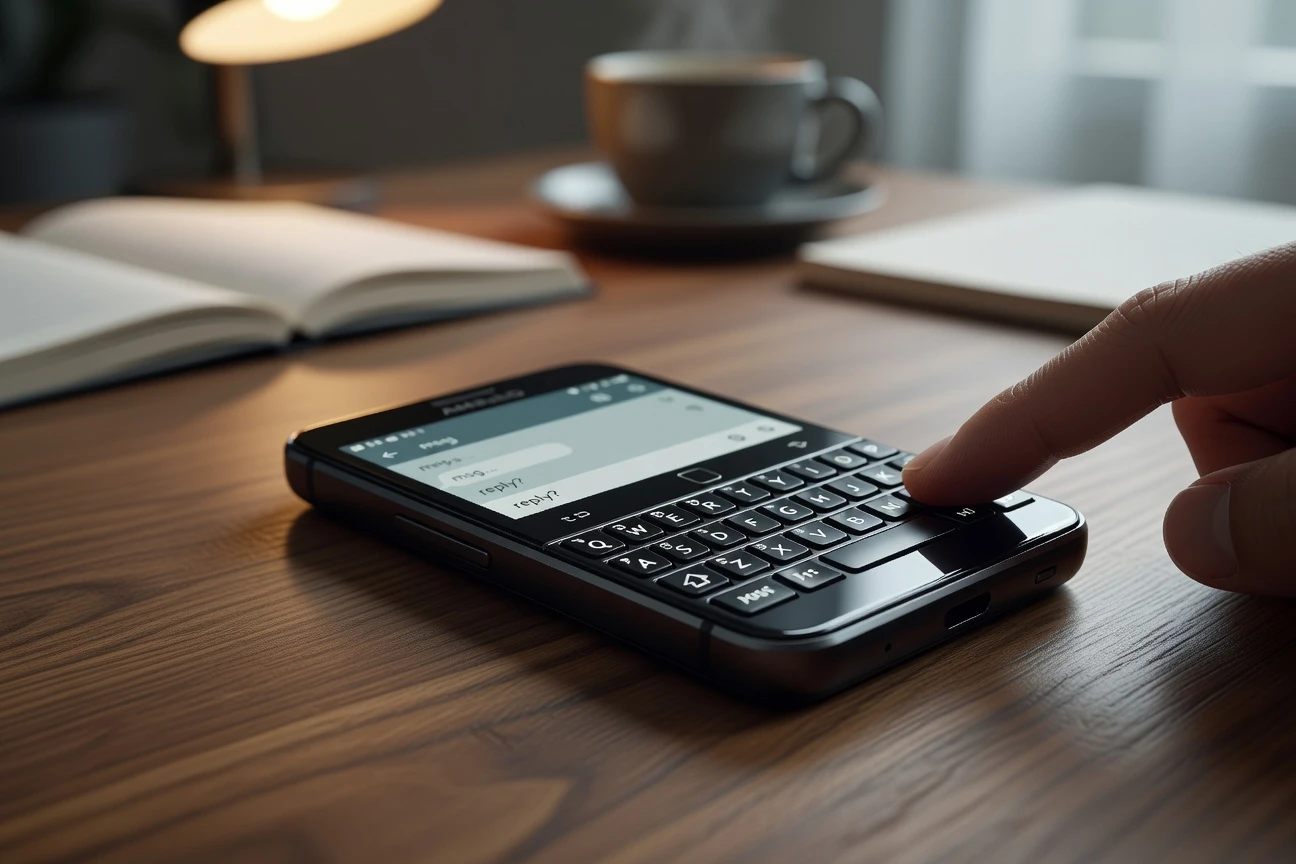
Nearly 9,000 Kickstarter backers pledged more than $4 million for the Unihertz Titan 2 Elite, a 5G Android handset built around a BlackBerry-style physical keyboard. Clicks, a New York hardware startup, says its slide-out Power Keyboard accessory has cleared 50,000 preorders since January. The QWERTY phone, long left for dead, has quietly become a small but funded category in 2026.
Apple, Samsung and Google have not noticed. Mainstream handset majors ship near-identical glass slabs and have ceded form-factor experimentation to crowdfunded outfits that operate two or three orders of magnitude below their unit volume.
The Money Behind the Keyboard Revival
The pledge sheets tell the story. The first-generation Unihertz Titan 2 raised more than $2 million from 7,000 backers on Kickstarter in summer 2025 at a $229 starting price. Eight months later, two successors doubled that haul at Mobile World Congress 2026 in Barcelona, where Unihertz collected several Best of MWC awards for the device.
Clicks runs a parallel track on accessories. The company sold $139 keyboard cases for select iPhone models in 2024, expanded the line to Pixel and Galaxy handsets in 2025, and used the Consumer Electronics Show (CES 2026) in Las Vegas to launch a magnetic Power Keyboard that snaps onto any phone with MagSafe or Qi2.2 wireless charging support.
- $4 million pledged across two Titan 2 Elite variants on Kickstarter at MWC 2026.
- 50,000 Power Keyboard preorders booked since January, per the company.
- 25% sales growth for dumbphones globally in 2025, per industry research.
- $499 sticker price for the Clicks Communicator handset launched at CES.
None of these figures register against Apple’s iPhone shipments, which clear nine figures per quarter. They do not need to.
Why the Incumbents Let This Niche Exist
Two pressures sit underneath the QWERTY return. The first is the dumbphone surge, which Statista pegs at roughly 210 million unit sales worth $3.2 billion in 2024, with analysts expecting continued growth through 2026 as buyers chase digital detox. The second is the iPhone keyboard reliability gripe that has surfaced through software-keyboard bugs across recent iOS builds, pushing typing-heavy users toward a hardware solution.
Apple sees both pressures. Its product lineup answers neither. A taller iPhone 17 Pro Max with a titanium frame and a triple camera array is not the device a screen-time-fatigued buyer is shopping for, and a thinner Galaxy S26 will not solve a typing complaint.
BlackBerry itself has no interest in the segment. The Canadian company exited handset hardware about a decade ago and now ships QNX automotive software, with a leadership change at the unit last year reported in our coverage of BlackBerry’s QNX automotive pivot under John Wall.
The vacuum is what the crowdfunded makers have walked into. Kickstarter and Indiegogo gave them a way to validate demand at five-figure backer counts, presell most of a production run, and ship to a passionate buyer base without ever needing a carrier deal or shelf space at a US retailer.
Five Phones Built Around Buttons
Five distinct keyboard handsets are now shipping or in preorder, ranging from a $399 e-paper minimalist device to a $580 high-spec Android phone. Screen sizes cluster around four inches, processors run from low-end MediaTek to the Dimensity 8300 found in many mid-tier flagships, and operating system support spans Android 13 through Android 16.
| Phone | Price | Display | Notes |
|---|---|---|---|
| Minimal Phone | $399 base | 4.3-inch E Ink, 600 x 800 | Android 14 with Google Play, Minimal Launcher |
| Zinwa Q25 | ~$400 | BlackBerry Classic chassis | Refit Android 13 conversion |
| Unihertz Titan 2 Elite / Pro | $490 / $580 | 4.03-inch OLED, 120 Hz | 5G, eSIM, microSD, up to 512 GB on Pro |
| Clicks Communicator | $499 | 4.03-inch AMOLED, 1080 x 1200 | MediaTek Dimensity 8300, Android 16, 5 years of updates |
The Communicator is the most software-promised handset of the group. Clicks says the device will receive at least four Android version updates, taking it through Android 20, plus five years of security patches. That is a BlackBerry-style hardware bet paired with a Pixel-style software policy, and it is the longest update commitment any QWERTY phone has carried in years.
Snap-On and Slide-Out Accessory Paths
Buyers who want to keep their existing iPhone or Pixel and still type on real keys have three accessory options. Two are slim cases that extend the body downward to host the keyboard. One snaps on magnetically and slides out for use.
The original Clicks Keyboard, released in 2024 from $139, was extended to Pixel and Galaxy handsets a year later. It draws power over Lightning or USB-C and keeps the host phone screen fully visible while the keys live below the display. The Akko Metakey, launched in October 2025, prices the same form factor at $49.99 but only fits the iPhone 16 Pro Max and the iPhone 17 Pro Max.
The Clicks Power Keyboard product page details a different approach. The 2,300 mAh accessory attaches via MagSafe or Qi2.2, slides out from behind the phone when typing, and can wirelessly top up the host device while paired. Pre-orders sit from $99, with first shipments scheduled for late spring and multi-device pairing for up to three Bluetooth targets, including Apple Vision Pro and a connected TV.
The Compromises Buyers Sign Up For
A keyboard phone is not a free upgrade. Buyers swap modern screen area, camera quality, and mainstream app polish for the tactile typing experience.
Five compromises show up most often in owner reviews and forum threads, and a buyer should weigh each before pledging.
- Smaller displays: a 4.03-inch OLED is closer to a 2013 iPhone than a current flagship, and video, gaming and photography all suffer at that size.
- Bulkier bodies: slide-out accessories add roughly 15 mm of depth and 180 grams of weight to the host phone, per the maker’s own dimensions.
- Limited carrier support: none of these handsets ship with US carrier subsidies, so buyers pay full price upfront and bring the device to a network themselves.
- Niche software polish: custom launchers, dedicated key shortcuts and vertical thumb-typing app support all remain works in progress.
- Long lead times: Kickstarter and Indiegogo orders ship months after pledge, and multiple campaigns in this space have slipped past their committed dates.
Most buyers in this segment treat those compromises as features. A smaller screen cuts idle scrolling, and an older operating system release cycle does not bother a customer whose main use case is email and messaging.
The minority who care deeply about typing speed, distraction reduction, or simply owning a phone that does not look like every other slab on the table is the customer who pays for the difference.
The Spring 2026 Shipping Window
The next 90 days will tell whether the category holds. Spring 2026 brings Power Keyboard shipments in late May, the latest Unihertz Kickstarter deliveries scheduled for June, and the Clicks Communicator on a phased rollout that opens with US and Canada units before extending to localized QWERTZ and AZERTY keyboard variants for European markets.
If June deliveries arrive on schedule and reviewers land well on the second-generation hardware, the keyboard phone graduates from Kickstarter project to a specialty device buyers can recommend without disclaimers, and mid-tier Android OEMs may begin copying the layout. If shipments slip or reviews disappoint, the QWERTY revival caps where it sits today, as a passionate cult buy that ships a few tens of thousands of units a year.
Frequently Asked Questions
What is the BlackBerry-style phone trend in 2026?
It is the return of smartphones with built-in physical QWERTY keyboards, plus accessory cases that add a keyboard to an existing iPhone or Android phone. The category is led by Clicks, Unihertz, Zinwa Technologies, Minimal Company and Akko, not by BlackBerry itself.
How much does the Clicks Power Keyboard cost?
Pre-orders start at $99 on the Clicks website, with early-bird tiers near $79 and a regular MSRP of $109 once general sales begin. The accessory attaches via MagSafe or Qi2.2 to any compatible iPhone or Android phone.
Does BlackBerry still make smartphones?
No. BlackBerry exited the smartphone hardware business roughly a decade ago and now focuses on QNX automotive software and enterprise cybersecurity. The current QWERTY phones come from independent makers using the BlackBerry-style layout without any BlackBerry brand involvement.
Which iPhones work with the Akko Metakey keyboard case?
The Akko Metakey is compatible only with the iPhone 16 Pro Max and the iPhone 17 Pro Max. The case is priced at $49.99, ships in several colors, and adds depth to the host device.
When will the Unihertz Titan 2 Elite ship?
Deliveries are scheduled to begin in June 2026 for Kickstarter backers, with general preorders open at $490 for the standard Titan 2 Elite and $580 for the Pro variant via the Unihertz website. The phones feature 4.03-inch OLED displays, 5G, eSIM and microSD.
Is a keyboard phone a good fit for heavy app users?
Probably not. Screen sizes around 4 inches limit gaming, video and photography, and software polish for vertical thumb-typing apps remains uneven. The category fits buyers focused on messaging, email and reduced screen time more than buyers who want a primary flagship phone.