Google confirmed the screenless Fitbit Air for an India launch window in October 2026, five months after its US debut at $99.99. The announcement came during the company’s India briefing tied to the Pixel 11 series, with no exact date or local price yet.
Amazon India listings already show the tracker at placeholder prices near Rs 17,000. Industry estimates had clustered lower, between Rs 9,999 and Rs 14,000. That gap sets up the real contest.
Until Google prints a final MRP, every conversation about the Air in India stays provisional. The hardware is fixed. The software tier is known. Only the shelf price will sort winners from also-rans.
The Pebble That Skips the Screen
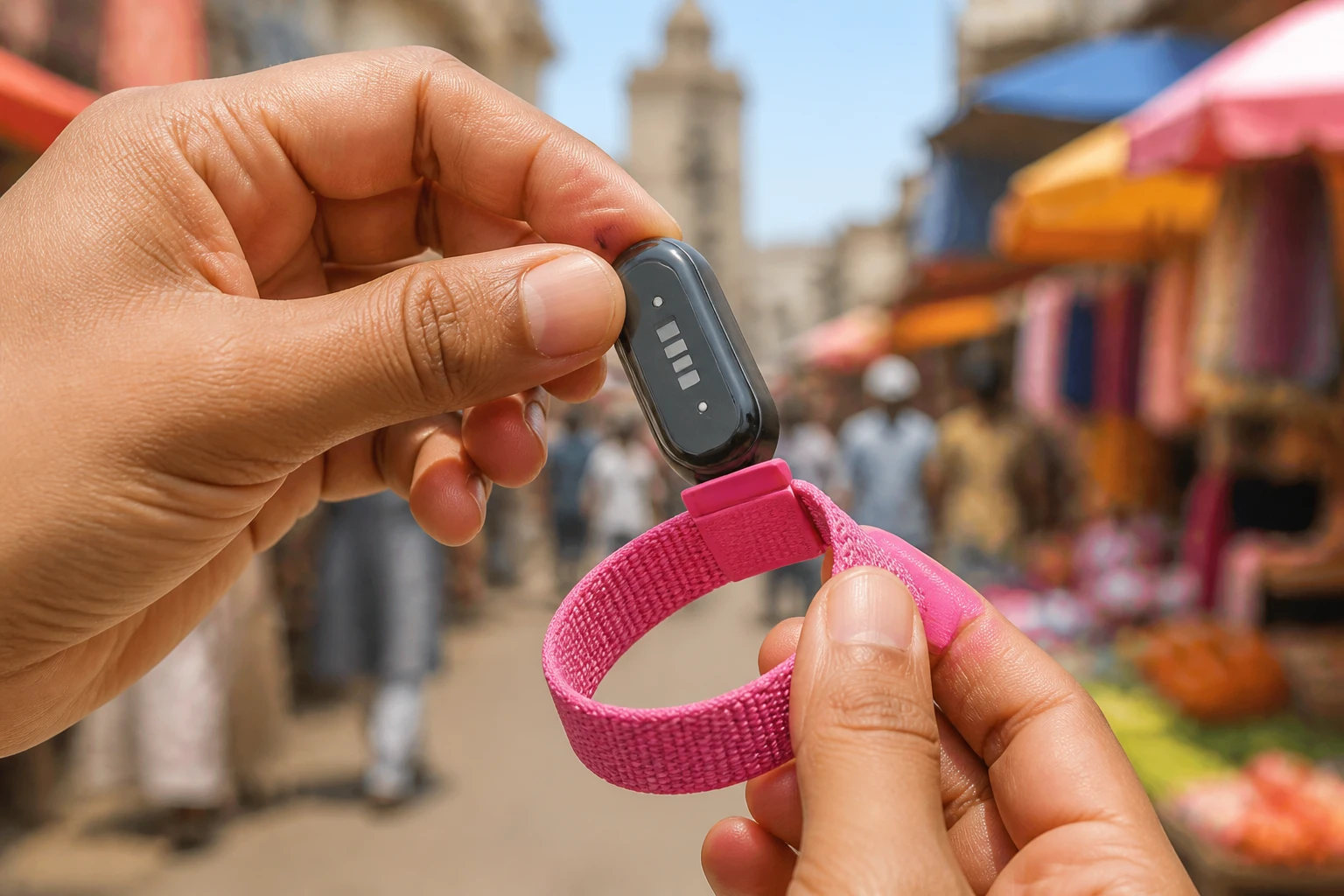
Fitbit Air is Google’s smallest tracker yet. It weighs about 12 grams with the band and sits as a discreet pebble with no display at all. Data for workouts, sleep, heart rate and more flows straight to the Google Health app on the phone.
Core sensors cover the full daily stack without needing a face to read them:
- 24/7 heart rate and heart-rate variability
- SpO2 and resting heart rate
- Skin temperature variation and breathing rate
- Atrial fibrillation alerts during stillness or sleep
- Automatic activity detection that improves with use
Battery life reaches up to seven days; five minutes of fast charging delivers a full day. That pairing keeps the pebble on the wrist through a full work week and a short top-up when it finally dips.
Google bundles three months of Google Health Premium with every unit. That unlocks the Gemini-built Health Coach for adaptive fitness plans, sleep guidance and proactive insights. After the trial the coach sits behind the paid tier.
- Performance Loop band (in-box standard): recycled materials, micro-adjustable, multiple shades
- Active Band: sweatproof silicone for training
- Elevated Modern Band: bracelet-style for everyday wear
- Stephen Curry Special Edition Performance Loop also exists globally at a higher price
The design lets users keep an analog watch on one wrist and the tracker on the other, or simply stay notification-free. That is the pitch that already draws early adopters. Colour options shown so far include at least the pink Performance Loop unit Google brought to the August India briefing.
India’s Wearables Market Just Hit a Reset
IDC data for 2025 shows India’s wearable market contracted 4.0 percent to 114.2 million units. Smartwatch shipments fell harder, down 17.6 percent to 28.9 million units. Average selling prices rose modestly as buyers shifted toward higher-quality devices.
| Segment / Vendor | 2025 Share or Volume | Note |
|---|---|---|
| Overall wearables | 114.2 million units | -4.0% YoY |
| Smartwatches | 28.9 million units | -17.6% YoY, 25.3% of market |
| boAt (Imagine Marketing) | 29.2% overall | Up from 27.6% |
| Noise (smartwatch) | 26.6% category lead | Mass-market strength |
| boAt (smartwatch) | 14.1% | Second place |
| Fire-Boltt (smartwatch) | 9.7% | Third |
| Overall ASP | US$20.3 | +1.8% YoY |
| Smartwatch ASP | US$26.5 | +11.7% YoY |
Smart wristbands staged a revival, growing 67 percent, with WHOOP and Amazfit among the screenless names gaining early traction. Smart rings cooled. The market is already testing faceless form factors even as cheap full-screen watches still own volume.
That is the terrain the Fitbit Air enters. Local brands thrived on sub-Rs 5,000 feature packs and aggressive online-offline push. Google arrives with software depth and a higher starting price point. Volume still belongs to the mass labels; the open question is whether a thinner slice of buyers will pay up for coaching and quieter hardware.
Who Stands to Gain and Who Stands to Lose
Noise, boAt and Fire-Boltt together still control the bulk of smartwatch volume. Their moat is distribution, brand recall in mass retail, and relentless price competition. A Fitbit Air that lands under Rs 15,000 would sit in the mid-range where some of their better models live. Google’s AI coaching and accuracy claims become the differentiator.
If the final India price holds near the US conversion (roughly Rs 8,500-10,000 before duties and taxes) and the three-month Premium trial converts users, Google gains a beachhead among buyers who want recovery scores and sleep stages without a Whoop-level subscription from day one. Core tracking works without paying after the trial ends.
Local mid-tier trackers lose if buyers decide the screenless experience plus Gemini coach is worth the premium. Google loses if the street price lands near the current Amazon placeholders of Rs 16,000-18,000 and buyers stick with familiar brands that already ship millions of units. Samsung and Apple remain at the true premium end and are less directly threatened.
Early reaction on X already frames the Air as the affordable Whoop alternative. Content creator Parth Monish Kohli wrote that the device is excellent for people who want no screen, want to wear an analog watch alongside tracking, or refuse Whoop pricing, but called the October India window a missed opportunity after weeks of reseller and Reddit demand.
Google’s plan to release it in India only in October does not sit right with me. Reddit has been buzzing with people waiting for the Fitbit Air, resellers have already been selling it in India for weeks now.
Kohli’s post, which drew solid engagement, captures the split: product praise paired with frustration at the rollout lag.
What the AI Coach Adds
Google positions new machine-learning models as improving sleep tracking accuracy versus earlier Fitbit devices. The Health Coach builds longer-term fitness plans, adjusts daily goals around readiness and cardio load, and answers questions from the wearer’s own metrics. It lives inside the Google Health app coaching details that replaced the old Fitbit app.
In India the Premium tier already sits at Rs 99 per month or Rs 999 per year. Google AI Pro and Ultra subscribers get it bundled. That pricing is far lower than Whoop’s annual membership and removes the biggest objection many Indian buyers raise against subscription wearables.
The three-month trial on every Air purchase is the conversion engine. If the coach proves sticky, Google locks in recurring revenue and a richer data set. If users churn after the trial, the device still functions as a solid basic tracker and the hardware sale stands alone.
This software-first approach echoes the same bet Google is making on the wrist with its full smartwatches. A recent Pixel Watch 5 software focus leak showed the company prioritizing Gemini features over silicon leaps. The Air is the purest expression of that philosophy: almost no hardware surface, maximum reliance on the phone app and cloud models.
Screenless Trackers Already Have a Foothold
The Air does not invent the faceless wrist in India. Smart wristbands grew 67 percent in 2025 while full smartwatches shrank. WHOOP and Amazfit already showed that some buyers will accept no display if recovery and training metrics feel credible.
Smart rings cooled in the same stretch, so the appetite is selective rather than blanket. Buyers appear willing to try a quieter form factor on the wrist more readily than on the finger. Google’s pebble rides that wristband revival rather than starting a new category from zero.
What the Air adds on top of those early screenless names is the Gemini coach behind a low local Premium price and a free three-month window. Core sensors keep working if the subscription ends. That split between always-on hardware tracking and optional coaching is the commercial hinge.
Local mass brands still own impulse volume with bright screens under Rs 5,000. The Air aims at the thinner group that already noticed WHOOP-style recovery talk and wants a lower ongoing fee than a pure subscription band demands.
Five Months Behind the US Is Normal and Costly
The US launch landed in May 2026. Pre-orders opened at $99.99 with the Special Edition at $129.99. India follows in October. That lag matches Google’s usual hardware cadence for the country, yet it feels longer this time because gray-market units and Amazon placeholders appeared weeks earlier.
- May 7, 2026: Google publishes the official Fitbit Air introduction post and opens US pre-orders at $99.99 with three months of Premium.
- May 26, 2026: Special Edition hits US shelves.
- July 2026: Amazon India listings surface with unavailable stock and high placeholder prices.
- August 13, 2026: Google confirms the October India window during its Pixel 11 India briefing and showcases a pink Performance Loop unit.
- October 2026: Planned India retail start; exact day, colours, channels and final MRP still open.
The same August window also brought the Made by Google August event preview cycle and the broader Pixel 11 family, including the Pixel 11 Pro XL India price path. Hardware announcements clustered; the Air simply rode along as a side confirmation rather than a standalone India event.
Reseller demand and gray-market stock filled the gap in the meantime. That early leakage raised awareness, yet it also anchored price expectations to the high Amazon placeholders before Google could set its own MRP.
Price Will Decide the Winner
US buyers pay $99.99 once for the base model. At current exchange that is roughly Rs 8,400-9,500 before any local duties, GST or channel margins. Google has not said whether India will see a direct conversion, a premium, or a special introductory cut.
| Market / Source | Price Signal | Notes |
|---|---|---|
| US Google Store | $99.99 base / $129.99 SE | Official, three months Premium included |
| Industry estimates (pre-confirm) | Rs 9,999-14,000 | Currency + duty guesses |
| Amazon India listings | ~Rs 16,600-18,500 | Third-party placeholders, stock unavailable |
| Google Health Premium India | Rs 99/mo or Rs 999/yr | Already live; trial on Air purchase |
A final MRP under Rs 12,000 would put real pressure on mid-range Noise and boAt models that still rely on bright screens and basic apps. Anything above Rs 15,000 risks confining the Air to a narrower wellness niche while the volume kings keep shipping millions of cheaper units. Retail partners beyond Amazon remain unconfirmed, as does availability on Google’s own India storefront.
Colour options shown so far include at least the pink Performance Loop. Full palette and accessory band pricing will land closer to the day. The Stephen Curry Special Edition stays a global higher-price option; India still has no word on whether that variant arrives with the base model or later.
The Trial Turns Buyers Toward Premium
Every Air unit carries three months of Google Health Premium. In India that tier already costs Rs 99 per month or Rs 999 per year once the trial ends, and Google AI Pro and Ultra subscribers receive it bundled. The coach can build fitness plans, tune goals around readiness and cardio load, and answer metric-based questions inside the Google Health app.
After the free window the path splits cleanly:
- Stay on Premium: keep the Gemini Health Coach, adaptive plans and proactive insights at the local Rs 999 yearly rate.
- Drop to free: retain core tracking for workouts, sleep, heart rate and the rest of the sensor stack with no coach.
- Arrive via AI bundle: Pro and Ultra subscribers already carry Premium, so the trial simply overlaps existing access.
That structure lowers the usual objection to subscription wearables. Hardware still works alone. The coach is the upsell, priced far below Whoop’s annual membership on the figures already in market conversation. Sticky trials become recurring revenue and a denser health data set; churn still leaves Google with a completed hardware sale.
The Contest Is Already Running
Google arrives late to a market that cooled on pure volume and is slowly experimenting with screenless and ring form factors. Its weapon is not another bright AMOLED face. It is a 12-gram pebble, seven-day battery, free core tracking and a three-month window into Gemini coaching that already costs only Rs 999 a year afterward.
Noise and boAt still own the shelf space and the impulse buy. The Fitbit Air will test whether enough Indian buyers now want the quiet wrist and the adaptive coach enough to pay a mid-range premium and keep the subscription. The October window is short. The price Google finally prints will decide who walks away with the share.
For now the device is confirmed, the US product page is live on the Google Store Fitbit Air product page, and the local MRP is the only missing number that matters.