Apple moved the iPhone X onto its obsolete products list on August 13, 2026, ending all official hardware repairs and parts orders for the device nearly nine years after its debut. The 15-inch 2018 MacBook Pro made the same jump in the identical quiet update to Apple’s support documentation.
The change follows the company’s published rule that products become obsolete more than seven years after Apple stops distributing them. The iPhone X left Apple’s lineup in September 2018, so the reclassification lands almost exactly on schedule.
The Quiet List Update That Sealed the Cutoff
9to5Mac first spotted the shift on Apple’s “Obtaining service for your Apple product after an expired warranty” page. The iPhone X and the 15-inch 2018 MacBook Pro simply moved from the vintage column to the obsolete column. No press release accompanied the change. That is how Apple has handled every prior transition.
Under Apple’s vintage and obsolete product definitions, vintage status covers devices last sold more than five but less than seven years earlier. Service continues only while parts remain in stock, on a best-effort basis. Obsolete status ends the conversation: Apple and Authorized Service Providers stop offering hardware repairs entirely, and shops can no longer order replacement parts even if a customer pays full price.
- Date of reclassification: August 13, 2026
- Devices added: iPhone X and 15-inch 2018 MacBook Pro
- Prior status: vintage for both
- Final major OS for iPhone X: iOS 16 (currently 16.7.16)
Owners who still rely on an iPhone X for daily use now face a binary choice when hardware fails: find an independent shop with leftover inventory or stockpiled donor parts, or retire the phone.
What Obsolete Status Removes
The difference between the two lists is stark and permanent for hardware.
| Status | Time since last sale | Official hardware repairs | Parts ordering |
|---|---|---|---|
| Vintage | More than 5, less than 7 years | Best-effort while stock lasts | Possible if available |
| Obsolete | More than 7 years | None from Apple or AASPs | Blocked |
Mac laptops can still receive battery-only service for up to ten years in some cases, subject to parts. The iPhone X receives no such carve-out. Software support had already narrowed years earlier. The phone lost eligibility for new feature releases with iOS 17 and sits capped at iOS 16.7.16. Apple has continued occasional security patches for that branch into 2026, but those windows are narrowing.
Independent repair shops remain the only practical route for a cracked screen, swollen battery or dead charging port. Genuine Apple parts for the X will dry up as authorized channels stop ordering them.
How Apple’s Seven-Year Clock Works in Practice
Apple states the thresholds plainly and applies them across iPhones, iPads, Macs, Watches and accessories. The exact day of the move remains at the company’s discretion, yet the pattern holds: five-plus years after discontinuation brings vintage status; seven-plus years brings obsolete status.
- November 3, 2017: iPhone X goes on sale after pre-orders open October 27.
- September 12, 2018: Apple stops selling the iPhone X after the XS, XS Max and XR launch.
- Earlier 2020s: Device reaches vintage list once the five-year mark passes.
- August 13, 2026: Reclassified obsolete, roughly seven years and eleven months after the final sale date.
The same calendar math previously retired the iPhone 6 series, early SE models and older MacBooks. Earlier this year Apple had already grouped the iPhone X with the first-generation HomePod and first-generation AirPods on the vintage list. The August update simply completed the next scheduled step for the phone and the 2018 15-inch MacBook Pro.
France maintains longer statutory parts requirements for certain purchases, but the global list governs most service channels.
The Phone That Rewrote the Flagship Playbook
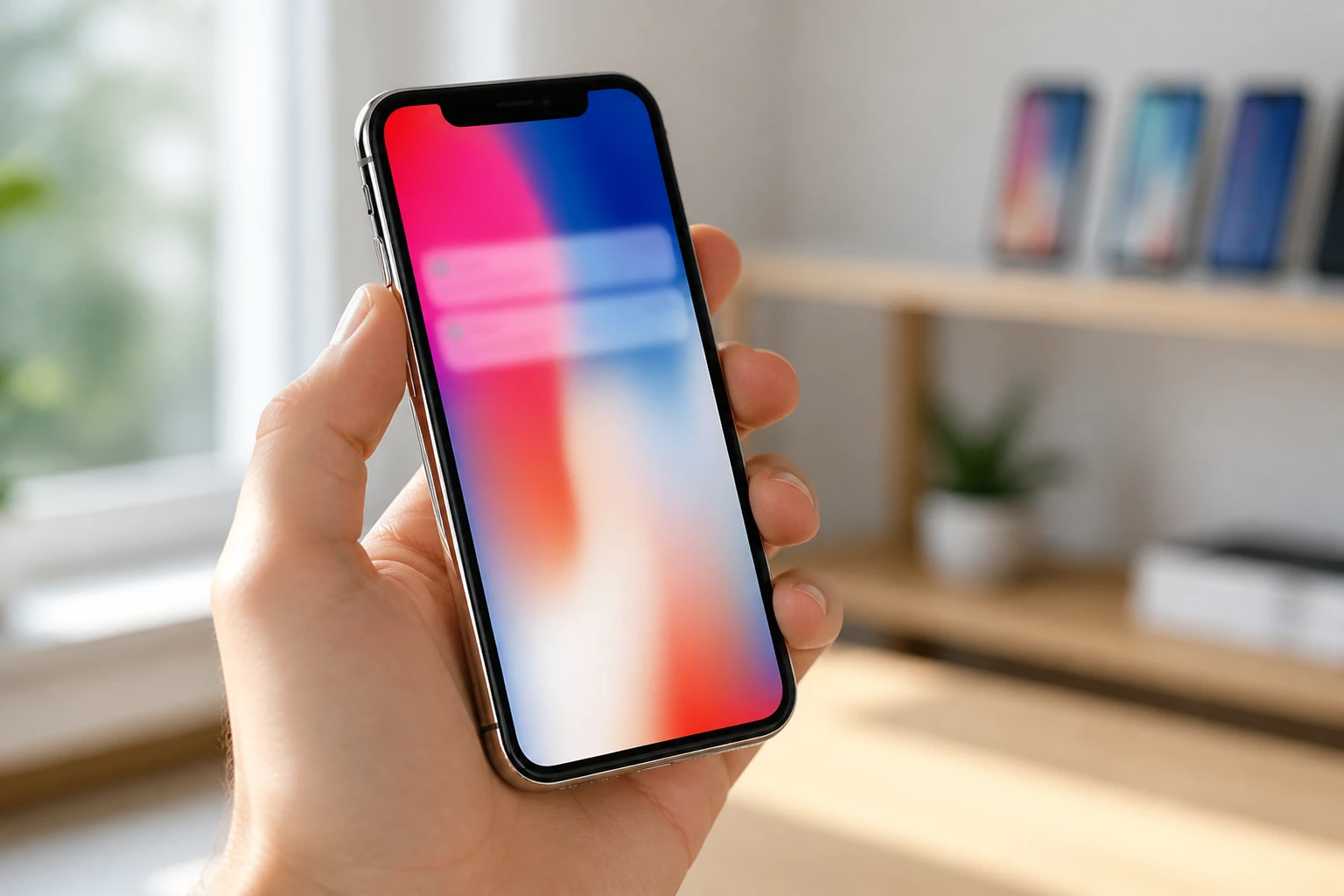
When Apple unveiled the iPhone X on September 12, 2017, the company called it the start of the next decade. Apple’s original iPhone X announcement listed a 5.8-inch Super Retina OLED display, surgical-grade stainless steel frame, glass back for wireless charging, and the TrueDepth camera system that powered Face ID.
- First iPhone without a home button or Touch ID
- First OLED “Super Retina” panel with 1,000,000:1 contrast
- Face ID using more than 30,000 invisible IR dots
- Edge-to-edge design interrupted only by the notch
- Starting price of $999 for 64 GB, then the highest ever for an iPhone
Jony Ive, then chief design officer, said the goal had been an iPhone that was all display. “The iPhone X is the realization of that vision,” he said. “iPhone X marks a new era for iPhone, one in which the device disappears into the experience.” Philip Schiller called it “the beginning of the next ten years for iPhone.”
Those ten years have largely arrived. Every subsequent flagship still carries a version of the notch or Dynamic Island, Face ID, glass sandwich construction and stainless or titanium frame language the X introduced. The hardware that first shipped those ideas is now the one Apple will no longer fix.
Owners Left Holding a Still-Working Classic
A relatively small number of iPhone X units remain in daily service. On X, the announcement triggered waves of nostalgia rather than mass panic. One widely shared post from @theapplehub simply noted that Apple now considers the iPhone X obsolete and that it is no longer eligible for repairs at Apple or authorized providers; it drew more than 6,700 likes and replies calling the phone legendary and the second-most revolutionary iPhone after the original. Users posted photos of devices still in cases and asked who was still carrying one in 2026.
For those owners a hardware failure now means third-party repair or replacement. Batteries and screens remain the most common requests. Some independent shops have stockpiled parts or harvest components from broken units. Others will simply decline the job once their shelves empty.
For more than a decade, our intention has been to create an iPhone that is all display. The iPhone X is the realization of that vision.
Jony Ive said that in 2017. The design won. The specific chassis that carried it has now aged out of Apple’s parts system.
Software security remains a separate, softer cliff. Occasional iOS 16.7.x patches have continued into 2026 for the X, 8 and 8 Plus, yet feature development ended years ago and the patch cadence is expected to slow further.
Design Legacy That Outlived the Model Number
The stainless-steel band, dual-glass construction and Face ID module did not retire with the X. They became the default architecture. Later models refined the notch into the Dynamic Island, upgraded the display refresh rate and swapped steel for titanium, but the core decisions made for the tenth-anniversary phone still shape the 2026 lineup.
Apple continues to argue that durable materials and long software support keep devices in use longer, which benefits the planet. The company points readers to Apple’s stated design for longer product life on its environment pages. At the same time the vintage-to-obsolete ladder steadily removes official repair options once the calendar threshold passes. Right-to-repair advocates have long described that ladder as a form of planned obsolescence that pushes residual value toward newer models and increases electronic waste. Apple maintains the timelines are transparent and driven by parts economics and technological age.
The X itself sold strongly in its short window. Public tallies place lifetime volume around 63 million units before the XS generation took over. Many of those phones have already been recycled, resold or retired. The remainder now sit outside Apple’s hardware safety net.
The Same Clock Keeps Ticking for the Rest of the Lineup
More devices will cross the same thresholds in coming months. Older iPad Pro and Apple Watch models sit near the vintage or obsolete edges. Each quiet update to the support page will move another handful of model numbers without ceremony.
For the iPhone X the ceremony is external. Fans still treat the 2017 launch as a high-water mark of hype and design risk. The phone that killed the home button, introduced Face ID and forced every competitor to chase full-screen notches is now officially past Apple’s repair horizon. The policy that put it there is the same one that has governed every prior flagship. The calendar simply reached the next number.
Owners who want to keep an X running will do so through independent channels for as long as parts and ingenuity last. Everyone else will treat the August 13 update as the formal close of the book on a device whose ideas still fill every new box Apple ships.
Frequently Asked Questions
What does Apple mean by an obsolete product?
Apple classifies a product as obsolete when it stopped distributing the model for sale more than seven years earlier. At that point the company and its authorized providers discontinue all hardware service and block parts orders, even for paying customers. Vintage status, by contrast, still allows best-effort repairs while stock remains.
When was the iPhone X sold and discontinued?
The iPhone X went on sale November 3, 2017 after pre-orders opened October 27. Apple stopped selling it on September 12, 2018 when the iPhone XS, XS Max and XR arrived, giving it roughly ten months as a current model.
What is the final iOS version the iPhone X can run?
The iPhone X maxes out at iOS 16. It never received iOS 17 or later feature releases. As of mid-2026 the highest available build is iOS 16.7.16, which has continued to receive intermittent security fixes alongside the iPhone 8 and 8 Plus.
Can I still get my iPhone X repaired anywhere?
Official Apple Stores and Authorized Service Providers will no longer perform hardware repairs or order parts. Independent third-party shops can still attempt fixes if they have remaining inventory, donor devices or compatible aftermarket components, though availability will shrink over time.
Which other devices moved with the iPhone X?
The 15-inch 2018 MacBook Pro was reclassified obsolete in the same August 13, 2026 update. Earlier in the year the first-generation HomePod and first-generation AirPods had joined the iPhone X on the vintage list before the phone advanced further.