Netflix asked a federal judge Friday to throw out Tyra Banks’s defamation lawsuit over the docuseries Reality Check: Inside America’s Next Top Model, arguing the supermodel’s complaints target ordinary editorial choices she herself perfected for 24 seasons. The special motion to strike and dismiss, filed in the Central District of California, sets a hearing for October 30.
Banks Banks filed the original June defamation complaint against the streamer, directors Mor Loushy and Daniel Sivan, and related entities. She said a three-hour interview was cut to roughly 16 minutes in ways that falsely painted her as insensitive to contestant Shandi Sullivan’s account of a sexual encounter during Cycle 2.
The filing frames that cut not as malice but as the same craft Banks practiced when she controlled the original series. Defendants cast the dispute as a fight over narrative control after the fact, not over false statements of fact. That framing sets the tone for every argument that follows.
The Filing Hits Banks Where She Built Her Brand
Gibson Dunn lawyers for the defendants zeroed in on a core irony. Banks created, hosted and executive-produced the long-running UPN/CW/VH1 competition. She routinely decided what footage stayed, what vanished, and how competing stories landed on screen.
Banks understands editorial discretion. She created, hosted and executive produced 24 seasons of ANTM, making the same kinds of editorial decisions she now attacks, what footage to include, what to omit, and how to present competing narratives. The Documentary simply turned that editorial lens back on ANTM and Banks. Her disagreement with the resulting portrayal does not make it defamatory.
The motion, lodged as a California anti-SLAPP special motion paired with a Rule 12(b)(6) dismissal bid, calls the suit a request for more airtime and a friendlier cut. Accepting it, the lawyers wrote, would let almost any unhappy documentary subject force discovery into raw footage simply by claiming a different edit would have looked better.
Netflix’s public statement matched the legal posture. “Directors Daniel Sivan and Mor Loushy are respected documentarians who thoroughly interviewed the people behind America’s Next Top Model,” a spokesperson said. “Tyra Banks was given the opportunity to speak openly about her experience and the creators fairly presented her perspective alongside those of every other participant shown in this documentary. We stand behind Reality Check: Inside America’s Next Top Model and will continue to vigorously defend it.”
That public line and the brief share one premise. An interview subject who spoke at length still does not own the finished cut. The streamer is treating Banks’s participation as proof of process, not as a promise of equal screen time or a preferred sequence.
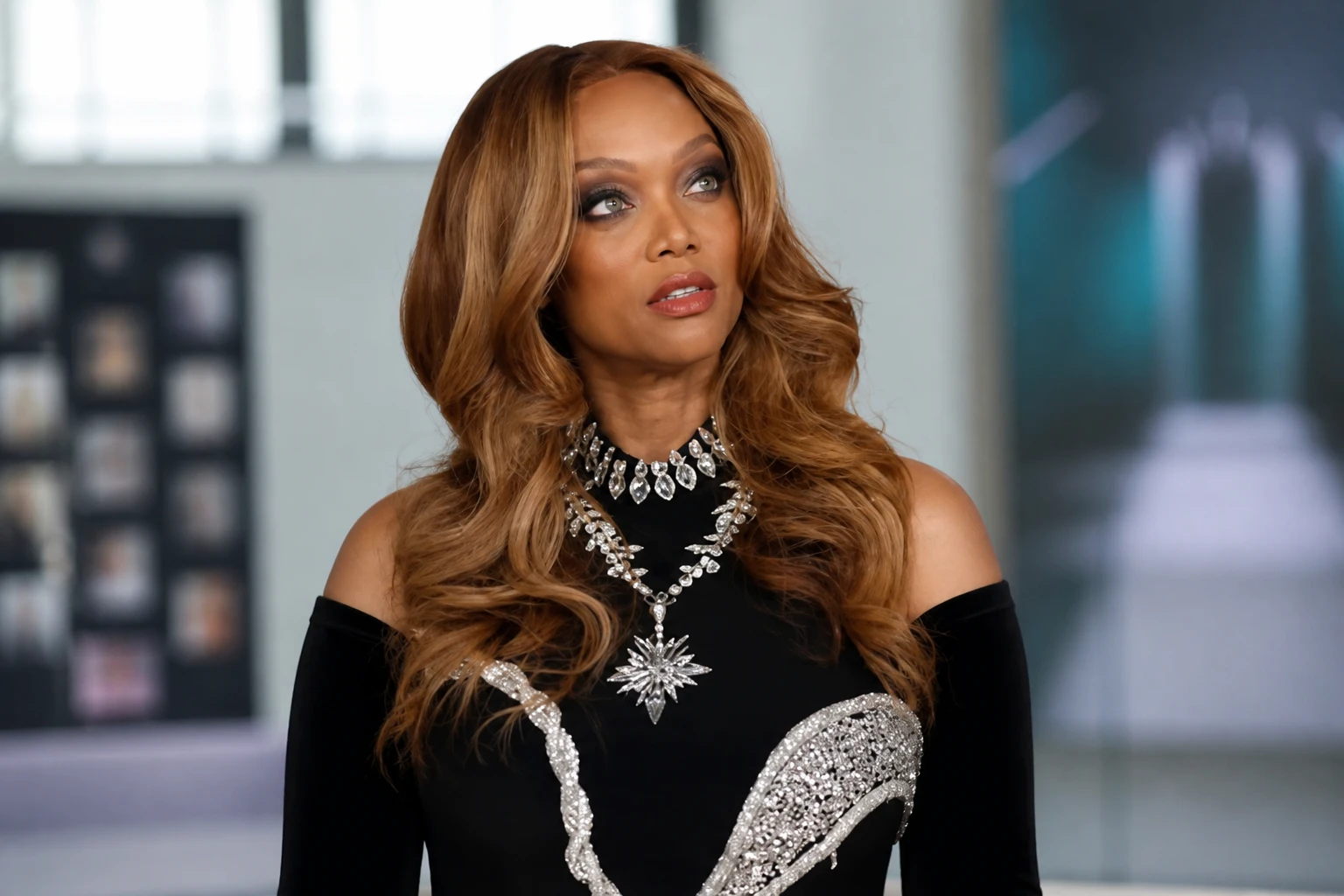
How the Shandi Sequence Plays
The complaint focuses on two short stretches involving Sullivan, a Cycle 2 finalist whose original episode framed a Milan night as cheating on her boyfriend. In Reality Check she describes being blackout drunk, in the shower and the bed, with no one intervening and cameras rolling.
- Episode 1 end: A producer raises “a more difficult territory is Shandi.” Banks answers “Shandi, okay.” Asked if she remembers the story, she says “Um…” and the episode cuts to credits.
- Episode 2 open (simultaneous release): Banks continues, “I do remember her story. It’s a little difficult for me to talk about production because that’s not my territory.”
- Surrounding cuts: Sullivan’s interview, creative director Jay Manuel’s recollection of hearing about sex in the shower, and producer Ken Mok describing scaling the footage back for broadcast standards.
Netflix’s papers argue the full sequence cannot reasonably imply Banks forgot Sullivan or knew of an assault in real time and covered it up. “A documentary expressly showing Banks remembering does not imply that she forgot.” The motion adds that the show never places Banks on set that night or attributes knowledge of blackout status to her.
Time’s February review of the series quoted Sullivan at length on the blackout fragments and production’s choice to keep filming. It also noted Banks’s limited answer and Mok’s statement that the team treated the original show “as a documentary.”
Viewed as a continuous thread across two episodes released together, the Banks answers move from hesitation to recollection. Defendants say that arc undercuts any claim that the edit left her looking as if she had blanked on Sullivan entirely. The surrounding voices from Manuel and Mok supply production context without pinning real-time knowledge on Banks.
The Waiver Banks Signed
After the interview Banks signed an agreement that released the filmmakers and anyone distributing the series from “all claims, known or unknown,” including defamation and false light arising from her appearance or the uses described.
- She gave up creative control over the final cut.
- The release expressly listed defamation among the surrendered claims.
- Nothing in the finished episodes, defendants say, violates the limited editing restrictions that remained.
- A separate Lanham Act claim over use of her image is attacked under the Rogers v. Grimaldi First Amendment test for expressive works.
The motion treats the contract as an independent bar even before the merits of the tort claims are reached.
If the court accepts that reading, the waiver can end the state-law counts without a deep dive into what each cut implied. The Lanham Act piece then stands or falls on whether the series qualifies as an expressive work under Rogers, a test built for titles and artistic uses rather than ordinary commercial ads. Defendants present both paths as reasons to dismiss with prejudice.
What 24 Seasons of ANTM Looked Like From the Edit Bay
Public reaction when the suit first landed already framed the conflict as a mirror. One widely shared post put it bluntly: Tyra spent 24 cycles selectively editing girls into villains for ratings; Netflix gave her 16 minutes of her own medicine. The “we were all rooting for you” meme flipped into a karma line that still circulates.
That crowd reading tracks the legal one. America’s Next Top Model built its brand on high-stakes challenges, harsh critiques, compulsory makeovers and storylines that sometimes left contestants in tears on camera. Judges and producers chose the narrative. Banks was the face and a driving force for most of the run.
| Practice | ANTM under Banks | Reality Check treatment of Banks |
|---|---|---|
| Selective footage | Routine: challenges, confessionals, eliminations shaped weekly villains and heroes | 16 minutes from a three-hour sit-down |
| Competing narratives | Producers sequenced storylines for drama and ratings | Sullivan’s later account placed beside original episode framing and Banks’s response |
| Omission | Hours of unused tape every cycle | Banks says key context of her answers was left out |
| Creative control | Banks and team held it | Banks signed it away for the doc |
The Banks understands editorial discretion across 24 seasons passage is the filing’s sharpest edge. It does not deny the cuts. It insists those cuts are the ordinary work of documentary filmmaking and of the reality show Banks ran.
The table’s last row is the pivot the brief keeps pressing. Control sat with Banks on ANTM. Control left her hands when she signed for Reality Check. Defendants say she cannot reclaim through defamation law the edit she bargained away in the release.
Anti-SLAPP and the Chill on Future Subjects
California’s statute lets defendants strike claims arising from protected speech on public issues early, shifting fees if they win. Reality television history and a high-profile reappraisal of a cultural phenomenon qualify. Courts have applied similar protections to films and reports that depict real people in contested ways.
The California anti-SLAPP protections for public-issue speech exist precisely so expensive discovery cannot be used to punish critical speech. If the motion succeeds, Banks would face fee exposure and the claims would end without a full trial on the merits.
Documentary makers and streamers watching the case see a practical stake. Subjects already hesitate to sit for long interviews when the final cut may sting. A ruling that treats dissatisfaction with airtime or sequencing as potential defamation would raise the cost of any tough retrospective. A clean win for Netflix would reinforce that signed releases and the First Amendment still give filmmakers room to edit.
Fee shifting is the statute’s sharp tool. It is meant to deter suits that use the threat of long discovery to force softer cuts or quiet settlements. Here the defendants argue Banks’s complaint fits that pattern: a demand for a friendlier portrayal dressed as a tort claim.
The Doc Itself Still Streams
Reality Check: Inside America’s Next Top Model is a three-episode series directed by Loushy and Sivan. It features Banks, Mok, Jay Manuel, J. Alexander, Nigel Barker and multiple former contestants, including Sullivan. Netflix’s own materials describe it as unpacking both the show’s viral highs and its low points around body image, race, and on-set conduct. The three-part series premiered February 16 and remains available; the platform’s title page still lists Banks among the voices looking back at the complicated legacy.
Global peak audience claims for the original ANTM franchise topped 100 million. That scale is why the reappraisal drew notice and why Banks’s participation mattered to the filmmakers. She sat for the camera knowing the series would not be pure celebration.
Keeping the series online while the motion proceeds also keeps the evidence in plain view. Anyone can compare the Shandi stretches, Banks’s answers, and the surrounding interviews against the claims in the complaint. The platform is not treating the lawsuit as a reason to pull the work.
Releases and Retrospectives Face the Same Pressure
The Banks case bundles two protections defendants often raise together. One is contractual: a signed release that names defamation and surrenders final-cut control. The other is constitutional and statutory: anti-SLAPP screening plus Rogers-style breathing room for expressive works.
- The release is offered as a threshold bar on the state tort claims.
- Anti-SLAPP is offered as an early exit that can shift fees.
- Rogers is offered against the Lanham Act image claim.
- The editorial-discretion argument ties all three back to Banks’s own 24-season record.
Filmmakers who chase large franchises need primary voices on camera. Those voices rarely appear without paperwork. If dissatisfaction with length or order can reopen released claims, the incentive to book major subjects drops. If the paperwork and the First Amendment hold, retrospectives on hit reality shows stay workable.
The motion’s warning about raw-footage discovery sits in that same lane. Once every unhappy participant can plead a better alternate edit into court, the cost of a critical series rises even when the finished program stays inside ordinary documentary practice.
How the Court May Separate Craft From Harm
Judge André Birotte Jr. will have to sort disagreement over portrayal from statements that a reasonable viewer would take as false facts. The brief insists the series shows Banks remembering Sullivan, never places her on set that night, and never assigns her knowledge of blackout status.
That is a viewer-facing test. It asks what the episodes communicate when watched in order, not what a longer cut might have included. Banks’s complaint treats the missing context as the injury. Defendants treat the existing context as enough to defeat any defamatory implication.
The symmetry argument then supplies motive for skepticism toward the suit without replacing the legal elements. Banks spent years shaping contestants’ stories for broadcast. The directors shaped her interview for a three-episode reappraisal. The filing says only the second of those acts is now in court, and that it is still editorial judgment rather than a tort.
October Hearing Will Test the Mirror
Judge André Birotte Jr. will hear the motion on October 30. Defendants ask that the state-law claims be struck under the anti-SLAPP statute and that all claims, including the Lanham Act count, be dismissed with prejudice. They also seek fees and costs.
Banks’s side has not yet filed its opposition in the public docket summaries available so far. A representative did not immediately respond to requests for comment when the motion landed. The case number is 2:26-cv-06467-AB-DMK.
Whatever the ruling, the exchange already freezes a larger tension. The same tools that made ANTM appointment television for a generation are now the tools used to examine it. Banks spent years deciding which stories the audience saw. Netflix and the directors decided which pieces of her own interview the audience saw. The motion says that symmetry is not a legal wrong. The court will decide whether the law agrees.
Reality Check still streaming on the platform keeps the contested portrayal available while the briefs fly. Viewers can watch the exact sequences the lawyers are fighting over and form their own view of what the edit implies.