
In a move that marks the end of a computing era, developers working on the Linux kernel have begun phasing out built‑in support for the Intel 486 processor as part of the upcoming Linux 7.1 release. This 37‑year‑old chip ushered in the age of modern personal computing, but now its time supporting the latest Linux kernels is finally drawing to a close. The change reflects a shift in open‑source priorities and has stirred memories and debate across the tech community.
Why Linux is Ending Support for the i486 Chip
For decades, Linux was famous for running on extremely old hardware. Users could often install a relatively recent Linux distribution on vintage machines and still access email, browse lightweight sites, or simply enjoy tinkering with historic tech.
That broad hardware support has long been a point of pride for the Linux community. However, developers now say continuing to support hardware from the late 1980s is no longer practical.
A patch authored by veteran Linux developer Ingo Molnar has been queued ahead of the Linux 7.1 merge window. The patch removes several configuration build options that have allowed the kernel to be compiled for 486‑class CPUs. While the actual removal of all 486‑specific code will happen in later kernel series, this first step signals the start of the end for i486 support.
Linus Torvalds, the creator of Linux, is also on board with the change. He commented that there is “zero real reason” to spend developer time maintaining compatibility for this very old architecture, especially when very few, if any, modern machines still run the chip.
What the 486 Means in Computing History
The Intel 80486, commonly called the i486, was introduced in 1989 and quickly became a darling of early PC builders and hobbyists. It followed the earlier 386 line and brought important innovations such as on‑chip cache memory and an integrated floating‑point unit in many models. These advancements made the chip significantly faster and more capable for early graphical user interfaces and demanding software of that era.
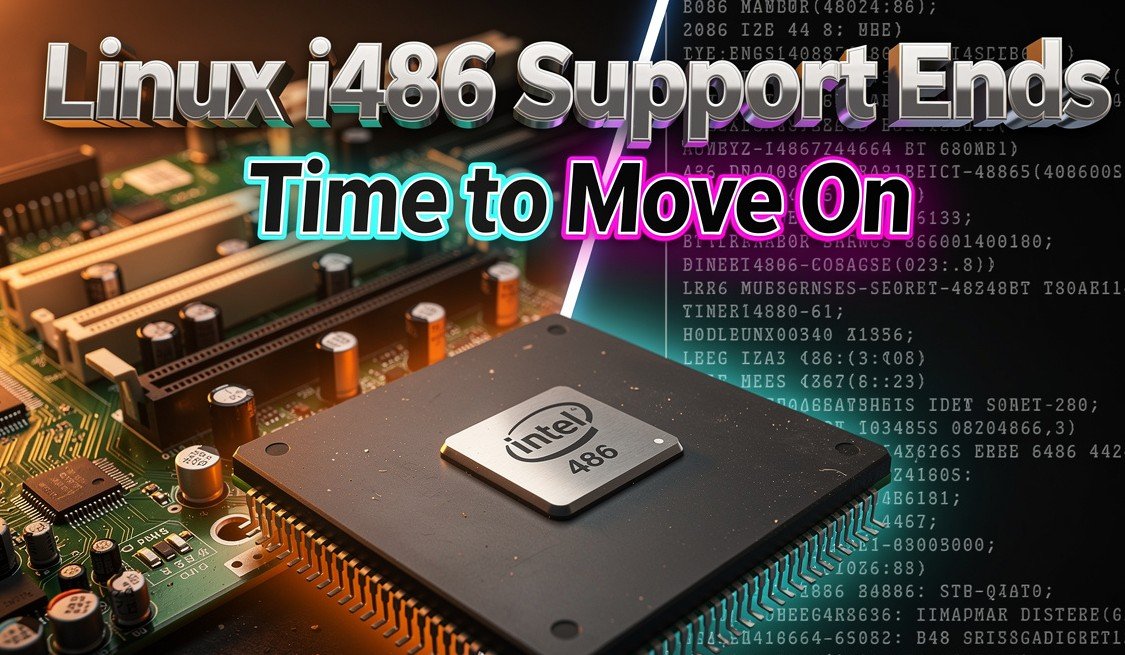
Throughout the early to mid‑1990s, the 486 was ubiquitous in desktops and workstations. Even after it became outdated for mainstream use, production continued into the 2000s for industrial, embedded, and legacy systems that prioritised longevity over raw performance.
Because of this history, the 486 has a special place in computing culture. It was often the first real CPU that many computer enthusiasts encountered, and its long run of service is a testament to the open‑source community’s commitment to backward compatibility.
What is Actually Changing in Linux 7.1
The changes targeting the Linux 7.1 release do not immediately make the kernel unusable on old 486 machines, but they do remove the ability to build an upstream kernel for these CPUs.
Here are the key technical updates underway:
- Dropping legacy build options such as
CONFIG_M486SX,CONFIG_M486, andCONFIG_MELAN, which let developers tailor builds specifically for 486‑class hardware. - Phasing out complex hardware emulation code that existed to support older chip instructions not present in more modern CPUs. This includes code that helped emulate functions required by ancient processors.
After these changes, the Linux kernel will require certain hardware features (like timestamp counter registers and newer instruction support) that the i486 simply does not have. This effectively means no modern kernel versions beyond 7.1 will run on a pure 486 CPU.
What Happens to People Using Old Hardware
While this change sounds dramatic, very few people are actually affected in practical terms.
Most mainstream Linux distributions stopped shipping 32‑bit x86 builds targeting old CPUs many years ago. Many require at least i686‑class or newer hardware today, and almost all require 64‑bit capable processors for current stable releases.
If someone truly needs to run Linux on 486‑era hardware, they still have options:
- Continue using older Long Term Support (LTS) kernel versions that support i486 CPUs.
- Run lightweight, niche Linux distributions that aim to be friendly to legacy hardware. However, such distros often have limited communities and may not offer current security updates.
- Explore alternative operating systems designed for very old machines, such as minimal Unix variants or historical OS projects tailored to vintage hardware.
Even industrial systems still using 486‑class embedded processors rarely rely on the latest Linux kernels because the hardware itself is not capable of supporting modern workloads. These systems often use static legacy software stacks that do not change frequently.
Why This Change Matters for Linux Development
The decision to drop support for the i486 is less about abandoning the past and more about improving the future of Linux.
Supporting extremely old CPUs adds complexity to the kernel codebase. Over time, developers have had to maintain special emulation paths and compatibility glue that very few users rely on. Removing this legacy burden can:
- Reduce kernel code complexity, making it easier to develop and maintain.
- Lower the risk of bugs, especially as newer features are built on assumptions that older chips do not meet.
- Free up developer time to focus on performance, security, and support for current and future hardware.
Linus Torvalds and other maintainers have acknowledged that ongoing support for legacy CPUs can sometimes slow progress. By trimming this rarely used part of the code, they are trying to balance respect for history with practical engineering needs.
Looking Ahead
Dropping i486 support is symbolic of how far computing has come. What was once cutting edge in personal computers is now a legacy component being retired from the ongoing evolution of one of the world’s most important open‑source projects.
For many, this news will be nostalgic. For others, it is a necessary step in keeping Linux relevant, secure, and optimised for modern applications and hardware.
Have you ever used a 486 machine? Share your memories or thoughts on this change in the comments below. Use the hashtag #Linux486Farewell if you are discussing this on social media to keep the story alive and help others reminisce about this iconic processor.