
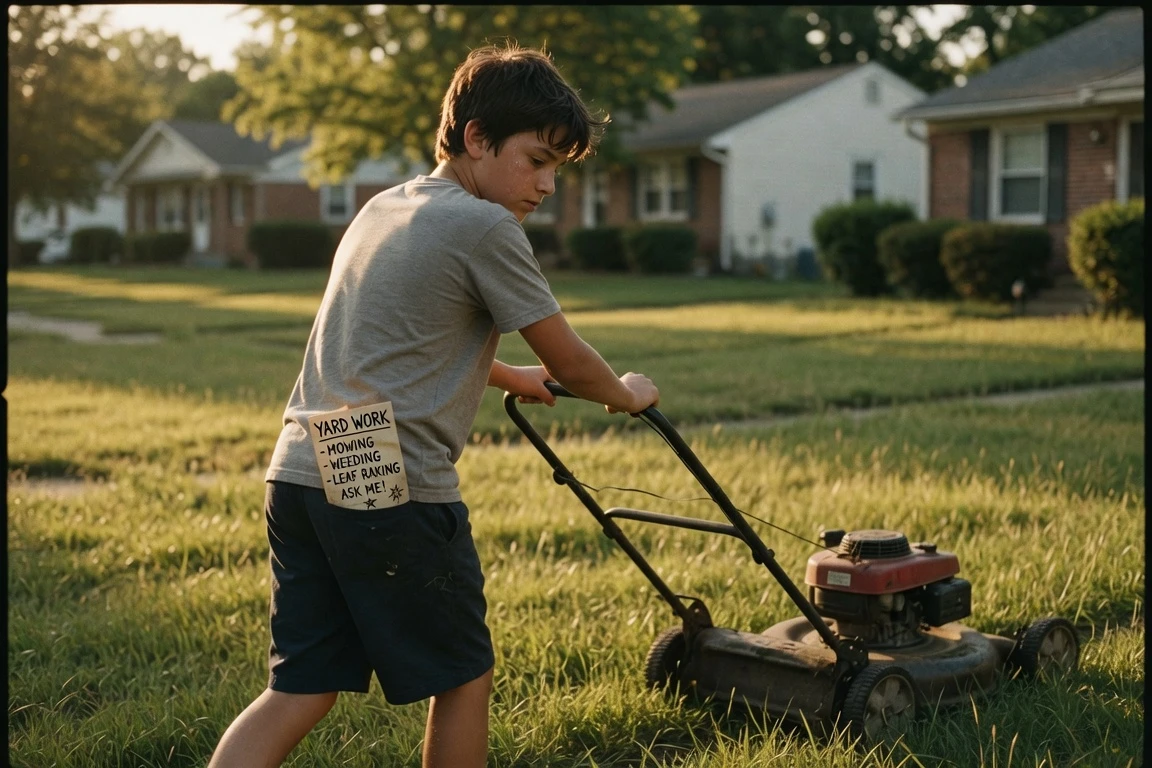
Slate’s work advice column this week opened with a 16-year-old’s summer lawn mowing business that has gone better than his stepmother ever planned. The boy is spending the full summer with her and her husband, and he made flyers with his own phone number to land enough work. Neighbors keep calling his stepmom to book his services anyway, even though the flyer says to call him.
The letter, signed “Frustrated Stepmom,” ran in the ‘Good Job’ column on June 23, 2026, answered by Doree Shafrir. The stepmom had posted a photo of the flyer in the neighborhood Facebook group. Within days she had Facebook messages and three phone calls from neighbors asking if the boy could water their plants, feed their cats, or quote a rate. One neighbor she had only met once knocked on her door, then seemed miffed when she pointed him down the block to the stepson, who was mowing another lawn at that moment. Doree’s diagnosis was blunt, and her fix list was short.
The Letter: A 16-Year-Old’s Summer Side Hustle
The letter writer identifies herself as the stepmother of a 16-year-old who normally alternates weeks between parents, then moved in for the full summer break. Her husband had suggested the lawn business, and the boy had been enthusiastic about it from the start. He made the flyers himself, walked the block, and dropped one at every house with his own phone number printed on it. The stepmom helped by snapping a photo of one flyer and posting it to the neighborhood Facebook group.
What the stepmom did not expect was the wave of messages that followed. The three phone calls she had received so far all came from people on her street. The Facebook messages, by her count, all asked about scheduling, rates, or extras. The flyer, she wrote, was “super clear to call him.” A neighbor who had only met her once showed up at her door that morning to book a mow, then looked visibly annoyed when she redirected him to the stepson, who was already working a different lawn down the block.
The boy’s schedule was already filling up. The work was real. The routing was the only thing broken, and the routing was the only thing the stepmom could change.
- Watering plants while the neighbor was out of town
- Feeding cats for a neighbor on a trip
- Quoting a rate for a new mow
Why the Calls Keep Coming to Mom
The routing problem is the post, not the flyers. The flyers went door to door with the boy’s own number; the Facebook post went to a group where the only contact detail visible at a glance was hers.
When a neighbor scans a group on a phone, they see the poster’s profile picture, the poster’s name, and the first line of the post. They do not always scroll to the bottom for a number that is not theirs. The result, in this case, was three phone calls to the stepmom within days, plus a Facebook inbox she had not expected to use as a small business answering service. Askers seemed surprised, sometimes annoyed, when told to call the stepson directly. The stepmom started feeling like the de facto office manager for a business she did not run.
Doree’s Three-Word Diagnosis: People Don’t Read
In her reply, Doree summed up the stepmom’s issue in three short words. She expanded: people saw the post, glanced at it, caught the first line, and did not keep scrolling to the bottom where the stepson’s number probably sat. The diagnosis is short. It also does most of the work in the column, because once you accept that the neighbors are not going to read past the headline, the fix list is short.
I can sum up the crux of your issue in three words: People don’t read.
Doree, who writes the column with Laura Helmuth, framed the rest of her reply around the medium that put the stepmom in the line of fire. The Facebook group post is the channel that put her face in front of every neighbor who booked or asked about the lawn. The flyers did not put her face in front of anyone, because the flyers carried only the stepson’s number.
Three Fixes, From Easiest to Hardest
Doree laid out three options for the stepmom, in order of how much they ask of her. The first is to take the post down from the Facebook group entirely and rely on the flyers and word of mouth, which “seems to be booming” already. The second is to edit the post so the top line is a clear, all-caps instruction steering the neighbors away from messaging the stepmom and toward the stepson’s number at the top. The third is to keep answering, forward each request to the stepson, and gently remind the neighbor of the direct line.
| Option | What it does | Tradeoff |
|---|---|---|
| Take the post down | Removes the only Facebook-facing entry point | Cuts off a channel that was working |
| Add caps warning: “DO NOT MESSAGE ME DIRECTLY” | Filters most misrouted messages | Likely still gets a few stragglers |
| Keep answering and forward | Maintains goodwill with the neighbors | Requires ongoing time from the stepmom |
The first option is the cleanest cut. The post is the misrouting; remove the post, and the misrouting stops. The second option is the most likely to leave a few stragglers, since not every neighbor will read past the new top line. The third option keeps the post live, keeps the stepmom in the loop, and trades the work for goodwill with the neighbors. The hard part of any of these is the same. The stepmom has to decide whether to keep playing middle manager or step out of the booking flow entirely, since staying in means the boy learns that his customers have a back channel to his stepmother, a different kind of business education than the one the flyers are set up to give.
A Parallel Problem: When the Babysitter Won’t Leave
The same column ran a second letter, signed “Bad Boss,” that lands a different beat of the same chord. A parent who never wanted to manage anyone has, with a new child, started hiring a babysitter. The current sitter is the neighbor’s daughter, home from college for the summer, and she is good with the kid.
She is also, every time, sticking around for at least 15 minutes after the parent walks in the door. On one occasion she stayed a full extra hour, just chatting, after her shift was over.
Doree’s response was practical. The next time the sitter starts chatting when the parent comes home, the parent should interrupt her and say a short line that signals the night is over. For daytime pickups, a watch glance plus a line about a call coming up usually does it. Doree noted that this gets easier over time, and that the sitter will likely start picking up the cue on her own.
I have an early morning tomorrow so I’m going to have to say good night. Thanks again!
The babysitter case is a cleaner version of the same lesson. The parent has not been explicit. The sitter is not misreading the room; she is reading an absent signal, and without a direct line in the moment, she keeps staying.
What Both Sides Can Take From This
Both letters were filed under “Good Job,” the column Slate runs on workplace questions, and both were answered in a register Doree uses often. The neighbor’s behavior tracked the post that made her the obvious contact. The babysitter’s behavior tracked the absent signal, since nobody had told her the night was over. Reading them side by side, the fix in both was the same: a small direct statement from the manager, since the signal had not been set in the first place.
Doree ended the first response with a soft reframe. The stepmom’s situation, she wrote, fits “under the ‘good problems to have’ category,” and could even be a way to strengthen the relationship with her stepson. The reminder is gentle. The work for the stepmom is the same work either way. The neighbors are still going to call the person whose name is on the post, so the fix is to change which name is on the post, or to take the post down.
Frequently Asked Questions
Why do neighbors keep calling the stepmom instead of the stepson?
The post that started the calls was on the neighborhood Facebook group, and it was the stepmom’s profile on it. Doree, the columnist, framed the issue in three short words: people don’t read. Most neighbors see the poster’s name and stop scrolling. The fix, in Doree’s view, is to change which name is on the post, or to take the post down.
What did Slate recommend for the stepmom’s situation?
Three options, in order of effort: take the Facebook post down and rely on the flyers, edit the post so the top line is a caps instruction not to message the stepmom, or keep answering and forward each request to the stepson. Doree flagged the first as the cleanest cut and the second as the most likely to leave a few stragglers. The third is the most time-consuming, since it keeps the stepmom in the routing loop.
How should a parent handle a babysitter who stays too long?
Be explicit the next time it happens. Doree suggested a short, friendly line at pickup, such as a quick note that the parent has an early morning and needs to call it a night. The cue gets easier with repetition, and the sitter usually adjusts. Without a direct line in the moment, the sitter keeps staying, since the absent signal reads as an open invitation to keep chatting.
Is it common for parents to help promote a teen’s side business online?
The column treats the stepmom’s post as the kind of helpful boost a parent commonly does. The cost, in her case, was that the post put her name in front of the neighbors, which is what made her the contact point for every question that followed. The flyers, by contrast, carried only the stepson’s number and routed the inquiries to him directly.