A New York Times investigation identifies a covert Russian military intelligence unit operating out of an Aeroflot office in Tokyo, sourcing civilian electronics that end up inside missiles and drones striking Ukrainian cities. The findings, published Sunday, land the same week four US senators announced a long-stalled agreement with the White House on a sanctions package aimed at the energy revenues that keep the same pipeline running.
Ukrainian government estimates cited by the Times put Japanese-made components in about 90 percent of Russian missiles and drones recovered in Ukraine. Tokyo’s response is only beginning, with new counter-intelligence legislation passing in May and a warrantless-interception bill proposed days before the Times report. In Washington, the sanctions deal still has no released text. The operational picture and the legislative one now run on parallel tracks.
The Aeroflot Office Above Tokyo
The Times, drawing on interviews with current and former Western intelligence officials, names the unit directing the operation: the 20th Directorate of the GRU, a Russian military intelligence structure the paper says had not previously been identified in open reporting. At the center sits Maksim Vladimirovich Filchenkov, 49, a veteran GRU officer who arrived in Japan in February 2024 and has held cover as an Aeroflot employee at the airline’s 22nd-floor Tokyo office ever since.
The Aeroflot office is described in the report as a base from which Filchenkov plays “a crucial role in supplying Russia’s war machine,” with the Times portraying the operation as part of a wider Russian intelligence footprint that moved into Tokyo after the West expelled hundreds of Russian officers following the February 2022 invasion of Ukraine.
Ukrainian officials have spent years pressing Tokyo on the scale of the problem. Presidential Sanctions Commissioner Vladyslav Vlasiuk told Kyodo News in late June that the figure was approximately 90 percent of Russian missiles and drones, with components recovered specifically from the Kh-101, a Russian long-range air-launched cruise missile.
Ukraine’s push has run through official channels, with the Times reporting that the Ukrainian side has repeatedly asked the Japanese government to strengthen export controls on high-tech and other products. Tokyo’s existing restrictions, imposed after Russia’s invasion, have so far not closed the civilian-goods loophole that the Times investigation documents.
How Tokyo Became Russia’s Procurement Hub
Japan’s draw was less active recruitment than passive readiness. Soon after Russian troops crossed into Ukraine in 2022, Western governments expelled hundreds of Russian intelligence officers from their capitals.
The Times investigation finds that “dozens of those banished spies have turned up in an unexpected place: Japan,” a shift the paper attributes to a pairing of weak espionage laws and a flourishing high-tech industry. That combination, the Times writes, has made the country “a crucial piece of the Russian war effort,” a framing the report ties to officers operating under cover as diplomats or businesspeople.
Former and current members of five Western intelligence agencies, cited by the Times, said the GRU’s Tokyo presence has grown into a routine procurement channel rather than a one-off posting.
The Civilian Pipeline to Russian Missiles
The components the GRU is moving are not labeled “war goods.” According to the Times, the items are largely civilian dual-use electronics that sit just outside Japan’s existing export controls.
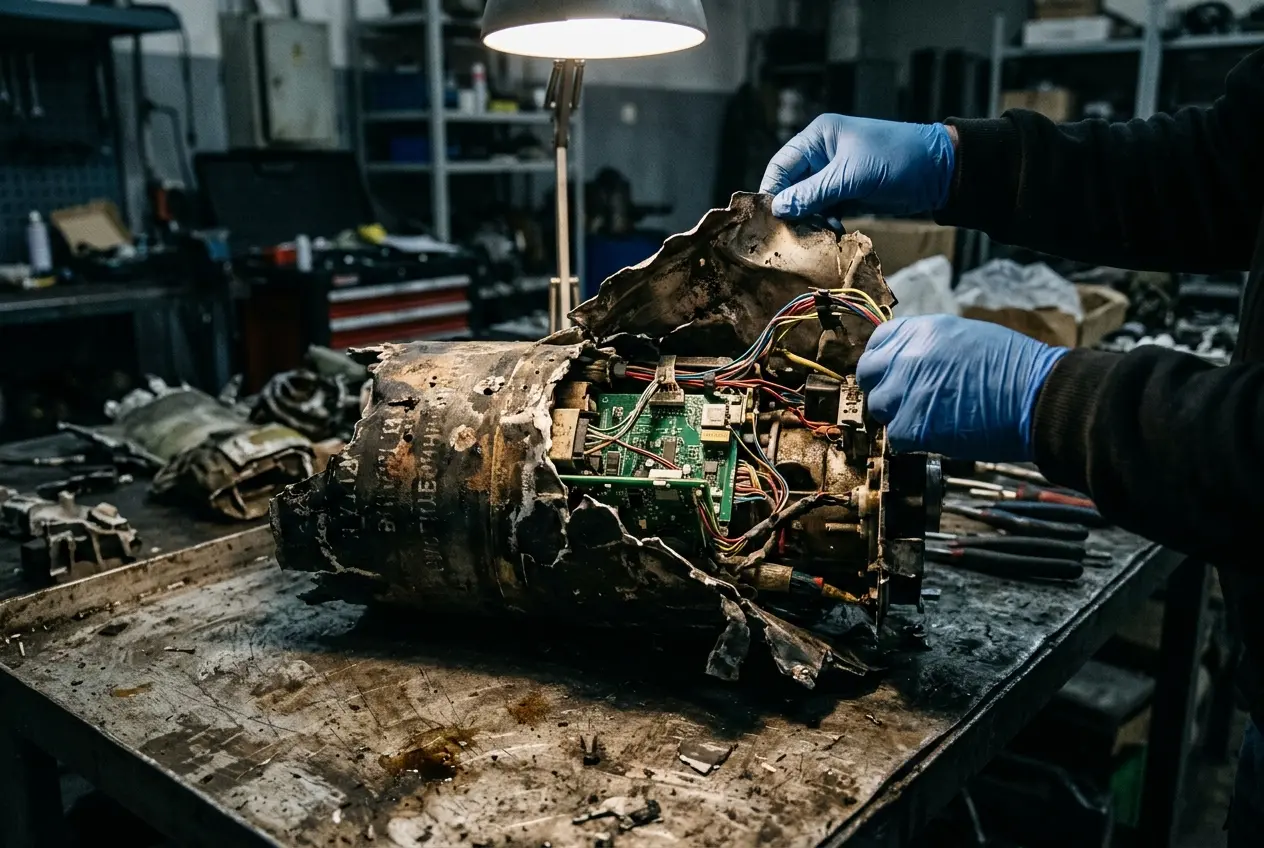
Routes run through third countries to avoid restrictions imposed after the February 2022 invasion, with Vietnam named by the Times as one transit point. The Kh-101 missile wreckage cited by Vlasiuk to Kyodo News offers the cleanest physical evidence, with matched Japanese parts found inside a weapon designed to travel long distances before striking.
- Civilian dual-use electronics, hard to capture under standard export controls.
- Routed through third countries including Vietnam to evade post-2022 rules.
- Components recovered from downed Kh-101 air-launched cruise missiles.
A Pattern in Europe, and Japan’s Slow Response
The Tokyo operation mirrors a pattern already documented elsewhere in Europe. In February 2026, Germany’s Federal Prosecutor’s Office announced arrests tied to a firm in Lübeck that investigators said had funneled dual-use technology to at least 24 Russian defense contractors.
Japan’s legal counter-punch is in its early innings.
Parliament passed the National Intelligence Council Establishment Act on May 27, creating new counter-intelligence coordinating authorities. Two days before the Times piece published, Prime Minister Sanae Takaichi’s administration proposed legislation to allow warrantless communications interception, a step the Times notes Japan had not previously authorized. The two moves represent Tokyo’s first structured response to the procurement problem and arrive after years of warnings from Kyiv.
| Japan | Germany | |
|---|---|---|
| Pre-invasion gap | Weak anti-espionage statutes | Enforcement gaps on dual-use exports |
| Trigger | Russia’s February 2022 invasion of Ukraine | Russia’s February 2022 invasion of Ukraine |
| First concrete action | National Intelligence Council Establishment Act, May 27, 2026 | Federal Prosecutor arrests tied to Lübeck firm, February 2026 |
| Latest move | Proposed warrantless communications interception | Not disclosed in same filing |
Senators and White House Reach a Sanctions Deal
On Friday, Republican Lindsey Graham of South Carolina, Democrat Richard Blumenthal of Connecticut, Democrat Jeanne Shaheen of New Hampshire, and Republican Roger Wicker of Mississippi said they had reached an agreement with the Trump administration to advance an updated Russia sanctions package. Graham, on his 10th wartime visit to Ukraine, made the announcement in Kyiv alongside President Volodymyr Zelensky.
The package would allow President Donald Trump to place heavy tariffs on imports from countries that import Russian oil, uranium and natural gas, with possible exceptions for nations that contribute to the Ukrainian war effort, a structure aimed squarely at the energy revenues Vlasiuk calls the war’s financial backbone.
The original 2025 version of the bill allowed the president to impose a 500 percent tariff on countries purchasing Russian oil and uranium, a figure now under negotiation in the narrower deal with the White House. A prior push to advance the legislation, in December, stalled after Democrats raised concerns about granting the president broad tariff authority while a related Supreme Court case was pending. The text the four senators and the administration settled on has not been released.
The bill already has 85 co-sponsors in the Senate, a bipartisan total confirmed by the senators and dating to the 2025 filing. Vlasiuk, the Ukrainian sanctions commissioner, put the war’s energy math plainly: “Russia has earned roughly $58 billion from oil and petroleum product exports to China and India in the first half of this year alone.”
We are proud to announce that we have reached an agreement with the Trump Administration to move our updated Russia sanctions legislation forward. We are very pleased with this significant progress and expect to roll out the legislation very soon.
- 90 percent – share of Russian missiles and drones with Japanese components.
- 85 – Senate co-sponsors on the sanctions bill.
- 500 percent – proposed tariff on countries buying Russian oil and uranium in the original 2025 text.
- 5 – countries the bill now targets.
- $58 billion – Russia’s oil and petroleum exports to China and India in the first half of this year, per Vlasiuk.
The Two Tracks Now Converge
The pipeline and the sanctions bill are now both live and both unfinished. The Times investigation names a unit, an officer, and a Tokyo cover office; the Senate deal names a vehicle and a tariff design but not yet the final language.
Senators say the bill text will roll out “very soon,” and the Takaichi administration’s warrantless-interception proposal is moving through Tokyo’s Diet. Graham, in Kyiv, framed the convergence plainly: “I’ve never been more optimistic than I am today. We have the formula to end this war.”
I’ve never been more optimistic than I am today. We have the formula to end this war.