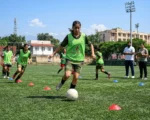
Pedro Ayón and Serafín Andrade met on a dirt recreation yard in McFarland, California, kicking a soccer ball while locked inside an immigration detention center. Years later they lined up together again, this time as free men, on a soccer pitch in San Francisco.
The reunion happened at the fourth annual CCIJust Goals tournament in June, which drew 100 amateur players and ten mixed teams to the University of San Francisco’s Negoesco Stadium, timed to the opening weeks of the World Cup. The tournament raises money for detainees’ legal defense and doubles as informal group therapy for people who survived detention. It runs alongside a California detention system that, by the state’s own count, is holding more people and recording more deaths than at any point since inspections began in 2017.
A Yard Ball Becomes a Lifeline
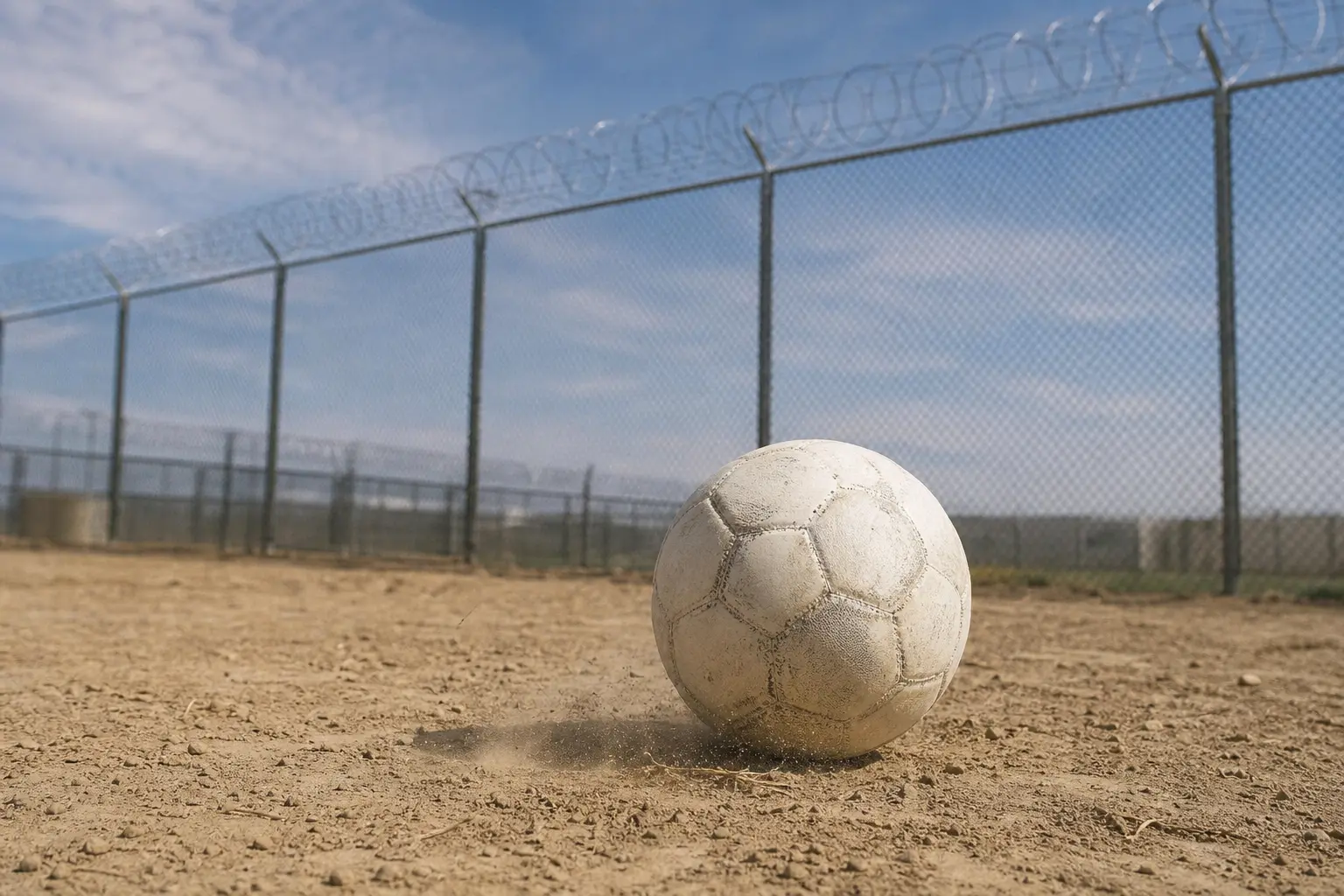
Ayón was born in Mexico and raised in the United States. He spent eight months in Immigration and Customs Enforcement (ICE) detention in 2021. Pandemic rules barred visits, so the recreation yard was his only real contact with anyone outside his own head.
“When we were allowed recreation for an hour, half an hour, we often went out and that was a way to feel free, to enjoy ourselves, to be able to share and in any way forget about the situation we were in,” he told Noticias Telemundo, the Spanish-language NBC News outlet that first reported this story.
“It’s a ball, right?” Ayón said. “But it does things you wouldn’t think of.” A ball, he added, can heal people just by being kicked around.
Andrade spent a year and a half detained at the same McFarland facility. The friendship the two men built there survived release, deportation fears and years apart. McFarland itself has since become a bigger flashpoint in the state’s detention fight: GEO Group runs both the long-standing Golden State Annex there and a newer 700-bed site called Central Valley Annex, and the state’s detention center count rose to eight after that second facility began taking detainees this spring.
“Football was more than a game. It was more than a code. It was more than a sport. It was the way we could connect,” Ayón said of those yard games, where Russians, Japanese, Chinese and Latin American detainees became, in his words, brothers over a shared ball.
Ten Teams Take the Field as the World Cup Kicks Off
CCIJust Goals is organized by the California Collaborative for Immigrant Justice (CCIJ), a nonprofit that uses legal services to fight for the release and empowerment of immigrants detained in California. Edwin Carmona-Cruz, the group’s executive director, said players arrived this year in the jerseys of their home countries and other nations, swept up in World Cup fever.
The format is deliberately mixed. Men and women share rosters. Lawyers face off against people they once represented in detention. The mechanics are simple but not free:
- Format – ten teams, five-a-side matches, four pitches running at once across Negoesco Stadium
- Entry cost – each team must raise at least $1,000 just to register
- Where it goes – registration money funds legal services for people currently detained, including a Salvadoran man held at California City Detention Facility
Carmona-Cruz said the pitch produces a kind of leveling he rarely sees in legal consultations. “Many people inside tell us, ‘That’s the moment when I feel free and I can be on a team with someone from another country who doesn’t speak my language, but we’re on the same team and we’re fighting for the same thing.’”
The Man Who Designed a Jersey He Cannot Wear
CCIJ’s own team is called The Strikers, a name that nods to protests inside detention centers. Its jersey, in orange, yellow and navy blue, was drawn by a Salvadoran immigrant detained at California City Detention Facility, run by the private prison company CoreCivic. He asked to remain anonymous when he spoke to Noticias Telemundo from inside the facility.
He has drawn since childhood and spent a week designing the logo. He hopes to play for the team himself once he is released. Until then, soccer is confined to a single hour a day.
We only get one hour of recreation to go out to the yard. The other 23 hours we are locked up, in the cell or in the dormitory.
After the men organize into teams inside that hour, he said, roughly 40 minutes of actual play is left. “They are the best 40 minutes of the day,” he said. Some of the balls barely hold air. “There are people who love scoring goals and, even if the ball is punctured, that’s how we play.”
Fan-drawn crests carry more weight in soccer than outsiders often realize. A devoted fan once designed Argentina’s national federation crest decades before a detained artist in Kern County sketched a jersey for a team he cannot yet join.
Researchers Find Soccer Eases the Weight of Detention
Ayón’s account of what the ball did for him has research behind it. A study published in May in the American Journal of Community Psychology, led by researchers including Rutgers University’s Germán Cadenas alongside colleagues at Arizona State University, examined 529 Latino immigrants and found that a safe, inclusive environment is linked to lower anxiety and stress.
Cadenas, who directs Rutgers’ Global Mental Health and Immigration programs, said playing soccer can function as a form of “collective care and resilience.” The ecological model linking immigration policy to mental health that the research team built traces how unsafe conditions ripple into anxiety, and how community settings can blunt that effect.
Andrade, 41, came to the United States from Mexico at age 4. He said the five-a-side format detainees played at McFarland was partly a function of a cramped field, but it worked on the mind regardless: “that helped us with the stress, so we wouldn’t think about the bad things that were happening to us,” he said, recalling detainees from Armenia, Germany, India and Canada on his own makeshift squads. Andrade now studies sociology at the University of California, Berkeley, and remains active with Just Goals alongside Ayón, who works in Sacramento helping people reintegrate after incarceration.
Why Has California’s Detention Population Exploded?
California’s detainee population grew roughly 162% in two years, from 2,303 people during 2023 inspections to 6,028 during 2025 site visits, as the federal government’s deportation push filled beds faster than facilities could staff them. That growth is the backdrop against which CCIJust Goals raises money for legal defense.
California Attorney General Rob Bonta released the state’s fifth report on detention conditions in May, describing it as “cruel, inhumane, and unacceptable.” Investigators toured all seven facilities active in 2025 and interviewed 194 detained people from more than 120 countries. They documented a population that grew roughly 162% in two years, alongside inadequate medical care, delayed treatment, overcrowding, inadequate food and excessive use of force.
| Facility | Location | Scale | Reported Findings, 2025-2026 |
|---|---|---|---|
| California City Detention Facility | Kern County | 2,560 beds, the state’s largest | Inadequate access to recreational and outdoor activities, per the DOJ report |
| Golden State Annex | McFarland | Average daily population of 565 | Run by GEO Group since 2020 |
| Central Valley Annex | McFarland | 700 beds | Began holding detainees in April 2026 |
| Adelanto ICE Processing Center | San Bernardino County | Grew from 7 detainees in 2023 to 1,570 by July 2025 | Four deaths recorded between September 2025 and March 2026 |
Two more deaths were recorded in the same window at the Imperial Regional Detention Facility near Calexico, bringing the state total to six, the highest since California began these reviews. In the specific case of California City, where the anonymous logo designer is held, the report found inadequate access to recreation and outdoor time and noted the facility was understaffed when it opened last August without the paperwork the city says it needed. CoreCivic spokesperson Ryan Gustin has said the company’s immigration facilities “adhere to federal detention standards, including staffing.”
Oversight Erodes as Detention Deaths Climb
Nationally, ICE detention hit a record on a single day in mid-January, when more than 73,400 people were held in one day, according to the Vera Institute of Justice’s detention tracking dashboard. The population has since eased but remained above 60,000 by early April, consistent with the figures cited in the original reporting on this tournament.
Even as those numbers climbed, federal scrutiny went the other way. Bonta joined a multistate coalition objecting to a new ICE directive telling the agency to stop investigating and reporting deaths that occur within 30 days of someone’s release from custody, a move that arrived amid a spike in detainee deaths and the closure of the Department of Homeland Security’s detention ombudsman office. Bonta has also sent letters opposing CoreCivic’s license applications for California City and sued to block a proposed ICE facility near Gilroy.
State lawmakers are pushing back on their own timeline. Senator Maria Elena Durazo has advanced a bill to make Bonta’s detention inspections permanent past their 2027 expiration date, and Bonta is separately sponsoring legislation to stop detention facilities from marking up basic goods sold to detainees. Neither bill touches the deeper question CCIJust Goals was built around: what happens to the people still waiting inside while the paperwork moves.
Watching From Kern County, One Tablet at a Time
The Salvadoran detainee who drew the Strikers’ jersey could not travel to San Francisco in June. He watched some of the matches on a tablet from inside California City instead, alongside other detainees in Kern County who cheered over video links while the tournament played out hundreds of miles away.
Asked how it felt to take part only as a remote spectator, he said it still counted for something. “It’s another connection,” he said.
For Carmona-Cruz, that link between a soccer field and a detention cell is the whole point of the exercise, and this year’s World Cup gave it extra pull. “We use the tournament as a bridge between something like soccer and a topic as complex as immigration,” he said. “We know that with the World Cup, this can be replicated and implemented in other parts of the country.”
Ayón still remembers walking onto the field for his first tournament after his own release. “I felt free, I felt joyful, I felt blessed, I felt blissful, and I felt part of a community,” he said. “I felt that part of me was representing my comrades who were still detained, because I know how football united us in there and made us forget.”