Ronaldo Nazario and Ronaldinho Gaucho drove Madonna across the MetLife Stadium turf on Sunday, the marquee cameo inside FIFA’s first-ever World Cup halftime show. Spain beat Argentina 1-0 to win the tournament. But the eleven minutes squeezed between the two halves outlasted the football news cycle by days.
Behind the soccer nostalgia sat a nonprofit with its own $100 million target, a broadcast rule stretched further than regulators had allowed months earlier, and a halftime break nearly twice its legal length. The legends on screen were not just tribute acts. They were the emotional currency that made a distinctly American entertainment format feel like it belonged in a soccer stadium.
Ronaldo and Ronaldinho Ride Shotgun for Madonna
Madonna’s segment opened with her riding in an off-road vehicle across a rainbow banner covering the field, driven by Ronaldo Nazario with Ronaldinho Gaucho seated beside him. Both men won the 2002 World Cup together for Brazil, and both are still measured against every striker who came after them.
Ronaldinho, nicknamed O Bruxo (the Wizard), won two FIFA World Player of the Year awards and a Ballon d’Or. He is the only player to have won a World Cup, a Copa America, a Confederations Cup, a Champions League, a Copa Libertadores and a Ballon d’Or. He retired in 2018 at 38, then announced a return this year, at 46, with Italian Serie C club Ravenna.
Ronaldo, known as O Fenomeno and R9, won FIFA World Player of the Year three times and two Ballon d’Or awards before retiring in 2011. He is still ranked among the greatest strikers the sport has produced.
Madonna had wanted this stage for years. She told her team as much before the booking ever happened, saying she had been bugging and harassing my manager for over a year about landing a World Cup slot.
Haaland’s Old Footage and Pele’s Final Word
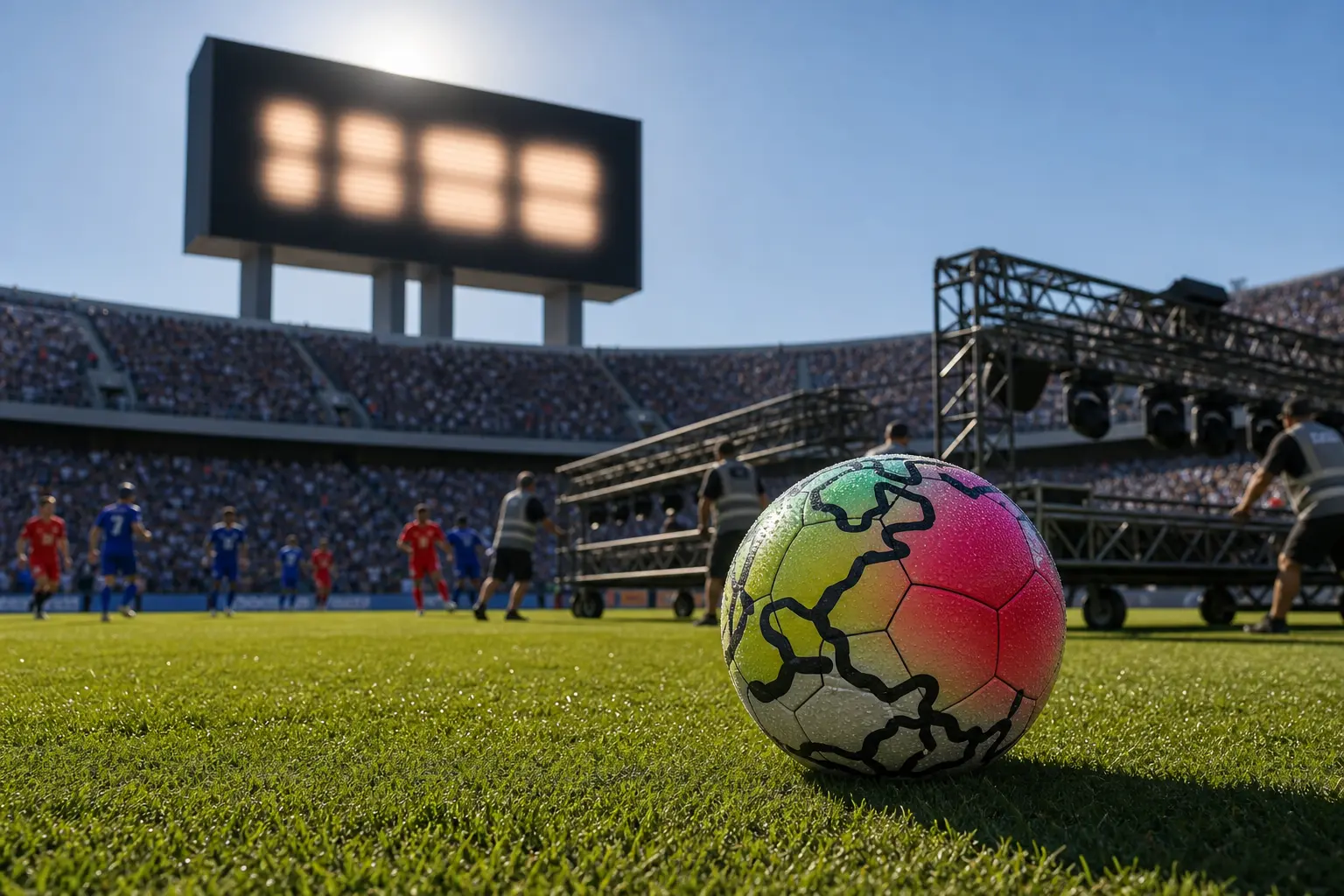
The eleven-minute show moved through four distinct movements, and only two of them were live football cameos.
- Madonna’s arrival, flanked by Ronaldo and Ronaldinho in the field vehicle.
- Dr. Teeth and the Electric Mayhem, conductor Gustavo Dudamel with the New York Philharmonic and Venezuela’s Simon Bolivar Symphony Orchestra, backed by archival footage of Erling Haaland beating a drum during Norway’s locker room celebration.
- Shakira and Burna Boy performing the tournament anthem, with a cameo from Jason Sudeikis in character as Ted Lasso.
- PS22 Chorus and Coldplay’s Chris Martin closing with the children on the field, following a video tribute to Pele.
Haaland never filmed anything for the broadcast. Norway’s striker, who plays his club football for Manchester City, became one of the tournament’s most replayed personalities for his goals and for his sense of humor, and producers simply pulled existing footage of him drumming for his teammates.
The Pele video came right before the final segment. It showed the Brazilian great delivering his 1977 farewell message, ending with him asking the crowd to repeat one word three times. Pele, born Edson Arantes do Nascimento, won three World Cup titles with Brazil, including one at age 17, and was recognized by Guinness World Records for his career goal-scoring record. He died on December 29, 2022, at age 82. The tribute set up Coldplay’s closing number and the show’s central theme, love as the antidote to poverty.
The Charity Running FIFA’s Halftime Machine
The name attached to that theme was Global Citizen, described by the Irish Times as an advocacy platform dedicated to achieving the end of extreme poverty. It, not FIFA’s broadcast division, produced the show, working alongside Live Nation and the production house Done + Dusted.
Global Citizen co-founder and chief executive Hugh Evans pitched FIFA president Gianni Infantino on the idea back in 2024. The two organizations tested a scaled-down version first, a 24-minute halftime show at the 2025 Club World Cup final between Chelsea and Paris Saint-Germain. On September 28, 2024, FIFA and Global Citizen announced a four-year partnership built around the concept.
Infantino called it a historic moment for the tournament and a show worthy of the world’s greatest sporting events. Evans, previewing the final version on Good Morning America, said viewers would want to watch it multiple times because every second was, in his words, absolutely amazing.
Hamish Hamilton, who has directed every Super Bowl halftime show since 2010, was brought in to direct FIFA’s version too, which tells its own story about where the format’s playbook came from. The commercial logic behind it is the same one that has reshaped sponsorship strategy across this tournament, the kind of shift Mind Cron examined in how the 2026 World Cup is reshaping playbooks for small business owners chasing a piece of its audience.
How Much of FIFA’s $100 Million Pledge Has Come In?
The FIFA Global Citizen Education Fund had already passed $60 million in commitments before kickoff, with more than $50 million of that coming specifically from a $1 levy FIFA attached to every ticket sold across the tournament’s 104 matches. That leaves the fund roughly $40 million short of its stated goal.
| Milestone | Detail |
|---|---|
| September 28, 2024 | FIFA and Global Citizen announce a four-year partnership creating the Education Fund |
| 2025 Club World Cup Final | Chelsea vs. Paris Saint-Germain hosts a 24-minute trial halftime show |
| Pre-kickoff, July 19, 2026 | Fund commitments pass $60 million |
| Ticket levy | More than $50 million raised from $1 added to every match ticket |
| Stated goal | $100 million to expand education and football access for children worldwide |
The fund’s own expand access to quality education and football pitch is the language stitched through every announcement, panel and press appearance tied to the show since 2024. The soccer legends gave that pitch a face fans already trusted.
FIFA Bent Its Own Rule After Denying the Same Break to CONMEBOL
The International Football Association Board (IFAB, the body that writes soccer’s Laws of the Game) caps halftime at 15 minutes under Law 7.2. Competition organizers can only extend it with the match referee’s permission.
FIFA had told both finalists the break would run about 20 minutes, stage build included. It ran longer. Unofficial clockings from outlets covering the final put the actual gap at more than 27 minutes, roughly double the legal limit, before referee Slavko Vincic restarted play.
What makes the number sting for some in the sport is timing. CONMEBOL (South America’s football confederation) had previously asked IFAB for a 25-minute halftime allowance of its own. IFAB turned it down, citing the negative impact on player welfare and safety. FIFA’s own show ran past that rejected figure anyway.
- Sports scientists warned the extended layoff carries real risk. Dr. Liam Harper, a senior lecturer in physiology at Manchester Metropolitan University’s Institute of Sport, said a longer break makes the drop in muscle temperature more pronounced heading into the second half.
- FIFA defended the decision by pointing to the show’s entertainment value and its fundraising return for the Education Fund.
- Some fans and pundits argued the spectacle earned its extra minutes, comparing it favorably to recent Super Bowl halftime shows.
Independent chief football writer Miguel Delaney was not among the second group.
A half-time show is an anti-football abomination. Players have gone through their careers used to a normal break. That rhythm disrupted, in the biggest game of their careers… FIFA ushering this through.
Delaney posted that reaction on X as the show wrapped and Spain and Argentina headed back out for the second half.
From ‘Crap’ to Full Marks
Wayne Rooney, the former Manchester United and England captain, gave the show one word on the BBC broadcast: crap. He was not alone in his irritation, and plenty of fans inside MetLife Stadium spent the delay waiting for the actual football rather than watching the screens.
Others were kinder. Coverage from OutKick rated the show ahead of Bad Bunny’s recent Super Bowl LX performance, calling it more energetic and easier to follow. The lineup, spanning Madonna’s pop catalogue, Shakira and Burna Boy’s Latin and Afrobeats blend, BTS and Justin Bieber, was built specifically to read as global rather than American, even while running on an American format.
Whether it becomes permanent is still an open question inside FIFA, but the organization has already run this play twice, once at a smaller scale in 2025 and now at football’s biggest possible stage. A third attempt at the next World Cup would make it tradition rather than experiment.
Argentina came into the final chasing something no team had done since Brazil in 1962, back-to-back titles. Its bid ended instead with the same crest it has carried for fifty years, a design with its own five-decade design origin story, going home a runner-up.
Frequently Asked Questions
How much money has the FIFA Global Citizen Education Fund raised so far?
Commitments had topped $60 million before the final kicked off, with more than $50 million of that tied directly to the $1 levy FIFA placed on every ticket sold across the tournament’s 104 matches. That still leaves the campaign roughly $40 million away from its $100 million target, with no public deadline attached to closing that gap.
Did Erling Haaland actually perform at the World Cup halftime show?
No. The footage shown on the stadium screens was archival video of Haaland drumming during Norway’s locker room celebration after its 2-1 round of 16 win over Brazil. He did not film anything new for the halftime broadcast.
How did FIFA get permission to make halftime longer than 15 minutes?
Under IFAB’s Law 7.2, competition rules must state the length of the halftime interval in advance, and any change requires the match referee’s sign-off. FIFA secured that approval ahead of the final, allowing referee Slavko Vincic to hold the second half until the show and stage teardown finished.
Will the 2030 World Cup have its own halftime show?
FIFA has not confirmed one. But the organization has now run the concept twice, first at a smaller scale during the 2025 Club World Cup final and now at the sport’s biggest match, and momentum inside the game points toward this becoming a fixture rather than a one-off.
What happened in the actual Spain vs. Argentina final?
Spain won 1-0 in extra time, with Ferran Torres scoring the only goal and taking Man of the Match honors. The result denied Argentina a chance to become the first team since Brazil in 1962 to win back-to-back World Cup titles.