Saving Private Ryan, Steven Spielberg’s 1998 World War Two epic, is streaming free on BBC iPlayer until June 19, giving UK viewers a 20-day window to watch a film that critics and veterans still rank among the greatest war movies ever made. The drama won five Academy Awards, holds a 94% rating on Rotten Tomatoes, and built its reputation on an opening D-Day sequence that audiences in 1998 had simply never seen the like of before.
The free run matters beyond the price tag. Nearly three decades after release, the film Tom Hanks anchored as Captain John Miller still sets the visual template that modern war pictures and combat video games keep borrowing from.
The 20-Day Window, and Why It Closes June 19
iPlayer flags the film as scheduled to leave the platform in June, and the British Broadcasting Corporation (BBC, the UK’s public broadcaster) has dated that exit to June 19. Anyone in the UK with a valid TV licence can stream it at no extra cost until then, with no separate subscription required.
The deadline is not a marketing gimmick. Public-service streaming rights are licensed in fixed windows, and when a window expires the title drops off whether or not viewers have got round to watching it. That is why a film this celebrated can sit on the BBC iPlayer film catalogue one week and vanish the next.
So the practical read is simple. If you have meant to watch it, or rewatch it, the cheapest route shuts in under three weeks. After that the film moves back behind a paywall on the usual rental services.
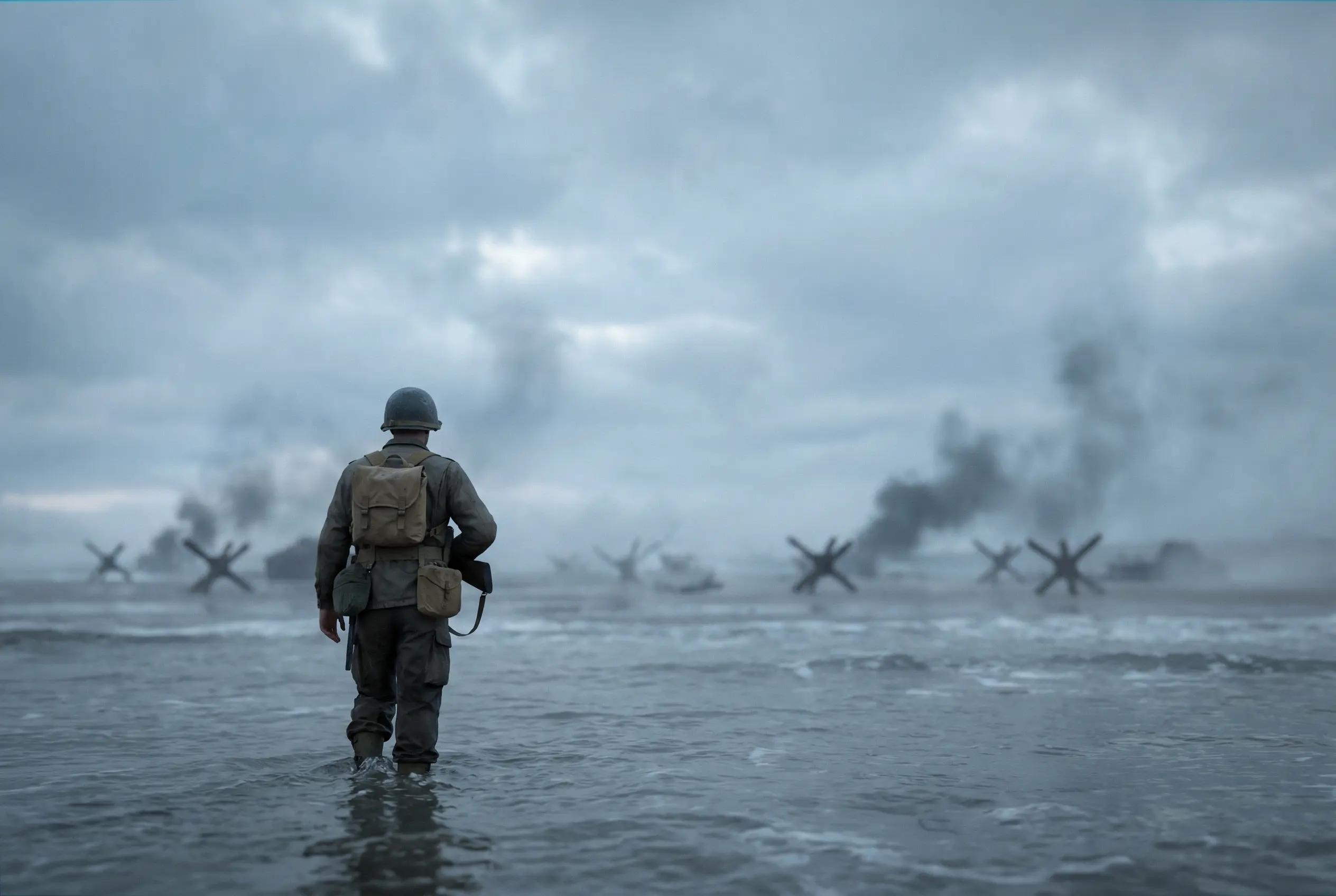
The Mission Built on a Real Family’s Loss
The plot turns on a single grim order. After surviving the carnage of the Normandy landings, Captain Miller is sent into contested German-held territory to find one man, Private James Francis Ryan, played by Matt Damon, and bring him home. Ryan’s three brothers have already been killed in action, and the US Army wants to spare his mother the loss of a fourth son.
The story itself is fiction. Its emotional backbone is not. The screenplay drew on the work of American historian Stephen E. Ambrose and on real wartime families who lost multiple sons, most directly the Niland brothers, whose case prompted the policy of pulling a surviving sibling out of the fighting.
That tension, weighing the lives of Miller’s squad against the rescue of a single soldier, gives the film its uneasy moral centre. The mission is described in the film’s own framing as both brutally dangerous and potentially pointless, and Spielberg never lets the audience settle on whether it was worth it.
How Spielberg Reset the Look of War on Screen
What lifts the film above a strong story is how it was shot. Spielberg and his crew threw out the clean, heroic war-movie playbook and built a new one in real time, and almost every serious combat production since has been working from their notes.
The Camera Techniques That Spread Everywhere
Cinematographer Janusz Kami ski, who won an Oscar for the work, stripped colour out of the image, shot much of the action on handheld cameras, and altered the camera shutter to give explosions and gunfire a jittery, strobing harshness. The effect put viewers inside the chaos rather than safely above it. Those choices, the desaturated palette, the shaking frame, the muffled-then-deafening sound design, hardened into the default grammar for filming combat.
From the Cinema to the Console
The influence ran well past other movies. Spielberg himself carried the experience into gaming, and the lineage from the film is easy to trace through later war storytelling:
- Medal of Honor (1999), conceived by Spielberg and built by his DreamWorks Interactive studio, brought the film’s boots-on-the-beach intensity to the PlayStation.
- Band of Brothers (2001), the HBO miniseries Spielberg produced with Tom Hanks, extended the look across ten episodes of European combat.
- The Pacific (2010) carried the same realism to the war against Japan.
- The early Call of Duty shooters openly chased the film’s Normandy-landing adrenaline, cementing the template for a generation of players.
You can see fresher takes on the genre in this rundown of war films that have since outpaced the 1998 benchmark, but even those reckon with the standard Spielberg set.
Omaha Beach, and the Veterans Who Lived It
The opening assault on Omaha Beach is the reason the film hits as hard as it does. For roughly the first half-hour there is barely a pause: men drown under the weight of their gear, are cut down before they reach the sand, and crawl through a tide turning red. Critics have called it one of the greatest pieces of combat cinema ever filmed.
The realism landed hardest on the people who had been there. When the film opened in 1998, the US Department of Veterans Affairs set up a toll-free support line within the first three days, and more than 100 calls came in from veterans whose post-traumatic stress disorder (PTSD, the lasting psychological injury of combat) had been triggered by the footage.
D-Day survivor John Raaen described being unable to speak after seeing it.
Everybody was stunned by it. I was too. I wasn’t about to talk to anyone either. It just brought back so many memories that your mind was racing through all the things that happened to you.
Raaen, a US Army officer who landed at Omaha on June 6, 1944, was speaking to the reaction that swept early veteran screenings. For anyone wanting context on that response, the National Center for PTSD’s resources for veterans grew out of exactly this kind of need.
Five Oscars, One Famous Snub
Awards season treated the film as a heavyweight. It collected five Academy Awards from eleven nominations, two BAFTAs, and Best Drama at the Golden Globes. The trophies clustered around the craft that made the combat feel real: directing, camerawork, editing, and sound.
| Award body | Result | Notable wins |
|---|---|---|
| Academy Awards | 5 wins from 11 nominations | Best Director (Spielberg), Best Cinematography (Kami ski), Best Film Editing (Michael Kahn), Best Sound, Best Sound Effects Editing |
| Golden Globes | Best Drama | Plus Best Director for Spielberg |
| BAFTA | 2 wins | Sound and special visual effects |
The one prize it did not take is the one everyone remembers. Best Picture went to Shakespeare in Love, a result still cited as among the biggest upsets in Oscar history. You can cross-check the full slate against the 71st Academy Awards results.
The commercial verdict was less divided. The film took around $481.8 million worldwide and was the top US release of 1998, a number that puts it high among war films ranked by global box office.
Where Else To Watch Tom Hanks’s War Drama
If the iPlayer window closes before you get to it, the film stays widely available, just not for free. Several services carry it to rent or buy:
- Amazon Prime Video, as a rental or purchase
- Google Play, as a rental or purchase
- Sky, through its movie service
The free run is the better deal while it lasts, and it follows a pattern for the platform, which has used limited windows to spotlight prestige titles before, including another Tom Hanks drama that ran free on iPlayer. The film disappears from the platform on June 19. After that, watching Captain Miller’s squad take their pointless, brutal walk costs a card payment again.
Frequently Asked Questions
Is Saving Private Ryan free to watch right now?
Yes. It is streaming free on BBC iPlayer for UK viewers with a valid TV licence, with no separate subscription needed, until June 19.
When does it leave BBC iPlayer?
June 19. iPlayer lists it as departing the platform that day, after which it returns to paid rental and purchase services.
How long is the film and how violent is the opening?
It runs close to three hours, and the opening Omaha Beach assault is among the most graphic war sequences ever filmed, intense enough that it triggered PTSD responses in some veterans when the film was released.
Is the story based on real events?
The plot is fictional, but it draws on historian Stephen E. Ambrose’s work and on real families, most directly the Niland brothers, who lost multiple sons in the war.
Where can I watch it after it leaves iPlayer?
It can be rented or bought on Amazon Prime Video, Google Play, and Sky, among other platforms.