Russia’s track and field federation filed a Court of Arbitration for Sport appeal on Thursday, moving the dispute over its exclusion from international competition since Russia’s invasion of Ukraine began in 2022. The Russian Athletic Federation’s claim argues that the federation’s blanket ban has blocked Russian athletes from earning Olympic qualifying marks. The appeal follows the International Olympic Committee’s separate action to provisionally lift its suspension of the Russian Olympic Committee and recommend that International Federations, including World Athletics, allow Russian athletes to qualify for the 2028 Los Angeles Olympics. World Athletics has said it will "strenuously defend" its position at the Lausanne-based tribunal.
The 241st World Athletics Council voted on 2 July to extend the exclusion of Russian and Belarusian athletes, officials, and support personnel from international competition. The Council decision now sits at the centre of a procedural duel that may decide whether Russian track and field athletes can earn places at the LA Games. CAS confirmed receipt of the appeal but has not released hearing dates or panel details, and Russian athletes cannot earn qualifying marks at World Athletics-sanctioned events while the ban is in force.
What the Russian Federation Argues
In its Thursday statement, the Russian Athletic Federation cast the dispute as a fight over athlete rights. "World Athletics’s decision affects the fundamental interests of athletics in Russia," the federation said, "and restricts Russian athletes’s right to compete, on grounds that Russian Athletics considers discriminatory." The federation added that it "continues to pursue all available legal measures to protect the interests of its athletes." "Russian Athletics is disappointed by yet another discriminatory decision by the World Athletics Council to bar Russian athletes from participating in competitions held under the auspices of World Athletics," the federation said in a separate statement carried by outlets including The Sports Examiner. It called the position "counter to Olympic principles and to current trends in global sport."
The federation also flagged what it describes as a generational cost. "Of particular concern is the fact that an entire generation of young athletes has no opportunity to compete at a high international level," Russian Athletics said. Those youth and junior athletes "consistently deliver strong results, feature in the top European and world rankings, and are rightly regarded as medal contenders at the European Championships, World Championships and Youth Olympic Games," the federation added. Russian Athletics has set "the return of Russian athletes to the international arena" as its "main objective."
The appeal arrived within the five-day window required under the World Athletics Constitution, AFP reported, satisfying the procedural requirement. The federation’s statement did not include a direct rebuttal of World Athletics’s stated rationale for the original ban.
Why World Athletics Held the Line
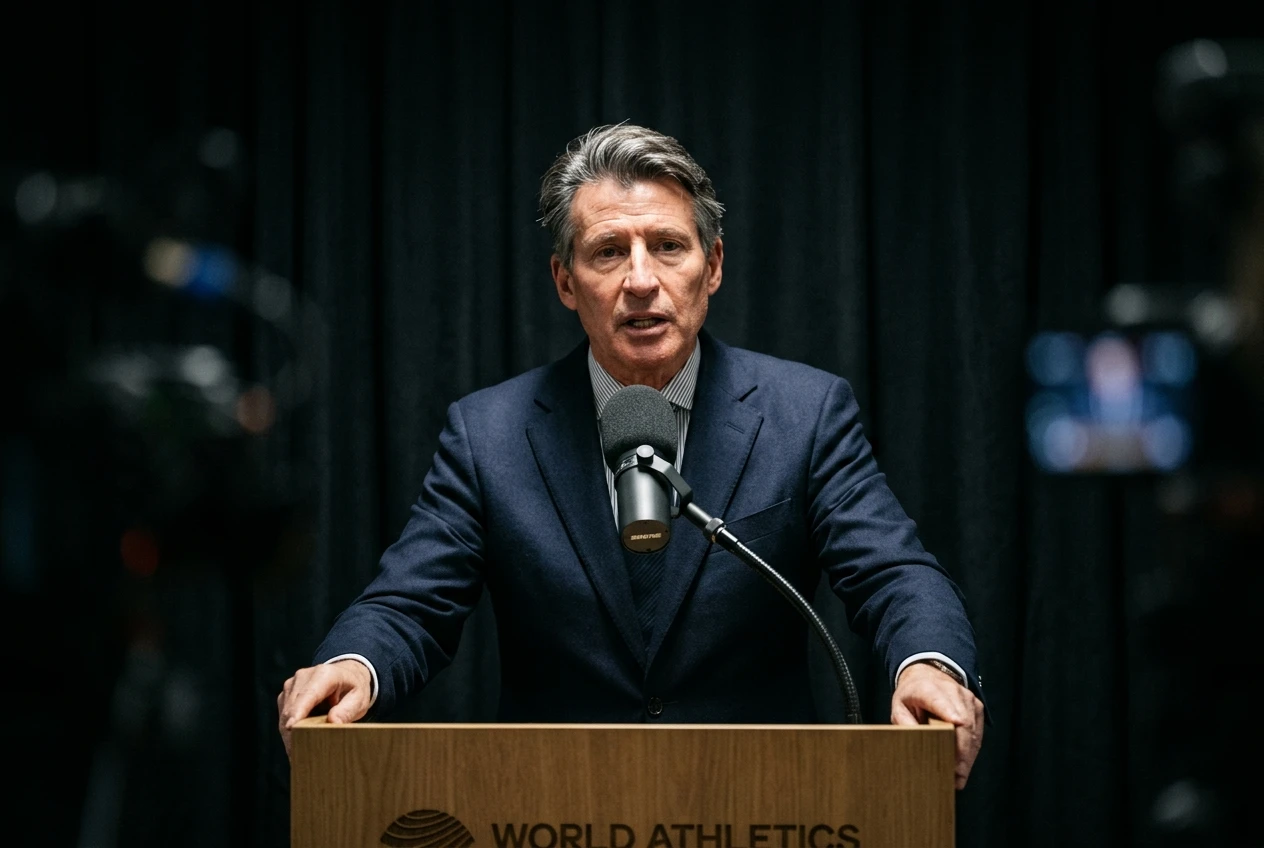
The 241st Council meeting decision statement, held by video conference on 1-2 July, considered several options for the Russian and Belarusian Member Federations’ case before reaffirming the exclusion. President Sebastian Coe said the Council and a working group had been deliberate in seeking "a conditional pathway back into international competition," but the lack of movement on peace kept the original sanctions in place. Council members also weighed the impact of the conflict on Ukraine’s own athletics infrastructure, including a World Athletics support fund set up in 2022.
"The original decision remains on the sanctions that protect the integrity and fairness of our competitions, with no tangible movement towards peace negotiations having materialised."
Sebastian Coe, president of World Athletics, said after the body’s 241st Council meeting, which voted to extend the exclusion of Russian and Belarusian athletes, officials, and support personnel from international competition.
The IOC Took a Separate Path
Before the Russian appeal, the International Olympic Committee had provisionally lifted its suspension of the Russian Olympic Committee. The IOC Executive Board’s decision was taken, the IOC’s statement lifting the ROC suspension said, "following a thorough analysis by the IOC’s Legal Affairs Commission, considering that the ROC no longer includes as its members any regional sports organisations in territories falling under the jurisdiction of the National Olympic Committee (NOC) of Ukraine." The Russian Olympic Committee also "confirmed that it does not, and will not, conduct any activities in these territories." The IOC’s separate suspension had been in effect since 12 October 2023.
The IOC simultaneously recommended that International Federations, including World Athletics, "allow Russian athletes to compete in qualifying events for the 2028 LA Olympics." World Athletics has not followed that recommendation.
IOC president Kirsty Coventry framed the move as a separation of athletes from geopolitics. "We made it clear that we wanted to ensure all athletes have the possibility to compete at the Olympic Games and not be held responsible for their government’s actions," Coventry said after the Executive Board meeting in Lausanne. Ukraine called the IOC’s decision "premature" and "unfounded" while "Moscow’s invasion drags on through its fifth year." The IOC reaffirmed that its condemnation of the invasion "remains unchanged."
The conditions for Russian athletes’ return are spelled out in detail in the IOC’s announcement. "All Russian athletes returning to international competition must meet relevant anti-doping requirements, particularly those set out in the anti-doping rules of the IOC and IFs, as well as best practices established by the World Anti-Doping Agency," the IOC statement read. With RUSADA flagged for governance concerns, the IOC has reserved the right to take "any further measures if deemed necessary."
| International Olympic Committee | World Athletics | |
|---|---|---|
| Headline action | Provisionally lifted the Russian Olympic Committee suspension | Reaffirmed exclusion of Russian and Belarusian athletes, officials, and support personnel |
| Reasoning cited | ROC membership reform, separation of athletes from government conduct | "No tangible movement towards peace negotiations," integrity and fairness of competition |
| LA 2028 pathway | Recommended that International Federations, including World Athletics, allow Russian athletes into qualifying | No qualifying marks available at World Athletics events |
| Belarusian athletes | Recommended restrictions lifted in May 2026 | Belarusian athletes also remain excluded |
The conditions Russia-bound athletes must meet to return, per the IOC statement:
- "All Russian athletes returning to international competition must meet relevant anti-doping requirements, particularly those set out in the anti-doping rules of the IOC and IFs, as well as best practices established by the World Anti-Doping Agency (WADA)."
- Russian athletes must be part of a "national (RUSADA/ROC) anti-doping programme (including risk assessment, test distribution plan and results management) that is delegated to the International Testing Agency (ITA)."
- All athletes newly returning to international competition must be tested multiple times before their return, based on a sports risk assessment.
- International Federations set the testing timeframe in line with qualification events for athletes newly returning or not already in a registered testing pool.
- Should RUSADA "still be considered non-compliant by WADA in 2028 prior to the LA28 Olympic Games," the IOC has said it will "instruct the ITA to ensure that all qualified Russian athletes have been subject to independent testing following the same approach."
How the Court Will Decide
CAS is an independent body established by the IOC in 1984 and based in Lausanne, Switzerland. The tribunal "does not have its own enforcement powers; instead, its rulings are binding because parties often agree in advance to submit to arbitration," Canadian Running Magazine reported in an explainer on the appeals process. Awards "can be enforced by sports governing bodies or national courts under the 1958 New York Convention on the Recognition and Enforcement of Foreign Arbitral Awards." CAS has acknowledged receipt of the arbitration request but has not yet released a panel or hearing dates. The Russian federation has framed its case on grounds of discrimination, citing the ban’s effect on athlete rights.
A Russian win would not directly lift the ban but could require the federation to reconsider. "If CAS rules in the RAF’s favour, it could require World Athletics to reconsider its position," the running magazine noted. The same report added: "If it upholds the ban, Russian athletes would remain ineligible to compete in World Athletics events unless the governing body independently changes its eligibility rules."
- March 2022 – World Athletics bars Russian and Belarusian athletes, officials, and support personnel from international competition following Russia’s invasion of Ukraine.
- 12 October 2023 – The IOC suspends the Russian Olympic Committee.
- May 2026 – IOC Executive Board lifts the recommended restrictions on Belarusian athletes.
- 1-2 July 2026 – 241st World Athletics Council meets by video conference and reaffirms the exclusion of Russian and Belarusian participants.
- 3 July 2026 – World Athletics publicly confirms the council’s ban extension.
- Same week – IOC provisionally lifts the ROC suspension and recommends that International Federations allow Russian athletes into LA 2028 qualifying.
- 9 July 2026 – Russian Athletic Federation files a CAS appeal challenging the World Athletics ban.
Stakes for the LA 2028 Olympics
The IOC confirmed the 2028 LA Olympics qualification period has started, and the Russian appeal targets the qualifying system for track and field. "With the qualification period for both the LA28 Olympic Games and the Dolomiti Valtellina 2028 Winter Youth Olympic Games having started," the IOC said, the Executive Board decided to drop its prior recommendations. For Russian track and field athletes, the IOC’s recommendation is a non-binding suggestion. The actual qualifying system for Olympic athletics is run by World Athletics, and Russian athletes cannot earn Olympic qualifying marks at its events.
The IOC’s recommended pathway also carries separate anti-doping and governance conditions on Russia’s anti-doping agency. "All Russian athletes returning to international competition must meet relevant anti-doping requirements, particularly those set out in the anti-doping rules of the IOC and IFs, as well as best practices established by the World Anti-Doping Agency," the IOC statement read. Should RUSADA "still be considered non-compliant by WADA in 2028 prior to the LA28 Olympic Games," the IOC has said it will "instruct the ITA to ensure that all qualified Russian athletes have been subject to independent testing following the same approach." A neutral flag programme that had allowed some Russian athletes to compete after a prior doping ban was ended in 2022 following the invasion, AFP reported. None of those conditions changes the CAS outcome, which turns on whether the ban is permissible under World Athletics’s own rules.
Russia last competed under its own flag at a World Athletics championship in 2015, AFP reported, and no Russians competed in Olympic athletics at the 2024 Paris Games even though IOC rules allowed neutral athletes in other sports. The Russian federation warned that "an entire generation of young athletes has no opportunity to compete at a high international level." On World Athletics’s reading, those athletes remain shut out of international competition as long as the ban holds.
Where the Wider Sport Has Moved
World Athletics is not alone in restricting Russian athletes, but it has become an outlier in keeping the ban. "Its stand has been in contrast with other federations – World Gymnastics and the International Skating Union, the latest to ease restrictions," AFP reported. World Athletics pointed out in its own statement that the last of its doping-related sanctions on Russian athletes was lifted in March 2025. Belarusian athletes were cleared by the IOC in May 2026, ahead of any parallel move inside track and field.
Coe has separately said that "if a peace agreement is reached then it is not for sports to stand in the way of the Russians’ return," with no peace negotiations currently in motion. The Russian federation’s appeal is now an open arbitration with no panel or hearing dates released by CAS.
Frequently Asked Questions
What is the Court of Arbitration for Sport?
CAS is an independent tribunal that resolves global sports disputes, based in Lausanne, Switzerland, and established by the IOC in 1984. Its rulings are typically binding because the parties agree in advance to submit to arbitration, with enforcement possible under the 1958 New York Convention on the Recognition and Enforcement of Foreign Arbitral Awards. The body has confirmed receipt of the Russian federation’s appeal but has not yet released a panel or hearing dates.
Why has World Athletics banned Russian athletes?
World Athletics first excluded Russian and Belarusian athletes, officials, and support personnel in March 2022, following Russia’s invasion of Ukraine. The ban has been reaffirmed multiple times since, including at the 241st Council meeting on 1-2 July 2026. President Sebastian Coe cited "no tangible movement towards peace negotiations" and the integrity and fairness of competition as reasons to keep the exclusion in place.
Could Russian track and field athletes compete in the 2028 Los Angeles Olympics?
Without access to World Athletics events, Russian track and field athletes cannot earn Olympic qualifying marks, because the qualification system for Olympic athletics is run by that federation. The IOC has recommended that International Federations, including World Athletics, allow Russian athletes into LA 2028 qualifying, but World Athletics has not followed the recommendation. A CAS win could require World Athletics to reconsider, though only the federation itself can change its eligibility rules.
Has the IOC changed its stance on Russia?
The IOC has provisionally lifted the suspension of the Russian Olympic Committee that had been in place since 12 October 2023, after determining the ROC no longer includes regional sports organisations in territories under the National Olympic Committee of Ukraine’s jurisdiction. The IOC confirmed that its condemnation of the invasion "remains unchanged" and that returning Russian athletes must meet anti-doping and other conditions.
What happens next in the Russian athletics CAS appeal?
CAS has acknowledged receipt of the arbitration request, with details of the official hearing not yet released. World Athletics has said it will "strenuously defend" the ban. A ruling in the Russian federation’s favour "could require World Athletics to reconsider its position," while an upheld ban would leave Russian athletes ineligible until the federation independently revises its eligibility rules.