Homebuilders are wiring smart home technology, locks, thermostats, security systems, into new construction from the foundation up, and buyers are paying for it. Connected homes are selling roughly 8.5 days faster than comparable listings without the tech. And 78% of first-time buyers in 2025 called smart readiness a major factor in their decision to buy, according to industry survey data circulating through the real estate trade press.
The gap opens on the other side of the transaction. Only 35% of agents see that buyer demand translate into a clean, appraisable dollar figure, and most of the country’s existing housing stock still has none of this wiring built in. That mismatch, between what buyers say they want and what the market can actually price, is starting to split new construction and resale homes into two different products.
New Construction Is Winning the Smart Home Arms Race
The scale of the buildout is hard to miss. The global smart home market is on pace to grow from $207.0 billion this year to $887.4 billion by 2033, a 23.1% annual growth rate, according to Grand View Research. Homebuilders are capturing a growing share of that spending by installing devices before a buyer ever walks through the door.
Major builders are no longer treating automation as an option buyers add later. Locks, thermostats, lighting and security packages now ship standard or as a bundled upgrade, timed to the same construction schedule as cabinets and countertops. At CES 2026, several categories stood out as the ones real estate professionals said would matter most this year.
- Smart locks and access control – the category real estate agents flagged as most relevant to home sales at CES 2026
- AI-driven voice assistants – generative-AI systems built to learn a household’s routine and adjust settings without being asked
- Whole-home security – cameras and sensors that sync to a phone for real-time alerts from anywhere
- Interoperable lighting and climate control – devices built on shared standards so they work together out of the box
None of that is cheap to add after the drywall is up. That is precisely the problem facing the other half of the market.
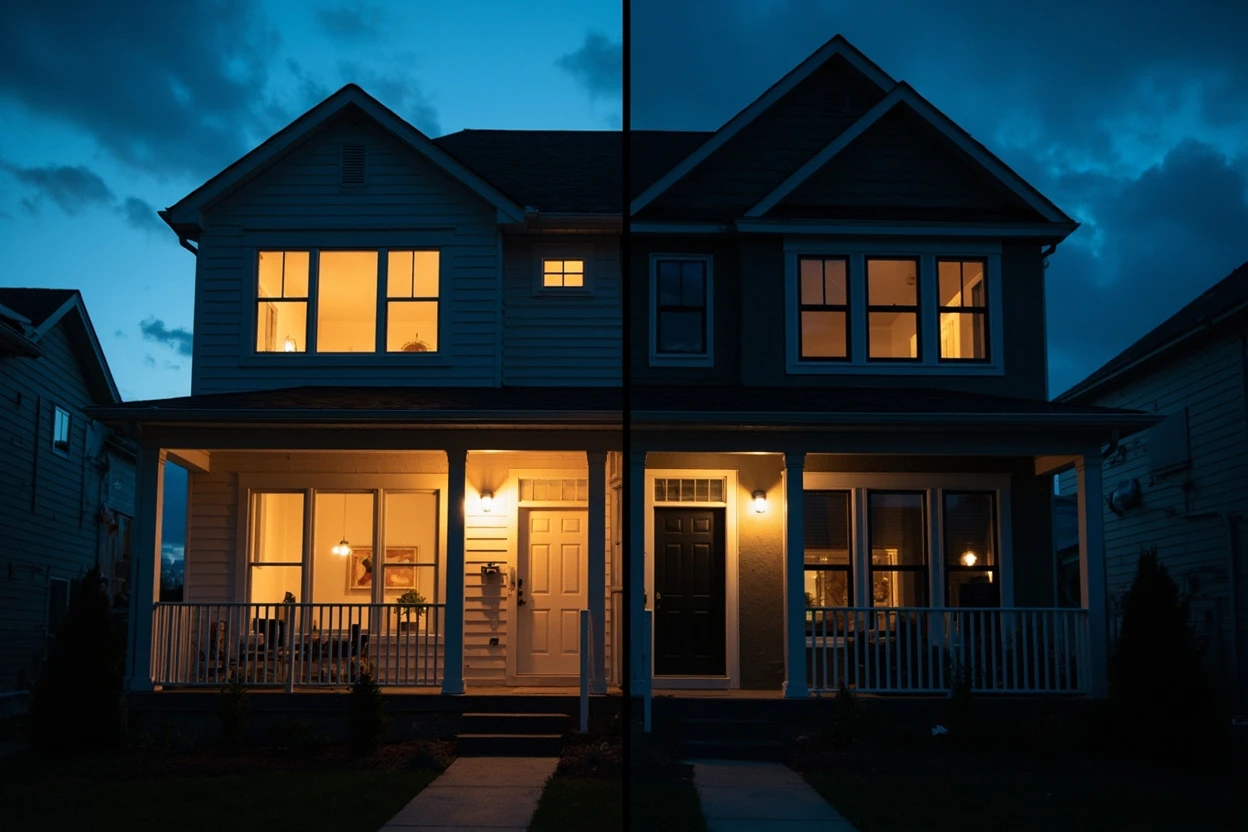
The Resale Market Has a Retrofit Bill Coming
Roughly 77 million U.S. households, about 51% of the total, are actively using some form of smart home device today. That means close to half the country’s housing stock has none. Globally, household penetration is set to hit 82.1% this year and climb toward 92.5% by 2029, per Statista’s market outlook, a pace the older U.S. housing stock is not matching.
Retrofitting an existing home to compete is not a small check to write. Whole-house automation projects can run from a couple thousand dollars into the tens of thousands, depending on how many systems get replaced and whether the wiring behind the walls can support it. That cost sits on top of ordinary staging and repair budgets sellers already face.
| Segment | Smart Features at Closing | Cost to Add Later | Buyer Demand Signal |
|---|---|---|---|
| New construction | Locks, thermostats, lighting and security wired in before the first walkthrough | Bundled into the base price or a builder upgrade package | 78% of first-time buyers call smart readiness a major purchase factor |
| Existing resale homes | Often nothing beyond a Wi-Fi router and maybe a doorbell camera | $2,000 to $20,000 or more for a whole-house retrofit | Only 35% of agents see a clear $5,000 to $10,000 value bump |
| Partially upgraded resale homes | A handful of retrofitted devices such as a lock or thermostat | Roughly $50 to $300 per device, added piecemeal | Sell about 8.5 days faster than homes with none at all |
Sellers do not have to gut a house to close the gap. Even a single retrofitted device, like the ten-dollar smart plug reshaping how older outlets work, can signal a connected home without a full rewiring project. The bottleneck shows up hardest when a house needs multiple systems to talk to each other. Utilities abroad are running into the same wall: Australia’s home battery rollout has hit its own smart-control bottleneck, where hardware shipped faster than the software needed to manage it.
Why Appraisers Still Can’t Price a Smart Thermostat
Buyer enthusiasm and appraised value are not moving at the same speed. Buyers say the technology matters. Agents, working deal by deal, see it show up in offers far less consistently than that enthusiasm would suggest.
- 35% of real estate agents report smart features adding $5,000 to $10,000 to a sale price
- 78% of first-time buyers in 2025 called smart readiness a major factor in their purchase decision
- Up to 10% is the ceiling some appraisers now credit to a fully connected security and climate system
- 8.5 days faster is how much quicker smart-equipped homes sell against otherwise comparable listings
Formal appraisal standards have not caught up to buyer sentiment. Comparable-sales models were built around square footage, lot size and finishes, not whether a thermostat learns a household’s schedule. Until that changes, the value of smart features shows up more reliably in how fast a home sells and how many offers it draws than in a line item on an appraisal report.
Security Sells, Until the System Gets Hacked
Security and access control is the single biggest reason buyers give for wanting a connected home. It is also where the technology’s promise cuts against itself. Devices marketed to make a house safer, cameras, locks, sensors, are also the ones collecting the most personal data.
That tension has real estate professionals paying closer attention to disclosure. The National Association of Realtors has started warning agents about the legal and ethical questions raised by recording devices left active during showings and after closing, since audio and video collected inside a home can carry privacy obligations buyers and sellers do not always anticipate.
Hacking risk compounds the concern. Devices that store footage or door-access logs in the cloud become new attack surfaces the moment they are installed, and a lack of standardization across brands has historically made it harder to patch a whole system at once rather than one gadget at a time.
Does a Smart Thermostat Really Cut Your Energy Bill?
Yes, connected climate systems measurably lower utility costs, largely by giving homeowners tighter control over heating, cooling and lighting schedules than a manual system allows. Industry estimates put the savings at up to 20% on utility bills for households that use the scheduling and remote-control features consistently, rather than leaving a smart thermostat on its factory defaults.
That efficiency angle matters to a specific slice of buyers. Environmentally conscious purchasers increasingly treat a documented energy-savings track record the same way they treat a new roof or updated HVAC unit, as a maintenance cost avoided rather than a luxury added.
Builders Bet on One Standard to Rule Every Device
Fragmentation has been the smart home’s biggest self-inflicted wound. A lock from one brand, a thermostat from another and a camera from a third have historically needed three separate apps, with no guarantee any of them would work together after a firmware update. CES 2026 pushed the industry’s fix further into the mainstream.
- Matter – a smart home connectivity standard that lets devices from different brands work on one shared network instead of separate apps
- Thread – the low-power wireless mesh network that many Matter devices run on, letting locks, sensors and lights relay signals to each other directly
The volume of hardware making standardization urgent is enormous. Global shipments of smart home devices are approaching 1.25 billion units this year alone, per Fortune Business Insights, and the industry is broadly moving away from single-gadget sales toward deeply integrated whole-home ecosystems, according to Technavio’s market analysis. Automakers are adding to that device count too. BMW’s move to sell home batteries alongside cars means BMW’s pivot into home battery storage is now one more system a house’s smart hub has to manage alongside locks, thermostats and cameras.
An $887 Billion Bet on Every Room in the House
The money behind this shift keeps compounding. Grand View Research separately projects the U.S. market reaching $84.2 billion by 2030, a 23.4% annual growth rate from 2025 through the end of the decade.
Adoption is accelerating fast enough to notice year over year. Smart home adoption among U.S. and Canadian households climbed from 49% in 2024 to 59% in 2025, a ten-point jump in a single year. Every point on that curve is another new-construction closing with the wiring already in the walls. The older house down the street is still waiting for its upgrade.
Frequently Asked Questions
Do smart home features actually increase a home’s resale value?
Security and climate systems tend to appraise better than novelty gadgets, since they solve a problem buyers already worry about rather than adding a feature they have to learn to use. Formal appraisal guidelines still lag behind buyer demand, so the value shows up more reliably in how fast a home sells and how many offers it draws than in a clean line-item on the appraisal report.
What smart home features are 2026 buyers asking for most?
Smart locks and video doorbells top most buyer wish lists, followed by AI-driven voice assistants that learn a household’s routine. Security add-ons like geofencing and facial recognition alerts are gaining ground fast, and CES 2026 pushed lighting and climate systems built on the Matter and Thread standards so new devices work together instead of needing a separate app for every brand.
Is it worth retrofitting an older home with smart technology before selling?
It depends on the market. In competitive, tech-forward metro areas, even a partial retrofit, a lock, a doorbell camera, a thermostat, can close the gap with newer listings fast enough to matter. In slower or more budget-driven markets, agents generally advise spending on cosmetic repairs first, since buyers there are less likely to pay a premium for automation they may end up replacing anyway.
What are the biggest risks of owning a smart home?
Hacking and data privacy top the list, since many connected devices collect audio, video or usage data that can be exposed in a breach. Devices also age out of software support faster than a house ages, leaving abandoned locks and cameras as unpatched entry points, and mixing brands without a shared standard like Matter can leave parts of a system unable to talk to each other.
Will homes without smart technology become harder to sell?
They are not unsellable, but they increasingly compete on price cuts rather than speed, especially against new construction that now ships with automation built in from the studs. Sellers of older homes who add even one or two visible features, like a smart lock or video doorbell, often close the perception gap without the cost of a full retrofit.