The Railway Children was filmed in and around Haworth, a pretty West Yorkshire village whose cobbled streets and steam railway still look much as they did when the cameras rolled in 1970. The 1970 drama holds a 100% critics’ score on Rotten Tomatoes more than five decades later, and most of the places it used remain open to visitors today, from a country station to a tunnel mouth on the valley floor.
Those locations survived for a reason that predates the film by two years. A group of local people had already fought British Rail to save the branch line running through the valley, and won, long before a director ever pointed a camera at it.
The Film Behind Haworth’s 100% Rotten Tomatoes Score
The Railway Children was directed by Lionel Jeffries and adapted from E. Nesbit’s 1906 novel of the same name. It follows three children who move from comfortable London life to a cottage in the Yorkshire countryside after their father is suddenly taken away, and it leans on warmth and small domestic drama rather than spectacle. The cast included Jenny Agutter, Sally Thomsett, Gary Warren, Dinah Sheridan and Bernard Cribbins as the kindly station porter Perks.
The film was a box-office hit in 1970 and has stayed near the top of British viewers’ affections ever since. It carries a perfect 100% critics’ score on the review aggregator, drawn from a modest pool of professional reviews rather than hundreds, so the figure rewards a small, consistent set of glowing notices. Audience scores sit a little lower, in the low eighties, which is closer to how warmly the wider public still rates it.
Reader reviews tend to skip nuance altogether. You can read the film’s full critics’ rating on Rotten Tomatoes and the comments underneath are almost competitive in their praise.
Best film ever made. Period. Nothing comes close.
That line, posted by one viewer on the aggregator, captures the tone of a fan base that has handed the picture an unusually durable reputation for a gentle children’s drama.
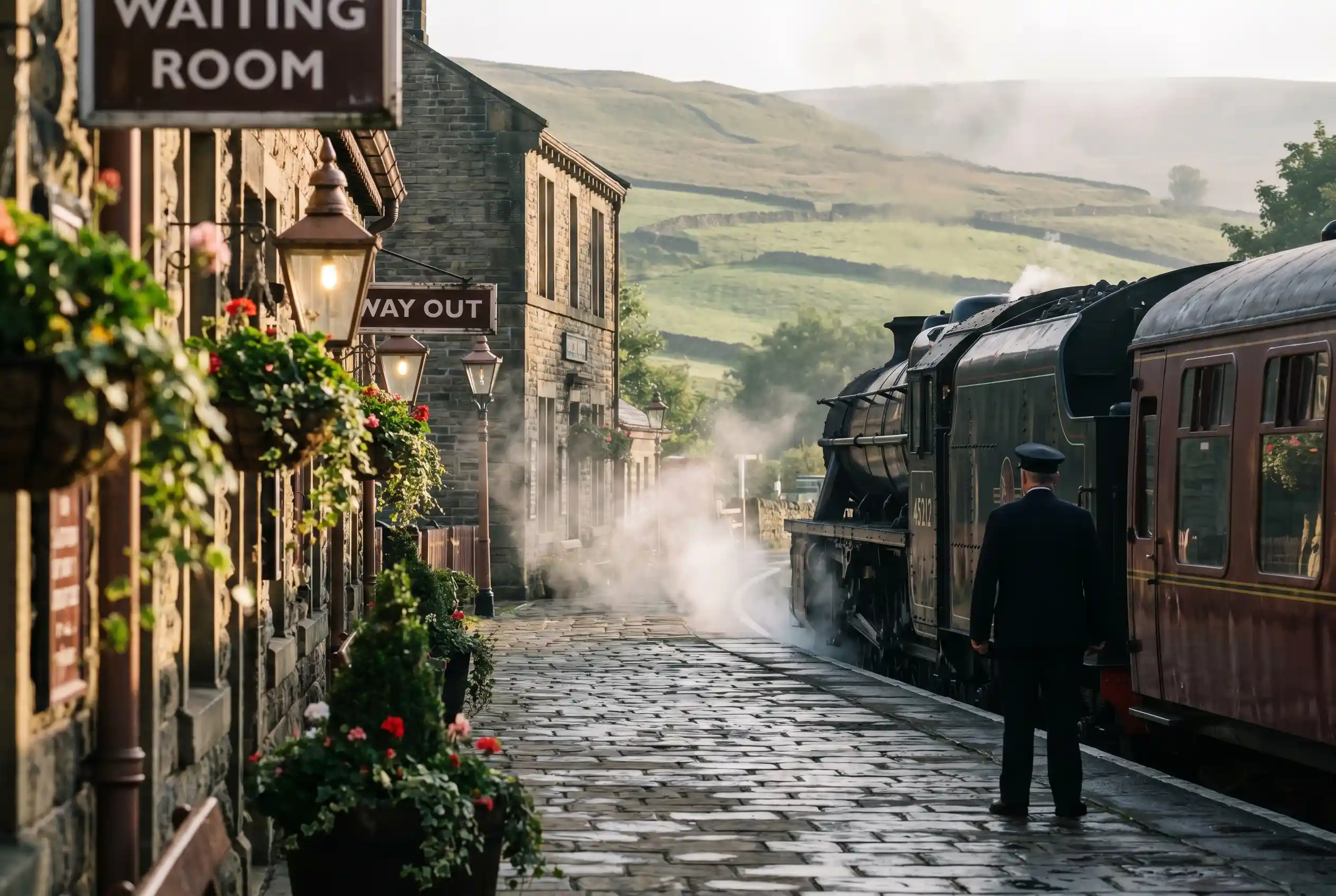
The Volunteers Who Saved the Line Before the Cameras Came
The steam railway threaded through nearly every memorable shot is the Keighley and Worth Valley Railway, a five-mile branch between Keighley and Oxenhope. It opened on 15 April 1867 and ran for the best part of a century before British Rail closed it to passengers at the end of 1961 and to goods in 1962, part of the wave of cuts that stripped branch lines across Britain.
Local opposition refused to let it go quietly. Residents and railway enthusiasts formed the Keighley and Worth Valley Railway Preservation Society, raised money, learned the trades and rebuilt the operation themselves. The line reopened under volunteer control on 29 June 1968, two years before the film crew arrived.
That timing matters. Director Lionel Jeffries picked the Worth Valley precisely because it had barely changed and still read as an Edwardian Yorkshire branch line, a look that existed only because the society had preserved the stations, signals and rolling stock instead of letting them be scrapped. You can read the full account on the Worth Valley line’s preservation history page.
Today the railway is one of the busiest heritage lines in the country, and it is still run almost entirely by unpaid hands. A few headline dates explain how it got here:
- 1867 – the branch opens, linking the mills of the Worth Valley to the main line at Keighley.
- 1961 to 1962 – British Rail withdraws passenger and then goods services.
- 1968 – the preservation society reopens the line to passengers after years of volunteer work.
- 1970 – the valley becomes the backdrop for the film that gives it a second life as a destination.
Locations From the Film You Can Still Walk Today
The best-known stop is Oakworth Station, which has been kept in period detail and is the spot most fans come to find. Several other settings are within a short distance, and because the area has stayed little changed since the Edwardian era, many corners are instantly recognisable from the screen. The official guide to the Railway Children Line locations maps them in detail.
| Location | Role in the film | What you find now |
|---|---|---|
| Oakworth Station | The children’s home station and Perks’s workplace | Preserved working station on the heritage line |
| Mytholmes Tunnel | The paper chase and the famous landslide scene | Active tunnel on the route between Haworth and Oakworth |
| Haworth Main Street | Village street scenes | Cobbled high street lined with independent shops |
| Bents Farm, near Oxenhope | Three Chimneys, the family cottage | Private farmhouse south of Oxenhope, viewable from nearby paths |
Walkers can also link several of these on foot using Church Lane and the bridges around the valley floor. Haworth is far from the only British village to trade on a screen credit; a tiny Croatian settlement now markets itself as the medieval stand-in for Nottingham in a recent Robin Hood film, proof of how durable a single production can be for a small place.
Haworth’s Other Claim: The Bronte Sisters
For all the steam-train fame, plenty of visitors arrive in Haworth with no interest in the film at all. The village is the home of the Bronte sisters, and that literary pull predates the cinema by more than a century.
Charlotte, Emily and Anne Bronte lived in the parsonage at the top of the village and wrote some of the most famous novels in English there, including Jane Eyre and Wuthering Heights. Their former home is now the Bronte Parsonage Museum in Haworth, holding manuscripts, furniture and personal belongings connected to the family.
Beyond the museum, the moors above the village draw walkers toward Bronte Waterfall and Top Withens, a ruined farmhouse widely thought to have inspired the setting of Wuthering Heights. Back down the hill, the cobbled Main Street is packed with pubs, cafes, tea rooms and small independent shops, which means a day here rarely runs out of things to do whether you came for the railway or the writers.
Planning a Trip to the Railway Children Line
The Keighley and Worth Valley Railway runs heritage steam services on more than 200 days a year, so timing a visit around a train is straightforward for most of the calendar. Keighley sits on the national rail network, which makes the line easy to reach without a car, and from there the preserved trains carry you up the valley through the filming country.
- 5 miles of preserved track between Keighley and Oxenhope.
- 6 stations on the line, including Oakworth and Haworth.
- 500-plus volunteers keep services running, supported by around ten paid staff.
Step off at Oakworth and the platform looks much as it did in 1970, down to the gas lamps and enamel signs. The difference is that the figures in period uniform are volunteers giving up their weekends, not actors waiting for a take.
Frequently Asked Questions
Where Was The Railway Children Filmed?
It was filmed in and around Haworth in West Yorkshire and the nearby Worth Valley, using the Keighley and Worth Valley Railway. Key spots included Oakworth Station, Mytholmes Tunnel, Haworth’s Main Street and Bents Farm near Oxenhope, which served as the family cottage Three Chimneys.
Can You Still Visit Oakworth Station?
Yes. Oakworth Station is preserved in period detail and remains a working station on the Keighley and Worth Valley heritage line, so visitors can arrive by steam train and walk the same platform seen in the film.
Is the Keighley and Worth Valley Railway Still Running?
Yes. The line reopened under a volunteer preservation society in 1968 and still operates heritage steam services on more than 200 days a year along the five miles between Keighley and Oxenhope, carrying well over 100,000 passengers annually.
What Else Is There to Do in Haworth?
Haworth is the former home of the Bronte sisters. You can visit the Bronte Parsonage Museum, browse independent shops and tea rooms on the cobbled Main Street, and walk on the moors to Bronte Waterfall and Top Withens, the ruin linked to Wuthering Heights.
How Do You Get to Haworth?
The easiest route is to travel by national rail to Keighley, which connects to the wider network, then join the Keighley and Worth Valley heritage line up the valley. Haworth also has its own station on the preserved railway, a short walk from the village centre.
Was The Railway Children Return Filmed in the Same Place?
Yes. The 2022 sequel, The Railway Children Return, returned to the same Worth Valley locations, with Jenny Agutter reprising her original role, which underlines how little the area has changed since the first film.