Philippine banks stopped charging for InstaPay and PESONet transfers this month, and the Bangko Sentral ng Pilipinas (BSP) wants the habit to stick. Circular No. 1238 took effect July 4 and forces banks, e-wallets and other payment firms to price digital transfers on actual cost, not on what the market will bear. Bank of the Philippine Islands (BPI), Land Bank of the Philippines and Union Bank of the Philippines have all gone to zero. GCash and Maya cut their fee instead of killing it outright.
Manila did not invent this trade. Brazil ran the same experiment at a much bigger scale in 2020, when its central bank switched on the free instant payment system Pix. The fee losses banks feared came in lighter than forecast. Fintechs scrambled for a new hook. Financial inclusion jumped by tens of millions of users. That playbook now previews what Philippine lenders are about to live through, just as GCash’s parent lines up what could be the country’s largest stock listing ever.
Banks Turn a Fee Mandate Into a Customer Grab
BSP Circular 1238, signed by Governor Eli M. Remolona, Jr. on June 17 and effective July 4, orders banks, e-wallets and other payment service providers to adopt reasonable, fair and market-based pricing for retail money transfers. InstaPay, the country’s real-time interbank transfer rail, and PESONet, its batch-settlement counterpart, both fall under the new rule. The target is a specific kind of markup: banks that let customers move money for free inside their own walls, then charged extra the moment that money crossed to a different institution.
BSP Deputy Governor Mamerto E. Tangonan put it plainly to reporters. A fee for an off-us transfer, one landing in another bank or wallet, should not run far above an on-us transfer within the same institution, minus the network or switch cost a bank actually pays to move the money across. BPI president and chief executive officer TG Limcaoco put that switch cost at around ₱1.50 per InstaPay transaction. Next to that number, a ₱10 or ₱15 charge got hard to defend.
Compliance came fast, then got policed. BPI and Rizal Commercial Banking Corp. (RCBC) moved first, cutting fees on July 1. Land Bank had already trimmed its charge to ₱8 from ₱15 ahead of the deadline and temporarily zeroed out fees on government payments through December 31. GCash and Maya, the country’s two largest e-wallets, cut their InstaPay fee to ₱10 from ₱15, which was not enough for regulators. Tangonan said the BSP summoned several banks and wallet operators, GCash and Maya among them, to explain pricing that still looked out of step with the rule.
| Institution | Fee Before | Fee After | Change Effective |
|---|---|---|---|
| Bank of the Philippine Islands | ₱10 InstaPay, ₱50 PESONet | ₱0 for both | July 1 |
| Land Bank of the Philippines | ₱15 | ₱8, government transfers free through Dec. 31 | Ahead of July 4 deadline |
| Union Bank of the Philippines | Fee-based InstaPay | ₱0 for InstaPay peer transfers | July 7 |
| Rizal Commercial Banking Corp. | ₱10 to ₱15 | Free for first 30 monthly transfers (₱100 minimum), ₱10 after | July 2026 |
| GCash and Maya | ₱15 | ₱10 | Ahead of July 4 deadline |
Philippine National Bank and BDO Unibank joined the wave within days. Cristina S. Ulang, First Metro Investment Corp.’s head of research, told BusinessWorld the waiver makes banks more visible as payment conduits at a time of growing competition from digital banks and financial technology firms, including newly arrived platforms like Google Pay’s nine-bank launch in the Philippines.
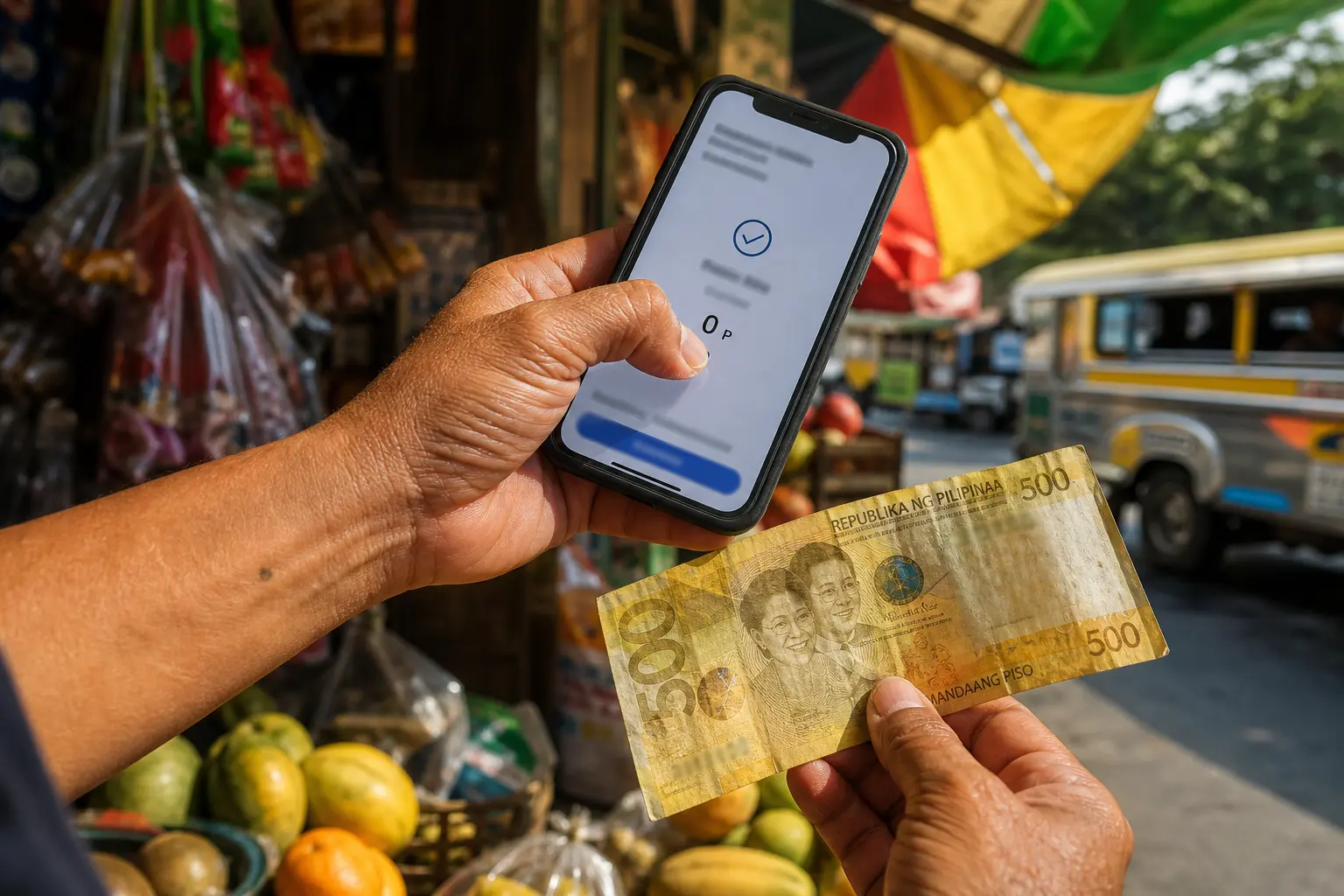
Manila Is Rerunning a Trade Brazil Made First
Central banks have tried this move before. Banco Central do Brasil switched on its own free instant payment system, Pix, in November 2020. Individuals pay nothing to send or receive money through it, a rule the Brazilian central bank sets out for individuals using Pix. Banks lost fee income overnight. What they got in exchange took longer to show up.
Moody’s initial read was blunt. The rating agency projected Brazilian banks would lose 16 billion reais in fee income within Pix’s first year, about 10% of total fees. The eventual hit reportedly landed closer to 8%, as banks leaned harder into lending, cards and cross-selling to close the gap.
- 10%: share of fee income Moody’s initially projected Brazilian banks would lose in Pix’s first 12 months
- 8%: where the eventual hit is reported to have settled instead
- 71.5 million: Brazilians who used an electronic transfer for the first time within two years of Pix’s launch
- 83%: share of Brazil’s population now using Pix, out of roughly 177 million users
Network effects built fast enough to become what one policy researcher studying the system called an economic moat, tough for any rival payment scheme to cross. The Philippines is testing a much smaller version of the same bet.
The Philippine Math Looks Smaller
Manila’s version starts from a lower base, and that gap is the whole argument for why the damage should be contained.
April Lynn C. Lee-Tan, COL Financial Group, Inc.’s chief equity strategist, said the shift to zero-fee retail transfers could shave about 1% off big banks’ revenue, with the profit hit running from 1% to 3%, citing internal estimates. F. Yap Securities, Inc. called the threat to listed banks’ earnings ‘negligible’ in a July 12 market note, pointing to ‘resilient’ net interest margins. ‘Expect competition in digital banking, but this headline is largely deposit-accretive for banks,’ the brokerage wrote.
The industry has room to absorb it. The banking system’s combined net profit rose 2.87% to ₱104.82 billion, about $1.7 billion, in the first quarter, up from ₱101.9 billion a year earlier, according to BSP data. Fee and commission income, the line item transfer charges sit inside, grew 6.8% year on year to ₱47.62 billion, the bulk of the industry’s non-interest income. Tangonan said banks’ digital transaction volume has already jumped by up to 50% since the waivers began.
Ulang said the change ‘actually helps bank profitability as it improves banks’ relevance, market profile, customer retention, client relationship and overall business,’ calling the timing apt given inflation pressures on households. Jonathan L. Ravelas, Reyes Tacandong & Co.’s senior adviser, called it ‘a modest headwind to bank profitability, particularly for institutions more reliant on transaction fees, but they could be positive for financial inclusion, digital adoption, and long-term customer acquisition.’ Ruben Carlo O. Asuncion, Union Bank of the Philippines’ chief economist, said the effect ‘will likely be limited for universal and commercial banks, as transfer fees account for only a small portion of total revenues relative to lending, treasury, cards, and other fee-generating businesses.’ A policy researcher tracking Brazil’s rollout described network effects there as having dug a powerful moat around the dominant free system, a scale the Philippines is nowhere near yet.
Why Did BPI Move First?
BPI moved first because its leadership decided fee income was worth less than the data and engagement a free transfer generates. The bet: more app activity, better insight into customer behavior, and more room to sell loans, cards and insurance later.
We think this just generates a lot more customers, a lot more activity, our ability to understand what the customer does.
Limcaoco told Rappler the bank can then watch whether a customer stays, and what else it can sell them, loans, credit cards, insurance or deposits. He also argued the circular leaves rivals little room to keep charging for interbank transfers while same-bank transfers stay free, since the only defensible gap is that network switch cost of about ₱1.50.
The move creates an odd problem inside BPI itself. Its own e-wallet, VYBE, already offered verified users free interbank transfers as a selling point. With the main BPI app now matching that deal, VYBE needs a clearer reason to exist beyond being just another payment channel.
The Bill Comes Due for GCash Before Its Record IPO
GCash and its rivals spent years building their reputation on being the free option in a country where banks charged for everything. That edge just evaporated, at an awkward moment for GCash’s parent company.
Mynt Inc., the operator of GCash, is looking to raise as much as ₱92.3 billion, about $1.5 billion, in what could be the Philippines’ largest-ever IPO, with the maximum share price implying a valuation near $10.9 billion. GCash counts about 90 million registered users and roughly 40 million monthly active ones, according to Mynt president and chief executive officer Martha Sazon. Mynt’s net income surged 56% to a record ₱17.3 billion last year, as revenue jumped 27% to ₱79.8 billion on a 28% rise in GCash transaction volume, to ₱17 trillion.
Globe Telecom, which holds a 34% stake in Mynt, and Ayala Corp., which owns 6.5%, both stand to unlock value the market has never priced directly. The listing is expected as early as the fourth quarter of this year.
Asuncion said digital banks now face a subtler problem than lost fee income. Most already offered free transfers before the BSP mandate, as a customer acquisition tool. ‘With traditional banks now matching this feature, differentiation may increasingly depend on deposit rates, user experience, rewards, and product offerings,’ he said. That pressure lands on an industry already fighting on thin margins, as newly licensed digital banks struggle toward profitability even before this rule arrived.
Rural Lenders Have the Thinnest Cushion
Smaller banks read the same circular and see a different problem. Asuncion said thrift and rural lenders, especially those without diversified income, could feel the waiver more sharply than bigger peers. ‘The effect will vary depending on how much they relied on transaction-based fees and how successful they are in leveraging free transfers to attract and retain customers,’ he said.
That risk is not universal even among small lenders. Several rural and thrift banks had already gone fee-free long before the BSP forced the issue, treating zero fees as their own customer acquisition tool rather than a burden. Institutions offering free InstaPay or PESONet transfers ahead of the circular included:
- HSBC and CIMB Bank Philippines
- East West Banking Corp. and its unit, East West Rural Bank
- City Savings Bank
- UnionDigital Bank and BPI Direct BanKO
- Netbank, a rural bank, and Own Bank, the Rural Bank of Cavite City
- GoTyme Bank, Maya Bank and Maribank Philippines
For these lenders, the new rule changes nothing. For the rural and thrift banks that leaned on transfer fees as real revenue, the calculus is harder, and the outcome depends on how fast they can turn a lost fee into a kept customer.
Deposits Become the Next Battleground
Asuncion does not expect the fee change to move deposits by itself. ‘I do not expect a significant shift of deposits from digital banks back to traditional banks solely because transfers have become free,’ he said. ‘Depositors will continue to be guided primarily by interest rates, convenience, platform quality, and trust in the institution.’
Lee-Tan agreed. ‘I don’t think funds will shift from digital to traditional banks just because of free InstaPay,’ she said. ‘There are many other reasons for opening digital bank accounts, such as convenience, ease of opening, higher deposit rates, and easier access to credit.’
Asuncion pointed to a different contest ahead: deposits, wallet share and long-term customer engagement, now that transfers no longer separate one bank’s app from another’s. Brazilian payment firms went through an identical pivot once Pix flattened the fee playing field; PagSeguro pivoted toward a broader neobank model to stay relevant as fee income thinned.
The BSP is not hiding its ambitions. It wants digital payments to reach 60% to 70% of total retail payment volume by 2028, under the Philippine Development Plan. Digital payments made up 57.4% of the country’s monthly transaction volume in 2024, up from 52.8% the year before, and 59% of combined value. Brazil needed roughly four years to push Pix from launch to about half of all national payment methods. Manila is starting from a higher base, with about the same amount of time to close a smaller gap.