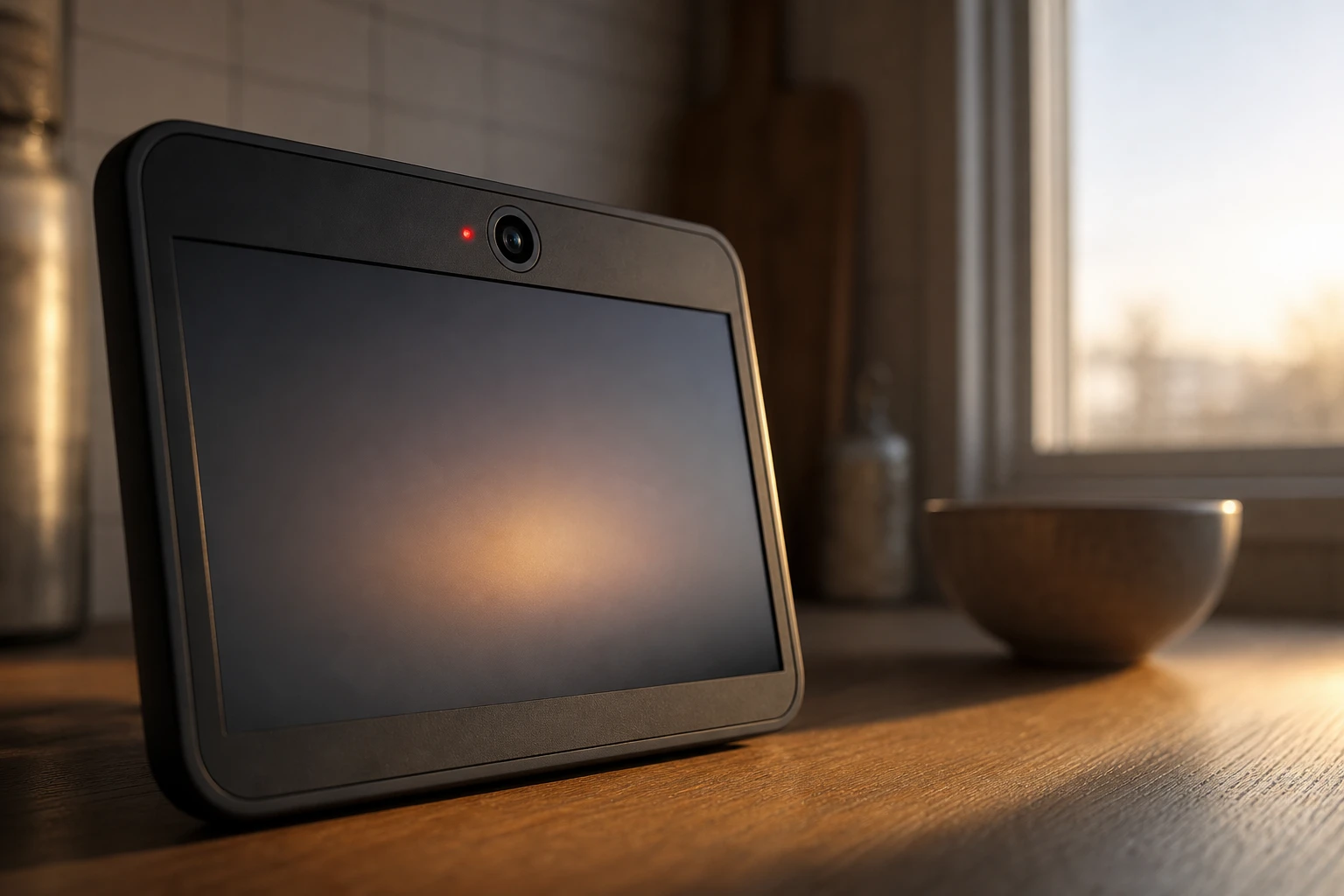
Leaked code shows Google’s rumored Home Display running its camera on Nest Cam’s paid recording tiers, free live view included, longer history locked behind a subscription. Android Authority spotted the strings this week inside the Google Home app, the clearest sign yet of a smart display Google hasn’t refreshed in five years.
Underneath the hardware sits a bigger shift in how Google plans to make money from the smart home. The company has spent the past year rebuilding its whole Home platform into a subscription and licensing business, and this display reads like the first screen built for that model from its first day of design.
The Leak Reveals a Camera Wired Like a Nest Cam
The strings, surfaced through an app teardown, describe a familiar structure. Free users get up to three hours of event history.
A Google Home Premium subscription unlocks up to 60 days of event history and 10 days of continuous, 24/7 recording, the same ceiling Google already sells on its standalone Nest Cams.
The microphone goes beyond voice commands. Code references sound-triggered event logging, so the display could flag breaking glass or a smoke alarm the same way Google’s dedicated security cameras already do.
Users can reportedly switch recording off entirely. Do that and the camera still shows a live feed, it just stops saving anything. One string ties the screen to a legal disclosure: it may need to show an on-screen message when recording starts, depending on local law.
Google already sells that tier structure today: $10 a month or $100 a year for Standard, twice that for Advanced.
| Tier | Price | Event History | Continuous Recording |
|---|---|---|---|
| Free | $0 | 3 hours | None |
| Home Premium Standard | $10/month or $100/year | 30 days | None |
| Home Premium Advanced | $20/month or $200/year | 60 days | 10 days, 24/7 |
The engineering is familiar. It’s the Nest Cam business model, poured into a screen Google hasn’t updated since 2021.
Carriers and Security Firms May Soon Bill for This Camera
Anish Kattukaran, Google’s chief product officer for Home and Nest, said last October that the smart display is “the ultimate form factor to be able to deliver a really great home experience,” without confirming any specific plans. Eight months later, the code answers part of that question.
A Licensing Pivot at I/O
At Google I/O in May, a Google product management director for the Home Platform wrote that the company wants outside partners to build “monetizable, proactive services” for customers’ homes, phrasing that reads like a licensing pitch rather than a product description.
Phone carriers, internet providers and home security firms can now bundle Google’s Home APIs and Gemini features, including the Google Home Premium subscription itself, inside their own service plans. Your internet provider could end up billing you for the camera sitting on your kitchen counter.
The Subscription Math Keeps Climbing
Subscription pricing across the industry has only moved one direction. The Verge has reported that Ring’s subscription doubled from $100 to $200 since 2021, while Nest’s top camera plan climbed from $120 a year to $200 and Arlo’s rose from $117 to $216.
Smart home was always a services play disguised as a hardware business.
Frank Gillett, a principal analyst at Forrester, made that observation around the time Google folded Nest Aware into Google Home Premium last year. The Home Display, if it ships the way the code describes, looks like the argument made physical.
Amazon still holds 29% of U.S. smart-speaker units, and Samsung’s Vision AI displays captured 28.3% of premium-category shipments in 2024, according to Mordor Intelligence. Apple is reportedly preparing its own first smart home display, and Google hasn’t had a real answer in this category since 2021.
Who Actually Benefits from This Trade
Three groups have very different stakes in what ships.
- Nest Hub Max owners gain sharper camera capability than their discontinued device ever had, since Nest Cam-grade recording and independent sound logging outclass the original hardware.
- Video-calling households risk a step backward. Nothing in the current findings mentions video calling, which was the original camera’s main job.
- Security-minded Home users get a device that could replace a separate Nest Cam and display, provided the privacy controls hold up.
Existing Nest Cams already flag familiar faces and packages, plus a notification for an open garage door, and the Home Display’s camera looks built to inherit the same alert system.
Will the Google Home Display Still Let You Video Call?
Nothing in the leaked code mentions video calling, the feature that defined the Nest Hub Max’s camera from 2019 onward. Anyone who used the old device mainly for video chats would be trading a familiar feature for a security camera. Google hasn’t addressed the gap either way.
The Nest Hub Max shipped with a camera built for face-tracking video calls. This leak uses different vocabulary: recording tiers, sound-triggered logging, an on-screen recording notice, the same terms Google uses to sell its Nest Cams. Hardware can still change before anything reaches a store shelf.
Google Has Reversed This Camera Decision Before
This isn’t the first time Google has changed its mind about putting a lens on a home screen.
- 2018: Google launches the original Home Hub without any camera at all, priced at $149, so people would feel comfortable putting it in a bedroom.
- 2019: The Nest Hub Max debuts with a built-in Nest Cam, a bigger screen and improved speakers.
- 2021: The Nest Hub 2nd generation ships. Google doesn’t launch another smart display for five years.
- 2026: Code for a Google Home Display resurfaces inside the Home app, camera included, this time wired to Nest Cam’s paid subscription tiers.
In between, Google discontinued the Nest Hub Max itself and scrapped a planned Pixel Tablet 2, leaving nothing with both a camera and a screen on sale at all.
Google’s reasoning for skipping a camera the first time is preserved in a 2018 interview about the camera-free Home Hub. “We consciously decided to not include a camera on Google Home Hub,” said Diya Jolly, Google’s vice president of Home product management at the time, so buyers would feel at ease placing the device somewhere private, like a bedroom.
What Google Still Hasn’t Confirmed
Plenty stays open. The code confirms a feature direction. It stops well short of a finished product.
What We Know:
- Recording tiers matching existing Nest Cam pricing.
- Sound-triggered event logging separate from “Hey Google” commands.
- A toggle to disable recording, leaving only a live view.
- A possible on-screen notice tied to local recording laws.
What’s Unconfirmed:
- Whether the camera has a physical shutter or an always-on indicator light.
- Whether footage processes locally or in Google’s cloud.
- Video-calling support, price and a release date.
Google’s existing camera policy promises a visible green light while it’s recording, a standard the company would presumably carry over to the new display. Google has not acknowledged that the Home Display exists in any form.
Google’s closest comparison is its own Home Speaker: teased at an August event, detailed two months later, and not on sale until this June, roughly a ten-month runway from tease to shipping. If the Home Display follows a similar script, whatever Google shows next is still likely months from a store shelf.
Frequently Asked Questions
What Exactly Is the Google Home Display?
It’s an unannounced Google product known only from strings inside the Google Home app’s code, where it sits alongside older entries like the Nest Hub Max, Nest Hub and Home Mini. Google hasn’t shown the device or confirmed its name, price or launch window.
How Much Would the Camera’s Full History Cost?
Google’s top Home Premium tier costs $20 a month or $200 a year in the United States. International pricing for the Home Display itself isn’t confirmed, though an estimated £16 a month for the UK’s top tier would match existing Home Premium pricing.
Does This Replace the Nest Hub Max?
Current Nest Hub Max units keep receiving Gemini support for every existing Nest display even though Google no longer sells the device new, so existing owners aren’t cut off while they wait for a formal successor.
Has Google Confirmed the Home Display Exists?
No. Unlike the Home Speaker, which turned up as a background prop around Google’s Pixel 10 Pro launch event lead-up before its official unveiling, the Home Display has never appeared publicly. Everything known so far comes from strings inside the app’s code.
Can the Camera Work Without a Google Home Premium Subscription?
Yes. The leaked tiers show three hours of free event history and a live view with no subscription required, matching what Google already offers on standalone Nest Cams. Google also runs a 30 day free trial of Home Premium on compatible cameras and doorbells for anyone who wants to test the extended history first.