India’s Under-18 women’s hockey team opened its Asia Cup 2026 campaign with a 2-1 win over Malaysia in Kakamigahara, Japan, on Saturday, carried by a two-goal burst from 15-year-old forward Nousheen Naz. The result lifted India to second in Pool A on three points and set up a Sunday clash with Korea that will likely decide who tops the group.
The scoreline reads like a routine start. The shot count tells a harder story: India won 16 penalty corners across four quarters and turned just one of them into a goal, a finishing gap that a sharper opponent will punish.
Nousheen Naz’s Brace Carries a Flat Attack
Both Indian goals came off the stick of the same teenager. Nousheen opened the scoring in the 19th minute, finishing a set-piece move from a penalty corner, then doubled the lead in the 28th by beating the Malaysian goalkeeper with a sharp strike before half-time. She was named Player of the Match.
Strip away her two moments and India’s attack was wasteful. The side manufactured pressure all afternoon, camped in the Malaysian circle for long stretches, and still walked off with a one-goal cushion after Nur Azli pulled one back for Malaysia in the 41st minute. A young defence then had to hold firm through a nervy fourth quarter rather than close the game out by three or four.
That is the honest read on a winning start: one player delivered the points, and the rest of the scoring chances went begging.
- 16 penalty corners earned by India, one converted into a goal
- 2 goals, both scored by Nousheen Naz, age 15
- 3 points, yet India sit second in Pool A on goal difference
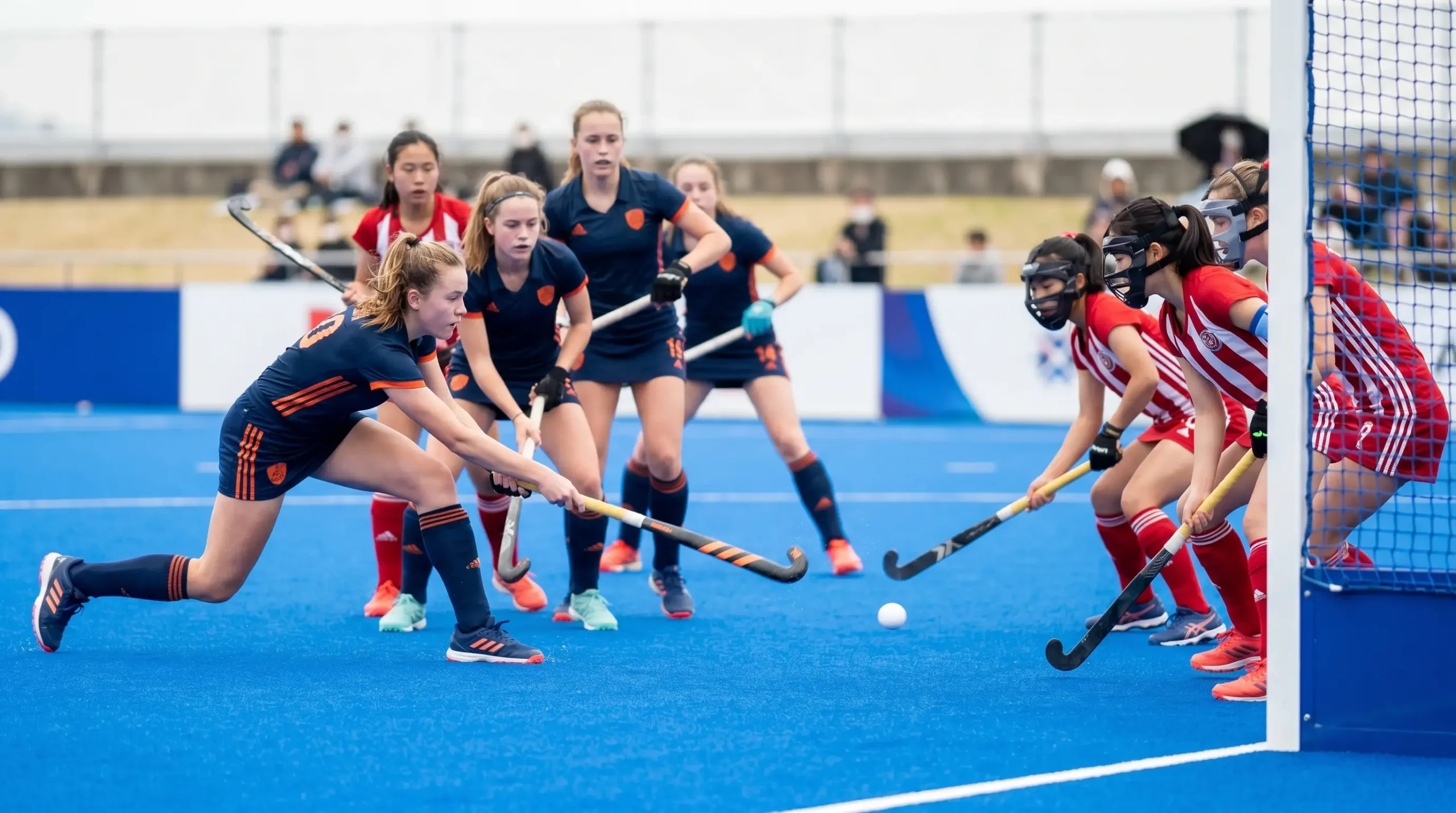
Sixteen Penalty Corners, One Conversion
The penalty corner, a restart awarded for defensive fouls inside the shooting circle, is hockey’s most reliable scoring route at every level. Junior sides that win the corner count usually win the match. India won the corner count by a landslide and barely cashed it in.
One goal from 16 attempts is a conversion rate close to six percent. For a team built around set-piece volume, that is a warning light, not a footnote. Penalty corner drag-flicking and deflection routines are the hardest skills to coach at age-group level, and they are exactly where matches against Korea and the Pool B heavyweights get decided.
There is an upside hidden in the same number. A team that wins 16 corners is creating the platform; the routines just need to land. India’s coaching staff under Rani spent a month-long national camp in Bhopal and warm-up matches against Australia drilling these phases. The raw volume says the structure works. The single conversion says the execution lagged on the day.
Against Malaysia it cost nothing. Against an opponent that scores its own chances, leaving 15 corners unconverted is how a comfortable afternoon turns into a one-goal scramble or a draw.
How the Match Unfolded
The first quarter ended goalless before India found its rhythm through the middle two periods. The scoring sequence tracked the swing of momentum.
- 19th minute: Nousheen converts a penalty corner to put India 1-0 up after a cagey opening 15 minutes.
- 28th minute: The same forward beats the Malaysian goalkeeper with a quick shot, making it 2-0 just before the half-time hooter.
- 41st minute: Nur Azli scores for Malaysia early in the third quarter to cut the deficit to 2-1 and reopen the contest.
From there it became a holding job. India kept Malaysia from drawing level through the fourth quarter, with the back line and goalkeeping pair seeing out the win rather than the forwards adding a buffer.
Pool A Comes Down to Goal Difference
India and Korea both took three points from their opening matches, which leaves goal difference as the early separator at the top of the group. Korea sit first; India second. With four teams in the pool and only the top two advancing, Sunday’s head-to-head carries outsized weight.
The four-team pool format leaves little margin. Each side plays three group games, and the Women’s U18 Asia Cup 2026 fixtures and standings show the top two from Pool A and Pool B crossing into the semi-finals on June 5, with the final on June 6.
| Pool A team | Played | Points | Opening result |
|---|---|---|---|
| Korea | 1 | 3 | Win |
| India | 1 | 3 | Beat Malaysia 2-1 |
| Malaysia | 1 | 0 | Lost to India 1-2 |
| Singapore | 1 | 0 | Lost opener |
A win over Korea would all but lock India into the semi-finals and hand it top spot. A loss would leave qualification riding on the June 2 fixture against Singapore and on results elsewhere in the group.
A 15-Year-Old Carrying a Young Squad
The headline name is also the youngest scorer in the conversation. At 15, Nousheen is two and three years younger than many of the opponents she is finishing against, and she delivered both goals in India’s opener while older teammates created and missed.
She is not carrying the side alone on paper. The 18-member group is captained by forward Sweety Kujur and includes goalkeepers Mahak Parihar and Khili Kumari, with defenders such as Nilam Topno and Kiran Ekka anchoring a back line that had to defend a slim lead for a full quarter. The depth chart looks balanced; the goals, so far, do not.
India’s wider women’s hockey pipeline has leaned on this kind of teenage emergence before, the same pattern that runs through the senior set-up where forwards like Navneet Kaur and the senior India attack have spoken about a generation of younger players pushing through. It echoes a broader surge across Indian youth sport, visible in the way young Indian shooters chasing Olympic places have rewritten expectations at age-group level.
The captain framed the mood plainly before the squad left for Japan.
Everyone is eager to perform well.
Sweety Kujur, captain of the India Under-18 women’s team, said as much ahead of the tournament, after the side prepared through a national camp and matches against Australia. The line reads differently after one game: eagerness is not the issue, conversion is.
The Korea Test and the Road to the Semis
Korea is the measuring stick of the group, and the timing is unforgiving. India plays them on May 31, the day after the Malaysia win, with both teams level on points and Korea ahead only on goal difference. The corner-conversion problem gets its first real examination against a side that defends its circle better than Malaysia did.
The format adds the pressure. With the Indian U18 women’s squad for Kakamigahara built for a short, sharp tournament, there is no long league to absorb a bad day. After Korea comes Singapore on June 2, then potentially a semi-final on June 5 against a Pool B side from a group containing hosts Japan, China, Chinese Taipei and Bangladesh, per the host association’s U18 Asia Cup details.
If India turns even a third of its penalty corners into goals against Korea, the same attack that looked wasteful against Malaysia becomes the most dangerous in the pool and the group lead is theirs. If the corners keep going to waste, a 15-year-old’s brace will only stretch so far, and the road to the June 6 final gets a great deal steeper.