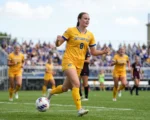
Six years out from the Brisbane 2032 Olympic and Paralympic Games, Australia is leaning on a single phrase to guide both its athletes and its national image: Win Well. The slogan is more than a chant for medal tables. It sits at the centre of a 10-year high-performance sport strategy the country launched in December 2022.
What most of the world cannot see is the scaffolding behind it. Win Well is wired into intellectual property contracts, athlete image rights, and a rebranded Australian Olympic identity, all working to turn gold medals into a coherent nation brand. In a long interview on sport, IP and the nation brand, Fiona de Jong laid out how the pieces fit together.
From Montreal’s Zero Gold to Brisbane 2032
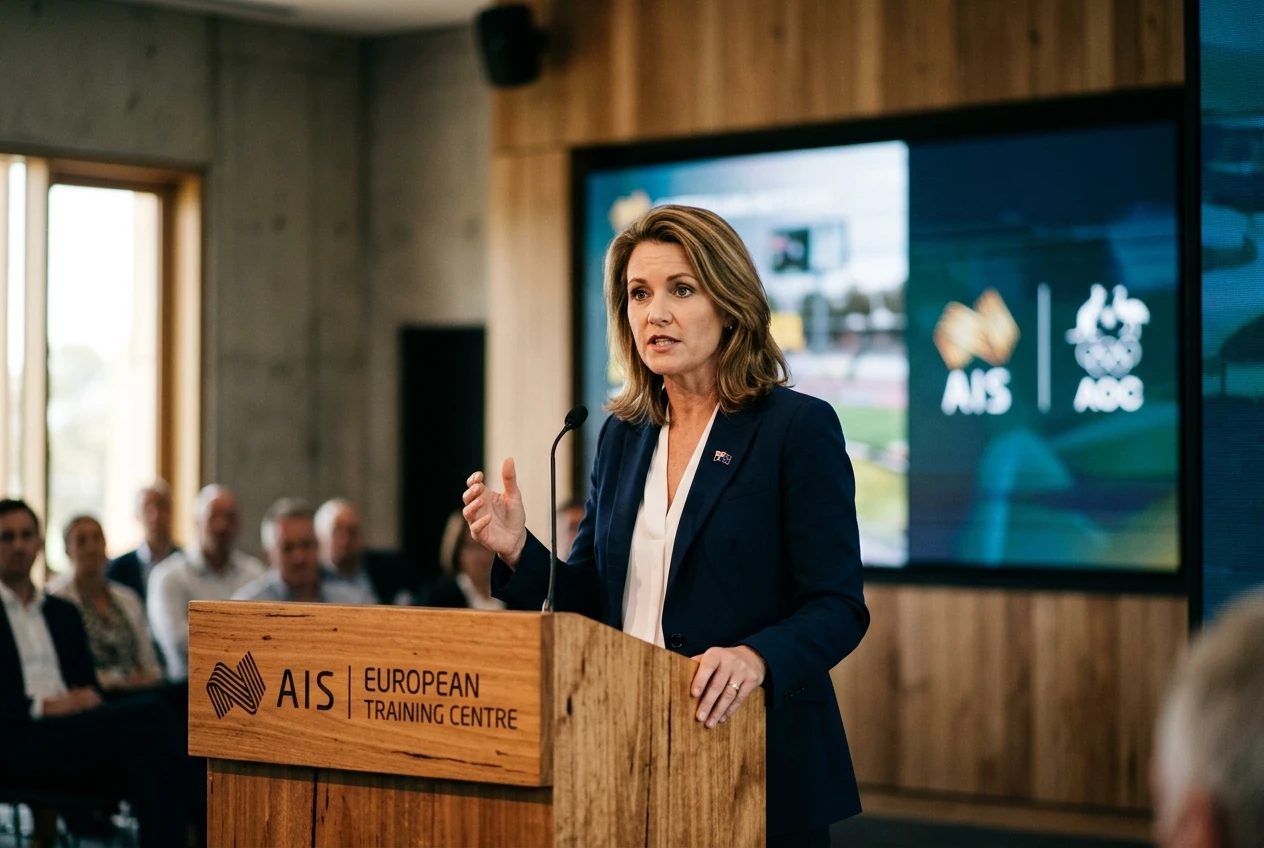
The Canadian city of Montreal hosted the 1976 Summer Olympics, and Australia left without a single gold medal. The country’s response came in 1981, when it opened the Australian Institute of Sport in Canberra, one of the first centralised high-performance facilities any nation had built. Fiona de Jong, who now leads the AIS’s European Training Centre, says the model has been copied widely since.
De Jong spent 12 years at the Australian Olympic Committee, working from 2004 to 2016. Nine of those years she served as Director of Sport organising Olympic teams, and three she served as Chief Executive. She led 10 Olympic campaigns across nine countries and worked inside 10 Olympic Villages. That exposure, she says, was the foundation for her later work on Australia as a national brand.
At the 2024 Paris Games, the scaffolding paid off. Australia finished with 53 medals at the Olympics and 63 medals at the Paralympics, with a record 18 golds at the able-bodied Games.
Paralympic sprinter James Turner delivered Australia’s first gold of the Paris Paralympics on September 7, 2024, winning the men’s 100m T36 at the Stade de France. Nina Kennedy made history at the Olympics as Australia’s 18th and final gold medalist. Australia finished fourth on the Olympic medal table. The question facing de Jong now is whether the country can convert those numbers into a longer national story before Brisbane 2032.
The Win Well Philosophy Powering Australia’s 2032 Run
Win Well is more than a slogan. The Australian Sports Commission describes it as a united commitment to balance ambitious performance goals with a culture of care, integrity, fair play and pride. The High Performance 2032+ Sport Strategy that wraps around it launched in December 2022.
It is also the framework for a record amount of federal money. A new High Performance Investment Framework has secured $489 million in government funding.
The strategy is built around four phases the ASC calls Horizons. Horizon 1 ran from 2022 through the Paris 2024 Games. Horizon 2, the current phase, runs from post-Paris through December 2026 and includes the Milano Cortina 2026 Winter Games. Horizons 3 and 4 will run from January 2027 through Brisbane 2032 and into the decade beyond.
The AOC’s CEO, Matt Carroll, has publicly backed the framework in the AOC’s published response to the strategy. Carroll said the strategy addresses the key areas critical to the future success of Australian sport as the country looks to Brisbane 2032 and beyond. He pointed to collaboration with athletes, sports, the National Institute Network, and peak bodies from the outset.
Australia has already delivered concrete early wins: a record gold-medal haul in Paris, an expanded Para sport program, and a stronger First Nations leadership pipeline. The first Horizon 1 report logged those gains alongside the new federal funding. Eleven national sporting organisations have signed the Win Well Pledge, joining the AOC, Paralympics Australia, and Commonwealth Games Australia. The strategy is also governed by a Leadership Group chaired by Matti Clements, the AIS Executive General Manager of Performance. The pledge language, ‘We Win Well to Inspire Australians,’ is itself treated as branding worth protecting.
How Olympic IP Became a Nation-Branding Tool
De Jong’s legal training shows in how she talks about the strategy. She says nation branding is about using words wisely and articulating a vision to a large extent. Lawyers, she argues, are trained to persuade, consume large amounts of information, and turn it into a coherent plan. Australia’s official Nation Brand Toolkit, launched in 2022, applies that kind of synthesis at scale.
Legal precedents are all based on telling stories, and the ability to tell the right story to the right audience is very important in nation branding.
De Jong made that case in a long conversation with José Filipe Torres, CEO of Madrid-based Bloom Consulting, for WIPO Magazine. She trained as an intellectual property lawyer in the IT sector before moving into sports leadership, and she sees the legal mind as built for persuasion and synthesis. That mindset, she argues, fits nation branding, where a country must digest what the world thinks and turn it into a coherent, well-articulated plan.
| Horizon | Years | Focus |
|---|---|---|
| 1 | 2022 to Paris 2024 | Strategy launch and Paris campaign |
| 2 | Post-Paris 2024 to December 2026 | Current phase; Milano Cortina 2026 and Brisbane build |
| 3 | January 2027 to December 2030 | French Alps 2030 build and Brisbane qualification |
| 4 | January 2031 to 2032+ | Games delivery and 10-year legacy measurement |
The Horizon structure itself makes the scaffolding visible. Horizon 4 is where the final reckoning will happen, because Brisbane 2032 is the first Summer Games Australia will host since Sydney 2000. The strategy promises that the Games will leave Brisbane and Queensland in a better place beyond the 10-year lead-up. That long-tail measurement is built into the four-phase calendar on purpose.
Mateship as a Brand Pillar
When De Jong was CEO of the AOC, she led a rebrand of the Australian Olympic properties. The challenge was to capture what made Australian Olympians different while respecting the team’s history. Research with athletes identified four common attributes the new identity had to carry. The first was mateship, the sense that being part of an Olympic team is bigger than any individual performance. The second was excellence, because Olympians are the best of the best and that exclusivity is part of what makes the movement special.
- Mateship: the team matters more than the individual performance
- Excellence: only the best of the best wear the green and gold
- Respect: for the rules, for each other, for authority
- Sportsmanship: the moments that move audiences most
De Jong says the rebrand modernised and simplified the visual identity while staying true to those values. The work had to be respectful of the past, contemporised for young Australians, and resilient enough to outlive any one team. She calls the result a vibrant and strong branding architecture that stood the test of time. The same colours and symbols, she adds, looked strong and vibrant at the 2026 Milano Cortina Winter Games, more than a decade after the redesign.
The European Edge Powering Australian Athletes
Australia is a long way from any European Winter Games venue. That geography has shaped how the AIS prepares its winter athletes and summer athletes who spend long stretches training in Europe. The AIS runs a European Training Centre in Gavirate, a small town on the Varese lake in northern Italy, that de Jong now directs. The facility is the home base for Australian athletes preparing for Milano Cortina, the French Alps in 2030, and beyond.
For Milano Cortina 2026, Australia’s competitive disadvantage was timing: it was summer in Australia and winter in Europe when the team needed to qualify. The AIS European Training Centre solved that by offering local staff, native Italian speakers, and accommodation close to the competition venues. The setup let athletes train outside the high-pressure Olympic Village in a World Cup-style environment.
The base tripled its accommodation capacity ahead of Paris 2024 with the opening of the Sunset Hotel, adding 48 rooms. De Jong moved to Italy in 2023 to lead the centre. She says it has been a privilege to run the facility through two consecutive European Olympic and Paralympic campaigns. The strategy will need to change again for the 2030 French Alps Games, where a different set of conditions and travel headaches will apply.
The Centre also acts as a soft-power bridge to Brisbane 2032. De Jong says European teams are starting to scout Australian training facilities and conditions, with the French team recently making a first planning visit. She wants those athletes to have a positive experience in Australia long before the Games arrive. Sport, she argues, becomes useful to nation branding by opening the door to wider economic and reputational value.
The Commercial Logic Behind National Teams
The IP backbone of the Australian Olympic team is unusual. The AOC only sells the rights to the team for four weeks every two years, covering the Summer and Winter Games. The rest of the year, the athletes control their own image rights. The structure is short enough that regulators have judged it acceptable, rather than an unreasonable restraint on individual trade.
The AOC and its sponsors hold exclusive rights to use an athlete’s image during the Games. Olympic team sponsors tend to be large multinationals looking to reach international audiences. Individual athletes often have smaller, more nimble brands that want closer alignment with a specific personality. The arrangement is what allows both sides of the market to coexist.
The model has come under scrutiny as social media has risen. Where broadcasters once bought the full bundle of rights for a major sporting event, those rights are now broken apart into internet rights, TV broadcasting rights, live television rights, and social media rights. That unbundling has given national teams more tools to shape a coherent narrative across different audiences and platforms.
De Jong frames the rights split as a feature rather than a flaw. Athletes tell a more personal story between Games, she says, while the national team brings people together with a collective story. Olympic team sponsors need scale; athlete sponsors need intimacy. Clear IP contracts let both run without stepping on the other. De Jong says the AOC’s IP framework is what makes the four-week commercial window work in practice.
Australian sport treats the IP risk as live, not theoretical. In 2018, the cricket sandpaper scandal damaged Australia’s international image because it ran against the values Australians say they hold dear: sportsmanship, fairness, playing by the rules. De Jong uses that episode as a reminder that any one athlete’s lapse can hurt a country, and that clear rights and contracts are the only real defence. The lesson shaped the current AOC playbook on how national team IP gets managed.
What Brisbane 2032 Has to Prove
De Jong was born in Brisbane. She calls the city’s 2032 Games a full-circle moment, after a career spent at the heart of Olympic team operations around the world. She moved to Italy in 2023 to run the European Training Centre, where she has guided foreign teams on what to expect when they send athletes to Australia. One of her jobs is helping international federations design pre-Games training camps in southeast Queensland.
The economic effect of the Games will not be judged at the closing ceremony; it will be judged 10 years later.
De Jong made that case in a long interview with José Filipe Torres, CEO of Madrid-based Bloom Consulting, for WIPO Magazine. She frames the IOC’s new host city model as an attempt to spread infrastructure costs across a region instead of one city. Brisbane 2032, she says, is being designed as an accelerator for the infrastructure southeast Queensland needs anyway, including transport upgrades and venue reuse. The Australian Government’s elite and high-performance sport policy is now explicitly built around the same 10-year horizon. Australia’s High Performance 2032+ Sport Strategy, the document the Win Well philosophy anchors, treats Brisbane as the centre of gravity for the decade.
The first piece of that choreography is already on the ground. The French team made its first planning visit to Australia recently, looking for training facilities ahead of Brisbane 2032. De Jong is helping French officials connect with the right people in Queensland to design pre-Games camps.
Frequently Asked Questions
What is Australia’s Win Well strategy?
Win Well is the phrase the Australian Sports Commission uses to describe the country’s high-performance sport strategy through Brisbane 2032. It was launched in December 2022 and treats the next decade as a single planning arc across four phases. The slogan is meant to capture a trade-off: chase medals without sacrificing athlete welfare, fair play, or cultural change inside the system. Eleven national sporting organisations have signed the Win Well Pledge alongside the AOC and Paralympics Australia.
How does the Australian Institute of Sport work?
The AIS opened in Canberra in 1981, after Australia failed to win a single gold medal at the 1976 Montreal Summer Olympics. It is one of the world’s first centralised high-performance training facilities and is the centrepiece of Australia’s National Institute Network, which also includes state and territory institutes and academies. The AIS is run by the Australian Sports Commission, the federal agency that invests in elite sport. The European Training Centre in Gavirate, Italy, is the AIS’s overseas outpost for winter sports and summer athletes training in Europe.
Why did Australia win 18 gold medals at Paris 2024?
Australia’s Paris 2024 haul of 53 medals, including a record 18 golds, was the country’s most successful Olympics ever. The result capped Horizon 1 of the High Performance 2032+ Sport Strategy and validated the centralised training model that has been running since 1981. Performers like Nina Kennedy, who won the country’s 18th and final gold in athletics, anchored the medal surge. Two years on, the Paris figure stands as the benchmark the Brisbane 2032 team is now measured against.
What is the relationship between Olympic sport and IP?
National Olympic Committees like the Australian Olympic Committee treat athlete image rights as a structured commercial asset. The AOC holds exclusive rights to use athlete imagery during the Games, but releases those rights for the rest of the cycle so athletes can build personal brands. The legal scaffolding makes a four-week commercial window every two years work for both team sponsors and individual athletes. Fiona de Jong, the former AOC CEO, argues that clear IP contracts are also the only reliable defence when an individual athlete’s behaviour damages the national image.
What needs to happen before Brisbane 2032?
Australia is two years into the 10-year lead-up, with Horizon 2 of the strategy running through December 2026. The current phase covers the Milano Cortina 2026 Winter Games and the early build for Brisbane, including foreign-team planning visits like the one the French team recently completed. Infrastructure decisions about venues, transport, and athlete accommodation are being tied to southeast Queensland’s 10-year migration and growth needs. The closing ceremony will measure medals; the 2032+ period will measure whether the Games paid off as a regional investment.