Tallinn opened an international tender last week for a company to design, build and operate Estonia’s first Olympic-standard swimming pool, backing the project with €20 million (roughly $21.6 million) in public money. Bids are due by October 1, with the pool slated to open by the end of 2029.
Former Tallinn mayor Jevgeni Ossinovski, an SDE (Social Democratic Party) politician, says the city is steering the deal toward a single private company again. It would be the third attempt at this exact pool since 2019. The first two collapsed, and the more recent of them drew exactly one bidder before falling apart.
A Concession Deal Worth Nearly €20 Million
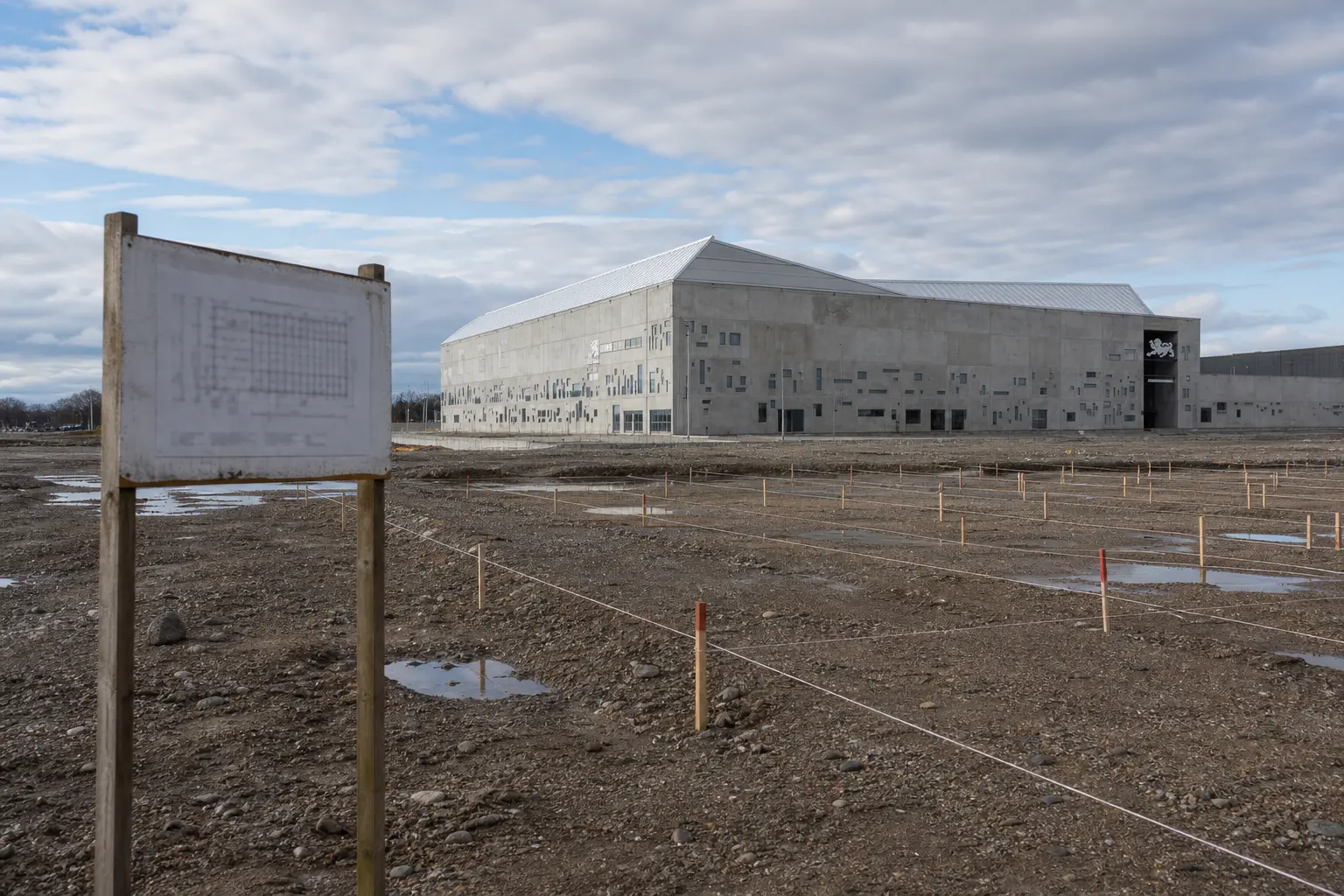
Miroslav Berezovski, the Center Party mayor of Tallinn’s Lasnamäe district, has described the plan the same way for months: a competition-length 50-meter pool, a second 25-meter pool for training, sports halls and a spa, built on Kuukivi Street next to the Tondiraba Ice Hall. That puts the project in Lasnamäe, a Soviet-era district of high-rise housing on Tallinn’s eastern edge, a world away from the cobblestone lanes of Tallinn’s fairy tale Old Town that draw most visitors to the capital.
“The city is not the operator. If there is a spa component, then that belongs to the private sector. They will also assume the responsibility of running and operating the swimming pool,” Berezovski said.
Under the concession structure the city has proposed, the winning company would take on several roles at once:
- Design and build the full complex, including both competition pools and dedicated training facilities
- Finance construction beyond the city’s €20 million contribution
- Operate the site commercially, including any spa or wellness business, for a fixed concession term
- Meet conditions the city sets for pool quality and public access, according to Berezovski
Berezovski said schoolchildren will have guaranteed access to the finished pool. He did not spell out separate guarantees for club swimmers or national team training blocks, a gap that becomes central later in the dispute.
Estonia’s Swimmers Have Been Waiting Since Before This Started
National swimming team head coach Toni Meijel has watched these plans stall for roughly as long as most of his swimmers have been racing. Estonia has no full-length competition pool built to Olympic standards, which pushes swimmers into short-course training that looks nothing like the long-course racing they face internationally.
“For years, or even decades, we have been trying to compete with countries that have more swimming pools than we do, so the training conditions are not comparable,” Meijel said.
The gap shows up earliest in young athletes’ careers. “There is very little opportunity or experience of training in a long-course pool. We have many children whose very first long-course competition experience comes at the Estonian Championships,” he explained.
Estonian swimmers have still reached recent World Aquatics Championships despite that disadvantage, training almost entirely in pools shorter than the ones their rivals grow up racing in. A finished pool in Lasnamäe would be the country’s first real long-course training base.
The City Has Tried This Twice Before
Tallinn’s pursuit of this pool did not start last week. City records and Estonian broadcaster ERR’s own coverage show two earlier attempts, both of which fell apart, and both connected to the same construction company.
- 2019: Tallinn holds an architectural competition for a new Lasnamäe swimming centre and awards the construction procurement to Tondiraba Ujula OÜ, targeting a 2024 opening.
- August 2019: Tondiraba Ujula OÜ tells the city it cannot finish the project on the agreed terms, citing a sharp rise in construction costs. Tallinn ends the contract, a pause that fell during Ossinovski’s own time leading the city.
- Early 2024: A new concession tender worth €96.9 million across design, construction and 50 years of operation draws exactly one bid, again from Tondiraba Ujula OÜ, this time requesting just over €19.8 million in city support.
- June 2024: The city’s Property Department annuls the concession procedure after economic conditions shift, and the Ministry of Culture says the state cannot help fund construction.
- October 2024: Officials begin a fresh review of options for the stalled water center site.
- July 2026: Tallinn launches a new international procurement for a developer, with bids due October 1 and completion targeted for the end of 2029.
Tondiraba Ujula OÜ, the company tied to both earlier collapses, is owned by Igor Mölder and Tanel Samuel, who also run the real estate developer Capital Mill, according to Estonian business registry records. Whether the same company bids on the new tender is not yet public information; the deadline is still more than two months away.
The good old Center Party days are back. Every time a somewhat significant decision is made, it smells like a criminal case. This is clearly about handing nearly €20 million of taxpayers’ money to one businessman.
Ossinovski made that accusation about the new tender specifically. His phrase about “the good old Center Party days” has a specific record behind it. Estonia’s Public Prosecutor’s Office opened a corruption case against the Center Party in January 2021 over a €39 million loan from KredEx, Estonia’s state credit agency, to a real estate developer, a scandal that forced Prime Minister Jüri Ratas to resign and collapsed the governing coalition. The Tallinn Circuit Court found the party guilty of influence peddling in March 2024, and the Supreme Court later dismissed its appeal. No criminal case has touched the swimming pool procurement itself; Ossinovski’s comparison is to the party’s broader record, not a specific allegation against this deal.
Three Rounds, One Bidder
Set side by side, the three procurement rounds show why Ossinovski’s suspicion has a paper trail behind it, not just a hunch.
| Round | City’s Financial Ask | Bids Received | Outcome |
|---|---|---|---|
| 2019 construction procurement | Fixed-price build contract | 1 (Tondiraba Ujula OÜ) | Winner withdrew in August 2019 over rising costs |
| Early 2024 concession tender | €19.8 million requested by bidder | 1 (Tondiraba Ujula OÜ) | Annulled by the city in June 2024 |
| July 2026 international tender | €20 million pledged by the city | Bidding open until October 1 | Pending; completion targeted for late 2029 |
Nothing in the new tender’s public description explains how the city will avoid a repeat of rounds one and two, which is exactly the gap Ossinovski is pointing at.
Who Guarantees the Pool Stays Open?
Berezovski says the city will require public and school access as a condition of the concession. Ossinovski says nothing on record yet protects training and competition access for clubs and the national team, the users the pool is ultimately being built for.
Ossinovski drew a line between the spa, which he accepts as fair territory for a private operator, and the sports infrastructure itself, which he argues stays a local government responsibility no matter who runs the building.
“How is the city’s interest protected in the sense that this swimming pool will remain accessible to our residents, schoolchildren, and, in addition, of course, professional athletes for both training and competitions?” Ossinovski asked.
Berezovski’s answer covered part of that question directly: schools will be guaranteed access, he said. He did not detail separate terms for club or national team training hours, competition pricing or public swim sessions, the specifics that will decide whether Meijel’s swimmers actually get more long-course pool time once the doors open.
The Next Deadline Is October 1
Tallinn’s tender window closes on October 1, after which the city evaluates whatever bids arrive against the quality and access conditions Berezovski has promised. Construction is meant to move fast enough afterward to open the complex by the end of 2029, a full decade after the city first put a shovel-ready design out to tender.
Ossinovski wants the city to explain how the public interest is protected before the money moves. So far, the public record shows Berezovski’s assurances on school access and quality conditions, not a detailed answer to the single-bidder history behind this project.
Bids close October 1. Whether more than one company answers will be the first sign of whether this attempt breaks the pattern the last two set.