A Cornish harbour pub is trading under its third company in three years, and the couple running it have twice walked away from HMRC bills that together add up to nearly £375,000. The Ship Inn in Fowey is owned by St Austell Brewery but operated day to day by James Paul Gitsham and his wife Yolanda, whose new management company started trading six months before their previous one collapsed owing over half a million pounds.
The obvious question, the one Fowey residents are already asking, is how St Austell Brewery let it happen twice. The less obvious one is why two legal mechanisms built for exactly this scenario, a law against reusing a failed company’s name and HMRC’s own preferential status in insolvencies, never came close to triggering.
Three Companies, One Pub, Two Directors
Fowey Enterprises Ltd was set up in October last year with Mr Gitsham as its sole director. It now runs the Ship Inn under an arrangement agreed directly with St Austell Brewery, the regional brewer that owns the building.
That timing is what has locals uneasy. Fowey Enterprises Ltd existed for roughly six months before Shipfowey Limited, the Gitshams’ previous operating company for the same pub, went into voluntary liquidation in March. Shipfowey left £513,802.02 in debts, including £224,294.06 in unpaid corporation tax owed to HM Revenue and Customs, the UK’s tax authority known as HMRC.
It was not the couple’s first collapsed company at the same address. In June 2023, Kingship Fowey Limited, trading as the King of Prussia and the Ship Inn with Mrs Gitsham as director, also went into voluntary liquidation, leaving £210,783.89 in debts.
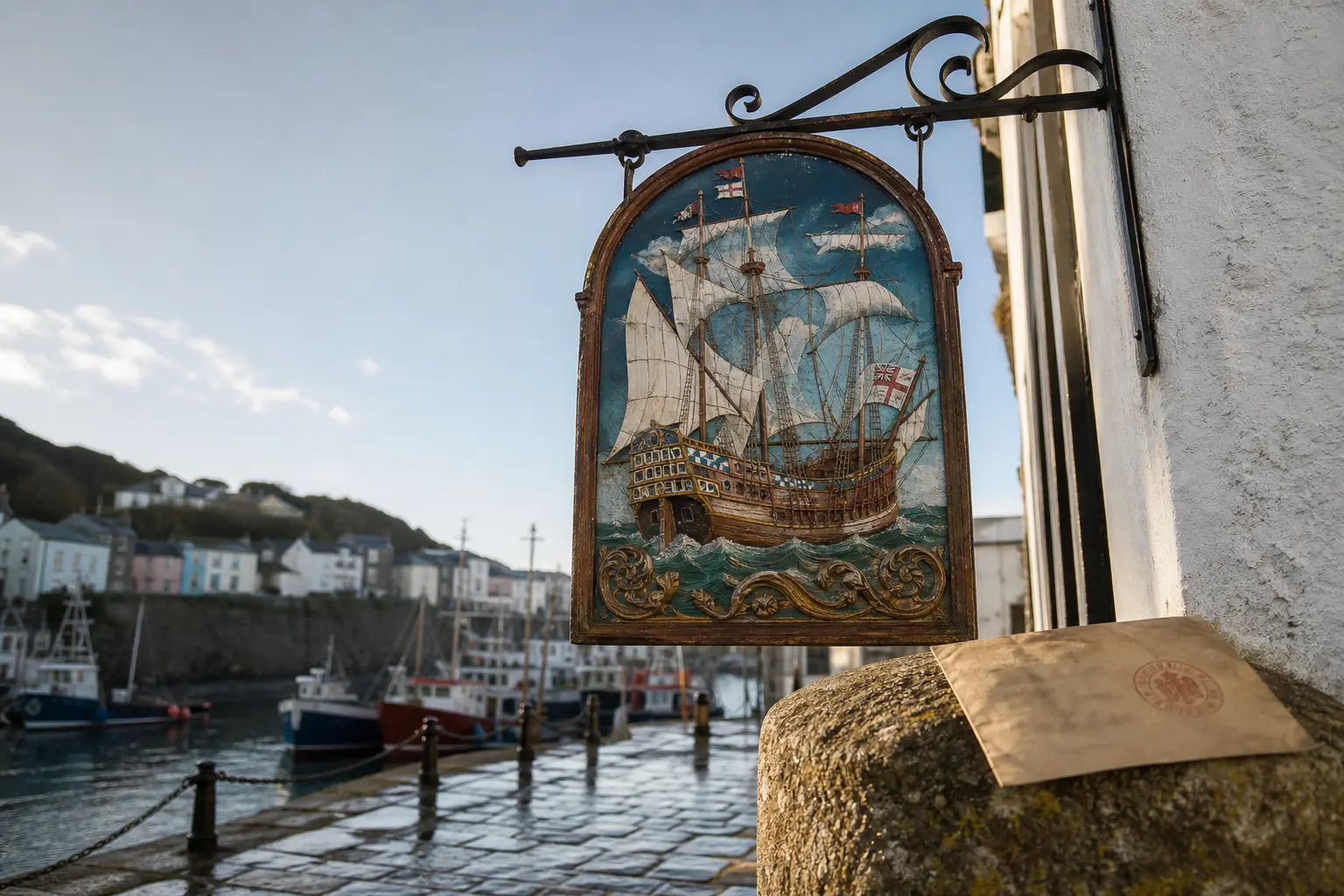
A Fowey Timeline of Company Collapse
Strip away the pub’s unbroken opening hours and a different picture emerges: three separate corporate vehicles tied to the same operators and the same building, each ending differently but none ending well for creditors.
- 2019 to 2021: Fowey Doors Limited, an unrelated business run by Mr Gitsham, is compulsorily struck off the register at Companies House, the UK’s registrar of companies, typically a sign of missed annual accounts or confirmation statements rather than insolvency itself.
- June 2023: Kingship Fowey Limited, trading as the Ship Inn and the King of Prussia with Mrs Gitsham as director, enters voluntary liquidation owing £210,783.89, including £150,573.56 in unpaid tax.
- October 2025: Fowey Enterprises Ltd is incorporated with Mr Gitsham as sole director, taking on the running of the Ship Inn.
- March 17, 2026: Shipfowey Limited, the company Fowey Enterprises Ltd’s formation had already preceded by half a year, is placed into creditors’ voluntary liquidation owing £513,802.02, including £224,294.06 in corporation tax.
Three failures, three different legal routes out, the same two names on the paperwork each time.
What the Two Liquidations Add Up To
Set side by side, the two pub-operating companies followed an almost identical pattern, just at a larger scale the second time around.
| Company | Liquidation Date | Total Debts | Trade and Expense Creditors | Unpaid HMRC Tax |
|---|---|---|---|---|
| Kingship Fowey Limited | June 2023 | £210,783.89 | £60,210.33 | £150,573.56 |
| Shipfowey Limited | March 17, 2026 | £513,802.02 | £98,663.59 | £224,294.06 |
Local trade suppliers and contractors were left short nearly £159,000 combined across both collapses, a debt that rarely makes headlines next to the HMRC figure but hits small Cornish businesses directly.
How Much Profit Sits Behind a £375,000 Tax Bill?
Working back from the corporation tax rate answers it in one step: HMRC’s unpaid corporation tax bills only arise once a company has already booked the profit those bills are calculated against, at the government’s standard 25 percent rate.
- £224,294.06 in corporation tax left unpaid by Shipfowey Limited implies close to £897,000 in profit at the 25 percent main rate.
- £150,573.56 left unpaid by the earlier Kingship Fowey Limited implies a further £602,000 or so in profit.
- Combined, the two companies’ tax bills imply almost £1.5 million in profit generated across three years of trading the same pub.
- The two firms’ unpaid HMRC debt together comes to roughly £374,868, nearly £375,000.
None of that profit figure is confirmed by filed accounts; it is simply what the tax bill implies at the headline rate. But it is why one Fowey resident, who contacted both St Austell Brewery and CornwallLive, could not square profitable trading with repeated collapse.
Residents Want Answers From St Austell Brewery
The resident’s letter, shared with CornwallLive, asked directly how a company with enough profit to owe six figures in tax ends up liquidated rather than paying it.
You’re facilitating people like James Gitsham to owe HMRC almost £400,000 and to just write that off too. That is taxpayers’ money footing that deficit and you think it is acceptable?
The resident, who did not want further liquidations to pass without scrutiny, argued that a large brewery tolerating repeat insolvency at one site sets a precedent for pub landlords across Cornwall and the UK.
St Austell Brewery said the Ship Inn is run by an independent business and the brewery has no role in its day to day management. A company spokesperson added that the brewery is aware of Shipfowey Limited’s liquidation, calls it a matter for the appointed liquidators and relevant authorities, and reviews every operator in its pub estate on an ongoing basis.
Leonard Curtis, the insolvency firm whose partners Siann Huntley and Nicola Layland were appointed joint liquidators of Shipfowey Limited, said it had no involvement in any previous business failures at the site and has acted solely in relation to Shipfowey Limited. A spokesperson said Shipfowey was insolvent on a balance sheet basis when the firm was appointed, with liabilities exceeding assets, and that a creditors’ voluntary liquidation was judged the most appropriate process after a full assessment. The firm confirmed it has had no involvement with Fowey Enterprises Limited, and that the Ship Inn’s ongoing occupation was arranged directly between Fowey Enterprises Limited and St Austell Brewery.
The Legal Gaps That Let This Happen
The Anti-Phoenix Rule That Never Applied
Parliament already legislated against exactly this pattern. Section 216 of the Insolvency Act 1986 bars a director of a liquidated company from being involved in any business trading under the same or a confusingly similar name for five years, precisely to stop what insolvency lawyers call phoenix trading, where a failed firm’s activity and goodwill simply continue under a new corporate shell.
Breach it and the penalties are real: up to two years in prison, a fine, and personal liability for the new company’s debts, as the official record on reusing an insolvent company’s trading name sets out. But the restriction attaches to the company’s registered name and trading style, not to the pub itself. Shipfowey Limited, Kingship Fowey Limited and Fowey Enterprises Ltd are three distinct names; the Ship Inn’s own signage never had to change. Locals see one pub and two familiar faces behind the bar. The law, on paper, sees three unrelated companies.
Why HMRC Still Finishes Near the Back of the Queue
HMRC’s own position looks stronger on paper than it plays out here. Since December 1, 2020, HMRC has held secondary preferential creditor status in UK insolvencies, moving ahead of floating charge holders for money a business collected on others’ behalf, PAYE income tax, employee national insurance, student loan repayments and construction industry scheme deductions, according to the government’s own explanatory memorandum on the preferential creditor reform.
Corporation tax is not on that list. For the exact debt driving this story, HMRC remains an ordinary unsecured creditor, queued behind secured lenders and preferential claims, the same position it has always held for tax a company owes directly rather than collects from someone else. A reform built to help HMRC recover more from failed companies simply does not reach the biggest number in this case.
Companies House’s ID Crackdown Arrives Too Late for the Ship Inn
Pub sector distress is not new context for this story so much as its backdrop. Hospitality insolvencies stayed elevated through 2025, with 3,353 businesses collapsing across the year according to trade coverage of the figures, before easing somewhat in mid-2026 as warmer weather and the World Cup lifted trading. That easing has not touched the Ship Inn’s finances, which suggests the pattern here runs deeper than sector-wide pressure alone.
What does change soon is oversight at Companies House itself. Under the Economic Crime and Corporate Transparency Act 2023, identity verification for company directors and people with significant control became compulsory from November 18, 2025, and the transition period for full compliance runs out by the end of 2026, after which active enforcement begins against anyone still unverified, per the government’s own law’s third implementation progress report. Unverified directors face fines up to £5,000 and, eventually, compulsory strike off.
The reform targets identity fraud and fabricated filings more than repeat insolvency itself, so it would not have stopped Fowey Enterprises Ltd from forming last October. But it does mean regulators will soon hold a clearer, verified picture of which real people sit behind serial company names, something that simply was not true when Kingship Fowey Limited folded in 2023.
For now, Fowey Enterprises Ltd keeps pulling pints at the Ship Inn, under the same roof, the same arrangement with St Austell Brewery, and the same two directors who left HMRC waiting twice before.
Frequently Asked Questions
What is a phoenix company, and did the Gitshams break the law?
A phoenix company is a new business that continues a failed company’s trade, often under a similar name, leaving the old company’s debts behind. Voluntary liquidation itself is entirely legal. A breach only occurs under Section 216 if a director reuses a prohibited name without one of the recognised exemptions, such as court permission, buying the business from an insolvency practitioner with notice given to creditors within 28 days, or the new company having already traded under that name for the twelve months before the old one collapsed.
Can HMRC recover this money personally from the Gitshams?
Not automatically. Limited company status generally shields directors from personal liability for corporate debts. HMRC or other creditors would need to show wrongful or fraudulent trading under separate Insolvency Act provisions, a higher legal bar than simply presiding over a loss-making or liquidated company.
Could the Gitshams be banned from running a company again?
Companies House and the Insolvency Service can investigate a director’s conduct after a liquidation and, if that conduct is judged unfit, seek a disqualification order lasting between two and fifteen years under the Company Directors Disqualification Act 1986. No such action has been reported in this case.
Why did the Ship Inn keep trading without interruption through three insolvencies?
Because the pub building, licence and lease sit with St Austell Brewery as landlord, separate from whichever limited company operates the business day to day. Leonard Curtis confirmed the ongoing occupation arrangement was agreed directly between Fowey Enterprises Limited and St Austell Brewery, allowing the pub itself to carry on trading regardless of what happens to the operating company behind it.