A record 701 companies from Latin America and the Caribbean took part in the 13th Virtual Agrifood Business Matchmaking Round and generated an estimated US$25.5 million in new business opportunities. The figure is only the latest layer on a quieter build that has now passed US$309.7 million since the rounds began in 2020.
Organized by the Food and Agriculture Organization of the United Nations (FAO), the Inter-American Institute for Cooperation on Agriculture (IICA) and the Secretariat for Central American Economic Integration (SIECA), the free online sessions keep drawing mostly micro, small and medium-sized firms that rarely appear at traditional trade fairs.
What the Latest Round Delivered
According to the joint release, 701 companies generated USD 25.5 million in surveyed business intentions. Central American firms sat alongside participants from Argentina, Chile, Colombia, the Dominican Republic, Ecuador, Mexico and Peru.
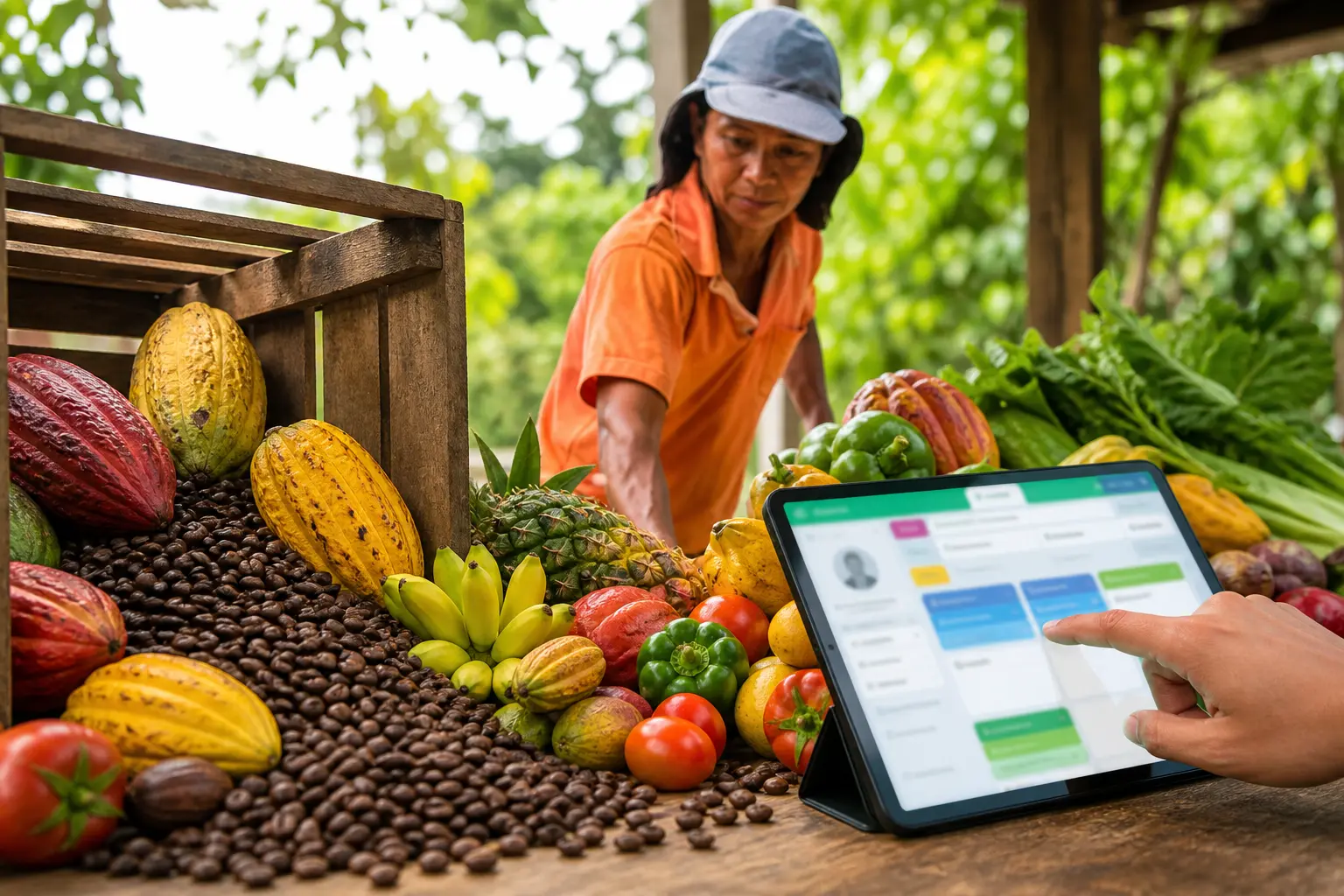
Fresh fruits and vegetables topped both offers and requests. Coffee and cocoa followed. Food preparations, healthy snacks, transportation and logistics services, plus quality and food-safety compliance support rounded out the agendas. Companies also used the meetings to expand contact networks and test new markets.
- Top products: fruits and vegetables, then coffee and cocoa
- Services featured: logistics, quality and safety standards support
- Secondary gains: new partnerships and market diversification
Participant surveys after each round supply the opportunity totals. The numbers are intentions, not closed contracts, yet the series has now posted consistent growth across thirteen editions.
Who Filled the Virtual Rooms
Micro, small and medium-sized enterprises made up 68 percent of this year’s participants. Women-led businesses reached 38 percent. Entrepreneurs under 40 headed 46 percent of the firms. The SIECA release highlights the steady climb in both women-led and younger-led participation.
| Category | Share of Participants |
|---|---|
| MSMEs | 68% |
| Women-led companies | 38% |
| Led by under-40 entrepreneurs | 46% |
| Total companies | 701 (record) |
Those shares matter because traditional export channels often favor larger operators with compliance staff and travel budgets. The virtual format lowers the entry cost. It also sidesteps some of the administrative burdens that sink small firms when they chase distant buyers alone.
How the Matchmaking Platform Operates
Each edition pairs a short training cycle with scheduled one-to-one meetings. Companies register, build profiles with SIECA technical help, and receive curated buyer appointments. Translation is available. Meetings run online so participants can join from any device with an internet link and share screens to show products.
The preparatory training cycle drew 927 participants in May 2026. Sessions covered keys to supplying retail chains (with Walmart and other retailers) and practical marketing strategies. Earlier editions already passed 6,000 companies before this round pushed the supplier total to 7,385.
- 2020: First rounds launched in response to COVID-19 disruptions that blocked physical fairs.
- 2025 (11th edition): 544 companies, US$20.1 million in intentions.
- 2026 (13th edition): 701 companies, US$25.5 million in intentions; cumulative opportunities reach US$309.7 million.
Daniel Rodríguez of IICA’s Directorate of Technical Cooperation called the sustained rise in companies, countries, intentions and product diversity proof that the rounds have become one of the region’s leading platforms for linking producers, agribusinesses, service providers and buyers.
Why the Region Still Undertrades With Itself
Latin America and the Caribbean is the world’s largest net food-exporting region. It supplies a large share of global cereals, oilseeds, bananas, coffee, sugar, fruits and vegetables. Yet food insecurity still touches a large share of its own population, and many countries import heavily from outside the region.
IDB and FAO work has mapped a potential market of US$24.7 billion in products with strong growth prospects inside the region. That figure equals roughly 8.5 percent of LAC’s total agrifood exports and more than half of existing intraregional agrifood trade. Cereals, meats, fats and oils, food preparations, dairy and beverages sit high on the opportunity list. Intraregional flows already skew toward processed goods that create more jobs and value than bulk commodities.
Tools such as virtual business matchmaking rounds are essential to encourage companies across the region to invest in regional markets. At a time of heightened global volatility, there is significant room for growth within the region, and this opportunity should be seized.
Pablo Rabczuk, FAO Senior Programme Officer, made that case while noting the 68 percent MSME share. Global shocks in energy, fertilizers and logistics keep raising the cost of distant supply chains. Shorter regional routes reduce both cost and risk.
The Quiet Stack Since 2020
Thirteen editions have now drawn 7,385 supplier companies. Surveyed opportunities total US$309.7 million. The jump from the 11th edition’s 544 firms and US$20.1 million to this year’s 701 and US$25.5 million continues a clear upward line.
| Edition | Companies | Business Intentions |
|---|---|---|
| 11th (2025) | 544 | US$20.1 million |
| 13th (2026) | 701 | US$25.5 million |
| All 13 editions | 7,385 suppliers | US$309.7 million |
Official posts from IICA and FAO accounts circulated the latest numbers with modest engagement. The rounds still sit below the radar of wider trade coverage even as the totals compound. That low profile is part of the sleeper quality: the work continues without fanfare while the infrastructure hardens.
Edith Flores de Molina, Director of SIECA’s Center for Studies on Economic Integration, said the results show the events promote regional trade inside a frame of inclusion and competitiveness. Firms tighten commercial ties beyond national borders, expand networks and open new markets. The same rounds have also tightened partnerships among FAO, IICA and SIECA around marketing support for agricultural producers.
What the Intentions Purchase
Beyond headline dollars, participants reported new alliances and market diversification. Logistics providers and quality-certification services appeared alongside primary producers. That mix matters for MSMEs that need reliable freight and compliance help to move from one-off sales to repeat orders.
The 38 percent women-led and 46 percent under 40 shares keep rising. Those cohorts often face steeper barriers to capital and buyer introductions. A free, translated, profile-supported virtual room removes several of those steps at once.
The organizers frame the series as a response first to pandemic lockdowns and now to successive waves of global volatility. Each round adds contacts and practical skills that stay with the firms after the meetings end. The cumulative US$309.7 million is the visible score. The durable buyer-supplier maps and training habits are the quieter asset.
Frequently Asked Questions
What is the Virtual Agrifood Business Matchmaking Round?
It is a free online series of scheduled business meetings and preparatory training sessions that connect agrifood suppliers and buyers across Latin America and the Caribbean. FAO, IICA and SIECA have run it jointly since 2020; companies register, receive profile support and curated appointments, and can join from any internet-connected device.
How much business have all the rounds generated so far?
Participant surveys across the thirteen editions show an estimated US$309.7 million in business opportunities and the participation of 7,385 supplier companies from the region.
Which products moved most in the latest round?
Fresh fruits and vegetables were the most frequently offered and sought items, followed by coffee and cocoa. Food preparations, healthy snacks, logistics services and quality-and-safety support services also featured strongly.
Who organizes the agrifood matchmaking rounds?
The Food and Agriculture Organization of the United Nations (FAO), the Inter-American Institute for Cooperation on Agriculture (IICA) and the Secretariat for Central American Economic Integration (SIECA) organize the initiative together. Earlier editions also involved the Executive Secretariat of the Central American Agricultural Council.
Why do so many MSMEs take part?
The virtual format, free registration, technical profile help, translation and training sessions remove travel, booth and compliance costs that normally shut smaller firms out of physical trade fairs, which is why MSMEs reached 68 percent of participants in the 13th edition.