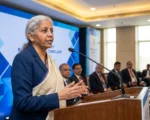
Teri Hatfield left her role as Salesforce executive vice president of sales and solutions and Tableau CRO to become chief revenue officer at Iterable, while AIM Intelligent Machines named Ben Reed CMO and Gravitics appointed Philip Wong CFO. The three moves, detailed in a GeekWire roundup, put commercial veterans into startups that already run customer fleets and hold government contracts.
Hatfield will work remotely for the San Francisco customer engagement platform. Reed and Wong join Seattle-area companies turning physical AI and modular space structures into deployable products.
Hatfield Leaves Tableau Revenue Role for Iterable
Hatfield spent more than a decade in sales leadership at Verizon before joining Tableau in 2012. After Salesforce acquired Tableau in 2019 she rose to executive vice president of sales and solutions and CRO of Tableau.
On LinkedIn she wrote: “I’ve come to believe that great customer relationships don’t start with technology. They start with understanding your customers. Iterable stood out because it’s built around that belief.”
Iterable closed a $200 million growth round that valued the company at $2 billion and has reported roughly $200 million in annual recurring revenue. The hire gives the platform a sales leader who scaled Tableau through its Salesforce integration years.
Her exit fits a broader pattern of Salesforce talent movement. Recent Salesforce cuts of 1,000 jobs for AI and internal shifts toward Agentforce have coincided with senior departures into growth-stage software firms.

Physical AI Startup Adds a Marketing Veteran
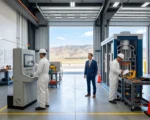
Ben Reed is now chief marketing officer at AIM Intelligent Machines, the Redmond-area company whose autonomous earthmoving platform for mining and construction retrofits bulldozers and excavators to run without operators.
Reed previously led AI marketing advisory work, served as CMO at Sanctuary AI, and spent a decade at Microsoft finishing as head of strategic storytelling for the digital transformation platform. He has told the story of Surface, HoloLens and now physical AI and robotics.
On LinkedIn he said: “I’ve spent much of my career helping frontier technologies become understandable, credible, and consequential, from Microsoft Surface and HoloLens to physical AI, humanoids, and robotics. At AIM, the unusual opportunity is that the technology, customers, deployments, and proof already exist.”
- $6.1M annual OpEx savings claimed from a single six-machine autonomous fleet
- +500% increase in fleet production in high-utilization operations
- $37M additional ore value unlocked per mining operation
- 0 injuries across harsh mine sites since 2021, per company figures
AIM raised $50 million in 2025 from Khosla Ventures, General Catalyst, Human Capital, Ironspring Ventures, Mantis, DCVC and Elad Gil. The capital funds a plug-and-play retrofit that works on existing equipment regardless of make or age.
In late July Komatsu and its subsidiary EARTHBRAIN entered a strategic partnership for autonomous bulldozers and hydraulic excavators with AIM. The deal moves validation into commercial deployment in the U.S. market, with Japan planned for 2027. Smart Construction plans feed AIM’s physical AI so machines can determine methods and routes on their own.
Mining and construction journals treat the partnership as confirmation that autonomous earthmoving has left the demo stage. Crowds watching physical AI note that suppliers such as LiDAR makers now list AIM fleets among real industrial wins rather than pilot announcements.
Gravitics Brings in Satellite Finance Experience
Aerospace startup Gravitics named Philip Wong as chief financial officer. The Marysville, Wash., company designs modular space station modules, cargo spacecraft and orbital carriers. Customers already include the U.S. Space Force and Axiom Space.
Wong spent years at Viasat leading financial strategy and investment planning for satellite and space infrastructure. Earlier stops include Pure Storage and Seagate Technology. He is based in California and reports to co-founder and CEO Colin Doughan.
Philip has spent 30 years deploying capital across satellite, network, and space infrastructure. That’s exactly what Gravitics’ next phase needs. He knows how to translate real engineering programs into the financial strategy that supports them.
Doughan said that in the appointment statement. Wong added that Gravitics has a defined pipeline and real execution demands, and that his role is bringing financial discipline to what the engineering team is building.
| Leader | Role | Prior Focus |
|---|---|---|
| Philip Wong | CFO | Viasat satellite finance, Pure Storage, Seagate |
| Jim Royston | Technical architecture | OmniTeq, SPACEHAB, Astrotech, ISS National Lab |
| Michael Bowker | Chief Business Officer | Voyager Space, Airbus/Astrium, SPACEHAB |
| Andy Jones | Engineering and manufacturing | Astrobotic lunar landers ($450M+ programs) |
On the same week Gravitics announced a Lockheed Martin partnership on a Department of War contract of national importance. The company already holds a Space Force STRATFI award and a seat on the Missile Defense Agency SHIELD IDIQ, a multiple-award vehicle with a $151 billion ceiling that supports Golden Dome layered defense concepts. Orbital carriers such as the Diamondback are designed for tactically responsive space and potential interceptor payloads.
- January 2026, Gravitics awarded seat on MDA SHIELD IDIQ
- August 3, 2026, Philip Wong named CFO
- August 4, 2026, Lockheed Martin selects Gravitics for Department of War contract
The finance hire lands as the company moves from design into repeatable production of carriers, cargo vehicles and station modules.
Legal Talent and Board Seats Keep Circulating
Seattle-area attorney Ken Miller joined Arnold & Porter as a partner in the life sciences and technology transactions teams. He spent 16 years at Perkins Coie on tech and nonprofit work, then moved to the Gates Foundation in 2015 as associate general counsel. He briefly led counsel for the Gates Medical Research Institute before returning as director of legal, covering global health, the research institute, business development, licensing, privacy and AI.
Katy Brown, president of Microsoft’s Americas Markets & Industries organization and a nearly 30-year Microsoft veteran, joined the Avanade board. Ben Minicucci, CEO and president of Alaska Air Group, joined Lyft’s board after more than two decades at the airline parent. Ash Wahi, founder and CEO of AI marketing startup Revenaut and a former Microsoft, Snap and Meta product and advertising leader, joined the MoPOP board.
TiE Seattle added five directors: Joseph Sirosh (CreatorsAG CEO, former Amazon and Microsoft, AbSci board), Monika Panpaliya (Microsoft partner director of product management), Vamshi Reddy (Quadrant Technologies CEO), Prasad Anguluri (Haply co-founder and Bothell City Council member), and Sanjay Puri (former Icertis VP).
Pathogen Tracking and Venture Capital Additions
JT McCrone, a Fred Hutch Cancer Center genomic epidemiologist, was named leader of Nextstrain. The open-source project tracks viral and bacterial pathogen evolution and spread in real time. It is based primarily in Seattle at Fred Hutch with partners in Basel, Switzerland. The Gates Foundation provided $1.5 million for the next phase, aimed at making analyses more accessible and scalable.
Graham Littlehale joined venture firm Felicis as an investing partner after serving as vice president at Point72 Ventures. Ian Fliflet, former chief growth officer at OfferUp, began sharing expertise through Intro’s video chat service.
Why the Pattern Points to Execution Over Hype
The three headline C-suite additions share a common thread. Each company already has paying customers, fielded hardware or software, and concrete contracts rather than pure research roadmaps. AIM’s fleets run on mine and construction sites. Gravitics holds Space Force, Axiom, Lockheed and MDA pathways. Iterable sits at a $2 billion valuation with established ARR.
| Hire | Company | Background | Company Proof Point |
|---|---|---|---|
| Teri Hatfield | Iterable CRO | Salesforce/Tableau sales leadership | $2B valuation, ~$200M ARR |
| Ben Reed | AIM CMO | Microsoft storytelling, Sanctuary AI | $50M raise, Komatsu commercial partnership, live fleets |
| Philip Wong | Gravitics CFO | Viasat space finance | Space Force, Axiom, Lockheed DoW, SHIELD IDIQ |
Seattle’s deep bench of platform operators, storytellers and capital allocators is flowing into these hard-tech and growth software names because the products have moved past slideware. The same region that supplied talent for earlier cloud and consumer waves is now supplying operators who can sell, market and finance machines that dig dirt and modules that fly.
Reed’s observation that proof already exists at AIM captures the second-order shift. When deployments, customer savings numbers and defense contracts are public, experienced executives leave large platforms for the chance to scale what is already working. The same logic applies to Wong’s move into orbital carriers and Hatfield’s bet on a customer engagement stack that prioritizes relationships over pure tech features. Salesforce AI tools in banking disputes show how the parent company itself is pushing agentic products; some of its alumni are choosing external platforms that already demonstrate commercial traction.
The roundup also includes quieter board and nonprofit appointments that keep the ecosystem’s connective tissue intact. Together the moves form a clear signal: physical AI for earthmoving and modular commercial space have reached the talent-attraction phase that precedes broader industrial adoption.