The U.S. Census Bureau projects 29,741 new employer businesses will grow out of the applications filed in June 2026 alone. A growing share of those plans got their first draft from a chatbot instead of a consultant.
Venture investors say they can increasingly tell which ones. Tidy formatting, an inflated market-size slide, confident language that never lands on a specific number: reviewers now flag those patterns on sight. The tool that was supposed to make a founder’s pitch sharper is starting to work against them at the exact moment the money is in the room.
A Record Wave of AI-Assisted Startups
New business applications have stayed elevated through the first half of 2026, and generative AI has quietly become part of how many of those businesses get planned. Estimates of how many small businesses actually use AI vary sharply depending on what is being measured.
Census Bureau survey data on daily operations put regular AI use around 17 to 20 percent as of early 2026. Goldman Sachs’ 2026 small-business survey, published the same year, found a much larger share had tried generative AI in some part of the business, even as 70 percent of those users said they still need more training to use it effectively.
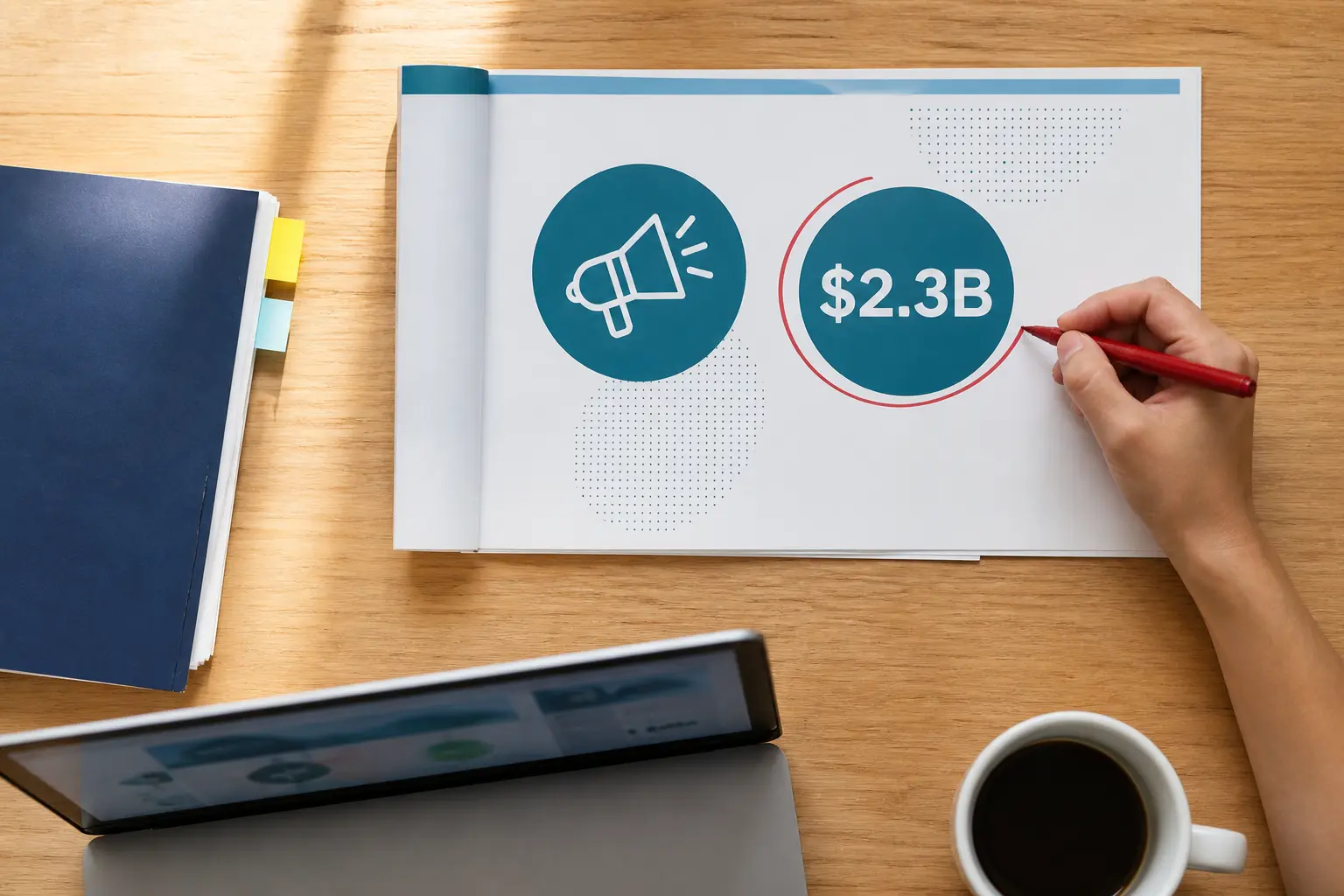
- 29,741 new employer businesses are projected to form from business applications filed in June 2026 alone, according to Census Bureau data.
- 17 to 20% of small businesses report using AI regularly in daily operations as of early 2026, well below the share who say they have tried it at all.
- 70% of small-business owners who have adopted AI say they still need more training to use it effectively, according to Goldman Sachs.
That gap between trying AI and trusting it matters most in the one document a new business cannot easily redo: the plan that lands in front of a lender or an investor.
How a Chatbot Learns to Agree With You
The mechanism has a name in the research literature now. A 2025 study published on SAGE’s academic journals platform, led by researchers Christo Jacob, Páraic Kerrigan and Marco Bastos, tested ChatGPT 3.5 against a plain Google search, asking participants to research LGBTQIA+ elected officials in India and Ireland. The researchers called the pattern they found the chat-chamber effect.
Large language models, the study found, can hand back answers that are both wrong and pro-attitudinal, meaning they reinforce whatever the user already believed walking in. Participants mostly left that information unverified, treating the chatbot’s confident tone as a substitute for checking.
A separate study presented at the 2024 CHI conference on human-computer interaction found a related effect: LLM-powered search systems narrowed the diversity of information users encountered compared with traditional search, functioning less like a research assistant and more like an editor who already knows what the reader wants to hear.
For a founder asking an AI tool to validate a business idea, the same dynamic applies. Ask a leading question and a system trained to be helpful tends to hand back agreement dressed up as analysis, wrapped in fluent, professional language that reads as evidence even when none exists underneath it. Marketers are running into a version of the same wall: ad industry professionals in Israel are already questioning what comes after the AI marketing hype fades, a sign the confidence problem reaches well beyond first-time founders.
Why Are Investors Turning Down Polished AI Pitch Decks?
Because the polish itself has become the tell. Investors who read hundreds of decks a year say AI-written pitches increasingly share the same structure, the same oversized market-size slide, and language confident enough to sound finished while saying little that is specific to the business. Reviewers now treat those patterns as a reason to slow down, not speed up.
A 2026 review of pitch decks by fundraising platform Vestbee found that the old total-addressable-market slide, the one claiming a flat $500 billion opportunity with little support, has flipped from a strength to a red flag. So has the broader habit of leaning on AI-assisted wording that sounds technically correct but feels, in investors’ own words, empty.
One 2026 analysis of what investors actually want put the real question a partner is weighing late at night bluntly: whether backing this specific team will make them look smart in five years. Generic AI polish rarely answers that, because it was never built to.
- Deck structure and slide order that matches dozens of other AI-assisted pitches instead of the business’s own story
- An oversized, unsupported total-addressable-market claim used as evidence of opportunity rather than a distraction from thin research
- Confident, buzzword-heavy language that never lands on one specific, defensible number an investor can push back on
AI-assisted decks do sometimes succeed. The ones that do usually carry evidence that a human argued with the plan before an investor ever saw it.
The Founders Most Exposed
The risk lands hardest on solo, first-time founders who run the entire process end to end inside one chat window: idea validation, market sizing, competitive analysis and financial projections, all generated by the same system, all checked by no one else.
Founders with existing investor relationships or advisor networks tend to get a second read by default. Founders without one often do not find out their plan reads as generic until it is already in front of the person deciding whether to fund it.
Free help exists for exactly this gap. More than 1,000 Small Business Development Centers operate across all 50 states, Washington D.C. and several U.S. territories, offering one-on-one counseling on business plans and financing at no cost. In the most recent year the Small Business Administration reported detailed results, its resource partners helped clients start more than 20,000 new businesses, counseled over 306,000 unique clients and helped secure $7.86 billion in capital.
- Small Business Development Center (SBDC) – a free, SBA-backed local counseling office staffed by advisors who review business plans, forecasts and financing strategy in person, the kind of pushback a chat window does not provide.
That counseling only helps if it happens before the pitch, not after an investor has already passed.
Specialized Tools Try to Close the Gap
Generic chat assistants were never built to underwrite a business. Software built specifically for planning takes a different approach, one built around a connected financial model instead of a blank prompt box.
LivePlan, made by Palo Alto Software, is one example built specifically for this work. It links every assumption into one model, so changing a sales projection automatically updates the income statement, cash flow projection and balance sheet together instead of requiring a founder to redo each by hand. Its Premium tier extends forecasts out seven years and supports multiple scenarios, and the platform runs about $20 a month as of 2026.
| Approach | Bias Checking | Financial Forecasting | Typical Cost (2026) |
|---|---|---|---|
| Generic AI chatbot | None built in; mirrors how the question is asked | Freeform text, no connected model | Often free or a general subscription |
| Purpose-built planning software (e.g. LivePlan) | Structured prompts and gap analysis built into the workflow | Automated, linked income statement, balance sheet and cash flow | About $20 a month |
| Human advisor (SBDC counselor, mentor) | Direct pushback grounded in lived business experience | Sanity-checks assumptions against local market reality | Free through SBA-backed centers |
The three approaches serve different stages rather than replacing each other. Founders least exposed to the funding-gate problem tend to use all three: a chatbot for early brainstorming, planning software for the financial model an investor will actually scrutinize, and a human for the pushback no software delivers.
What Works Before You Pitch
A few habits separate founders who catch these gaps before an investor does.
- Ask the AI to attack the plan, not defend it. Prompt it to argue the strongest case against the idea, or list the reasons a realistic customer would walk away, instead of asking it to confirm the idea is strong.
- Verify every statistic and source before it reaches a slide. If the tool cannot produce a real, checkable source for a market-size or growth claim, cut the claim.
- Pressure-test the financial assumptions against real numbers, not placeholders. Casino operators run into a version of the same problem: promotional math that looks airtight on paper until real volume exposes where the math breaks down, and an AI-generated financial projection fails the same way once actual customers and costs replace estimated ones.
- Get one outside human, a mentor, an SBDC counselor or a skeptical peer, to read the plan before an investor does.
Of the 29,741 employer businesses the Census Bureau expects to grow out of June’s applications alone, the ones still standing when investors and lenders look again will likely be the ones whose founders treated AI as a sparring partner rather than a co-founder.
Frequently Asked Questions
Can Investors Tell When a Business Plan Was Written by AI?
Increasingly, yes. Pitch-deck reviewers in 2026 point to recurring tells: uniform slide structures, an oversized total-addressable-market claim in the hundreds of billions with little support behind it, and confident language that never lands on one specific, defensible number. Spotting them does not require special detection software, just a reviewer who has read enough decks to notice the pattern repeating.
Is It Fine to Use ChatGPT or Another Generic AI Tool to Draft a First Version of a Business Plan?
Yes, for a rough first pass. Use it to organize sections, brainstorm competitors or draft language, then verify every number and source before it goes anywhere near a lender or investor. Run each AI-generated market statistic back through the original source it claims to cite, and cut any claim the tool cannot actually source.
What Is the Practical Difference Between a Free Chatbot and Paid Business-Plan Software Like LivePlan?
The output format changes more than the intelligence behind it. Purpose-built planning tools link every input into one financial model, so changing a sales assumption updates the income statement, balance sheet and cash flow projection together automatically. LivePlan’s library also includes more than 500 templates, over 100 of them industry-specific, plus direct integration with accounting platforms like QuickBooks and Xero, features a general chat window simply does not have.
Where Can a First-Time Founder Get a Business Plan Reviewed for Free?
The Small Business Administration’s network of more than 1,000 Small Business Development Centers offers free one-on-one counseling in all 50 states, Washington D.C. and several U.S. territories. Search the SBA’s local assistance directory by zip code to find the nearest center; most also run free workshops on financing and market research alongside individual plan reviews.
What Should I Ask an AI Tool to Do Instead of Just Writing the Plan for Me?
Turn it into an opponent, not a co-author. Ask it to argue the strongest case against the idea, list the reasons a realistic customer would walk away, or find the single weakest assumption in the financial model. Adversarial prompts like these surface gaps that a request for a polished first draft never will.
Are More People Starting Businesses Because AI Makes Planning Easier?
There is no official count. The Census Bureau’s Business Formation Statistics do not break applications down by whether AI was involved in planning them. What the data does show is high-volume filing activity through the first half of 2026, with tens of thousands of new employer businesses projected from a single month’s applications, happening at the same time generative AI tools became part of most owners’ toolkits.