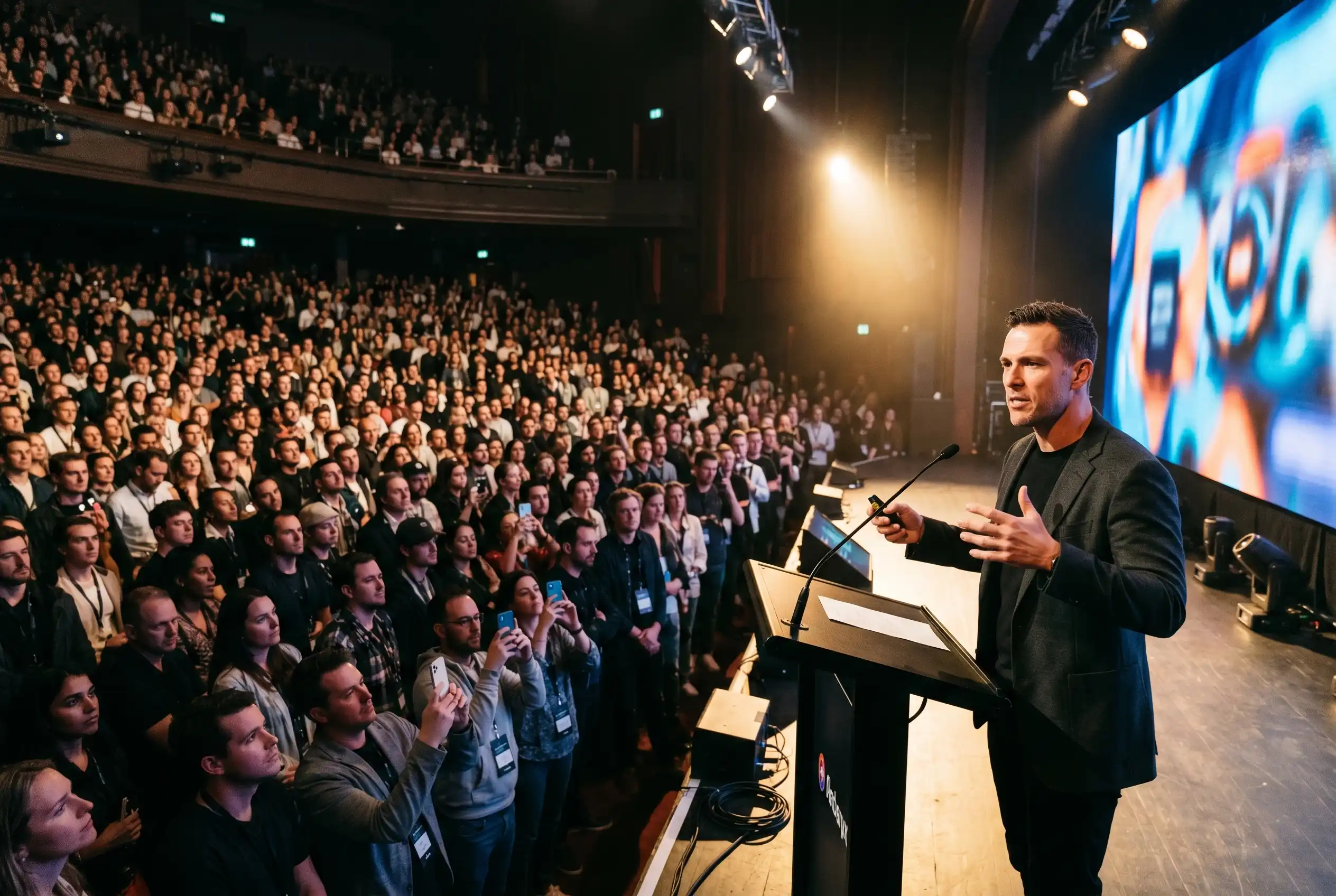
More than 1,200 marketing, creative, product, growth and technology professionals packed the Smolarz Auditorium at Tel Aviv University on the morning of June 4, 2026, for Creatives & Conversions TLV III on June 4 at Tel Aviv University, the third edition of the Israeli tech marketing conference built around one question: what does growth look like after the AI tool release cycle has stopped being the story.
The event, organized by Growth Marketing Pros, ran from 8 a.m. to 4 p.m. under the framing line that emerged from the main stage and the hallway conversations alike: less chasing the next new tool, more rebuilding the operating muscle that lets a marketing team keep producing when the rules change every quarter. As Ynet News reported, the year’s focus was “less on technology for its own sake and more on how marketing teams can work, create and generate growth in an environment where the rules are changing quickly.”
Organizer Roy Naar set the tone with a satirical opening film titled “Marketing in 2026 is…weird.” The satirical opening film Roy Naar commissioned for the conference was written by Ronen Harten, directed by Roni Kleiner as AI creator, and produced in collaboration with Evyatar Rosenberg, Oren Hadash and Daniel Atzil. Naar framed the piece as a way to “touch that nerve, laugh at the madness, and imagine where all of this might take us.”
The Conference Where the AI Hype Lost the Room
For a few years running, the question that dominated Israeli marketing meetups was the same one: which AI tool had just been released, and how fast could a team wire it into the workflow. The 2026 edition of Creatives & Conversions TLV marked the moment that question stopped being the headline. The headline in 2026 was what marketers actually do once the tool layer stops being the differentiator.
That shift showed up in the talk slate. Ten speakers from Navan, Meta, Natural Intelligence, McCann, Connecteam, Wiz and Figma took the Smolarz stage, sharing case studies, lessons from campaigns and the practical playbooks they run day to day. Eleven hands-on workshops ran alongside the main stage. The two tracks shared a common brief: bring the audience something they could use on Monday, not a tour of the latest demos.
Naar used the opening film to acknowledge the chaos directly. The two-minute piece, a satirical take on the marketing industry’s near-future, opened the day and the room laughed because the jokes were already inside their dashboards. The credited team, director and AI creator Roni Kleiner, concept and screenwriter Ronen Harten, and supporting AI creators Evyatar Rosenberg, Oren Hadash and Daniel Atzil, treated the AI wash that has flattened so much marketing output as the subject, not the solution.
Marketing in 2026 is…weird. For the opening of Creatives & Conversions TLV conference, we wanted to touch that nerve, laugh at the madness, and imagine where all of this might take us.
Naar credited the framing in a post on LinkedIn, where he described the piece as “a completely satirical take on our industry and the next few years.” The post is dated to the week of the event, and it carried the day.
From New Tool Announcements to Growth Playbooks
Read across the agenda, the 2026 conference treated AI as table stakes, not the topic. Speakers talked about trust, community, employee creators, and the post-click journey as if those were the only conversations worth having. The Creatives & Conversions TLV III event page bills the day as “the #1 event for creative, brand & performance marketing in Israel,” and the program backed that up with stage sessions plus hands-on workshops, breakfast and brunch included.
The Catalyst Startups area, a new addition for the 2026 edition, was a platform for 10 Israeli startups working in marketing and AI. The initiative was intended to expose early-stage companies developing tools for marketers and connect them with industry professionals. The move signals where the room sees the gap: not in another general-purpose LLM, but in the marketing-specific tools that sit on top of the model layer.
The other gap the room named out loud was the post-click journey. Jonathan Nimrodi, head of growth initiatives at Meta, told the audience that 85% of tech companies send their traffic into one single type of conversion funnel, “disregarding demographics, intent levels and evolving buying trends.” His session, titled “The Art & Science of Discovery Funnel Design: Lessons from Meta,” introduced what the agenda called the 2027 Discovery Playbook, framed as a shift from static, linear experiences to conversational systems. The diagnosis was shared by marketers from sectors as different as cybersecurity, fintech, and HR software.
\p>
The wider lens on the same shift has been tracked outside the room as well. Mind Cron’s recent piece on AI reshaping B2B marketing documents the same buyer-side behavior change, with Forrester data showing 94% of B2B buyers now using AI in their purchase process. The Tel Aviv conversation and the B2B data point at the same displacement: AI is moving upstream of the campaign, and the campaign has to follow.
The 2026 Conference by the Numbers
- 1,200+ marketing, creative, product, growth and technology professionals attended
- 10 speakers from Navan, Meta, Natural Intelligence, McCann, Connecteam, Wiz and Figma took the main stage
- 11 professional workshops ran alongside the main stage
- 10 Israeli startups in marketing and AI occupied the new Catalyst Startups area
- 85% is the share of tech companies Nimrodi said still route all traffic into a single conversion funnel
What the Ten Speakers Actually Said
The full Creatives & Conversions TLV III agenda lists eight named individual talks on the main stage. Across all of them, two threads carried the day: the trust problem created by AI-saturated creative, and the rise of internal people as the most reliable content engine a B2B brand has.
On trust, Molly Aviva, director of marketing strategy at Navan, framed the testimonial for the 2026 buyer. Her title was “The testimonial for testimonials,” and her point was that “testimonials became boring. Fake-stimonials became old, quick. And UGCs are losing credibility.” Attendee recap posts on LinkedIn captured the line the room kept quoting from her talk: over half of people pull away the moment they sense a piece was made by AI, so the first thing a buyer wants answered is whether they can trust the source.
On people, Maya Doron, growth marketing manager at Wiz, walked through how the cybersecurity company built its social channel to 400,000+ followers. Her talk, “From 0 to 400K+ Followers (And Having Fun Along the Way),” leaned on a simple idea: the strongest content comes from inside the company, from real people and small wins worth marking, with no gate around the best material. Jonathan Nimrodi from Meta added the funnel-design piece. Neta Kimhi, marketing director of Figma Weave, closed the acquisition-story thread with the case study of Weavy’s four months from $0 to Figma, a community-led growth path that ran from zero paid budget to a Figma acquisition in under half a year. Nitay Fisher, creative lead at Connecteam, opened the afternoon with the honest-conversion framework, a counter-intuitive response to the usual persuasion playbook.
Eight Talks, One Line Each
| Speaker | Company | The Line the Room Kept Quoting |
|---|---|---|
| Shlomo Genchin | Unbore | B2B creative does not have to be boring; visual analogies make complex problems instantly relatable |
| Neta Kimhi | Figma Weave | Community-led growth can become an entire distribution channel |
| Maor Chen | McCann6 | Most B2B ads sound exactly the same right now |
| Molly Aviva | Navan | Trust matters more at the top of the funnel than many marketers realize |
| Daniel Zikry | Natural Intelligence | Hand the repetitive tasks to AI and protect the human thinking |
| Jonathan Nimrodi | Meta | Static landing pages are becoming the weakest link in many funnels |
| Nitay Fisher | Connecteam | Find the topic in your vertical that everyone else avoids |
| Maya Doron | Wiz | Put your people at the center of your marketing |
The Honest Conversion Playbook and the New Startup Floor
Nitay Fisher’s Connecteam talk, “The Honest Way to Convert,” is the cleanest example of the room’s new center of gravity. The usual conversion playbook focuses on convincing people to buy. Fisher’s playbook does not. “When customers say ‘We don’t need this,’ the instinct is to convince. We chose to agree.” What began as a counter-intuitive response to a customer objection evolved into a high-performing campaign, and Connecteam’s creative lead walked the audience through how the approach becomes a repeatable framework.
The Catalyst Startups area, detailed on the Catalyst Startups showcase on the Creatives & Conversions TLV III agenda, occupied the second floor during the breaks. The 10 startups in the area were curated around growth, creative and marketing technology, and the showcase ran alongside the main stage sessions. The addition tells the story of the day on its own: the marketers in the room wanted a window into the tooling being built for them, not another panel on which foundation model had shipped the freshest features.
What an Honest Conversion Playbook Looks Like in Practice
- Find the topic in your vertical that everyone else avoids, and make a campaign out of it
- Stop trying to convince people to buy the product; turn real customer objections into real results
- Take what people troll the company about online and turn it into a campaign
- Repeat the framework across objection types; let the refusals carry the message
Why Roy Naar Is Betting on In-Person in 2026
Naar is the founder of Growth Marketing Pros, a community of thousands of tech marketers in the Israeli ecosystem, and the former vice president of marketing at Oribi, the Israeli marketing analytics company acquired by LinkedIn. Creatives & Conversions TLV is the community’s flagship conference, and the 2026 edition was its third running.
The bet, in plain terms, is that an in-person community still earns its keep when most business communication runs through Zoom, LinkedIn and WhatsApp. Attendee testimonials from Creatives & Conversions from earlier editions show the pattern Naar is after, with one past attendee calling the event “a solid 10/10” and another describing it as “the most valuable marketing conference” they attend. Naar and the Growth Marketing Pros team, per Naar, plan to keep running the conference and the year-round meetup program regardless of which tools replace which inside the marketers’ stacks.
Frequently Asked Questions
What is Creatives & Conversions TLV?
Creatives & Conversions TLV is an annual conference for Israeli tech marketers organized by Roy Naar’s Growth Marketing Pros community. The 2026 edition, the third in the series, focused on creative, brand, content, growth and performance marketing in the AI era.
When and where did the 2026 edition take place?
Creatives & Conversions TLV III was held on June 4, 2026, from 8 a.m. to 4 p.m. at the Smolarz Auditorium on the Tel Aviv University campus.
Who spoke at Creatives & Conversions TLV III?
Ten speakers from Navan, Meta, Natural Intelligence, McCann, Connecteam, Wiz and Figma took the main stage, with Shlomo Genchin (Unbore), Neta Kimhi (Figma Weave), Maor Chen (McCann6), Molly Aviva (Navan), Daniel Zikry (Natural Intelligence), Jonathan Nimrodi (Meta), Nitay Fisher (Connecteam), Maya Doron (Wiz), and director duo Noam Sharon and Tal Rosenthal among the named speakers on the official agenda.
What was the main theme of the 2026 conference?
The 2026 program shifted from showcasing new AI tools to how marketing teams can keep growing, building trust with buyers, and running repeatable creative playbooks in an environment where the rules change every quarter.
Who organized Creatives & Conversions TLV III?
The conference was organized by Roy Naar, founder of the Growth Marketing Pros community and former vice president of marketing at Oribi, the Israeli marketing analytics company acquired by LinkedIn.