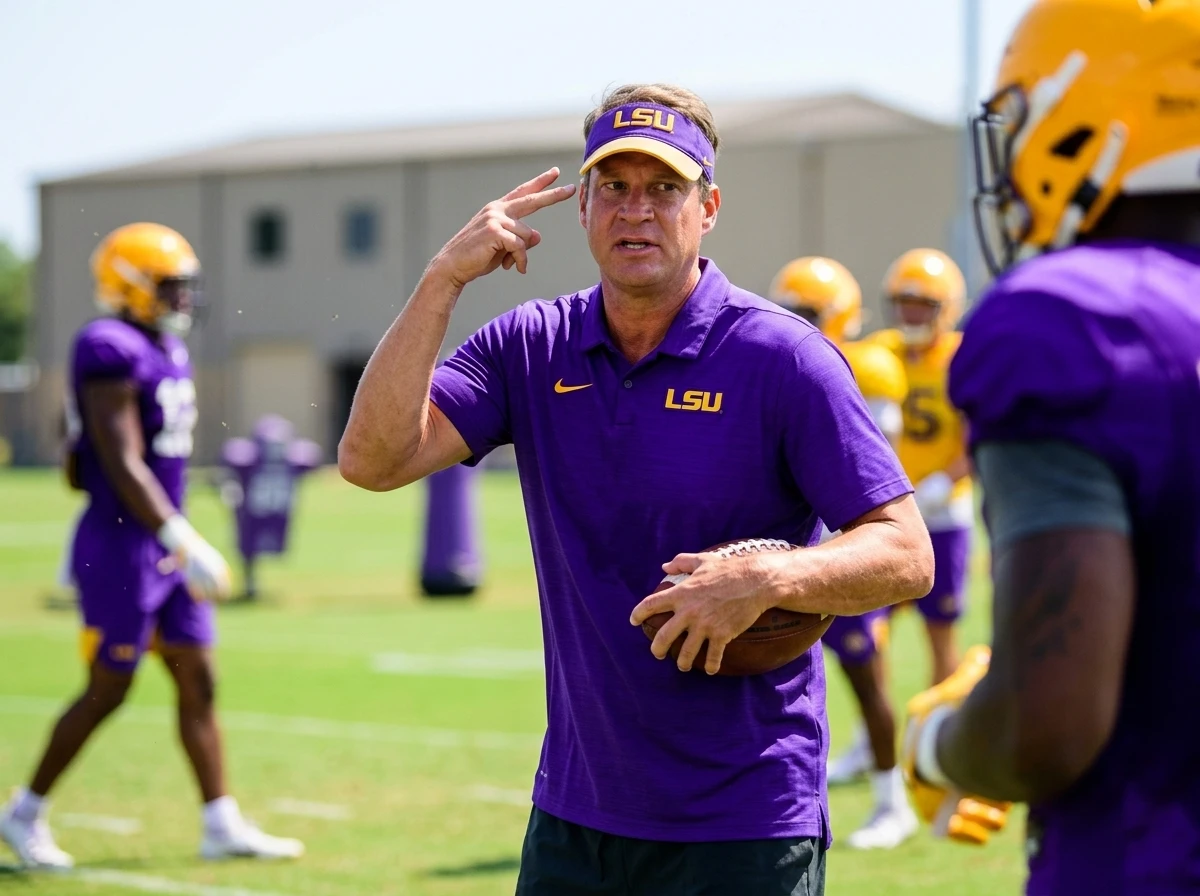
Dae’Quan Wright was waived by the Cleveland Browns with LSU agreement in place after a Louisiana temporary restraining order restored his college eligibility. The former Ole Miss tight end becomes the clearest early case of an NFL training-camp cut circling back to campus under Lane Kiffin.
The move lands days before LSU’s Sept. 5 opener against Clemson and exposes the new scoreboard in college football: who gains the talent and who absorbs the cost.
The Waiver Clears a Path to Baton Rouge
Agents Drew Rosenhaus and Kyle Lincoln told ESPN that Wright has a 2026 deal with LSU if he clears NFL waivers. He signed undrafted with the Philadelphia Eagles after the draft, then was claimed by Cleveland on Aug. 11. He dressed but did not play in the Browns’ second preseason game and had been sidelined by injury.
Browns coach Todd Monken called the situation “crazy” and said he wondered why Kiffin had reached out a week earlier. Kiffin later said he does not know Monken and has no phone number for him.
Wright played two seasons under Kiffin at Ole Miss. In 2025 he posted 39 receptions for 635 yards and five touchdowns. He graduated high school in 2022 and had exhausted eligibility under the old rules.
- 39 catches, 635 yards, 5 TDs for Ole Miss in 2025
- First known player with an NFL free-agent deal then a firm college return agreement
- LSU also added former Ole Miss DL Zxavian Harris (waived by Saints) and Notre Dame DE Junior Tuihalamaka
More than 40 transfers have already joined Kiffin’s first LSU roster, ranked No. 11 in the preseason AP poll.
How a Louisiana TRO Rewrote the Calendar
Wright belongs to a group of roughly 33 athletes, 16 of them football players, who won a temporary restraining order in Louisiana’s 19th Judicial District Court. Judge Will Jorden’s order let them reclaim a fifth season and enter a short transfer portal window.
- June 2026: NCAA adopts age-based model giving most athletes up to five years of eligibility starting with later classes.
- Mid-August 2026: Plaintiffs sue, arguing the new rules left the 2022 high-school class without the fifth year granted to those who follow.
- Aug. 19-20: TRO granted; players enter portal, including Wright, Harris, TJ Harden and others cut or still in NFL camps.
- Aug. 23: Wright waived by Browns; LSU agreement announced.
- Aug. 31: Full court hearing scheduled.
A separate federal ruling that briefly opened the door for the entire class was stayed by the Tenth Circuit. The state-court TROs remain in force for the named plaintiffs. The new age-based five-year eligibility rules start the clock at initial full-time enrollment or the academic year after an athlete’s 19th birthday, whichever comes first, and eliminate most redshirt and waiver categories. Athletes who used their final season in 2025-26 received no automatic extra year.
Kiffin Makes No Apology for Recruiting the Available
Kiffin defended the decision at a Monday news conference. He noted that other coaches are doing the same.
At the end of the day, because of these rulings, they’re either going to play for you or they’re going to play for someone else around the country. So we’ve made the decision to recruit them like probably most people are.
Lane Kiffin, LSU head coach, news conference
He added that it is “really wrong to be critical of these kids” because a judge ruled they were wronged by the NCAA and should have had the fifth year all along. In general he does not believe NFL players should return, but “every circumstance should be looked at differently.” His job, he said, is to LSU and the people who hired him.
The SEC answered the same day. Presidents and chancellors issued a statement: individuals who leave college athletics, sign professional contracts and compete professionally “should not then be permitted to return to college competition.” Commissioner Greg Sankey had earlier filed an affidavit calling such returns a source of disruption that harms high-school prospects and teams that followed the rules. SEC leaders were scheduled to meet in Birmingham this week.
Wright’s College Résumé and the Spot He Takes
Wright caught four passes for 66 yards in Ole Miss’s 24-19 win over LSU last September. He also produced against Tulane in both the regular season and the College Football Playoff. Fans in Baton Rouge will welcome the production. Players already on the LSU depth chart may see a roster spot shrink.
| Player | Prior School | NFL Stop | 2025 College Stats (key) |
|---|---|---|---|
| Dae’Quan Wright | Ole Miss | Eagles/Browns | 39 rec, 635 yds, 5 TD |
| Zxavian Harris | Ole Miss | Saints (waived) | Defensive line contributor |
| Junior Tuihalamaka | Notre Dame | None listed | Defensive end |
| TJ Harden | SMU | NFL camp | Running back |
SEC intra-conference transfer rules normally require notice inside the regular window. Wright’s path is from the Browns, not directly from Ole Miss, so the technical route differs. Whether the conference enforces additional limits remains open.
Who Banks the Gains and Who Absorbs the Cost
Players win immediate leverage and another season of NIL money plus exposure. Blue-blood programs with deep collectives and high-profile coaches can absorb the sudden arrivals and pay competitive rates. Kiffin arrived at LSU on a seven-year deal worth roughly $13 million per year after leaving Ole Miss in late November 2025 while the Rebels were still in the playoff. He is paid to win big, and he is using every available avenue.
- Proven college producers regain a season after NFL camps cut them
- Power programs add instant depth without waiting for the next portal window
- Coaches hired to win face little internal pressure to decline legal talent
- Mid-major and Group of Five programs lose both talent and recruiting footing when the same players choose higher-resource destinations
- High-school seniors and earlier enrollees compete against older, pro-experienced bodies for the same scholarships and NIL dollars
The same pattern appears in basketball. LSU’s Will Wade has pursued international and G-League veterans while waiting on rulings for undrafted players. Alabama’s Nate Oats drew criticism for similar moves. The common thread is coaches doing the job they were hired to do inside the rules that currently exist.
Cash Still Fills the Stands Even as Balance Tilts
Critics warn the brand of college football suffers. Attendance data and ticket demand so far say otherwise. Home fans of the schools that land these players show up louder. Rival fans show up to boo. Both groups buy tickets. The Crescent City Sports piece that first framed the Wright case noted exactly that dynamic: the common denominator is that they will show up.
College programs can already outbid the NFL for free agents who are long shots to make a roster. The incentive for some players becomes getting cut early so the college money starts sooner. Collectives and revenue-sharing deals keep expanding. At some point the money may tighten for schools without massive donor bases or media rights, the same way LIV Golf eventually strained even deep pockets. For now the dollars still roll downhill toward the programs already positioned to spend.
Kiffin and Wade are not inventing the system. They are operating inside the one the courts, the NCAA’s staggered rule change, and unrestricted NIL have built. Players crossed into paid status years ago. Coaches have always been free agents. The pendulum simply swung until the athletes held matching power. The next hearing is Aug. 31. The season starts Sept. 5. Wright is expected in Baton Rouge once the waiver process finishes. LSU will be better on paper. Someone else’s roster will be thinner. That is the trade the current rules produce.