Google will cut up to £850 off the new Pixel 11 Pro until 1 September when buyers trade in a qualifying phone, dropping the £1,079 flagship as low as £229 for owners of a top-spec recent iPhone. The four-model Pixel 11 family reaches shelves on 20 August after pre-orders opened 12 August.
The offer stacks a £400 bonus on standard trade-in value and applies to the Pro, Pro XL and Pro Fold. It leaves unlocked switchers from Apple and Samsung holding the clearest win while 36-month contract buyers face higher total costs.
The window is short and the peak credit is narrow. Anyone already holding a recent high-storage flagship can lock in the deepest cut before the bonus disappears; everyone else still sees a useful discount, just not the headline figure.
How the £850 trade-in actually works
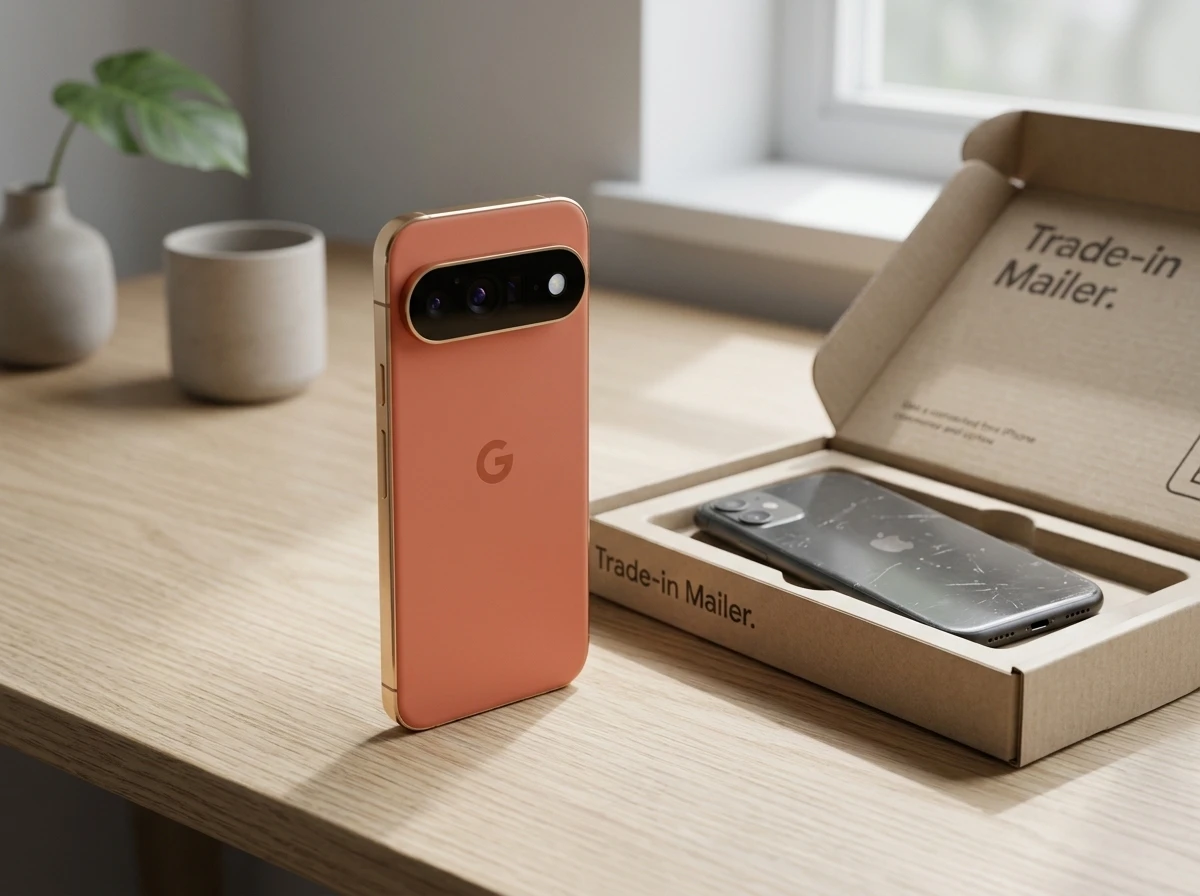
Add a Pixel 11 Pro or Pro XL to the basket on the Google Store, select the old handset, and the site shows an estimated credit that already includes the £400 bonus. Eligible customers can take the credit instantly at checkout; everyone else receives it after inspection.
- £1,079 starting price for Pixel 11 Pro (256 GB)
- £400 promotional bonus on top of base trade-in value
- Up to £850 total credit for a 1 TB iPhone 16 Pro in good condition
- Offer ends 11:59 pm on 1 September while stocks last
Google posts a prepaid label with the new phone. The old device must arrive within 30 days of the new one. After PCS Wireless inspects it, final value is confirmed by email within five working days. Condition must match the estimate or the credit is adjusted.
The process is linear once the order is placed. Miss the return window or send a handset in worse shape than declared and the final figure moves, sometimes sharply.
- At checkout: estimate appears with the £400 bonus already baked in; instant credit for eligible buyers
- With the new phone: prepaid label arrives so the old device can ship back
- Within 30 days: old handset must reach PCS Wireless
- Within five working days of inspection: final credit confirmed by email, or adjusted if condition differs
The same page lets buyers save up to £850 with eligible trade-in and also offers up to £80 off the Pixel Watch 5 plus six months of Google AI Pro for new users.
Who actually clears the maximum credit
The headline £850 figure requires a recent high-storage flagship in solid shape. Lower models and older phones still return useful money but fall well short of the peak.
| Trade-in device (good condition) | Approx. total credit toward Pixel 11 Pro (UK estimate incl. bonus) |
|---|---|
| 1 TB iPhone 16 Pro | Up to £850 |
| iPhone 13 Pro Max | Around £645 (user-reported) |
| Recent Galaxy S Ultra / Z Fold | £600-£800 range |
| Pixel 9 Pro / 10 Pro | £500-£600 range |
| iPhone 11 or older mid-range | £150-£300 range |
US store values published by 9to5Google top out near $1,000 for a Pixel 10 Pro Fold or Galaxy Z Fold 7 toward the Pro models, with an iPhone 17 Pro Max at $900. UK figures track the same hierarchy: premium recent Apple and Samsung devices unlock the deepest cuts. Older Pixels and budget phones still beat scrap value but leave the buyer paying most of the £1,079 sticker.
One X user noted an iPhone 13 Pro Max quote of £645 toward a Pro XL and called it “hard to say no to.” Another with store credit and trade-in calculated a Pro XL landing near £370. Those are the winners. Holders of a cracked five-year-old handset see far smaller numbers.
In short, the ladder is steep. A top-tier recent Apple or Samsung device clears the ceiling; a mid-range or ageing phone still helps, yet the buyer covers most of the flagship price.
Unlocked maths versus 36-month contracts
Daily Star and other UK outlets ran the Sky Mobile example: a 25 GB Pixel 11 Pro plan at £30 a month plus £12 up front over 36 months totals £1,092 before any mid-contract rise. Add a proper unlimited airtime plan and the lifetime cost climbs past £1,800. Google’s cash purchase after max trade-in sits hundreds lower even after adding a separate SIM.
| Purchase path | Approx. outlay |
|---|---|
| Sky Mobile 25 GB, 36 months | £1,092 before mid-contract rises |
| Unlimited airtime on a long contract | Past £1,800 lifetime |
| Google Store after max £850 trade-in | As low as £229 plus a separate SIM |
| giffgaff unlimited SIM-only | From £14 on 18-month terms or £20 rolling |
giffgaff currently lists unlimited SIMs from £14 on 18-month terms or £20 rolling. Mobiles.co.uk and iD Mobile bundle the phone with a free Pixel Watch 5 and case on selected tariffs, yet the total still exceeds the Google Store route once trade-in is applied. Vodafone advertises its own trade-in guarantees up to £710 on the Pro plus airtime discounts, but the Google direct path remains the lowest cash outlay for anyone already holding a high-value phone.
The phone ships unlocked, so the buyer chooses any SIM-only deal. That flexibility is part of the win for switchers who already own the right trade-in.
Heavy data users who want one monthly bill may still prefer a carrier bundle. For pure cash cost after a strong trade-in, the unlocked Google Store path stays ahead.
What the Pixel 11 Pro actually delivers
Google’s launch post details the Tensor G6 and camera upgrades that power the Pro models. The chip brings 25 percent faster web browsing and 15 percent quicker app launches versus the G5, plus 50 percent more TPU compute that runs on-device Gemini Nano tasks up to 3.5 times faster while using less energy. A Titan M3 security chip adds post-quantum cryptography to secure boot.
Key hardware points include:
- 6.3-inch Super Actua display peaking at 3,600 nits with anti-scratch coating more than twice as resistant as last year
- 50 MP main, 48 MP ultrawide, 48 MP 5x telephoto with Pro Zoom to 120x and 8K video
- Magic Capture that simultaneously records photo sequences and video of moving subjects
- Night Sight now up to 4.5 times faster
- IP68 rating, Gorilla Glass Victus 2, up to 16 GB RAM, 256 GB-1 TB storage, 30+ hour battery claims, Pixelsnap and Qi2.2 wireless charging
- Seven years of OS, security and Pixel Drop updates plus six months of Google AI Pro on Pro models
Those gains cluster around silicon, sensors and software polish. The design stays familiar, so the money is going into speed, zoom reach, night performance and on-device AI rather than a new shape.
Android Central’s early look called the Pro models “spectacular” for convenience and tools yet noted they are “basically the exact same models as last year” in overall design, with buyers mainly paying for the silicon, camera sensors and software. Colours run Canyon, Fog, Olive and matte Obsidian. The base Pixel 11 starts at £879 with a smaller bonus structure (up to £650 total in some reports).
Related coverage on the site has already examined the Pixel 11 Pro Fold durability focus and how the Tensor chip still trails Qualcomm in raw benchmarks even after the process switch.
The switch path and what Gemini adds
Google emphasises an easy transfer tool and the fact that the handset works with any network. HiLight, the coloured LED ring around the rear flash on Pro models, glows for Gemini listening/thinking states and can be set to custom colours for five priority contacts so the phone stays face-down yet still signals important calls. Full details on that limited feature sit in the site’s earlier HiLight glows for Gemini and five friends piece.
Gemini is woven through the camera (Circle to Search inside the viewfinder), messaging and system tasks. Counterpoint Research’s 2026 AI privacy scorecard, cited by Google, ranked the Pixel experience highest among major flagships for out-of-the-box privacy controls.
I can currently trade my iPhone 13 Pro Max for a Pixel 11 Pro XL and get £645 for it. That’s a great deal and one that’s hard to say no to. Google done well, IMHO.
Steve Perry posted that calculation on X shortly after pre-orders opened. Similar maths appears across UK and European threads: owners of late-model Apple or Samsung phones treat the net price as the decisive factor.
Transfer friction is low, the network lock is absent, and Gemini shows up in daily tools rather than as a separate app. For switchers weighing more than the sticker, those pieces matter alongside the trade-in credit.
The Calendar That Frames the Whole Offer
Three public dates and two post-purchase deadlines shape who can use the deal and how long the risk window lasts.
- 12 August: pre-orders opened on the Google Store
- 20 August: phones reach shelves and start shipping to retail
- 1 September, 11:59 pm: £400 bonus and peak trade-in values end while stocks last
- 30 days after the new phone: old handset must arrive for inspection
- Five working days after inspection: final credit confirmed by email
Buyers who order early still face the same inspection rules as latecomers. The September cutoff only removes the promotional bonus and the highest quoted credits; the underlying trade-in path continues on standard terms.
That calendar also explains the urgency in UK and European threads. Once the bonus drops away, the same iPhone 16 Pro or Galaxy Ultra no longer clears £850, and the unlocked cash advantage shrinks toward ordinary trade-in maths.
Where Carrier Bundles Still Change the Sum
The Google Store route wins on pure cash after a strong trade-in, yet several carrier extras still move the comparison for certain buyers.
- Mobiles.co.uk and iD Mobile pair the phone with a free Pixel Watch 5 and case on selected tariffs
- Vodafone offers trade-in guarantees up to £710 on the Pro plus airtime discounts
- Long contracts can fold handset and unlimited data into one monthly bill
- Google’s path still needs a separate SIM, with giffgaff unlimited options from £14 or £20
A free watch and case have clear value if the buyer wanted those accessories anyway. A single bill appeals to heavy users who dislike juggling handset finance and airtime. Those perks do not erase the gap when someone already holds a phone that clears the full £850, but they narrow it for shoppers starting from a weaker trade-in or no trade-in at all.
Unlocked flexibility remains the other half of the Google pitch. After the handset arrives, any SIM-only deal can sit underneath it, and the buyer can switch networks without waiting out a handset lock.
Offer clock and the remaining catches
The £400 bonus and peak values disappear after 1 September. Google’s own trade-in process and prepaid label pages spell out the 30-day return window, the single-device-per-order rule, and the requirement that the handset power on, be factory-reset and free of swollen batteries or reported theft. Final credit can drop if the physical condition is worse than declared; if it falls below 75 percent of estimate the device is returned and the original payment is charged.
Buyers still need a separate SIM. Carrier bundles can include free watches or higher data allowances that change the comparison for heavy users who prefer one monthly bill. And the phone itself is an iterative step: brighter glass, faster chip, better zoom and AI polish rather than a radical redesign. For someone already carrying a high-value recent flagship, the arithmetic still lands in Google’s favour before the September cutoff. For everyone else the gap narrows quickly.
Pre-orders are live now. The phones themselves start shipping and hitting retail on 20 August.