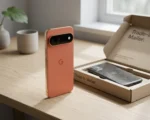
Google opened Google Store Omotesando on August 13 inside Tokyu Plaza Omotesando Omokado, its first directly operated retail location outside the United States and its largest anywhere. The three-floor, 1,158-square-meter space sells the new Pixel 11 series, Pixel Watch, Fitbit and Nest devices while running live AI demos and same-day repairs, timed to the 25th anniversary of the company’s first overseas office in Tokyo.
Mauria Finley, vice president of Google Store, framed the choice plainly at the opening. “Japan is a highly critical market for the Google Pixel portfolio, where we are seeing rapid and enthusiastic growth in users,” she said. The company is treating the store as more than a shop: feedback from every interaction here will help guide future Google stores worldwide.
Why Tokyo became the first stop outside America
Google began physical retail only in 2021 with a Chelsea store in New York and now runs ten U.S. locations. Japan is the rare market where its hardware already ranks second. MM Research Institute put Google’s smartphone shipment share at 12.7 percent for fiscal 2025, behind Apple’s 51.6 percent but ahead of Samsung. Counterpoint Research recorded that Google Google surpassed Samsung to rank No. 2 in Japan in February 2026, lifted by the Pixel 9a and carrier return programs that cut upfront cost.
Statcounter’s July 2026 vendor data shows Google near 10.7 percent and Samsung near 6 percent on the usage side. That footing, plus the 2001 Tokyo office anniversary, made Omotesando the logical first overseas flagship. The district already hosts an Apple Store and Samsung’s Galaxy Harajuku, so the bet sits in plain sight of the competition.
Shipment share and usage share tell slightly different stories, yet both put Google clearly ahead of Samsung and far behind Apple. The gap is large enough to justify a flagship and small enough that every retail edge still matters.
| Measure | Apple | Samsung | |
|---|---|---|---|
| Shipments, fiscal 2025 (MM Research) | 12.7% | 51.6% | Behind Google |
| Usage, July 2026 (Statcounter) | Near 10.7% | – | Near 6% |
| Rank in Japan, February 2026 (Counterpoint) | No. 2 | No. 1 | Passed by Google |
Those figures also explain the calendar. Opening one day after the Pixel 11 launch let the company stock the new line on day one rather than backfill an older assortment later.
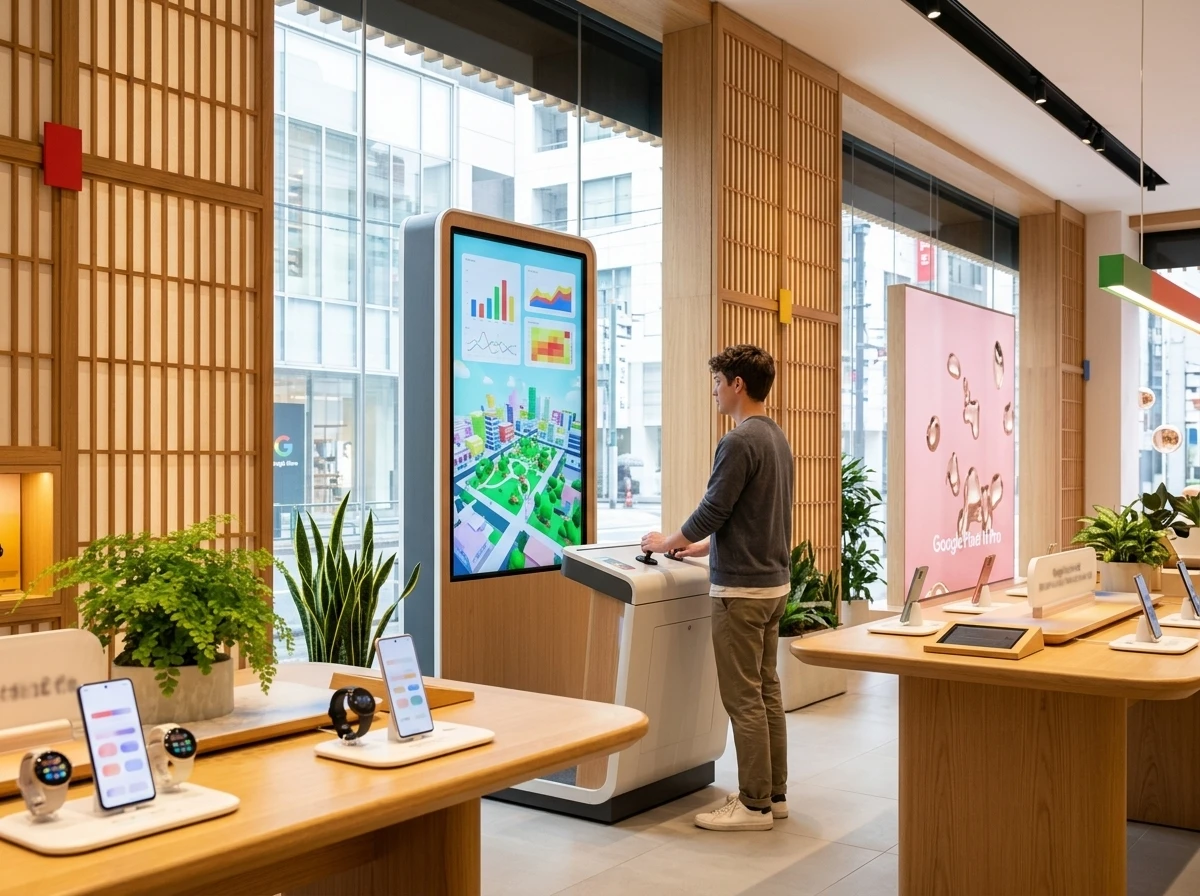
Three floors built for hands-on Pixel and AI
The exterior uses warm wood and latticework inspired by traditional Japanese lanterns. Inside, the layout separates shopping, experimentation and support.
| Floor | Name | Main features |
|---|---|---|
| 1F | Experience and sales | Pixel 11 series hands-on, watches, earbuds, cases, exclusive accessories from recycled watch-band scraps priced at 5,500 yen, cashless handheld checkout, online-order pickup |
| 2F | Pixel Studio | AI avatar ID cards from selfies, Nano Banana character prints, Veo video generation, Project Genie joystick worlds, workshop space for up to 30, Japan-exclusive merch |
| B1F | Here to help | Free troubleshooting, Pixel phone repairs (6a and newer) and Pixel Watch 4+ often finished in two hours if parts are stocked, setup help, sustainability displays |
Hours run 10 a.m. to 8 p.m. daily. Limited opening novelties were handed out in the first days. Direct retail of Google phones is new for Japan; until now owners relied on carriers or online orders for both purchase and service.
The floor split is deliberate. Sales stay on the ground level where foot traffic converts quickly. Experimentation occupies the middle floor so demos do not block checkout. Support goes below street level, where longer repair visits will not crowd browsers. Cashless handheld checkout and online-order pickup further reduce counter queues on the sales floor.
At 1,158 square meters across three levels, the Omotesando site is the largest Google Store yet. Scale lets the company run workshops for up to 30 people without shutting down the demo booths that draw casual visitors.
Pixel Studio turns research prototypes into public play
The second floor is the clearest statement of the bet. Visitors create avatars on physical Pixel 11 phones and walk out with ID cards. High-tech purikura booths powered by Nano Banana turn selfies into ukiyo-e prints, 8-bit scenes or Harajuku Lego figures and spit out short AI videos. Veo drives sticker-style video experiences.
The standout is Project Genie. Guests type a text prompt describing a world and a character, then navigate the generated environment in real time with a joystick. The Project Genie research prototype details describe it as a Google Labs experiment built on Genie 3 that lets users sketch, explore and remix interactive worlds. In the store it is free for anyone who walks in, not limited to Ultra subscribers.
- Avatar station: selfie to custom ID-card character
- Nano Banana booths: style-transfer prints and videos
- Veo-powered motion stickers
- Project Genie: prompt-to-navigable 3D world
- Workshop area for device and service classes
Early visitors on X described the Genie booth as “domain expansion” level after generating skater-filled Omotesando scenes from short prompts. The same crowd noted the warm timber interior feels less clinical than the stone-and-glass Apple Store a short walk away, and quieter in the opening week.
Making Genie free at the door removes the usual trial barrier. Visitors do not need an Ultra plan or a pre-booked lab slot. They type a prompt, take the joystick, and leave with a concrete memory of what the model can do. That public stress test is harder to run online, where latency, device limits and account walls filter who ever tries the prototype.
How Pixel reached second place in an iPhone country
Apple still owns more than half the Japanese smartphone market by most tallies. Google’s climb rests on mid-range hits, carrier installment-and-return deals that can drop effective device cost near ¥1 per month plus fees, and consistent software updates. Yoko Miyashita, senior consultant at Counterpoint Research, said Google combined competitive pricing with those carrier programs, though tighter subsidy rules and memory costs could slow the run later.
The store’s repair desk closes a practical gap. Pixel owners previously lacked an official walk-in service point. Two-hour glass and battery jobs, when parts are ready, turn a purchase into a longer relationship. Exclusive recycled-band accessories and Japan-only merch give local collectors a reason to visit even if they already own the phone.
Carrier return programs did the heavy lifting on price. The store now has to prove ownership is easy after the first payment. Same-day parts work, free troubleshooting and setup help are the retail answer to that second half of the sale.
- Mid-range models such as the Pixel 9a widened the buyer pool
- Installment-and-return deals cut effective cost near ¥1 per month plus fees
- Long software support reduced the risk of buying outside the Apple ecosystem
- Walk-in repairs remove the old carrier-or-mail-in service bottleneck
Twenty-five years after the first Tokyo office
Google opened its first overseas office in Shibuya in September 2001. The company has stayed in the city ever since, now based at Shibuya Stream. Hardware retail arrived late. After pop-ups, the permanent U.S. chain began in Chelsea in 2021 and expanded to Brooklyn, Boston, Washington, Miami, Austin, Oakbrook, Santa Monica, Mountain View and San Diego. Google’s full list of store locations still showed only those ten until Omotesando.
- September 2001, First overseas office opens in Tokyo
- June 2021, First permanent Google Store debuts in Chelsea, New York
- 2023-2025, Additional U.S. stores open on both coasts and in the Midwest
- August 12 2026, Pixel 11 series launches at Made by Google event
- August 13 2026, Google Store Omotesando opens as 11th store and first outside the U.S.
The anniversary timing is deliberate. Finley said the company looks forward to learning from every interaction in Omotesando to shape stores everywhere else.
A quarter-century of local presence means the company already understands Japanese carrier rules, payment habits and design taste. The store does not have to introduce Google as a brand. It only has to prove that Google hardware can be bought, tried and fixed in person at the same standard shoppers already expect from the neighbors on the street.
What the neighborhood already offers
Omotesando and Harajuku already function as a live electronics showroom. Apple’s nearby store draws constant queues. Samsung’s Galaxy Harajuku runs its own experiential programming. Google’s arrival completes a three-way presence on the same stretch of trend-setting real estate. The new store’s scale and free AI labs match or exceed the neighbors’ experiential floors, according to local coverage.
For hardware fans the comparison is practical. Someone testing foldables can walk between the Pixel 11 Pro Fold on Google’s first floor and the latest Galaxy Fold a few minutes away. That density is unique even among global flagship districts.
Side-by-side shopping raises the bar for every demo. If Genie sessions feel slow, visitors will notice within minutes of leaving Galaxy Harajuku. If two-hour repairs hold when parts are stocked, that speed becomes a talking point Apple and Samsung must answer on service, not only on screens.
The feedback loop that makes the bet worth running
Finley’s second quote is the operational core: customer interactions and feedback from this location will guide the future of Google stores worldwide. Japan gives Google a high-volume, high-expectation audience that already buys Pixel in meaningful numbers. The AI booths surface which prototypes feel magical and which feel slow. The repair desk surfaces real failure rates and wait-time tolerance. Workshops reveal which features need better onboarding.
That data is hard to collect online. It is also hard to collect in the U.S., where Pixel remains a smaller share. Tokyo supplies the missing middle: enough volume to matter, enough enthusiasm to stress-test the experience, and enough competition to keep standards high. Early social posts already show visitors traveling from outside Tokyo specifically for the Studio, treating the store as a destination rather than a quick pickup point.
The same hardware line that stocked the shelves also appears in other comparisons on this site, including why the aging Nest Hub still holds its own against newer speakers. The AI layer on display connects to broader work such as Gemini’s agent capabilities under new rules.
Repairs and Merch Turn Buyers into Regulars
Until Omotesando opened, Japanese Pixel owners had no official walk-in desk for glass, battery or setup work. Carriers and mail-in paths covered breakage, but neither matched the two-hour turnaround the basement now advertises when parts are on hand. Phones from the 6a onward and Pixel Watch 4 and newer fall inside that window.
Speed changes the ownership math. A cracked screen that once meant days without a phone can now be a same-day errand during store hours of 10 a.m. to 8 p.m. Free troubleshooting and setup help lower the cost of switching from another brand, which matters in a market where Apple still holds more than half of shipments.
Exclusive goods add a second reason to return. Accessories built from recycled watch-band scraps sell for 5,500 yen. Japan-only merch sits on the Studio floor beside the workshops. Collectors who already own a Pixel still have a product only this address sells. That mix of service and scarcity is how a single flagship keeps drawing the same visitors after the opening novelties run out.
What Tokyo Teaches the Wider Store Chain
Omotesando is store number eleven and the first outside the United States. Every earlier location, from Chelsea through San Diego, operated inside a market where Pixel share stays smaller than it does in Japan. Feedback gathered there skewed toward early adopters. Feedback here will come from a broader base that already ranks the brand second in shipments and near 10.7 percent in usage.
Three signals will travel first. Genie session logs show which prompts delight and which stall. Repair tickets show which parts fail and how long people will wait. Workshop attendance shows which features still need a human guide. Finley has said those interactions will shape stores worldwide, so the Tokyo patterns are not local color. They are the template for the next cities on the list.
Destination traffic already appears in early social posts from visitors who came from outside Tokyo for the Studio alone. A store that draws day-trippers proves the AI floor works as marketing, not only as support for people who meant to buy a case. That is the wager the company is running at full size on this block.
Google has placed its biggest retail bet on the market where its phones already work. The next months of foot traffic, repair tickets and Genie session logs will show whether the wager pays for the rest of the chain.