Gujarat has sent nine athletes and one reserve into India’s squad for the 2026 Asian Games, three times what the state managed twelve years ago. The 20th Asian Games run from September 19 to October 4 in Aichi and Nagoya, Japan, spanning shooting, table tennis, tennis, swimming, soft tennis and track.
State officials are treating the jump as proof that a decade of policy is working. A stipend scheme built in 2006 and a grassroots meet launched in 2010 have matured into a working pipeline, and Gujarat needs that proof now more than most states do, as it spends toward hosting the 2030 Commonwealth Games and backs Ahmedabad’s bid for the 2036 Olympics.
From Three Athletes to Nine in Twelve Years
Gujarat had three representatives at the 2014 Asian Games in Incheon. At the 20th Games in Japan, its contingent has tripled to nine athletes plus a reserve, according to a state government press release.
Deputy Chief Minister Harsh Sanghavi called it a proud moment for the state and credited a decade of policy under Prime Minister Narendra Modi, who served as Gujarat’s chief minister until 2014, and current Chief Minister Bhupendra Patel’s government, which has kept building on that base through added infrastructure, athlete support programs and high performance training.
| Athlete | Sport | Note |
|---|---|---|
| Elavenil Valarivan | Shooting | 2020 Tokyo Olympian; defended her Asian continental title in 2026 |
| Harmeet Desai | Table Tennis | One of three Gujarat paddlers on the squad |
| Manav Thakkar | Table Tennis | One of three Gujarat paddlers on the squad |
| Manush Shah | Table Tennis | One of three Gujarat paddlers on the squad |
| Aniket Patel | Soft Tennis | A discipline still rare on India’s roster |
| Aryan Nehra | Swimming | Gujarat’s lone swimmer in the contingent |
| Ankita Raina | Tennis | 2018 Asian Games singles bronze medalist |
| Vaidehi Chaudhari | Tennis | Selected alongside Raina in the draw |
| Devyani Zala | Athletics (Sprint) | Gujarat’s only track selection this cycle |
| Jil Desai | Tennis (Reserve) | Named first alternate in tennis |
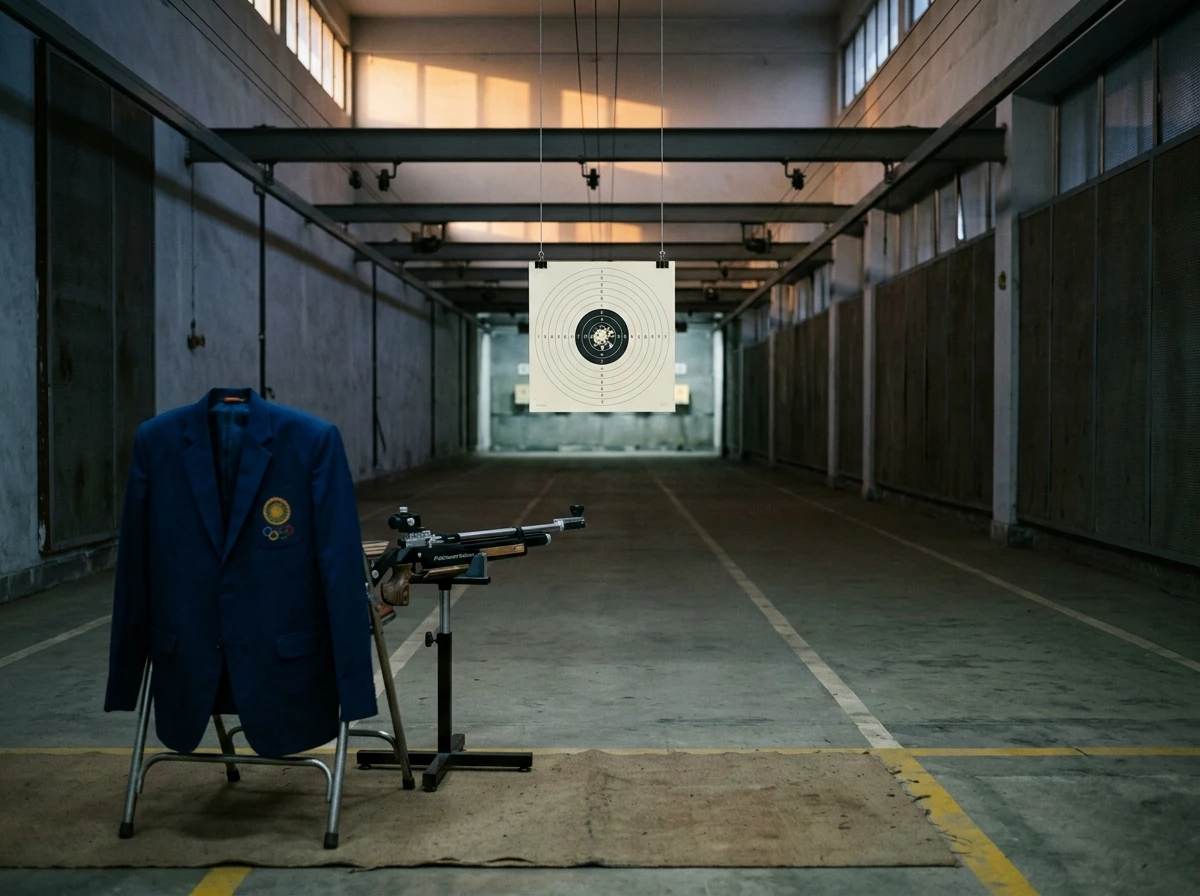
Valarivan is the squad’s most decorated name. She shot 252.0 to defend her women’s 10m air rifle continental crown at the Asian Shooting Championships in New Delhi earlier this year, her third individual continental title, and she already carries a 2020 Tokyo Olympics appearance and a 2022 Arjuna Award.
The Scholarship Behind the Scoreboard
Two names on that list, Valarivan and Raina, are publicly confirmed beneficiaries of the Shaktidoot Yojana, a Gujarat stipend scheme quietly funding elite athletes since 2006. State officials list swimmer Maana Patel, sprinter Sarita Gayakwad and para table tennis player Bhavina Patel among its other graduates.
The scheme, run by the state’s Sports, Youth and Cultural Activities Department, targets athletes under 20 who have already won at state level in a sport recognized by the School Games Federation of India or featured at the Commonwealth Games, Asian Games or Olympics. Its support runs deeper than a single cheque.
- Direct funding – up to ₹25 lakh a year for athletes on an Olympic cycle
- Medical cover – a ₹5 lakh mediclaim and accidental death policy
- Equipment and nutrition – customized kits, training tools and supplementary diet support
- International exposure – funded travel and competition abroad, plus sports psychology sessions
Few Indian state sports budgets itemize support this specifically, which is why officials keep pointing back to it when they explain how three selections became nine.
Villages Become the New Feeder System
Below the stipend layer sits Khel Mahakumbh, a grassroots sports meet Modi launched in 2010 while still Gujarat’s chief minister. Organizers now describe it as the largest grassroots sports competition in Asia, run jointly with the Sports Authority of India and open from village level up.
Scale has grown with age. Its 2025 state level athletics leg alone drew more than 9,300 competitors across roughly 390 events and five age groups, split almost evenly between boys and girls, before the strongest names get funneled toward stipends like Shaktidoot and, eventually, national trials.
Sanghavi framed the connection directly.
Our goal is not just to train athletes but to build an entire ecosystem that enables them to excel on the international stage and bring glory to the nation.
He added that Gujarat is preparing on a war footing to build out infrastructure ahead of its turn hosting the Commonwealth Games in 2030.
Why Is Table Tennis Suddenly Gujarat’s Strength?
Three of Gujarat’s nine selections, Harmeet Desai, Manav Thakkar and Manush Shah, play table tennis, making it the single biggest discipline in the contingent. All three were already established internationals before this cycle, giving Gujarat a bloc of experienced paddlers rather than first time hopefuls heading into Japan.
The broader squad skews toward women. Valarivan, Raina, Vaidehi Chaudhari and sprinter Devyani Zala account for four of the nine selected athletes, with reserve Jil Desai adding a fifth woman to the full contingent of ten. That balance reflects a much longer arc of investment in women’s Olympic style sport, one that traces back to the expanded women’s program at the 1976 Montreal Games that reshaped women’s sports a half century earlier.
Ahmedabad Is Already Spending Like the Bet Paid Off
Gujarat is not waiting for medals in Japan before cashing in on the sports buildout. Ahmedabad was recommended as host city for the 2030 Commonwealth Games after India had earlier submitted its formal bid to stage the Games in Gujarat, with hosting rights ratified in Glasgow in November 2025.
The same city anchors India’s separate push for the 2036 Olympics, with a Letter of Intent already filed with the International Olympic Committee. Spending is already visible on the ground.
- ₹1,278 crore committed in Gujarat’s 2026-27 state budget, roughly $150 million, to turn Ahmedabad into what officials call an Olympic Ready City
- More than Rs 6,000 crore in Ahmedabad sports infrastructure projects moving ahead regardless of how either bid lands
- Ten new stadiums and temporary venues under construction for sports ranging from gymnastics to skateboarding
- November 2025, the month India’s hosting rights for the centenary 2030 Commonwealth Games were formally confirmed
A nine athlete Asian Games squad will not build a stadium. But it gives Gujarat’s officials a talking point every time they ask taxpayers, and the IOC, to trust the state with a bigger Games.
Government Money Does Not Always Convert to Medals
Big sports budgets do not automatically produce results. Nigeria’s sports authorities have budgeted billions in naira for athlete programs in recent years, yet competitors there say they have collected nylon bags instead of promised bonuses, a gap between line items and what actually reaches athletes.
Gujarat’s bigger bid carries its own friction. India’s Olympic Association has told the Deccan Herald it is in talks with the IOC over the 2036 Games, with Ahmedabad’s Motera stadium complex viewed as the leading venue. But internal tension at the association, including friction between its leadership and executive committee, has drawn concern from Olympic officials over slow progress on governance.
That friction will not change what happens in Aichi and Nagoya this September. Gujarat’s contingent grew from three athletes to nine while the state built its case. The next count starts September 19.
Frequently Asked Questions
How big has Khel Mahakumbh grown since it started?
Khel Mahakumbh began in 2010 as a state level meet and has expanded into what organizers call Asia’s largest grassroots sports competition, run jointly by Gujarat and the Sports Authority of India. Its 2025 state level athletics leg alone drew more than 9,300 competitors across close to 390 events, split almost evenly between boys and girls.
What exactly does the Shaktidoot Yojana pay for?
Athletes under 20 who have already won at state level in an Olympic, Asian Games or Commonwealth Games discipline can qualify for up to ₹25 lakh a year in direct funding, plus a ₹5 lakh medical and accident policy, training equipment, nutrition support and funded international competition trips.
Why is the 2030 Commonwealth Games called a centenary edition?
The first Commonwealth Games were held in 1930 in Hamilton, Canada, which makes the 2030 edition in Ahmedabad the 100th anniversary of the event, a milestone organizers have leaned on while building support for the hosting bid.
What could still complicate Ahmedabad’s 2036 Olympic bid?
India has filed a Letter of Intent with the International Olympic Committee, but the Indian Olympic Association has faced internal tension between its leadership and executive committee, which international officials have flagged as a governance concern separate from the infrastructure buildout.
How many shooters make up India’s full Asian Games squad?
The National Rifle Association of India (NRAI), the sport’s governing body, named a 30 member shooting squad for the Asian Games, meaning Valarivan is one of 30 shooters nationally rather than the state’s sole representative in the sport.