
NEWS
Montreal’s 1976 Women’s Debut Arrived With an Unpaid Bill
Western’s 1976 Olympians reached the first women’s Olympic rowing start at a home Games that won no gold, lost 22 nations and took 30 years to pay off.

Western University named 16 students and alumni on Canada’s home team at the Montreal 1976 Olympics. They walked into a women’s programme that had just been born, and a host team that still won no gold.
The same fortnight left an unfinished stadium and a $1.6 billion bill. Fifty years on, the anniversary keeps circling a 14-year-old’s perfect 10, not the thin first field those Western women actually entered.
Sixteen Western Names on a 416-Athlete Host Team
The Canadian Olympic Committee listed 416 athletes, 283 men and 133 women, for July 17 to August 1, 1976. That was 32 percent women on the host roster, above the field as a whole. The International Olympic Committee counted 6,084 athletes from 92 nations in 198 events, and only 1,260 of them, 21 percent, were women.
Bob Barney, professor emeritus and founding director of Western’s International Centre for Olympic Studies, watched those Games in person, his first Olympics on site. He still treats the Western names as proof of a campus habit, not a one-off.
To have so many athletes who studied and trained here is a testament to what Western means to the Olympics, and what they mean to Western. We’ve always had a strong connection to the Games.
Bob Barney, professor emeritus, founding director of ICOS
Western’s published roster ran from diving and volleyball through rowing, track and wrestling. The finishes that can be checked are mostly mid-pack. None of the 16 stood on a Montreal podium.
WESTERN FINISHES THAT CAN BE CHECKED
| Athlete | Event | Finish |
|---|---|---|
| Nancy Higgins | Women’s eight | 4th (3:39.52) |
| Phil Monckton | Men’s coxless four | 5th |
| Andy Van Ruyven | Men’s coxless four | 5th |
| Monika Seymour | Women’s coxed four | 7th (3:46.18) |
| Brian Renken | 74 kg freestyle | 13th |
| Egon Beiler | 62 kg freestyle | Eliminated, round 3 |
| Becky Ostrom | Women’s rowing | Spare |
The rest of the list, as Western printed it, was Lynn Phoenix (diving), Kerry Klostermann (volleyball), Al Morrow (rowing), Susan Bradley-Kameli (track), Grant McLaren (track), Wayne Yetman (track), Michael Barry, Clive Llewellyn and Ray Takahashi (wrestling). Renken, then 21, was the only Canadian wrestler entered in both freestyle and Greco-Roman. In May 2026, members of that wrestling team met again in Montreal.
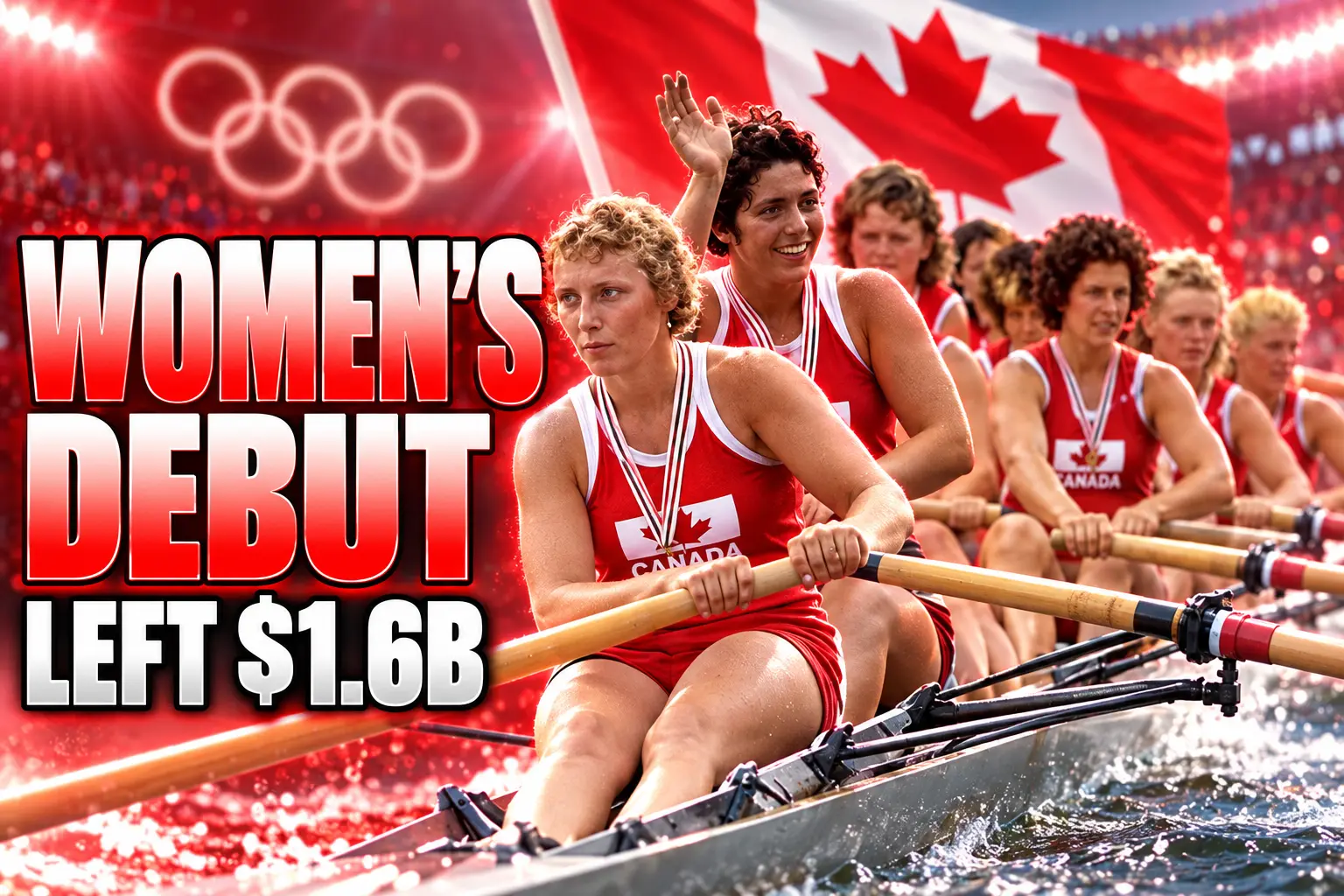
Orientation Week Turned a Track Athlete Into an Olympian
Monika Seymour, then Draeger, was a physical education student from Niagara Falls who had come to Western for track. A friend took her rowing in orientation week. After two days she stopped going back to the track.
I loved being outside, in the water, all of it. I didn’t even go back to track; I was in love with rowing.
Monika Seymour, Olympic rower, BA’77
James Walker, a Western graduate just back from Munich 1972, taught her the stroke. After her first season in 1972, women’s rowing was confirmed for Montreal. Men’s coach Bob Marlowe pushed her to stay. In the summer of 1974 she trained at Western under Kris Korzeniowski, a Polish coach newly arrived in Canada.
SEYMOUR’S PATH TO NOTRE DAME ISLAND
- 1972: Learns to row in orientation week and completes a first season.
- 1974: Makes Canada’s first women’s team at the 1974 World Rowing Championships in Lucerne and finishes ninth.
- 1975: Rows the world championships in Nottingham, then wins national titles with Becky Ostrom.
- July 1976: Strokes Canada’s coxed four at the Olympic basin and finishes seventh of eight.
Two years after she was a novice, she was a national champion. Four seasons after orientation, she was on the Olympic start. The village photo of that four shows Joy Fera, Seymour, cox Barbara Mutch Cameron, Korzeniowski, Dolores Young and Linda Gail Schaumleffel. Ostrom, another Western graduate, was named among the spares.
Rowing Canada later inducted the whole 1976 women’s squad as the first Canadian women to compete in rowing at an Olympic Games. The federation’s own citation is blunt about the conditions: a lack of coaching, money and support, plus a public idea that hard training was unfeminine and medically unwise.
Seymour still talks about walking into Olympic Stadium as the peak. The pressure, she said, sat inside the crew, not in a media machine that barely covered them.
As young women, we felt empowered that we could do whatever we wanted to do. Whether at school or at the Games, we weren’t going to let anything stop us.
Monika Seymour, BA’77
She went back to finish her degree, then spent a career as a librarian. Western put her on its Rowing Wall of Excellence in 2016. The Charter protections against sex discrimination were still years away when she raced.
Six Women’s Events, All Over 1,000 Metres
The IOC added women’s basketball, rowing and team handball at Montreal. That is the line every anniversary recap repeats. The start lists show how small those first fields were, and how little of the medal table Canada touched.
Women’s rowing used six events and a 1,000-metre course, half the men’s distance. Sixteen nations sent women. The eight and the coxed four each drew eight boats. East Germany took four of the six women’s golds (single sculls, coxed four, quadruple sculls, eight). Bulgaria took the other two. Canada’s best finish was Higgins’s eight in fourth. The coxed four went to Final B and seventh.
Basketball and handball were six-team tournaments. Canada lost all five basketball games and finished last. The handball side also finished last of six. The Soviet Union won both golds.
THE THREE WOMEN’S DEBUTS
| Sport | Field | Canada | Gold |
|---|---|---|---|
| Basketball | 6 teams | 0-5, 6th | Soviet Union |
| Rowing | 6 events, 16 nations | Best finish 4th | East Germany, 4 of 6 |
| Team handball | 6 teams | Last of 6 | Soviet Union |
Barney has called 1976 an explosion in women’s sport and a shift toward a family Games, especially in gymnastics and swimming. The new team sports did not explode on the Canadian side of the ledger. They gave phys-ed students a start line that had not existed in 1972. The medals went to programmes that had already been racing Europeans since the 1950s and world championships since 1974.
Canada Left Montreal Without a Gold Medal
Canada’s 11 medals were 5 silver and 6 bronze. No host nation at a Summer Games had finished without gold, and none has since. Eight of the 11 came from the pool. Greg Joy’s high jump silver in the rain, Michel Vaillancourt’s jumping silver and John Wood’s canoe silver were the only ones that did not.
CANADA’S MONTREAL HAUL
- Team: 416 athletes in 198 events, the largest Canada had sent.
- Medals: 0 gold, 5 silver, 6 bronze.
- Pool share: 8 of the 11 medals came from swimming.
- Youngest: Robin Corsiglia, 13, on the women’s 4×100 medley bronze; Nancy Garapick, 14, took two backstroke bronzes.
The women already inside the Olympic programme, in the water, did the scoring. Cheryl Gibson won silver in the 400 individual medley. Becky Smith took bronze in the same race. Shannon Smith won bronze in the 400 free. The women’s free relay and medley relay added two more bronzes. That is the opposite of the new basketball and handball draws: deep enough to reach a podium, and young enough that a 13-year-old still holds the Canadian mark.
Abby Hoffman, a 29-year-old 800-metre runner, carried the flag at the opening, the first woman to do so for Canada. Queen Elizabeth II opened the Games. Stéphane Préfontaine, 16, and Sandra Henderson, 15, lit the cauldron together.
Brian Renken, a Mustangs wrestler from the same faculty as Seymour, later said he was awestruck. He and Michael Barry both sat the law-school test after Western and practised law. He was inducted into the Mustangs Sports Hall of Fame in 2001. The Montreal results were not the part he kept.
The friendships I made at Western have proven to be lifelong. I can’t replace that.
Brian Renken, Olympic wrestler, BA’78
Thirty Years to Pay Off an Unfinished Stadium
On opening night the stadium had no tower and no roof. African nations, 22 of them, withdrew over New Zealand’s inclusion after an All Blacks rugby tour of apartheid South Africa. Only Senegal and Côte d’Ivoire represented southern and central Africa. The IOC still recorded 92 teams.
The 1970 public estimate for the Games sat near $120 million. The bill that stuck was $1.6 billion, more than 13 times that figure. Mayor Jean Drapeau had sold a modest Games. Quebec paid the rest with a property levy, an Olympic lottery and a tobacco tax.
THE BILL AFTER THE CLOSING CEREMONY
- 1970: Public estimate near $120 million.
- July 17, 1976: Opening proceeds in a stadium without its tower or roof.
- 1987: The inclined tower is finished, 11 years after the athletes leave.
- November 14, 2006: The Olympic debt is paid, 30 years after the Games.
- 2026: Quebec budgets $870 million for a new roof, with work aimed at 2027.
Barney still defends the gathering itself. He said the Games bring people together in a way almost nothing else can. He also flagged the security jump after Munich 1972, and the politics that sat inside the fortnight. The roof project is the part that did not close with the debt.
The Faculty Crocker Opened in 1930
Barney traces Western’s Olympic habit to John Howard Crocker, not to 1976. Crocker managed Canada’s first Olympic team in London in 1908, then served as honorary manager from 1912 to 1956. In 1930 he became director of physical education at Western, the first faculty of its kind there, and stayed through the building of Thames Hall until 1949.
ICOS keeps an annual lecture in Crocker’s name. Barney, who had been athletics director from 1972, founded the centre in 1989 and launched its journal, Olympika. He has said Western people have been involved in every Olympic Games since the 1930s.
WHAT CROCKER LEFT ON CAMPUS
- 1908: Manager of Canada’s first organized Olympic team.
- 1912 to 1956: Honorary manager of Canadian teams.
- 1930: Opens Western’s physical education faculty, later kinesiology.
- 1949: Leaves after Thames Hall is up, having trained teachers and coaches for Ontario schools.
That timeline is why a track athlete could find a boat during orientation and a national coach on campus two summers later. The faculty was already producing teachers, wrestlers and rowers. What changed in 1976 was the IOC programme, not Western’s pipeline. Status of Women Canada also became a federal agency that year. The athletes raced ahead of the legal floor that followed.
Why Does the Anniversary Keep Returning to Nadia Comăneci?
Nadia Comăneci was 14. On July 18, 1976, the uneven bars gave her the first perfect 10 in Olympic gymnastics. The scoreboard could not hold a 10.0, so it flashed 1.00. She collected seven 10s and left with three golds, one silver and one bronze. Olga Korbut, whom Seymour greeted in the village, was already the television gymnast of the last Games. Comăneci became this one’s.
Ask the open anniversary conversation what Montreal 1976 was, and it still answers with that 10. A July 18, 2026 history post about the bars routine drew people who had been 12 in the stands, and people who had copied her in club gyms. The new eights and the 0-5 basketball team do not travel that way. Neither does the tobacco tax.
Comăneci came back to the city around July 30, 2026. She said, “It’s gymnastics, Romania and Montreal this is my life.” The line fits the memory the fortnight actually sold. Seymour’s own advice to later Western rowers was smaller, and local: the four years on campus would be the best of their lives, so use them.
Phil Monckton, fifth in the 1976 coxless four with Van Ruyven, did take an Olympic medal, a bronze in the quadruple sculls at Los Angeles 1984. That sits eight years off the home programme that could not put a Western name on the Montreal podium. The women’s eight from 1976 is still the closest of the Western boats, fourth in a field of eight, on a 1,000-metre course that no longer exists for Olympic women.
Quebec is still putting a roof on the building they entered on July 17, 1976. The Western women who learned to row after orientation week did not need that roof to become Olympians. They needed the IOC to open six short races, and a faculty that had been waiting since 1930.
Frequently Asked Questions
Who Lit the Cauldron at the 1976 Montreal Olympics?
Stéphane Préfontaine, 16, and Sandra Henderson, 15, lit the cauldron together after Queen Elizabeth II opened the Games. The flame had been turned into coded impulses in Athens, sent by satellite to Ottawa, and rebuilt there with a laser before the relay continued to Montreal.
Did Any Western Athlete Win a Medal at Montreal 1976?
No. The best Western results were Nancy Higgins’s fourth in the women’s eight and a fifth in the men’s coxless four for Phil Monckton and Andy Van Ruyven. Monckton later won bronze in the quadruple sculls at Los Angeles 1984, the medal Montreal did not give him.
When Did Quebec Finish Paying for the 1976 Olympics?
On November 14, 2006, 30 years after the closing ceremony, using a tobacco tax that had been earmarked since June 1976, plus a special Montreal property levy and lottery revenue. The inclined tower itself was not finished until 1987.
When Was Western’s International Centre for Olympic Studies Founded?
Bob Barney founded ICOS in 1989 and started its scholarly journal, Olympika, the same year. He had been Western’s athletics director from 1972, and the centre still runs the John Howard Crocker lecture that began in 1990.

The Court Revisits the Climate Nuisance Door It Left Open

ChatGPT Now Compiles Live Interfaces With GPT-6

A Tanker Attack Moves the War Into Qatar’s Waters

Personio Buys Circula to Own the DATEV Channel

Bluesky Files for .bsky and Enters the Registry Queue

Musk’s $914 Billion Lead Is a Public SpaceX Bet

Microsoft’s 96% Cyber Score Sits at 86.3% on the Board

Free Live Sports Streaming in 2026: What to Watch Without Cable

Andrew Garfield’s Spider-Man Films Are No Longer Free

Endgame Encore’s $86 Million Trial for Infinity Vision
-
 BUSINESS4 months ago
Musk’s $914 Billion Lead Is a Public SpaceX Bet
-
 NEWS2 months ago
Microsoft’s 96% Cyber Score Sits at 86.3% on the Board
-
 SPORTS3 months ago
Free Live Sports Streaming in 2026: What to Watch Without Cable
-
 ENTERTAINMENT2 years ago
Andrew Garfield’s Spider-Man Films Are No Longer Free
-
 ENTERTAINMENT3 months ago
Endgame Encore’s $86 Million Trial for Infinity Vision
-

 NEWS4 months ago
Singapore’s 3×3 and Surfing Debuts Miss the Medal Stand
-

 NEWS1 month ago
G20 Cheers AI Investment After Bailey’s Frontier Cyber Warning
-

 NEWS4 weeks ago
An AI Lung Drug Shifted Biological Age Clocks in Patients