
NEWS
YouTube Partner Deals Strip Google of Its Hosting Shield
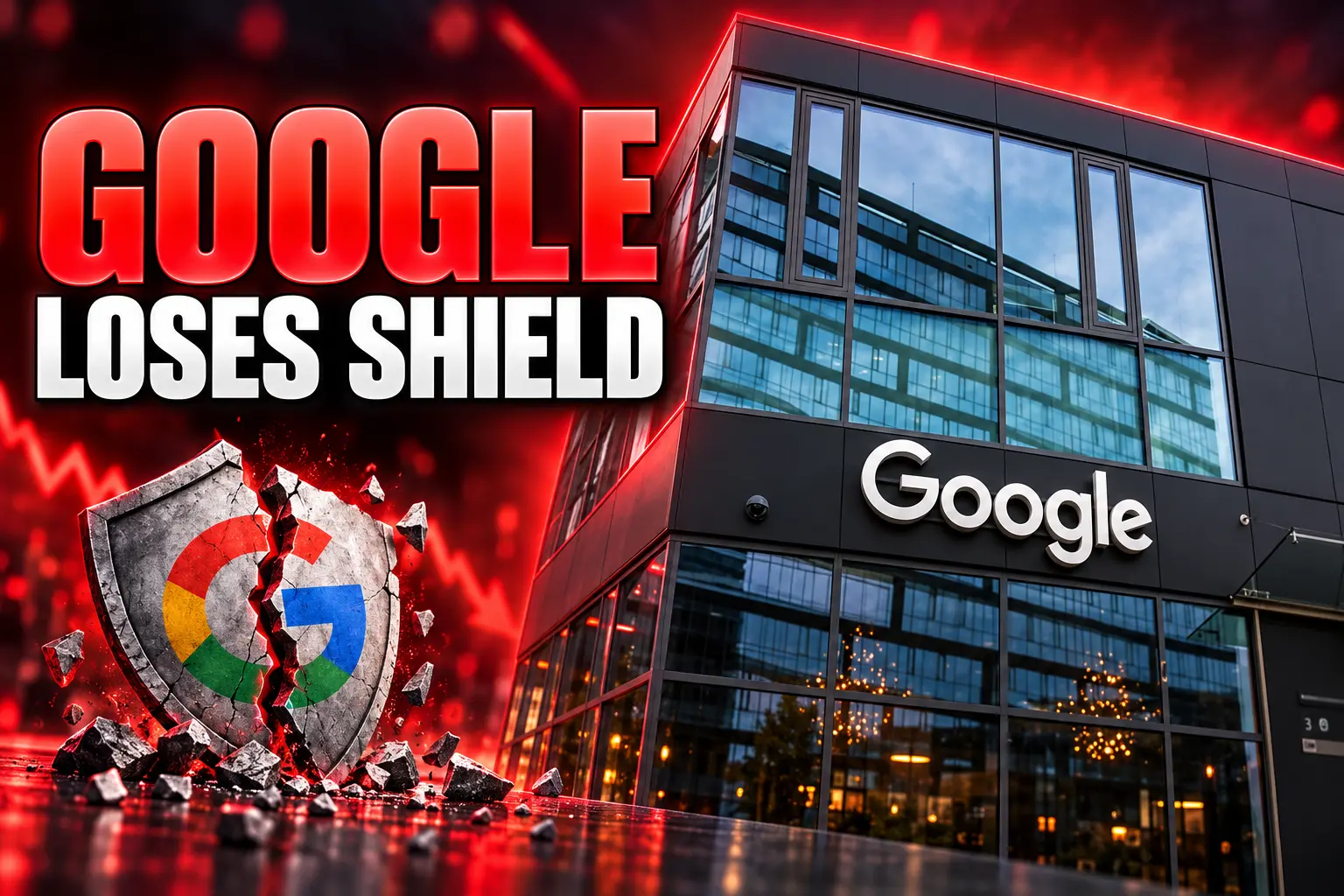
The CJEU tied Google’s liability for YouTube gambling ads to Partner Program reviews, not to random uploads, and sent the €750,000 Italian case back.

Europe’s top court held on 16 July 2026 that Google can be liable for YouTube gambling videos posted by a partnered creator. The finding turns on a revenue-share deal, not on every clip a stranger uploads.
Judges in Luxembourg said a platform that studies a channel in order to split advertising money is no longer a passive host. That is the YouTube Partner Program described as a legal problem.
Google’s Partner Review Became the Court’s Proof
The Court of Justice of the European Union was not asked whether gambling ads are distasteful. It was asked whether Google Ireland Ltd could still hide behind the hosting exemption in Article 14 of Directive 2000/31/EC, the e-commerce rule that protects a technical store of other people’s files.
The videos at issue sat on channels tied to Google by a commercial partnership. The deal shared the money from ads shown before each video. Before that deal was signed, Google had already looked at the videos, the theme of the channel, the most viewed or newest uploads, and the associated metadata.
Google may be held liable for the YouTube videos of a content creator with whom it has a commercial partnership.
Court of Justice of the European Union, Press Release No 109/26, Luxembourg
That sentence is the whole case in one line. The court said a host keeps the exemption only if it carries out a strictly technical, automated and passive activity, with no knowledge or control over what is stored. Reviewing a channel in order to sign a partnership is not that activity. The operator then has specific knowledge of the essential content of a set of videos, and Google may be held liable for what those partnered videos promote.
YouTube’s own help pages describe the same gate. After a creator accepts Partner Program terms and links an AdSense account, automated systems and human reviewers examine the channel as a whole against monetization policies, a process that typically takes about a month. The commercial filter and the legal knowledge test are the same workflow.
What the Judges Told Italy’s Council of State
The reference came from the Consiglio di Stato, Italy’s Council of State, by a decision of 11 June 2024, received in Luxembourg on 14 June 2024. Case C-421/24, AGCOM (Online gambling), was heard on 10 September 2025. Advocate General Maciej Szpunar delivered his opinion on 27 November 2025. The Second Chamber, with Küllike Jürimäe as rapporteur and President Koen Lenaerts sitting as a judge of the chamber, answered two questions.
THE TWO HOLDINGS IN C-421/24
| Question from Italy | What the Court answered |
|---|---|
| Does hosting videos that advertise gambling fall outside the e-commerce directive because gambling itself is excluded? | No. Hosting is storage of user files without a promotional purpose of its own, so it still sits inside Directive 2000/31/EC. |
| Does Article 14 still shield a video platform that signs a revenue-share partnership and examines the channel’s theme, top videos, newest videos or metadata? | No. Article 14 does not apply to that operator in those circumstances. |
The gambling exclusion in Article 1(5)(d) is real. The court repeated that EU law leaves games of chance, lotteries and betting out of e-commerce harmonisation because member states diverge on morals and culture. AGCOM had argued that this exclusion also covered the ads. The court cut that argument off. Hosting, it said, is not intrinsically linked to gambling.
So Google lost on the point it needed most. The directive applied, which meant the hosting exemption was in play, and then the partnership review took the exemption away. Italy, Belgium, Czechia, Portugal and the European Commission all filed observations. The language of the case was Italian.
Five Spike Channels and a €750,000 Order
The underlying order is older than the Luxembourg hearing. On 19 July 2022, the Autorità per le Garanzie nelle Comunicazioni, Italy’s communications regulator, fined Google Ireland €750,000 ($854,250) for breaking Article 9 of Decree-Law No 87/2018, the Dignity Decree of 12 July 2018.
That article bans any form of advertising, including indirect advertising, of games or betting with money stakes, by any means, including social media. The statutory penalty is 20% of the value of the sponsorship or advertising, and in any case not less than €50,000 for each infringement.
WHAT AGCOM SAID IT FOUND
- The channels: Gambling websites were promoted through videos on five YouTube channels.
- The takedown: Google was ordered to remove 630 videos from that creator, plus similar clips that also broke the ban.
- The audience hook: Each channel invited users, whatever their age, to send videos of their own winnings, paid so the creator could air the biggest scores.
- The companion fine: In the same 2022 action AGCOM also fined Top Ads Ltd €700,000, a combined €1,450,000 with Google’s penalty.
Advocate General Szpunar’s opinion names the creator as Spike and places the 630 videos on five of that creator’s channels, under a YouTube Partnership Programme contract. The 2022 AGCOM file also pointed at spikeslot.com and at Top Ads as the producer of the Spike material. Those names are the Italian record, not a finding Luxembourg had to repeat in its operative part.
Google’s line in the Italian courts was that it does not have to verify the content of videos published on YouTube, and that AGCOM’s order was censorship that restricted users’ speech and Google’s freedom to provide services. The first Italian court agreed with the hosting claim. Luxembourg did not write Google a blank cheque in the other direction either. It sent a test back to Rome.
A Lazio Court First Sided With Google
Google sued the 2022 decision in the Tribunale amministrativo regionale per il Lazio, the Regional Administrative Court in Lazio. That court held Google had not broken Article 9. It classed YouTube as a hosting service and said Google should get the Italian transposition of Article 14.
AGCOM appealed to the Consiglio di Stato. The regulator’s theory at that stage was the opposite of the partnership-knowledge theory that won in Luxembourg: it said the e-commerce directive did not apply at all, because gambling is excluded. The Council of State was unsure on both the scope point and the exemption point, so it asked Luxembourg.
THE PATH FROM THE DIGNITY DECREE TO THE JUDGMENT
- 12 July 2018: Italy’s Dignity Decree bans direct and indirect gambling advertising, including on social media, with a 20% fine and a €50,000 floor per infringement.
- 19 July 2022: AGCOM fines Google Ireland €750,000 and orders removal of 630 videos from five YouTube channels.
- After that order: The Lazio administrative court treats YouTube as a host and sides with Google on the exemption.
- 11 June 2024: The Consiglio di Stato refers two questions; Luxembourg receives the request on 14 June 2024.
- 10 September 2025: The Court hears the governments, the Commission and Google’s counsel.
- 27 November 2025: Advocate General Szpunar gives his opinion.
- 16 July 2026: The Second Chamber delivers the judgment in Case C-421/24.
- 21 September 2026: The judgment is published in the Official Journal; on 25 September it is available to the Italian Senate as Doc. XIX, n. 133, after transmission on 5 August.
A preliminary ruling does not finish the Italian file. The Court of Justice interprets EU law. The national court disposes of the dispute. Almost four years after the fine, the Consiglio di Stato still has to apply the knowledge test to Google’s actual partnership paperwork.
WHAT WE KNOW
- The legal test: Article 14 does not apply to a video platform that signs a revenue-share partnership and, in concluding or performing it, examines the channel’s theme, most viewed or newest videos, or metadata.
- The remaining job: Italy’s Council of State must check whether Google could reasonably have been unaware that the channel’s main theme was gambling and games of chance and that it carried videos promoting those games.
WHAT IS UNCONFIRMED
- The fine itself: Luxembourg did not confirm, cancel or recast the €750,000 penalty.
- The takedown: The 630-video order still depends on the Italian merits judgment.
Subject to that check, the Court of Justice’s own reading of the file is blunt. By examining those channels, Google could not reasonably have been unaware of the gambling theme or of the promotional videos, in breach of Article 9.
Hosting Protection Stops Where Revenue Sharing Starts
The exemption in Article 14 has two familiar limbs. The provider must lack actual knowledge of illegal activity, and must not be aware of facts from which the illegality is apparent; or, once it has that knowledge, it must act expeditiously to take the material down. Paragraph 2 adds that the exemption does not apply when the user is acting under the authority or control of the provider.
Recital 42 of the 2000 directive, quoted in the judgment, limits the shield to a mere technical, automatic and passive role, with neither knowledge nor control over the stored information. The Court of Justice has used that line in L’Oréal and eBay, in YouTube and Cyando, and, on 16 June 2026, in Joined Cases C-188/24 and C-190/24, WebGroup Czech Republic, on algorithmic control over distribution.
This case is about knowledge more than about an algorithm that ranks a feed. The referring court asked whether Google still had a purely technical and neutral role under the YouTube Partner Programme. The partnership did two things. It split the advertising revenue Google collected in front of the creator’s videos. And it rested on a prior examination of the channel.
The court said that examination gives specific knowledge of the essential content of a set of videos even if the operator does not watch every upload. Automated processing does not save the point. The press release notes that an operator which has already set, by algorithm, the conditions and order of broadcast exercises control over that content. A partner review done by software is still a review.
That is a narrower holding than the claim that social platforms are now publishers of everything users post. A channel with no commercial partnership, and no examination of its theme and metadata for a revenue deal, is not the fact pattern Luxembourg decided. The cost falls on the business model that made YouTube a media company: paid partners, pre-roll ads, a human-and-machine gate before the money flows.
Article 6 Keeps the Knowledge Test
The 2022 facts predate the Digital Services Act, so the Court of Justice had no need to apply Regulation (EU) 2022/2065. The liability articles of the 2000 directive have since been repealed and folded into that regulation. Article 14’s hosting test now lives, in nearly the same words, as the Digital Services Act hosting rule in Article 6, which has applied since 17 February 2024.
Article 6 still turns on actual knowledge of illegal content, on awareness of facts from which illegality is apparent, and on expeditious removal. It still drops the exemption where the recipient acts under the authority or control of the provider. Lawyers reading C-421/24 against that text treat the partnership-plus-review test as a guide to Article 6, not as a museum piece about a repealed directive.
The practical bind for a platform is ugly in a simple way. To run a partner programme at all, it has to look at channels closely enough to decide who gets a cut of the ads. That look is what the court treated as knowledge of the essential content. If the channel’s main theme is a product that a member state has banned from advertising, the host shield is already in doubt before the next upload lands.
Italy’s Dignity Decree is a hard local rule, a total advertising ban rather than a labelling duty. Other member states regulate gambling ads with licences, time slots or age gates instead of a blanket prohibition. The knowledge test still travels. A platform that reviews a channel to share revenue can be treated as knowing what that channel is about, including in countries where the underlying ads are legal only inside a licensed market.
YouTube Is Still Signing More Brand Deals
Szpunar’s opinion walks through YouTube’s public eligibility rules as they stood for the file. A creator asks to join. Google first checks the thresholds: 1,000 subscribers with 4,000 valid public watch hours in the past 12 months, or 1,000 subscribers with 10 million valid public Shorts views in the past 90 days, plus presence in a country where the programme runs and no active Community Guidelines strikes. Then, in the Advocate General’s account of YouTube’s review, automated systems and human reviewers look at the channel as a whole, a pass that may take a month.
Because reviewers cannot watch every video, the opinion says they may focus on a short list that now reads like the court’s knowledge catalogue.
WHAT YPP REVIEWERS ARE TOLD TO CHECK
- Main theme: The channel’s overall subject, not one outlier clip.
- Most viewed videos: The material that already found an audience.
- Newest videos: What the creator is publishing now.
- Watch-time share: The videos that eat the largest proportion of viewing time.
- Metadata: Titles, thumbnails and descriptions.
- About section: The channel’s own account of itself.
That list is how Google decides who gets paid. It is also how Luxembourg said a platform acquires specific knowledge. The money gate and the liability gate have the same hinge.
YouTube has not used the judgment as a reason to shrink that machine. In its Made on YouTube remarks in September 2026, the company said Creator Partnerships was available in 20 countries and that it was putting hundreds of millions of dollars into incentives for agency partners. New Partner Program terms are due to be accepted in Studio by 31 January 2027, with the updated thresholds running from 1 February 2027. The commercial partnership is still the product.
The Consiglio di Stato now has to decide whether, on these five channels, Google could reasonably have missed a gambling theme after that kind of review. If it follows the Court of Justice’s reading of the file, the 2022 fine and the 630-video order sit on a platform that was paid to know what it was carrying. The Partner Program will still mint creators. It will also be evidence.
Disclaimer: This article is news reporting on a published Court of Justice judgment and on related Italian regulatory orders. It is informational only and is not legal advice, nor a prediction of how the Consiglio di Stato will dispose of the fine or the takedown. Readers who face platform liability, advertising restrictions or creator contracts should consult a qualified lawyer admitted in the relevant EU member state before acting. Figures, case status and programme rules reflect the court texts, regulator orders and YouTube help pages used for this report and may change as the Italian proceedings continue.

The Court Revisits the Climate Nuisance Door It Left Open

ChatGPT Now Compiles Live Interfaces With GPT-6

A Tanker Attack Moves the War Into Qatar’s Waters

Personio Buys Circula to Own the DATEV Channel

Bluesky Files for .bsky and Enters the Registry Queue

Musk’s $914 Billion Lead Is a Public SpaceX Bet

Microsoft’s 96% Cyber Score Sits at 86.3% on the Board

Endgame Encore’s $86 Million Trial for Infinity Vision

Free Live Sports Streaming in 2026: What to Watch Without Cable

Andrew Garfield’s Spider-Man Films Are No Longer Free
-
 BUSINESS4 months ago
Musk’s $914 Billion Lead Is a Public SpaceX Bet
-
 NEWS2 months ago
Microsoft’s 96% Cyber Score Sits at 86.3% on the Board
-
 SPORTS3 months ago
Free Live Sports Streaming in 2026: What to Watch Without Cable
-
 ENTERTAINMENT3 months ago
Endgame Encore’s $86 Million Trial for Infinity Vision
-
 ENTERTAINMENT2 years ago
Andrew Garfield’s Spider-Man Films Are No Longer Free
-

 NEWS4 months ago
Singapore’s 3×3 and Surfing Debuts Miss the Medal Stand
-

 ENTERTAINMENT1 month ago
Sterling Point Holds No. 2 on Prime Video After 32 Days
-

 NEWS6 months ago
White Sands Footprints Put People in Ice Age New Mexico