A California jury cleared OpenAI chief executive Sam Altman of wrongdoing on May 18. Four days later, the company confidentially filed paperwork for a stock listing that could value it at $1 trillion. Now OpenAI wants Washington to own a piece of what is left.
OpenAI has proposed giving the federal government a 5% equity stake worth roughly $42.6 billion, according to the Financial Times. The offer follows a jury’s decision to toss Elon Musk’s lawsuit claiming Altman turned a charity into a commercial machine. That verdict settled the calendar question and left the harder one, who actually governs frontier artificial intelligence, for Washington to answer instead.
A Jury Clears OpenAI, But Not the Question Musk Raised
The nine-member jury deliberated for less than two hours before finding that Musk waited too long to sue. Judge Yvonne Gonzalez Rogers of the U.S. District Court for the Northern District of California accepted the finding and dismissed the case in full.
Musk had sought up to $150 billion in damages, money he wanted directed to OpenAI’s nonprofit foundation rather than to himself, along with the removal of Altman and co-founder Greg Brockman and the unwinding of the company’s for-profit arm. Jurors found Musk should have suspected OpenAI’s drift from its charitable mission years before he sued in 2024, placing his claims outside the statute of limitations: three years for breach of charitable trust, two for unjust enrichment.
Thinking that someone might steal your car is not the same as someone stealing it.
Musk told the jury on the witness stand, explaining why he waited years before filing suit.
OpenAI and Musk’s legal teams left the courthouse with opposite readings of what the jury actually decided.
- William Savitt, OpenAI’s attorney, said the verdict confirmed the case was “a hypocritical attempt to sabotage a competitor.”
- Elon Musk wrote on X that “the judge & jury never actually ruled on the merits of the case, just on a calendar technicality.”
- Marc Toberoff, Musk’s lead attorney, told reporters “this one is not over” and confirmed plans to appeal to the Ninth Circuit.
The ruling did what it needed to for OpenAI’s calendar. It cleared the legal cloud hanging over the company just as bankers were preparing paperwork for a stock listing.
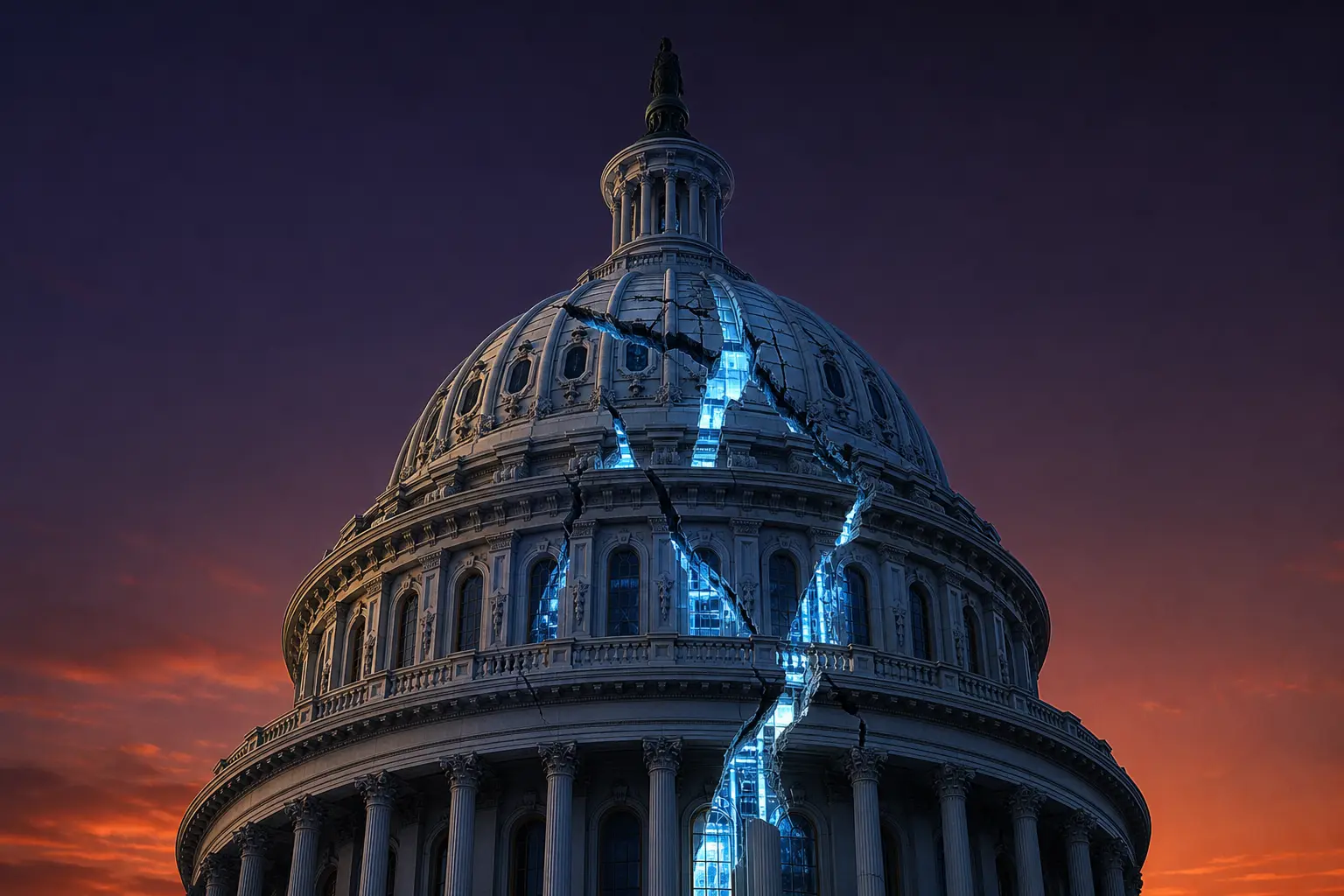
Washington Fills the Space the Courtroom Left Empty
In the weeks since the verdict, the U.S. government has moved from requesting voluntary cooperation from AI labs to unilaterally deciding which models reach the public. The sequence moved fast.
- May 18, 2026: A jury finds Musk’s claims time-barred and the judge dismisses the case.
- May 22, 2026: OpenAI confidentially files paperwork with the Securities and Exchange Commission for a stock listing.
- June 2, 2026: President Donald Trump signs an executive order letting AI companies voluntarily submit models for government security review up to 30 days before release.
- Mid-June 2026: The Commerce Department applies export controls to Anthropic’s Fable and Mythos models, and Anthropic suspends access for all users because it cannot verify a user’s nationality in real time.
- July 2, 2026: OpenAI proposes giving the federal government a 5% equity stake, according to the Financial Times.
OpenAI separately agreed to slow the wider rollout of its GPT-5.6 model at the administration’s request, releasing it instead through a limited preview with the government approving access customer by customer.
OpenAI has pushed back even while complying. “We don’t believe this kind of government access process should become the long-term default,” the company said in a statement.
Altman had welcomed the review framework when Trump signed it. “The U.S. should lead on AI by continuing to develop the very best models, making sure they’re safe,” he wrote on X, voicing support for the order.
The AGI Clause That Became a Due Date
Buried inside OpenAI’s contracts with Microsoft was a clause tied to one condition: the arrival of artificial general intelligence (AGI), AI systems capable of outperforming humans at most economically valuable work. Once OpenAI declared AGI, Microsoft’s access to the most advanced models was originally set to end.
That clause did not survive contact with the money.
- 2019: OpenAI creates a capped-profit subsidiary, limiting investor returns to 100 times their initial stake, and Microsoft invests $1 billion.
- 2023: Microsoft adds $10 billion, tying OpenAI’s compute needs to Azure in exchange for a share of future profit.
- October 2025: OpenAI recapitalizes into a public benefit corporation (PBC), a for-profit structure with a stated social mission; Microsoft’s stake settles near 27%, and OpenAI commits to buying $250 billion of Azure cloud services.
- April 2026: Microsoft gives up cloud exclusivity and its right to cut off OpenAI at the moment of AGI; OpenAI’s revenue-share payments to Microsoft are capped and run only through 2030, while Microsoft’s license to OpenAI’s technology extends through 2032.
Investor returns under the original capped-profit model were meant to top out at 100 times the initial stake before surplus profit flowed back to the nonprofit. That limit later slid, first to 20 times, then to what OpenAI called only “single digits,” part of a documented record of the profit cap’s slow disappearance compiled by governance researchers and former employees.
Public benefit corporations carry no legal requirement to put mission above profit the way the original nonprofit structure did. Legal analysts have warned the shift leaves no primary duty to the charitable mission for the people actually running the company.
A Two-Horse Race, With Washington Holding the Reins
OpenAI is not the only frontier lab discovering this. Anthropic, its closest rival and maker of the Claude chatbot, has spent the same weeks filing its own confidential paperwork for a stock listing, watching its models get caught in export-control crossfire, and quietly overtaking OpenAI on paper.
| Metric | OpenAI | Anthropic |
|---|---|---|
| Latest private valuation | $852 billion (March 2026 round) | $965 billion, overtaking OpenAI in 2026 |
| Revenue run-rate | About $25 billion (February 2026) | About $47 billion (mid-2026 estimate) |
| IPO filing status | Confidential S-1 filed late May 2026 | Confidential S-1 filed early June 2026 |
| Recent federal entanglement | Proposed a 5% equity stake to Washington | Fable and Mythos models suspended under export controls |
Both companies are effectively negotiating the same question with the same counterparty. Whichever one lists first will set the reference price for how public markets value a technology Washington now treats as a national-security asset it can freeze on short notice.
What Would a 5% Government Stake Do?
A 5% federal stake in OpenAI would be worth about $42.6 billion today, comparable in scale to the government’s stake in Intel a year earlier. Under the proposal, other leading AI companies, including Anthropic, Google and Meta, would contribute similar stakes to a shared vehicle modeled on the Alaska Permanent Fund, a sovereign fund that invests the state’s oil wealth and pays dividends to the state. Any deal would likely require an act of Congress.
Vermont Senator Bernie Sanders has floated a rival version: legislation imposing a one-time 50% tax on the stock of major AI firms, paid in shares rather than cash, to give the public a direct ownership stake. The Trump administration already has a template for taking equity in strategically important companies. It took a 10% stake in Intel in August 2025 after investing $8.9 billion in the chipmaker, and has since taken positions in IBM and several quantum-computing firms.
Forrester is split on what a government stake would signal to investors. Indranil Bandyopadhyay, a principal analyst at the firm, said “some institutional investors will view this as a de-risking signal; others will price it as a governance overhang.”
The equity proposal is not OpenAI’s only attempt to frame itself as a public partner rather than a private gatekeeper. The company already runs a program pairing its models with human engineers to patch vulnerabilities in open-source software used across critical infrastructure, the kind of dual-use capability that made Washington nervous enough to intervene on Anthropic’s models in the first place.
The Cash Burn Behind the Trillion-Dollar Target
OpenAI’s valuation has climbed from $29 billion in 2023 to $852 billion in March 2026, a roughly 29-fold jump in three years, after SoftBank and Microsoft led a $122 billion funding round. Sam Altman has reportedly called anything below a $1 trillion IPO valuation a “non-starter,” according to the New York Times.
The company is not yet close to matching that valuation with cash flow. Sacra, a research firm that tracks private company financials, projects cash burn reaching $63 billion in 2027, up from about $27 billion in 2026, under the renegotiated Microsoft deal.
OpenAI is not expected to turn cash-flow positive until 2030. HSBC has separately estimated the company will need more than $207 billion in additional capital to get there.
At $852 billion, OpenAI trades at roughly 34 times its annualized revenue. Greg Jensen of Bridgewater Associates has called that “priced for a monopoly outcome that does not yet exist.”
The IPO Clock Resets to 2027
OpenAI was widely expected to list before the end of 2026 to help close that gap. That timeline slipped in late June, after the New York Times reported the company is leaning toward waiting until 2027, rattled by the wobbly debut of SpaceX’s own record-breaking $1.77 trillion listing on June 12 and a broader tech selloff that followed.
Chief Financial Officer Sarah Friar has told associates she is preparing the company to operate with public-company discipline ahead of a listing that could now land anywhere from early to mid-2027.
Prediction markets have adjusted accordingly. Kalshi traders put the odds of an official OpenAI IPO announcement at 59% by March 1, 2027, and 73% by June 2027, but only about one in three odds of an announcement before the end of this year.
Anthropic is chasing the same window. It confidentially filed its own paperwork in early June and has already overtaken OpenAI on private valuation, a reversal that could let Anthropic list first if OpenAI keeps waiting for its number.
Government oversight that once applied only to model releases now shadows the listing itself. Whenever OpenAI’s public prospectus finally arrives, it will be the first document to say exactly how much of the company Washington actually owns.