Pakistan’s 33 scheduled banks operate roughly 19,000 branches, and those branches absorb 50 to 65 percent of the banks’ operating costs. A 2026 Business Recorder analysis lays out a plan for bank branch sharing: lenders would adopt a Branch Operating Company, a shared-branch network modeled on Engro Connect’s tower-sharing platform, to slash that burden. The same shared-infrastructure economics have already transformed Pakistan’s telecoms.
The case is now on the table: would a shared-branch network in banking, run the way Engro Connect runs towers, cut costs and reach the unbanked majority of Pakistani adults who remain outside the formal banking system? Pakistan’s smaller lenders could see their physical footprint grow eight to tenfold by joining the proposed Branch Operating Company, and the larger ones could trim a cost line that has resisted a decade of digital push.
The Branch Cost Burden in Pakistan
Pakistan’s commercial banks have spent decades building physical branches to win deposits, and the bill keeps rising, weighing on a banking sector whose 2026 outlook points to only a slow recovery. The 2026 Business Recorder analysis puts branch costs at 50 to 65 percent of total operating expenses, excluding financing costs, for a country where cash still dominates daily commerce. The country’s 33 scheduled banks operate some 19,000 branches, and most commercial high streets host several of them clustered side by side. Pakistan’s 2025 banking sector structure and branch share counts the branch network of one banking group alone at over 6,000 sites, or 32 percent of total bank branches.
Habib Bank Limited, the country’s largest lender, runs over 1,700 branches and serves around 27 million customers, per the bank’s own disclosure. National Bank of Pakistan, the state-owned heavyweight, sits close behind in branch count. Walk down a typical commercial road in Lahore or Karachi and you will pass three or four bank branches in a single block, each paying rent, security, and staff to do largely the same work.
The duplication has a price tag that varies by market. Pakistan’s branch cost share is the highest in the comparison the Business Recorder analysis draws, ahead of the United Kingdom and the United States, where digitization has pushed that share to between 30 and 45 percent, and behind pure digital banks like Revolut and Monzo, which run on near-zero branch expense.
| Market | Branch cost share of operating costs |
|---|---|
| Pakistan | 50 to 65 percent |
| UK, US | 30 to 45 percent |
| Germany, Japan, Canada | more than 50 percent |
| Revolut, Monzo (digital banks) | near zero |
What the Telecom Tower Playbook Looks Like
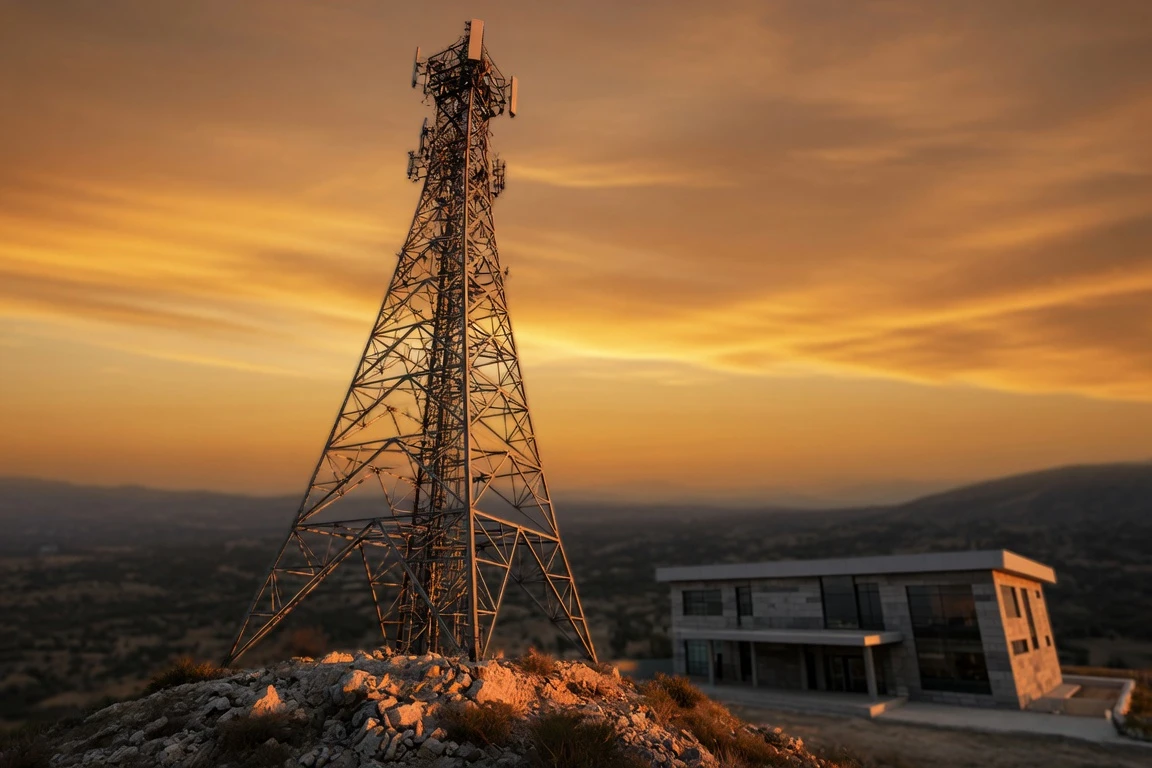
Pakistan’s mobile operators once faced the same arithmetic. Building a tower cost real money, and running three competing networks meant three sets of masts doing the same job in the same neighborhood. The answer, rolled out over the past decade, was to spin the towers into separate companies that rent capacity back to every operator on the same steel. Engro Connect, a wholly owned subsidiary of Engro Corporation, is now Pakistan’s largest independent tower platform, with over 14,000 towers nationwide, per the company’s own disclosure. The 2025 expansion came through a USD 562.7 million deal that absorbed Deodar, the tower platform of VEON’s Jazz, and added more than 10,500 sites to the Engro Connect portfolio.
Engro Enfrashare, the original subsidiary, brought over 4,400 towers into the merged platform, and the combined entity now offers tower colocation, build-to-suit sites, in-building systems, and energy-as-a-service to mobile network operators, ISPs, and government clients. The model the Business Recorder proposal borrows is the one Engro Connect and its peers made routine: separate the physical asset from the retail service, and let many retailers share the same mast. Banks have watched that transformation from the outside, and the proposal lays out the case for replicating it in banking.
Building a Shared-Branch Network
The Business Recorder proposal sketches a Branch Operating Company, or BOC, set up initially with the banks themselves as shareholders. The BOC would own and operate a network of shared branches, and the customer who walked in would be able to do everything they currently do at a single bank’s branch: open an account, deposit cash, apply for a loan, query a statement. The retail interface stays familiar to the customer.
The comparison the proposal draws is a travel agent who sells tickets on multiple airlines. The customer walks into one storefront and walks out with a choice of deposit rates, loan terms, and service fees drawn from every bank that has joined the BOC. The member banks keep their flagship branches for corporate and high-net-worth customers, where brand and bespoke advice still carry weight. All the high-volume retail work, the cash deposits, the small-business accounts, the routine loan applications, gets routed to the BOC at a fraction of what it costs each bank to run its own counter.
| Layer | Telecom model | Banking model (proposed) |
|---|---|---|
| Physical asset | Tower on a steel mast | Bank branch in a building |
| Infrastructure owner | Engro Connect, with over 14,000 towers | BOC, with 5,000 shared branches |
| Retailers served | Jazz and other mobile operators | All member banks, large and small |
| Customer experience | One mast, multiple operators’ SIMs | One branch, multiple banks’ products |
The customer journey at a BOC branch would run on existing infrastructure, and four steps cover a typical visit.
- Walk into a BOC branch; staff verify identity through NADRA’s biometric system, tied to the customer’s home bank.
- Browse competing deposit, loan, and remittance products across every member bank on a single screen.
- Complete the transaction at a shared counter; the BOC routes the paperwork and cash to the home bank.
- Leave with one receipt that names both the BOC branch and the home bank behind the deal.
The technology is already in place. The proposal notes that NADRA’s biometric database, the 1Link real-time payment switch, and standard core-banking integrations all exist, and the BOC would only need to interface with each member bank’s existing systems. The cost case rests on shared rent, shared security, shared staff, and shared back-office overhead, spread across the entire membership instead of duplicated by every lender. Pakistan’s financial inclusion gap and bank account access is the backdrop against which the BOC’s productivity gains would be measured: shared infrastructure in digital finance has so far been siloed by operator, leaving commercial banks and FinTechs locked out. The BOC, in the proposal’s framing, would interface with each member bank’s existing systems through the existing banking switch.
Reach for the Smaller Banks
The case sharpens when you set the proposed BOC against Pakistan’s current branch map. With its network of 5,000 shared sites, the BOC would triple the reach of HBL, currently the country’s largest single network at 1,700 sites, and offer that footprint to every member bank at once. A small bank with a few hundred branches of its own would see an eight to tenfold expansion in physical access by joining the BOC.
| Network | Branches | Reach per member bank |
|---|---|---|
| HBL, the largest single network | 1,700 | HBL customers only |
| Smaller banks, in the current system | a few hundred | 8 to 10x smaller than HBL |
| Proposed BOC, shared network | 5,000 | every member bank, full footprint |
The opportunity is largest in semi-urban and rural areas, where individual branches rarely pay their way. The proposal argues that the BOC could cover ground that no single bank’s branch economics can justify. For smaller lenders, the new footprint could be the first time their deposit and loan products reach a district they have never had a physical presence in. The BOC’s shared counters would also create a paper trail for small borrowers, the kind of formal transaction record that the Pakistan small-business credit recovery challenge has been holding back.
Closing the Financial Inclusion Gap
The branch-sharing argument turns, finally, on the unbanked share of Pakistani adults. The Business Recorder analysis cites a 25 percent account-ownership rate among adults in Pakistan, well below the South Asian regional average of 68 to 70 percent and the European level of 95 percent. The CGAP research on Pakistan’s financial inclusion gap has traced the same gap from a different angle, and the World Bank’s 2017 Global Findex estimate was 21 percent account ownership, the most-cited benchmark for cross-country comparison. The proposal argues that the increased reach from a shared-branch network could change this significantly, as it did when telecom tower sharing took mobile coverage into districts no single operator could justify building in. The State Bank of Pakistan has, separately, been pushing the small-business credit market for a decade, and the BOC’s shared counters are a direct route to a formal transaction record for that market.
Branch density is one of the most reliable predictors of account ownership, and Pakistan’s branch map is thinnest exactly where the unbanked population is densest. The BOC’s proposed network of shared sites would not, on its own, close the gap, but it would extend physical access into semi-urban and rural areas where individual branches do not currently make economic sense.
A first account opened at a shared branch is the on-ramp to a digital wallet, a savings habit, and the small-business credit market the State Bank of Pakistan has been trying to open up. The proposal frames lower branch costs, ploughed back into competitive rates and wider rural reach, as the path to lifting account ownership. Whether the BOC materializes is a separate question; the structural case, that shared infrastructure has already worked in telecoms, is what the Business Recorder piece is asking Pakistan’s banks to read carefully. The 25 percent figure, against a South Asian average of 68 to 70 percent and 95 percent in Europe, is the gap the proposal says a shared-branch network could narrow.
Frequently Asked Questions
What is a Branch Operating Company in Pakistan?
A Branch Operating Company, or BOC, is a proposed shared-branch network that Pakistani banks would set up jointly and operate as a single utility. The BOC would own the branches, and member banks would route their retail customers through the same counters. The proposal was laid out in a 2026 Business Recorder analysis on bank branch sharing.
How does Engro Connect’s tower model relate to bank branches?
Engro Connect, a subsidiary of Engro Corporation, runs over 14,000 telecom towers that mobile operators share instead of building their own. The Business Recorder proposal borrows the same idea: spin the physical branches out of the banks into a shared infrastructure company, then let every bank rent access to that network. The result, in telecoms, was faster network rollout and lower unit costs for every operator on the platform, per Engro Connect’s own corporate disclosure.
Why are bank branches in Pakistan so expensive?
Cash still dominates Pakistan’s economy, and customers rely on physical branches for deposits, withdrawals, and account opening. With around 19,000 branches across 33 scheduled banks, a lot of those branches are stacked in the same commercial districts, and the cost of the duplicated real estate, security, and staff shows up in operating expenses. The Business Recorder analysis puts that branch cost share at 50 to 65 percent of total operating costs, excluding financing costs.
How would a customer use a shared branch?
The customer would walk into a BOC branch, be verified through NADRA’s biometric system, and access deposit, loan, and remittance products from every member bank. The transaction would clear on the customer’s home bank, and the BOC would handle the paperwork and cash logistics. The BOC would issue a single receipt naming both the branch and the home bank behind the deal.
What could branch sharing mean for financial inclusion in Pakistan?
Pakistan has one of the largest unbanked populations in the world, with only about 25 percent of adults holding a formal account, against a South Asian average of 68 to 70 percent and 95 percent in Europe. A shared branch network would put a physical counter within reach of unbanked adults who currently have to travel to find one. CGAP’s research on Pakistan’s financial inclusion gap has tied the same gap to weak market-level financial infrastructure, and the BOC is the retail-side answer.